

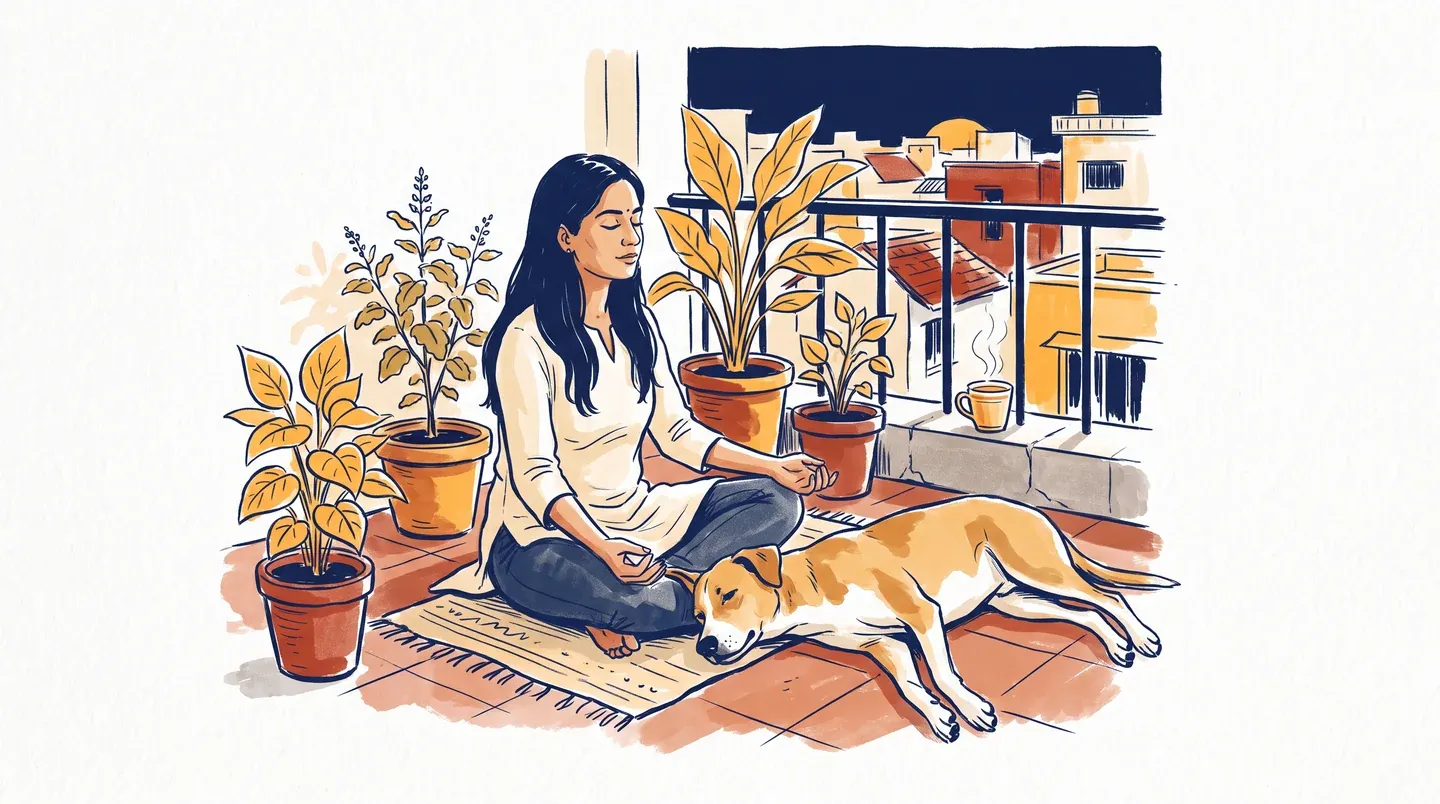
In chapter 01 I told you about Buddy. Nupur adopted him, and by the time she called us he was aggressive, dominant and anxious, and he had already been trained by several people in several methods. I said at the end of that chapter that Nupur changed first and the dog followed. I did not tell you how, because you did not have the rest of the book yet. Now you do.
We did everything with Buddy that this book describes. His walks were sorted. His needs were met. The house learned how to meet him and how to feed him, and there were rules, and there was play. And the aggression went, and the dominance went. But the anxiety did not go. Everything around the dog was right, and the dog was still anxious.
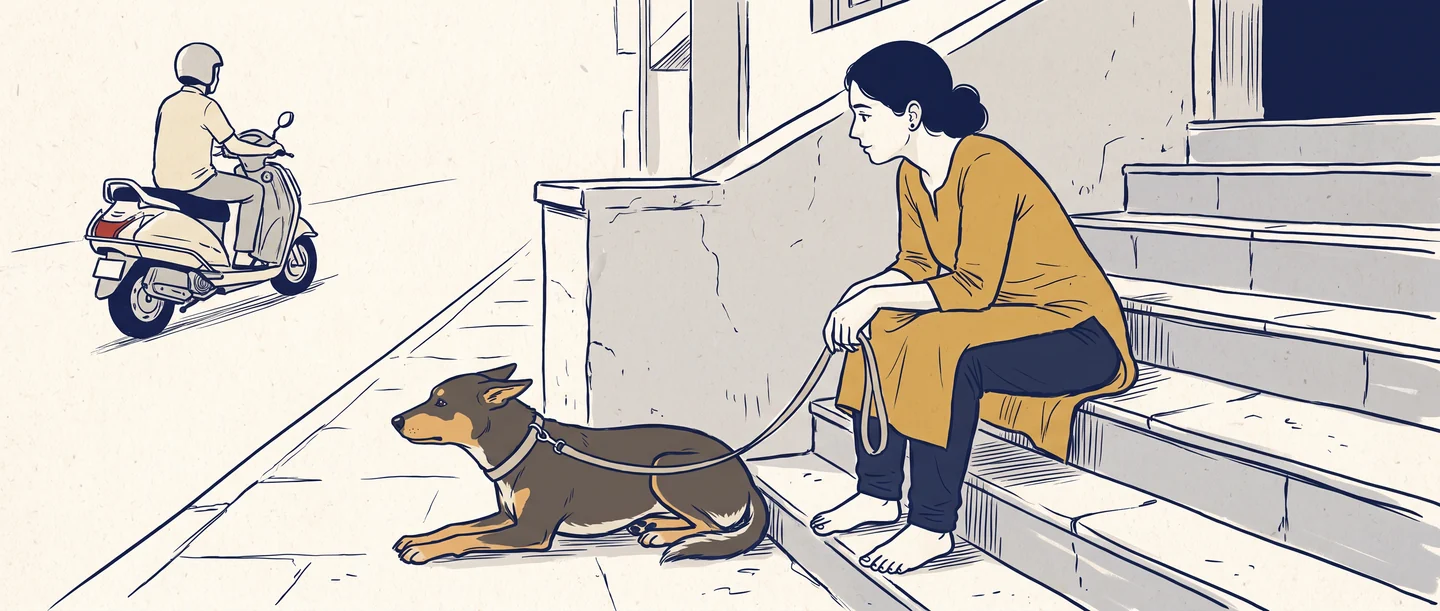
People say dogs are mirrors. I had heard it many times before I saw it properly, and Buddy is where I saw it. Buddy was mirroring Nupur. She was an anxious person, and he was carrying it for her.
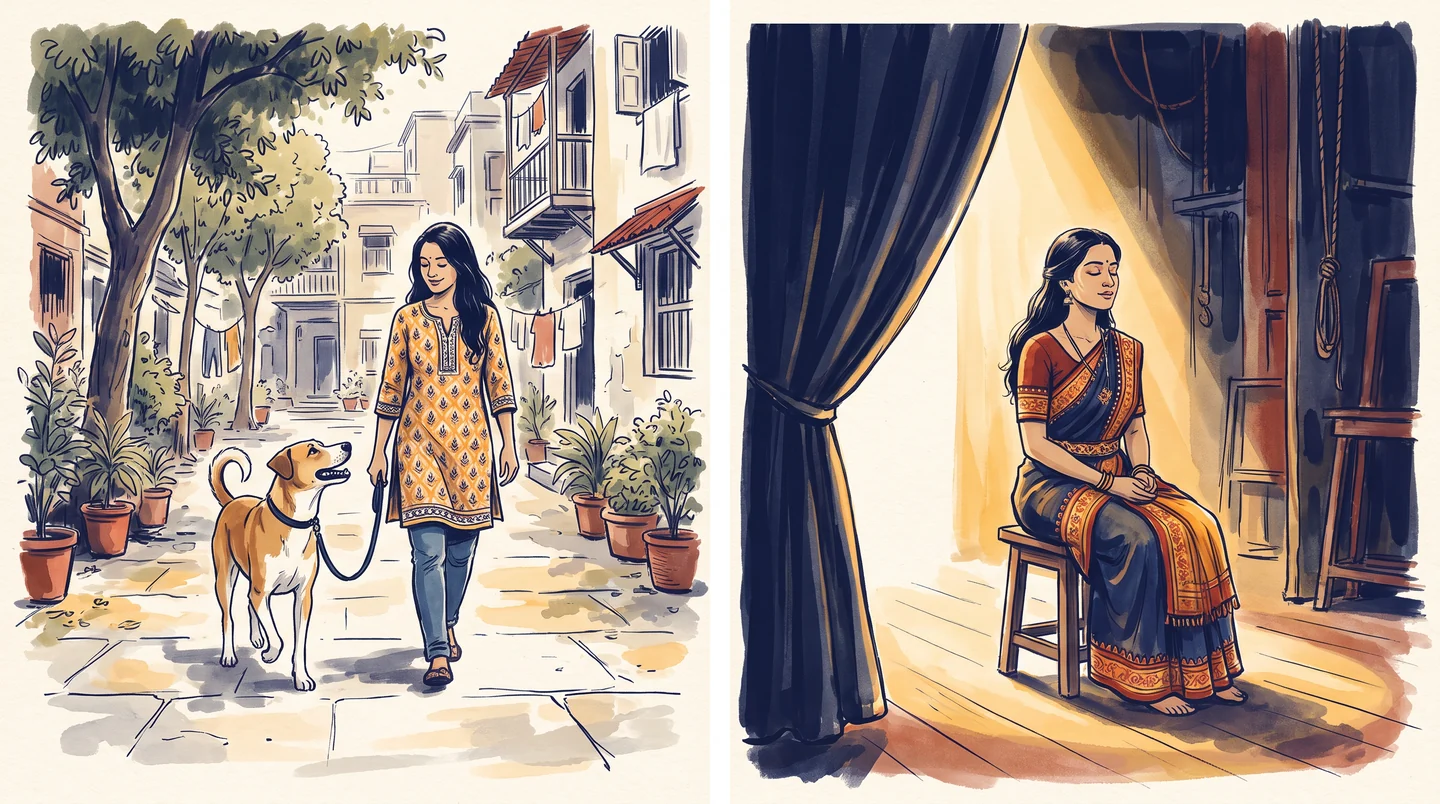
So Nupur had to work on her own anxiety. And the first thing she did, before any breathing or any meditation, was the hardest one. She accepted it. She said, yes, I am anxious. Then she worked on it, the way chapter 05 describes, a little every day. Her anxiety started coming down. And as it came down, Buddy's came down with it.
Here is the part I did not expect. Nupur is an international artist. She performs on stage. And the anxiety she used to feel before a performance started going too. She started new businesses. Her work got better. She had come to us for a dog, and what changed was her whole life. This is why I say that if you are getting better with your dog, you are getting better everywhere. It does not stay with the dog.
 , open the figure larger
He shows it first
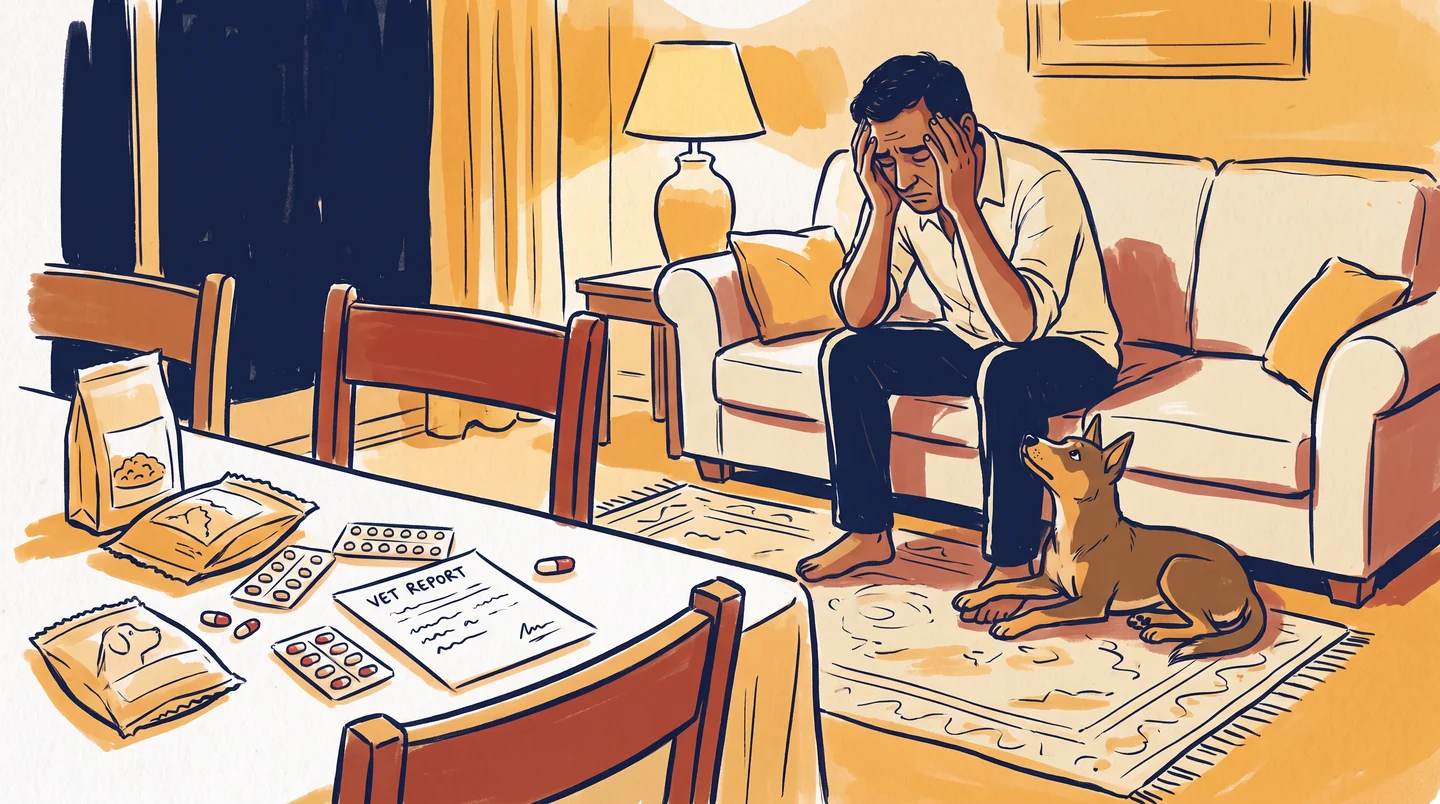
One of my students spent months trying to work out why their dog kept getting urine infections. They changed the meals, tried medicines, checked everything and checked again. And in the end they found the pattern in their own house. The dog was very close to the husband. Whenever his mood went up or down, she got stressed, and a few days later her urinary trouble came back. Most of the time, they told us, about eight times in ten. On her face, they said, the dog and the husband looked like carbon copies of each other.
 , open the figure larger
I am not telling you this so that you go and blame every infection on your mood. A urine infection is a urine infection, and the vet still sees it. I am telling you because of how long it took them to look at the house. Nobody looks there first. We look at the food, the walk, the bushes he peed in. The house is the last place we check.
I have said many times that dogs are like sponges. They take in whatever is around them. A dog feels the mood of a room all day long, and he has nothing else to attend to. A Swedish study measured the stress hormone in the hair of dogs and their people over months, and found the two moving together. And some dogs take in more than others. The sensitive dog in your house will show what is going on in it first, and sooner, and louder.
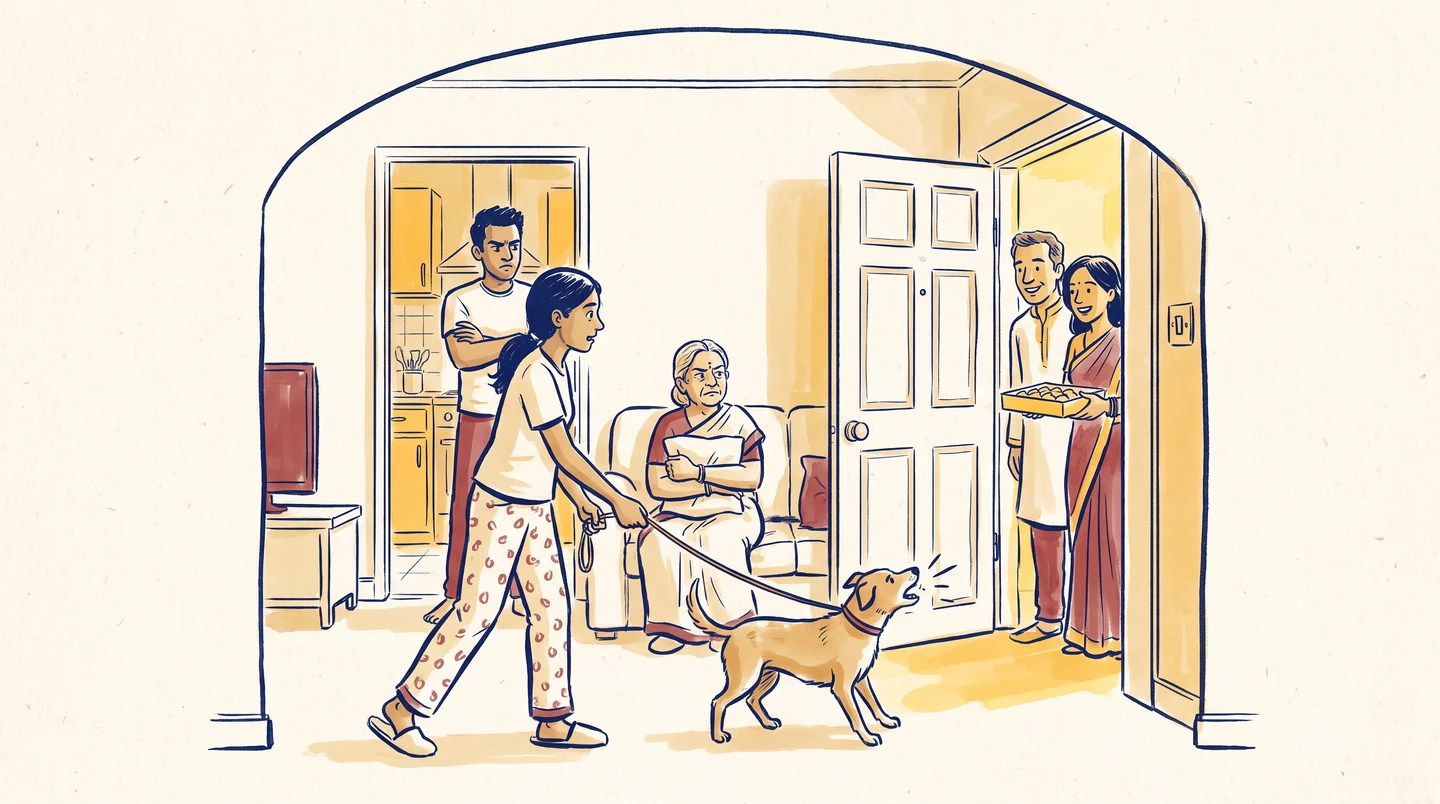
Pari is that kind of dog. When guests come to her house she barks, and sometimes she pees. When the peeing first came back, I had told her person to get a checkup done, and in the weeks with no guests it did not happen once. Her person did everything right. Took her out to pee before the guests came, brought her in, let her sniff them, took her out again, then shut her in a room. She barked anyway. When they let her out, she went and sat right next to the guests and growled at her own people, her person and her person's brother.
I did not ask about the dog first. I asked about the people. When guests are coming, what happens to everyone in that house? For one person it is socialising. For someone else, a guest at the door is a lot. Hearts go up. Shoulders go up. And Pari, the most sensitive one in that house, can hear the change before the doorbell goes. She is not the only one going through it. She is just the one showing it.1
 , open the figure larger
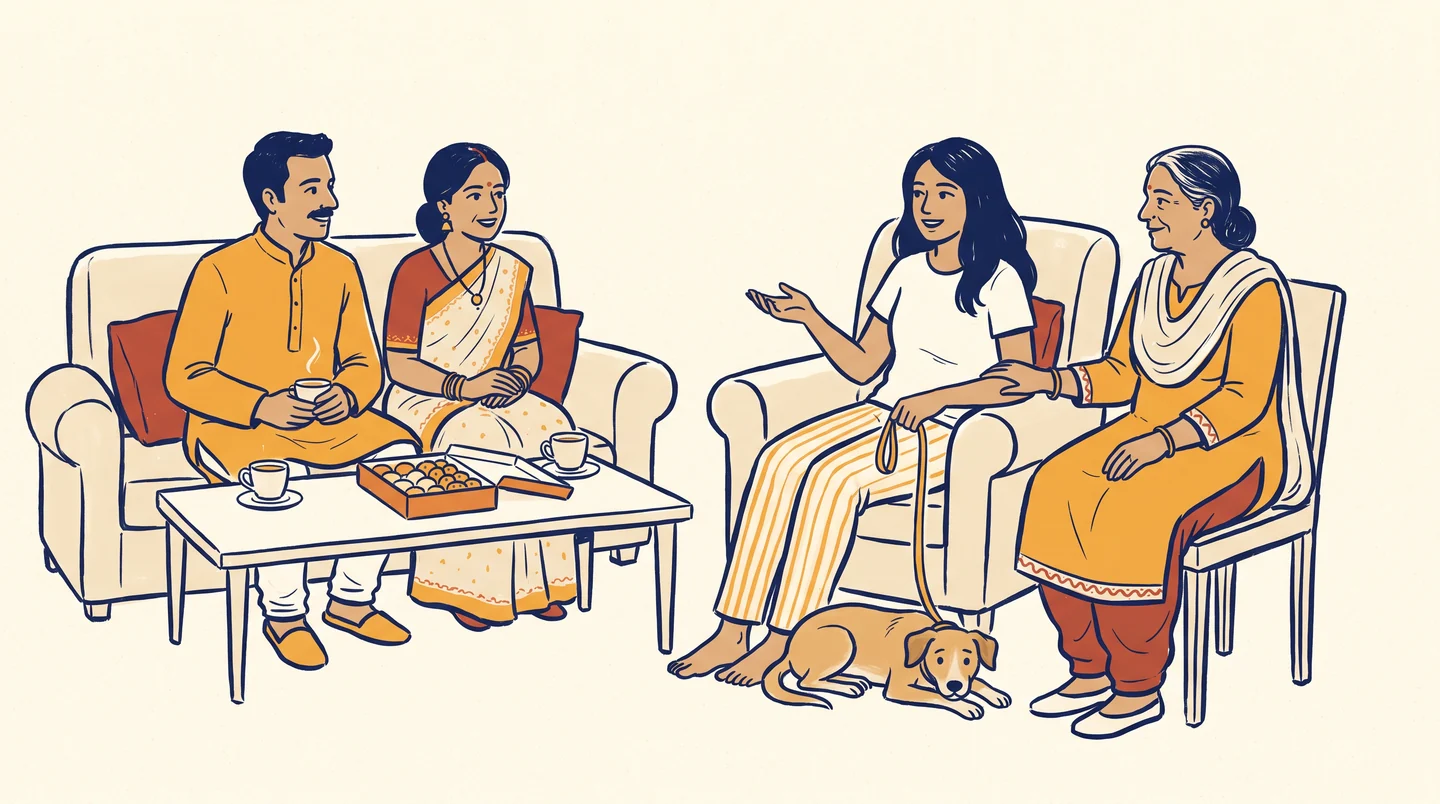
So I told them what I tell every house like that. Do not lock her in a room. Keep her on the leash, with whoever in the house stays calmest when guests come, and keep her there the whole time. And keep the anxious person close to you as well, the same way you keep the dog close. Help them be calm. If the dog is mirroring someone, help the someone.
Then I told them the bigger thing. Whenever something happens with a dog, consider it the energy of the house, with the dog as one part of it. Sometimes it is mostly the dog. Many times it is mostly the house. And when a family finds that out and works on it, the whole house changes. Their relationships with each other change.
So who in the house has to change? Whoever understands it first. If you are reading this book, that is probably you. It is not fair, and it is how it works.
 , open the figure larger
 The rest of the Foundation
 The Six Rituals
 When Something Is Wrong