

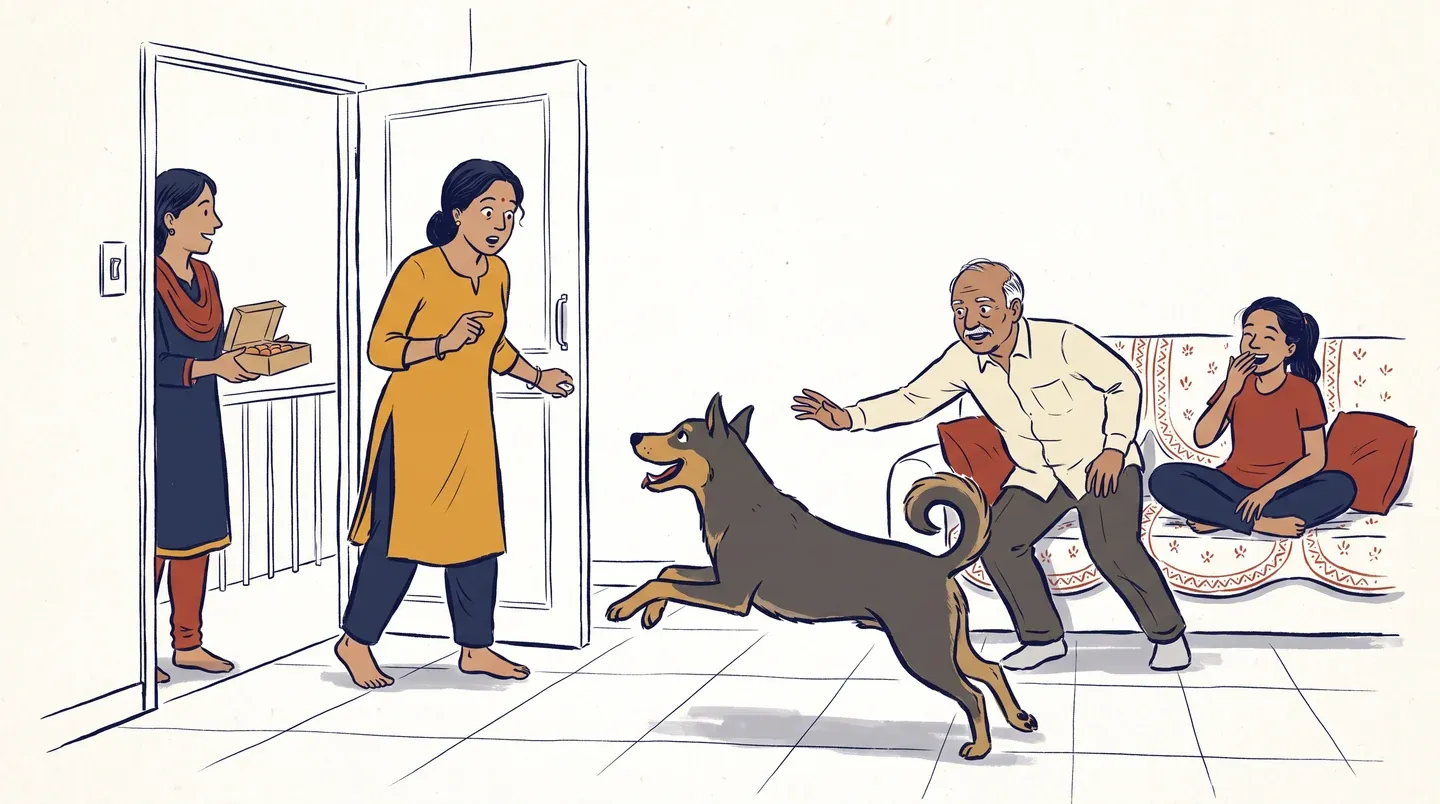
I used to ask every family the same question near the start, and it stopped most of them. What do you want him to do when the bell rings?
There was a pause. Then, usually, "well, not bark." Not bark is not an answer. It is the absence of one. Where should he be when the door opens? Standing at it? Sitting beside you? On his mat? Should he meet the guest, and if so, when, and how? Nobody in the house had ever decided, so he had decided, and what he decided was to bark and rush the door, and that was the behaviour they had called me about.
Most people expect twenty or thirty percent of their dog, and that is what they get, because that is all they were clear about. I want you to expect a hundred percent, and I have watched enough dogs give it to know they can. But he cannot meet an expectation you have never formed. So this chapter is about forming it, and then about holding it, every day, the same way, from every person in the house.
Why clarity makes a calm dog
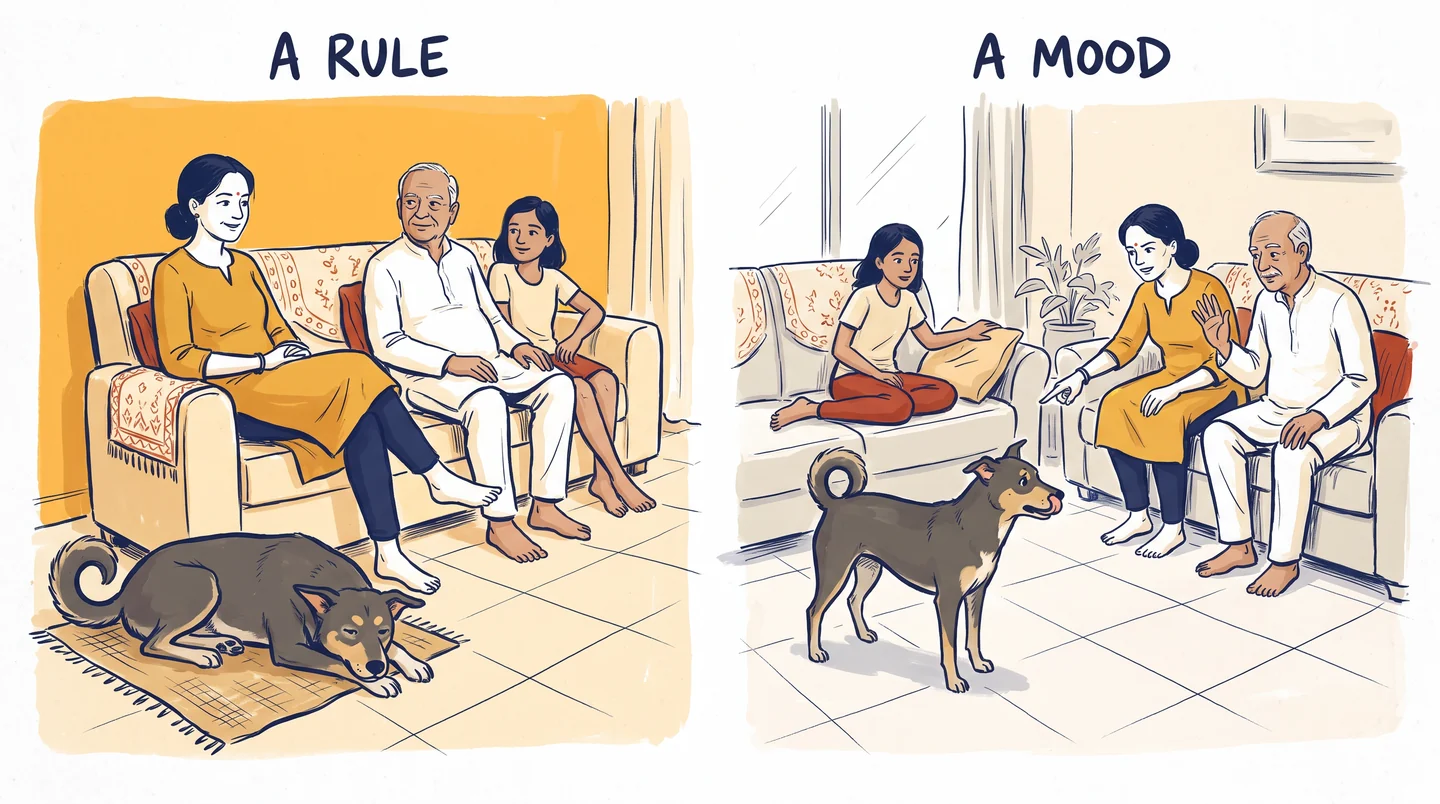
Clarity does something in your own life that you already know. When you are clear about what you want, you are steadier. When you are not, you are anxious, and you make it up as you go, and other people cannot predict you. A dog lives in exactly that relationship with you. When he knows what is expected of him, in each part of his day, he has confidence, because the ground is the same every time he puts his foot down. When the rule changes with your mood, or is held by one person and not another, he never knows, and a dog who never knows becomes anxious, and then insecure, and then one of the things in Part Three.
 , open the figure larger
So clarity is not a management idea. It is a kindness, and it was the first thing I gave a family, before any technique. You decide what you want. Then you make it so he can tell.
 The rest of the Foundation
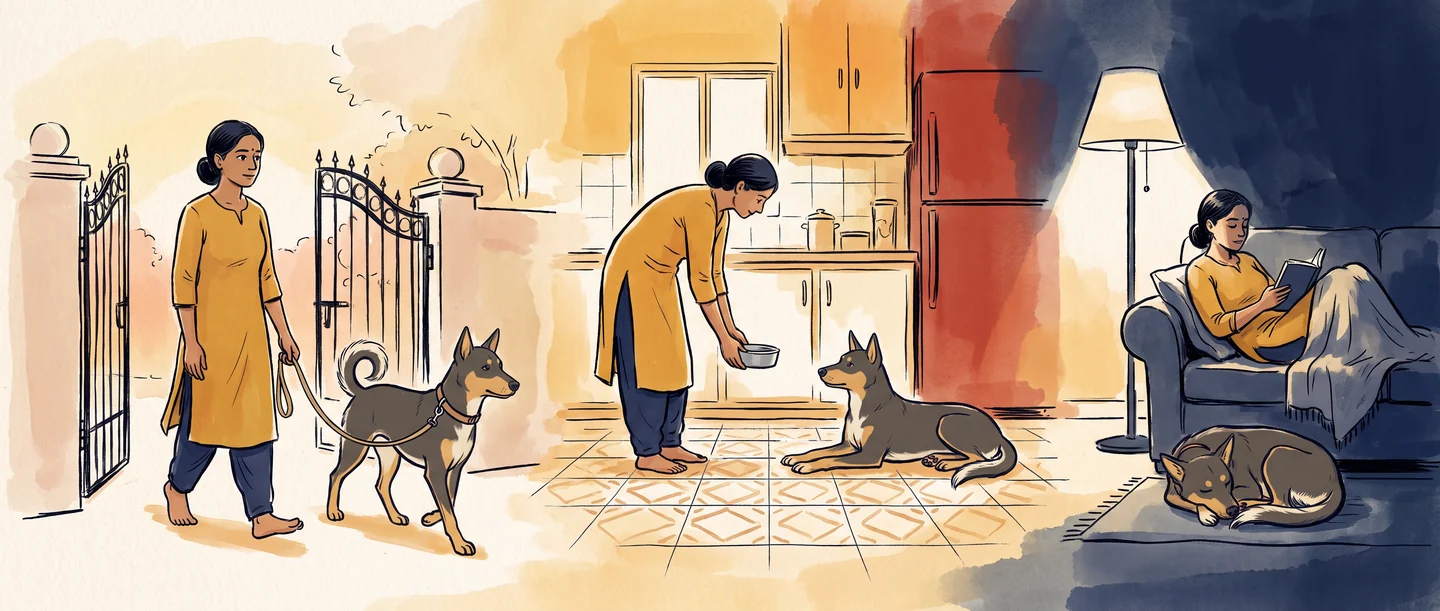 The Six Rituals
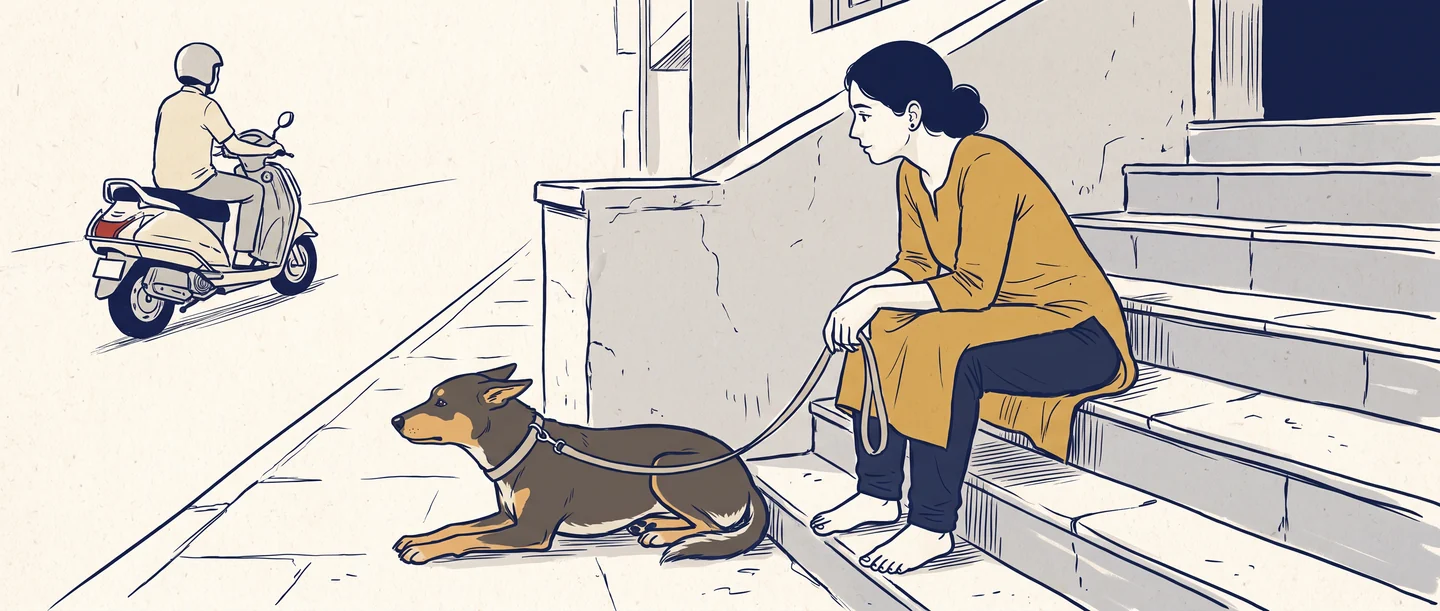 When Something Is Wrong