

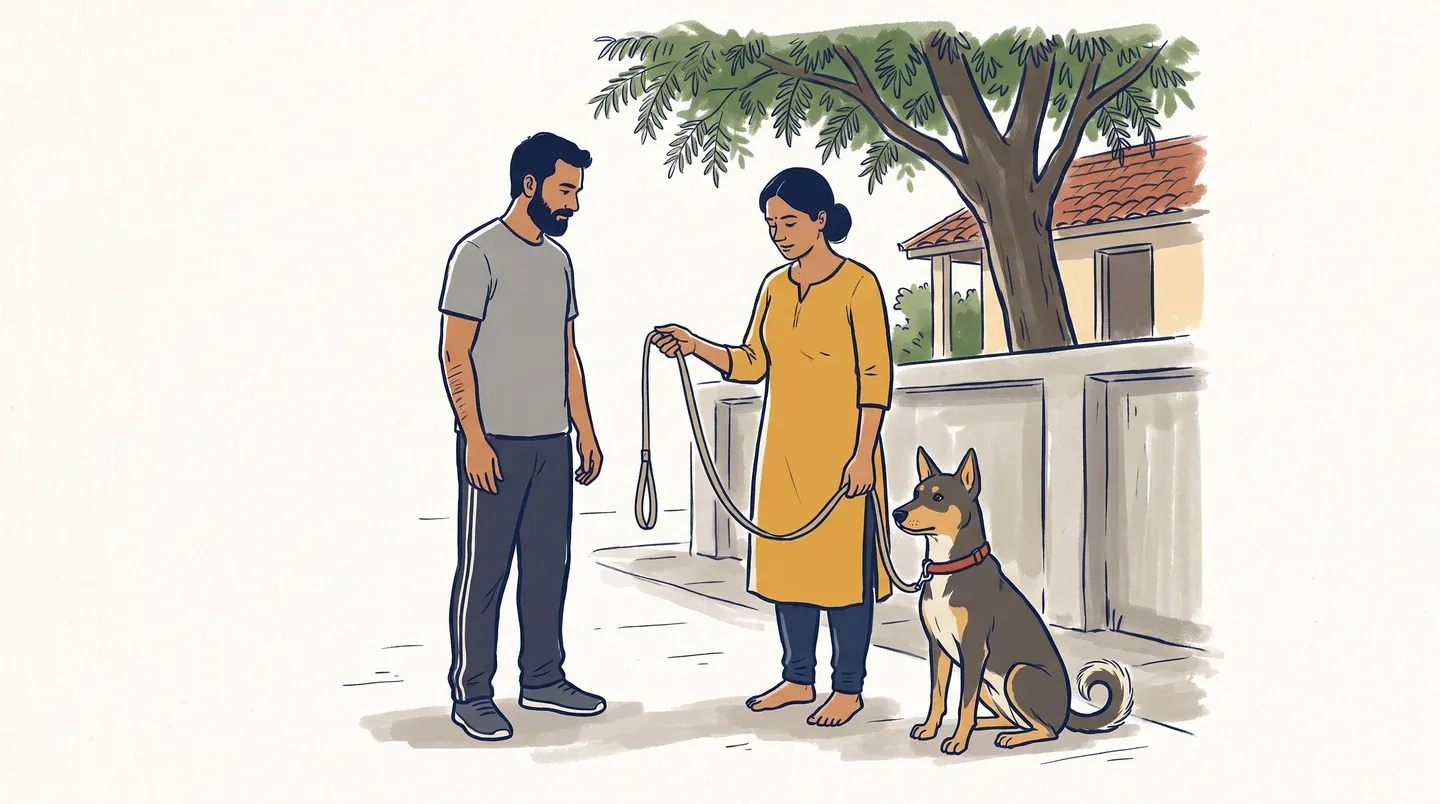
When a new dog comes to me, the first thing I do is not say hello. I look at the leash. Where the collar is sitting on him, how the leash is being held, how long it is. I set the collar high, just behind his ears, and I give him the first signal: I bring the leash up slowly until he feels it, hold that for a moment, and let it go. Never a snap, and never on a dog who coughs on a collar. I do this with every dog, before anything else, and if you watch closely you can see the whole animal change. The tail that was going stops. The body that was leaning forward settles back. He comes down into a quieter mode. Nothing was said. The hand said it.
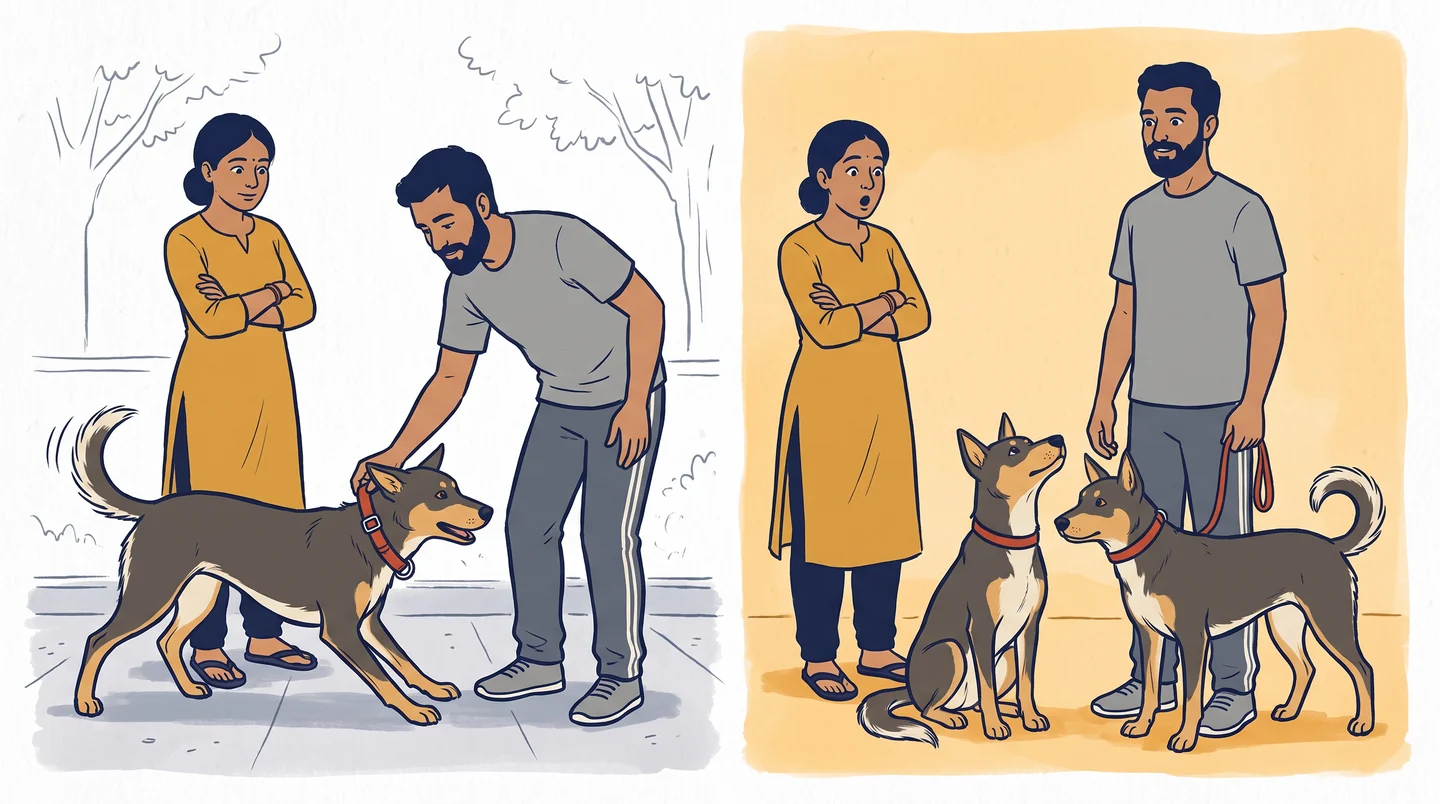 , open the figure larger
That is what this chapter is about. Chapter 08 gave the walk its shape, fifteen minutes on and five off, and taught the first sentence at the door. Now I want to go down the leash itself, because the leash is a line between your hand and his neck, and everything you feel goes down it, and everything he feels comes back up. Of the five ways we have of talking to a dog, energy, leash, space, touch and words, the leash is the one you have most of on a walk, and it is the one almost nobody has been taught to use.1
He has to want to come to the leash
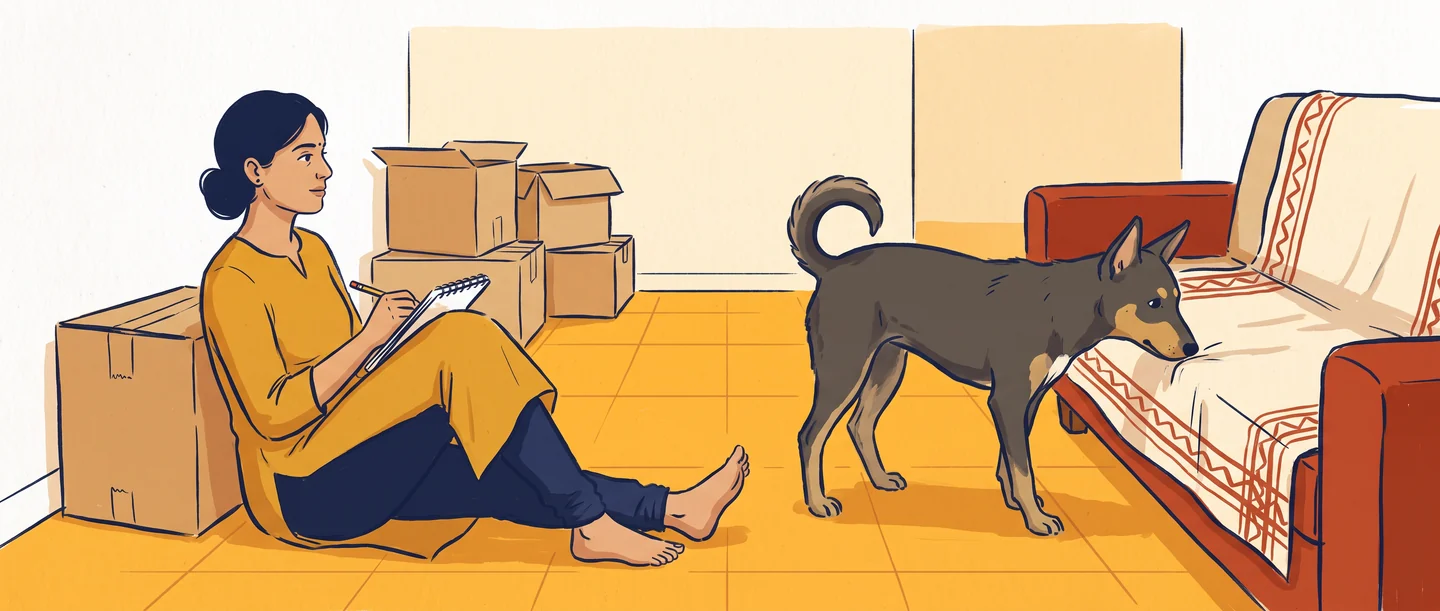
The conversation starts in the house, and it starts badly in most houses, because the human is running after the dog with the leash in their hand. He dodges, they chase, they corner him, the leash goes on, out they go. If you have to catch him to leash him, understand what you have just told him. Inside four walls you can catch him. Outside you cannot. A dog you chase in the house will never be in your control on the road, because the first thing he learned about the walk today is that he moves and you follow.
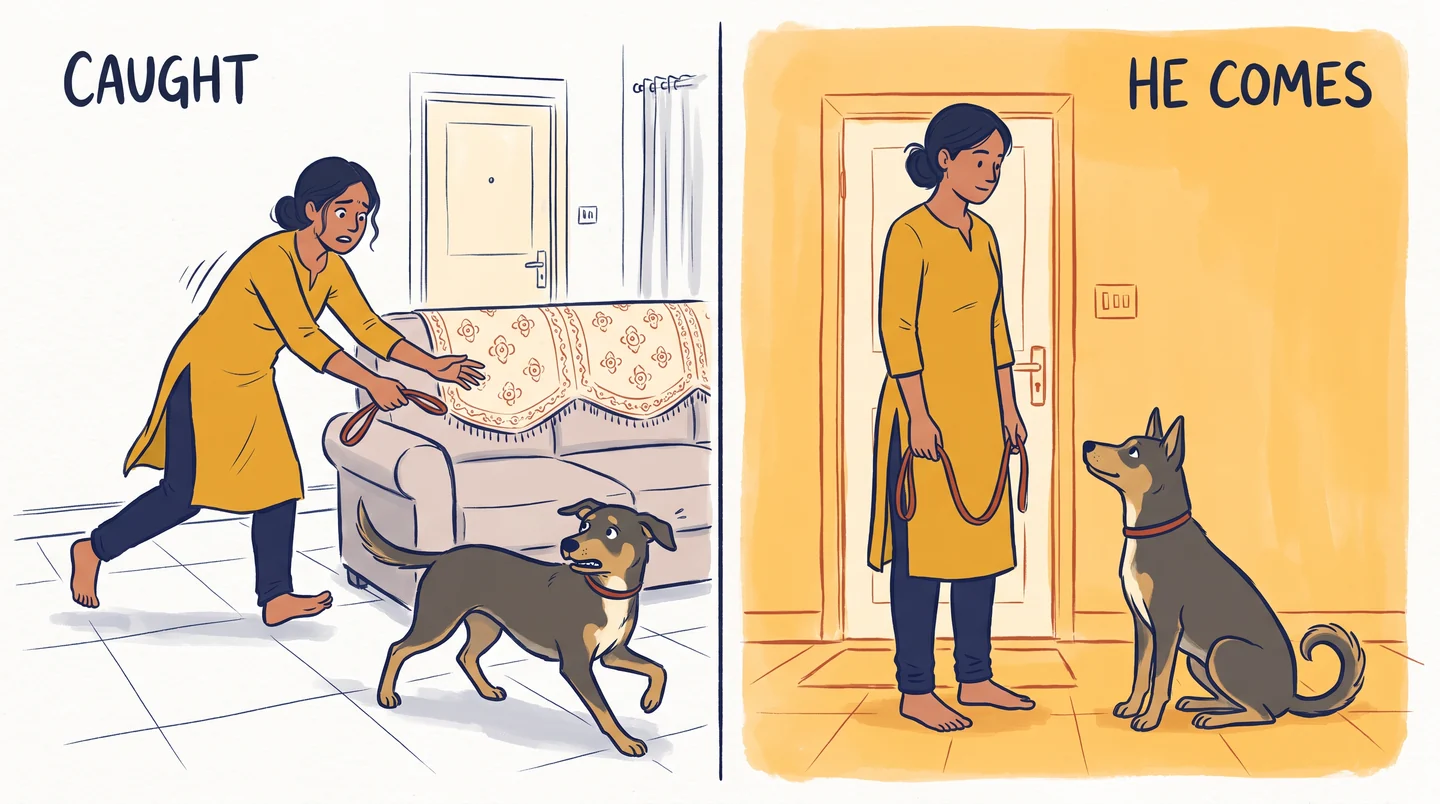 , open the figure larger
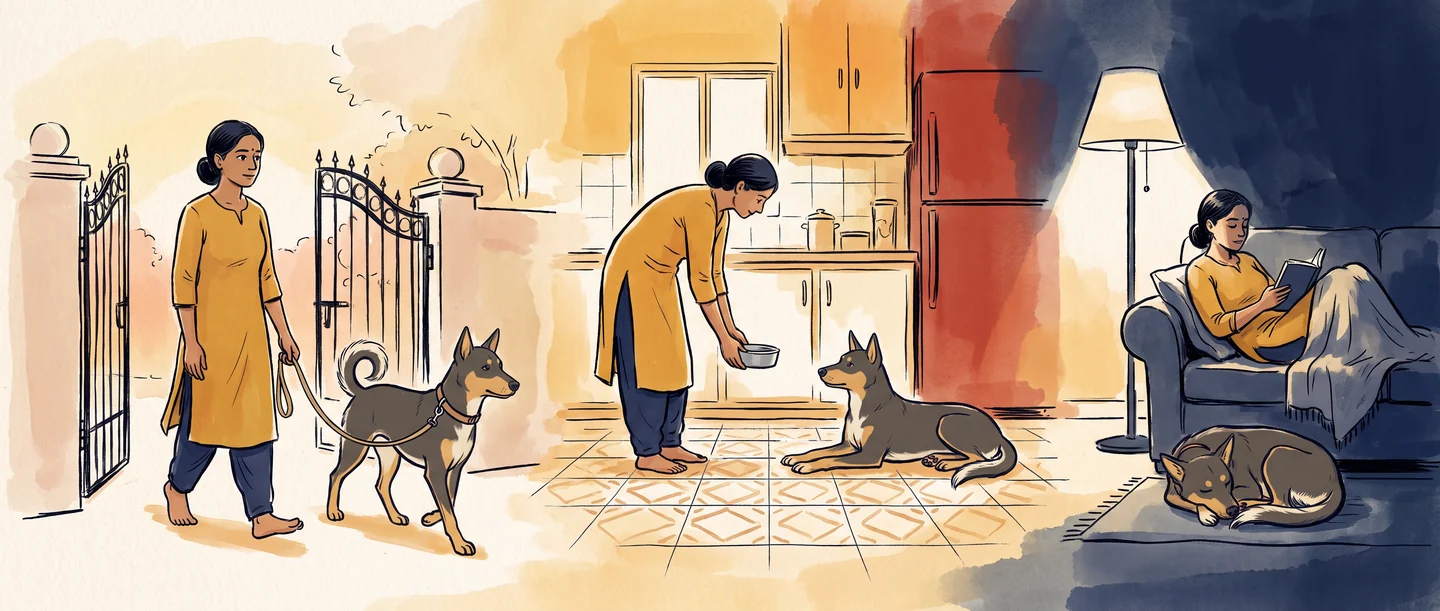
So if he does not come to the leash, the leash is not rewarding to him yet, and that is the thing to fix. Pick it up and wait, as in chapter 08. When he comes, calm, the leash goes on and something good happens: a small treat, a quiet hand on his side, your voice. Not before. And do not hurry him. I know the feeling at seven in the morning, the day waiting, the lift to catch, just put it on and let us get this done. Dogs do not work like that. Give that minute its time, because the ten years after it are built on it.
 The rest of the Foundation
 The Six Rituals
 When Something Is Wrong