


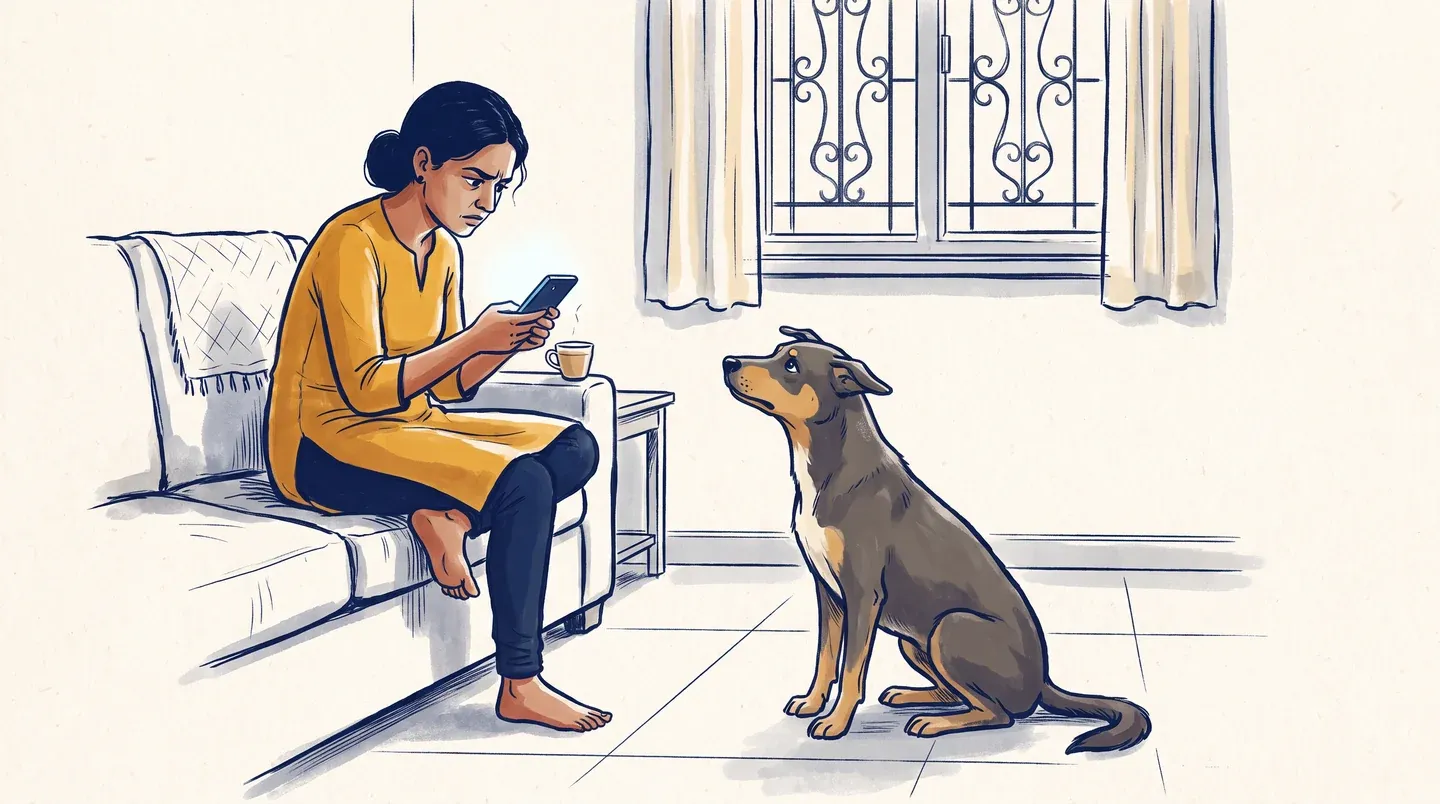
Every one of us has felt anxious. Some of us felt it this morning. Sometimes it lasts a second, over a message we did not like the look of, and sometimes a whole year, over something that would not come right. Nobody lives without it.
Dogs are the same. Every dog will feel anxiety, if not today then some day, so the work in this chapter is not a cure you do once and are finished with. It is day-to-day work. I call it rehab, and I use it on every dog I meet, whether or not anyone has noticed he is anxious, because sooner or later he will be.
One thing first. If the anxiety came on suddenly, in a dog who was fine last month, take him to the vet before anything else, because pain and illness make a dog anxious and no rehab reaches them. If it is severe, or he has bitten, this chapter is not enough on its own. Get someone who can see him, and ask your vet whether medicine would help for a while. Many frightened dogs need it, and there is no shame in that.
So what is anxiety?
A level of confusion
Anxiety is a level of confusion. That is all it is. The dog cannot work something out.
Sometimes what he cannot work out is his own energy. He is sitting, and he keeps shifting, getting up, lying down, getting up again, because there is energy in him and he cannot figure out where to put it. Sometimes it is something in front of him. He is standing at the door, whining, because he wants to come in and he cannot work out how. And sometimes it is something so small you would never think of it.
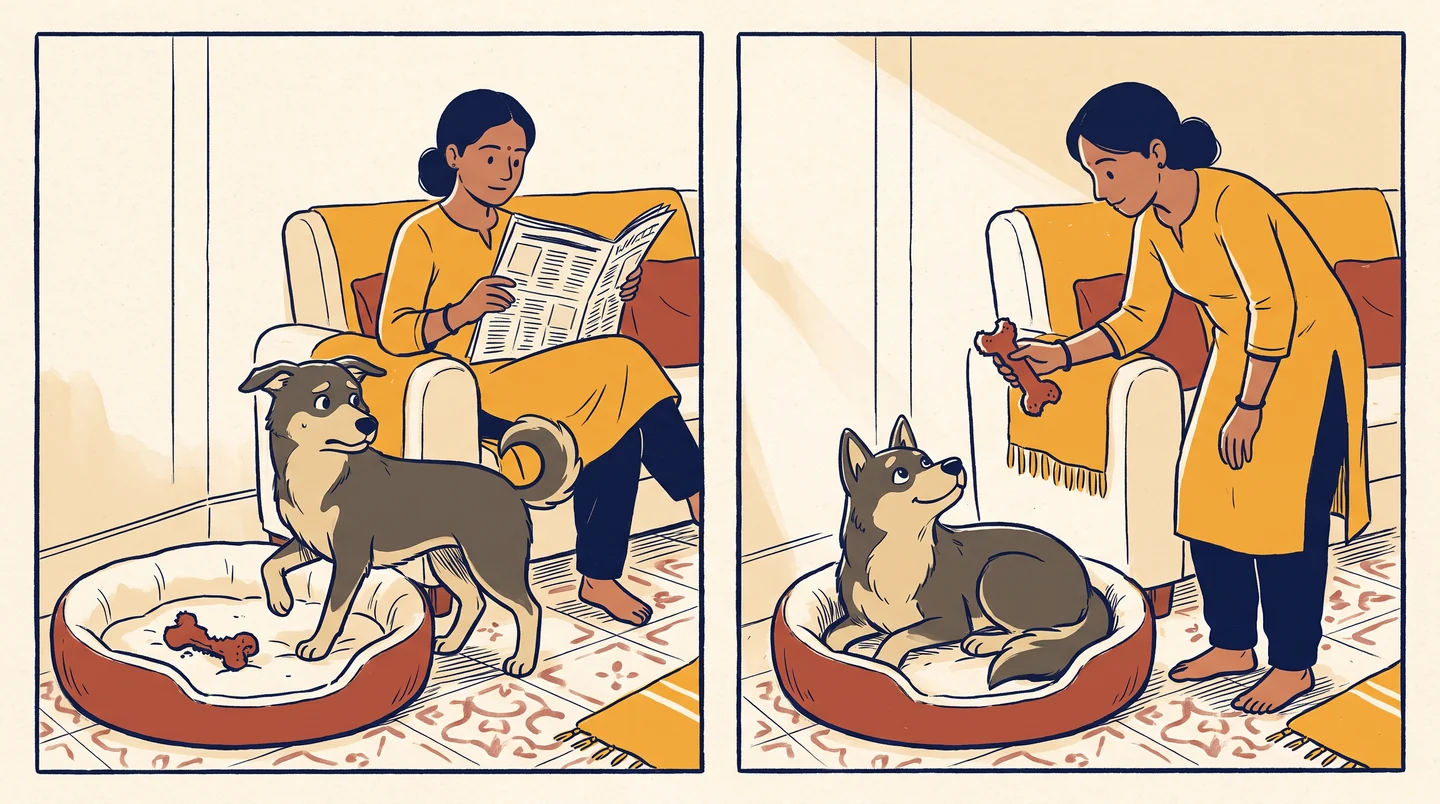
Here is one I see all the time. A dog walks up to his bed and stops. He looks at it. He looks at you. He looks at it again. He does not lie down. Families tell me stories about this. He is upset, he is sulking, he misses somebody. Do not put an emotion on it. Just look. There is a toy lying on his bed, and he cannot work out how to get on with it there, or whether he is allowed to. Pick the toy up, and he will walk onto the bed, lie down and look at you, and that look is a thank you. Somebody understood him.1
 , open the figure larger
A small moment like that does more for the two of you than any treat. Every time you work out what he could not, he learns that you understand him, and a dog who feels understood trusts the person who understands him.
So I do not want you to see anxiety as an issue. It is communication. It is his way of saying one sentence: I am confused, help me. What help means depends on what he is confused about. Does he need to let some energy out? Is there something he wants to do and cannot see how? Your job is to figure that out, not to make up a story.
We are very good at stories. He is crying because he misses his friend from the park, we say. More likely he got very excited in the park and has come home with all that excitement still in him, and he does not know what to do with it, so it turns into anxiety. You can settle it in a moment. Come, sit here. That is all. He was asking what do I do, and you told him. Keep doing this and you will start to understand what he is saying. Not in a day, but you will.
 The rest of the Foundation
 The Six Rituals
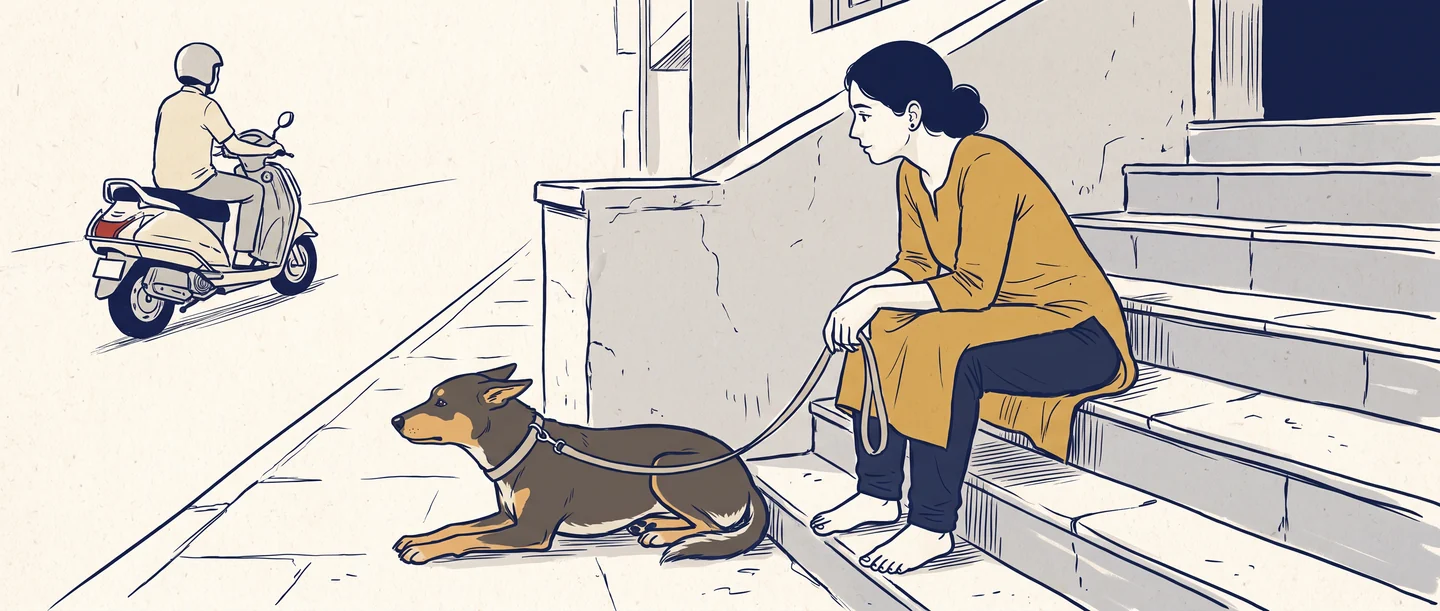 When Something Is Wrong