

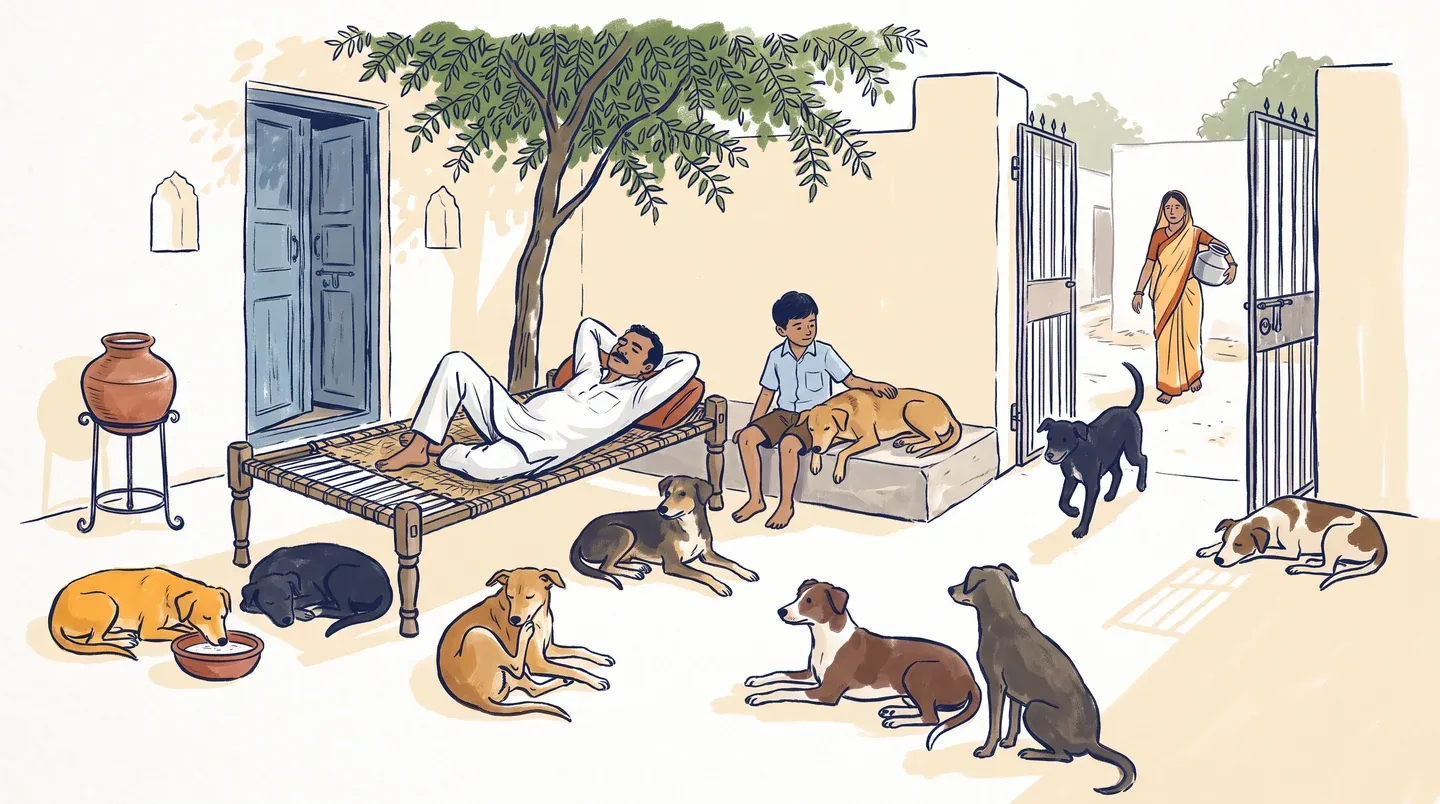
I grew up with dogs. My father liked them, and in our house in Ramganj Mandi, a small town in Rajasthan, there were ten or twelve at a time. None of them bit anyone. None of them took the house apart. Nobody in that town had heard of a dog trainer, and nobody needed one.
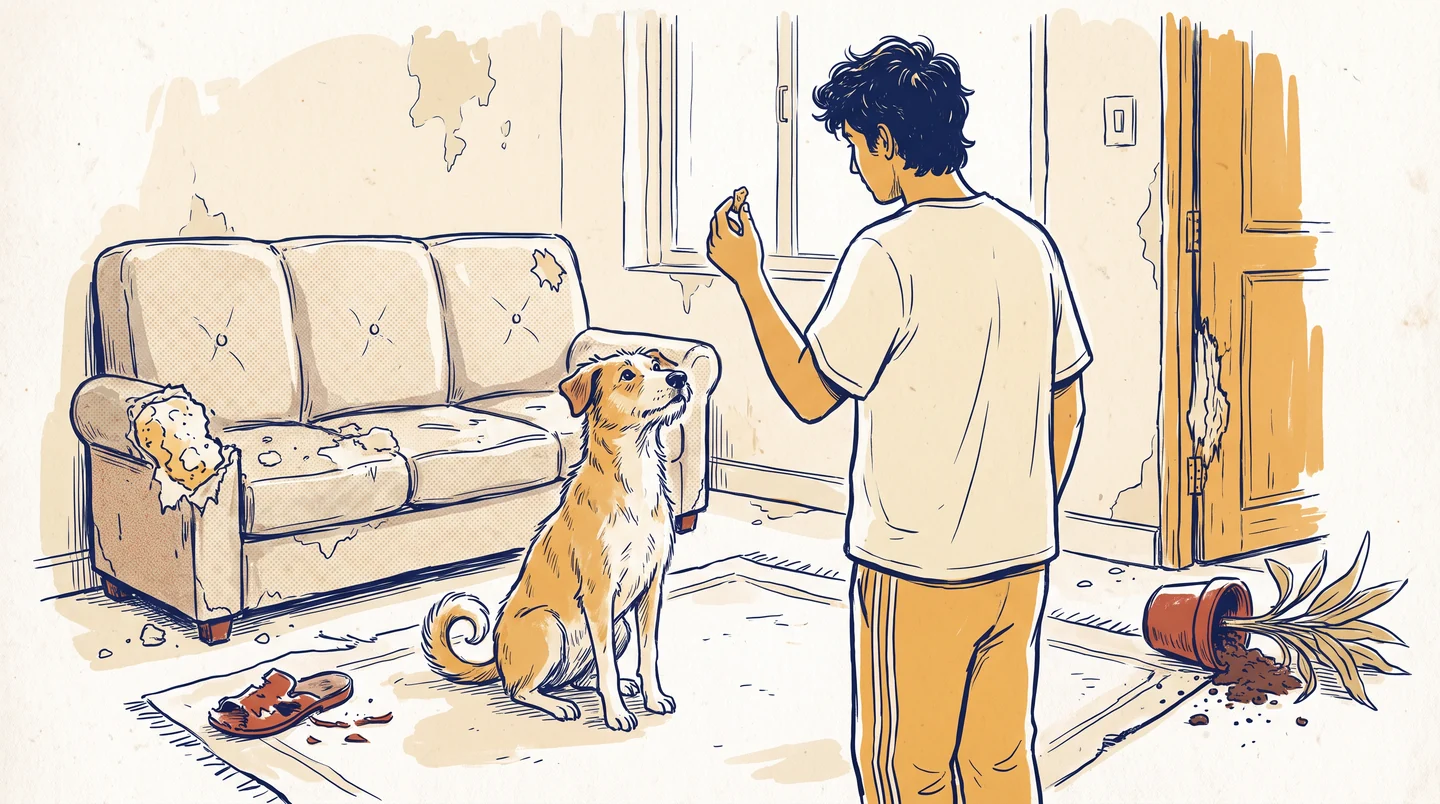
In 2002 I came to Pune for engineering, and in 2016 I got a dog of my own. What I wanted was simple: a dog I could play with, and a dog I could take among people. What I got, within months, was a dog with issues. He was excitable, he was destructive, and the issues were growing.
Everyone I asked, and everything I read online, said the same word: training. So I trained him. The problems escalated. That was the first thing that did not add up. If training was the answer, why was the dog getting worse?
 , open the figure larger
I started watching what every other animal does. A lion lives a lion's life. A zebra lives a zebra's life. A dog is an animal too, and his life has its own shape, and nobody who told me to train him had said a word about what that shape was. Reading about dog psychology, and then Cesar Millan, gave me the first language for it. The pack, the leader and the follower you will meet in this book, I learned from him, and the years of houses since have taught me what they ask for in an Indian home. Then I practised: on my own dog, then with friends, then with the people friends sent to me. Every case taught something. What held up, after years of that, became the OhMyDog Parenting Model, and this book is that model written down in order.
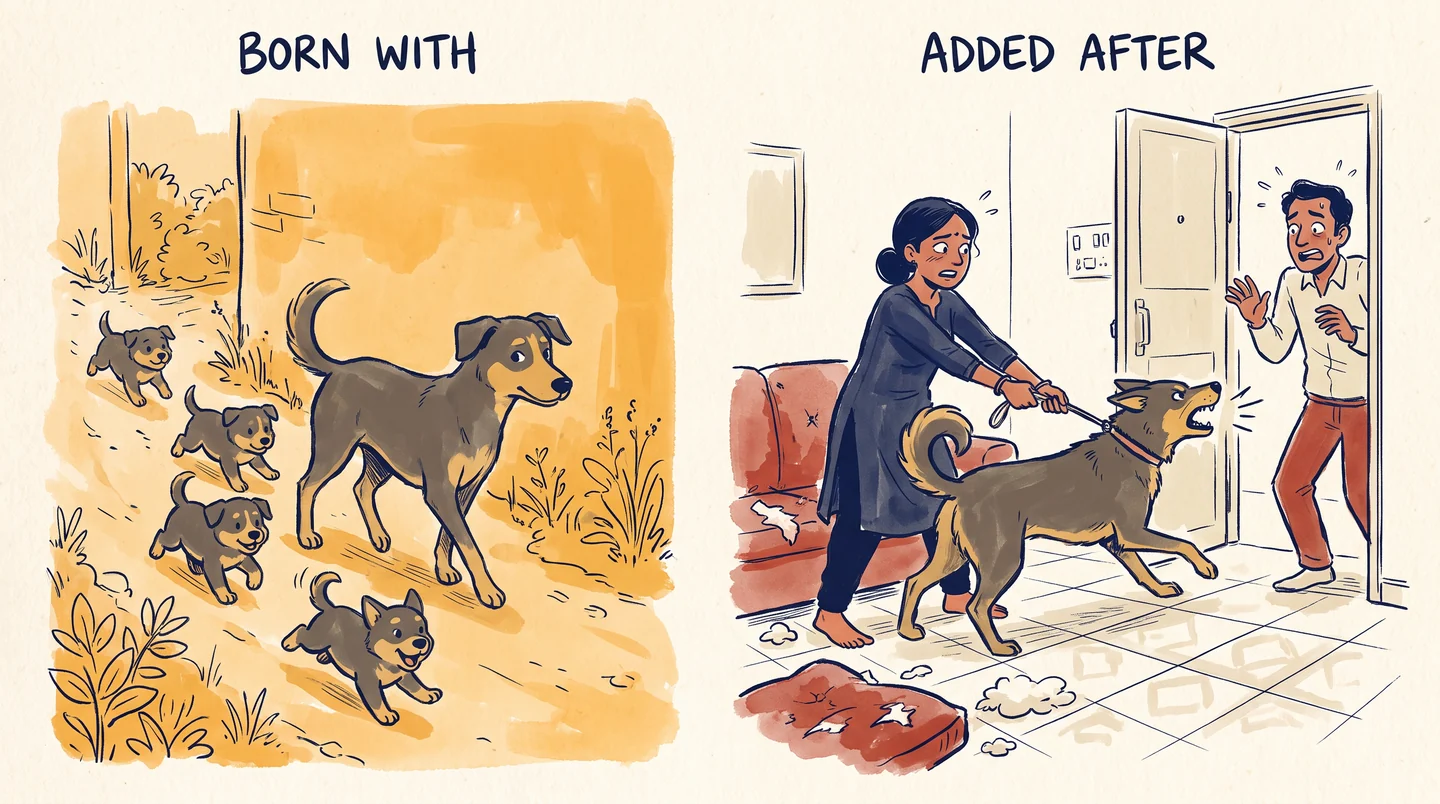
The first thing it rests on is the sentence at the top of this page. No dog is born aggressive, anxious or hyper.1 Some are born easier to frighten, or quicker to flare, but what that turns into is decided after. If your dog is one of those things today, it happened after he arrived, and most of it happened in the house.
What a dog arrives with
Be careful with that sentence, because it is easy to hear it as "a dog is a blank page". It is not. A dog arrives with some things of his own, and an honest book names them before it talks about everything the house adds.
 , open the figure larger
An intensity. Every dog is born with a level of energy it rests at. I sort them into four: low, medium, high and hyper. A low-energy dog and a hyper dog can be the same breed and the same age, and their days need to look different. The level can be pushed above its baseline by a life that gives it nothing to do, and brought back down, but the baseline itself is the dog's own.
A personality. Some dogs want to be ahead, some are happy behind. Some are bold with everything new, some are careful. This is the dog's own too, and it is not an issue. A careful dog is not an anxious dog. A dog who likes to be first is not a dominant dog.
A drive, in some lines. This is where "nobody is born aggressive" gets tested, and I want to meet the test head on. Some breeds were made for work, and the work was bred in. A line used for herding carries the herding. A line used for guarding carries the guarding. A line used for fighting carries a fighting spirit, a warrior drive. That dog was not born aggressive, in the sense of attacking everything he sees. But if he has to fight, he can, and he will not be bad at it. A drive is not aggression. It is a tool the dog carries, and what he does with it is decided after he is born.
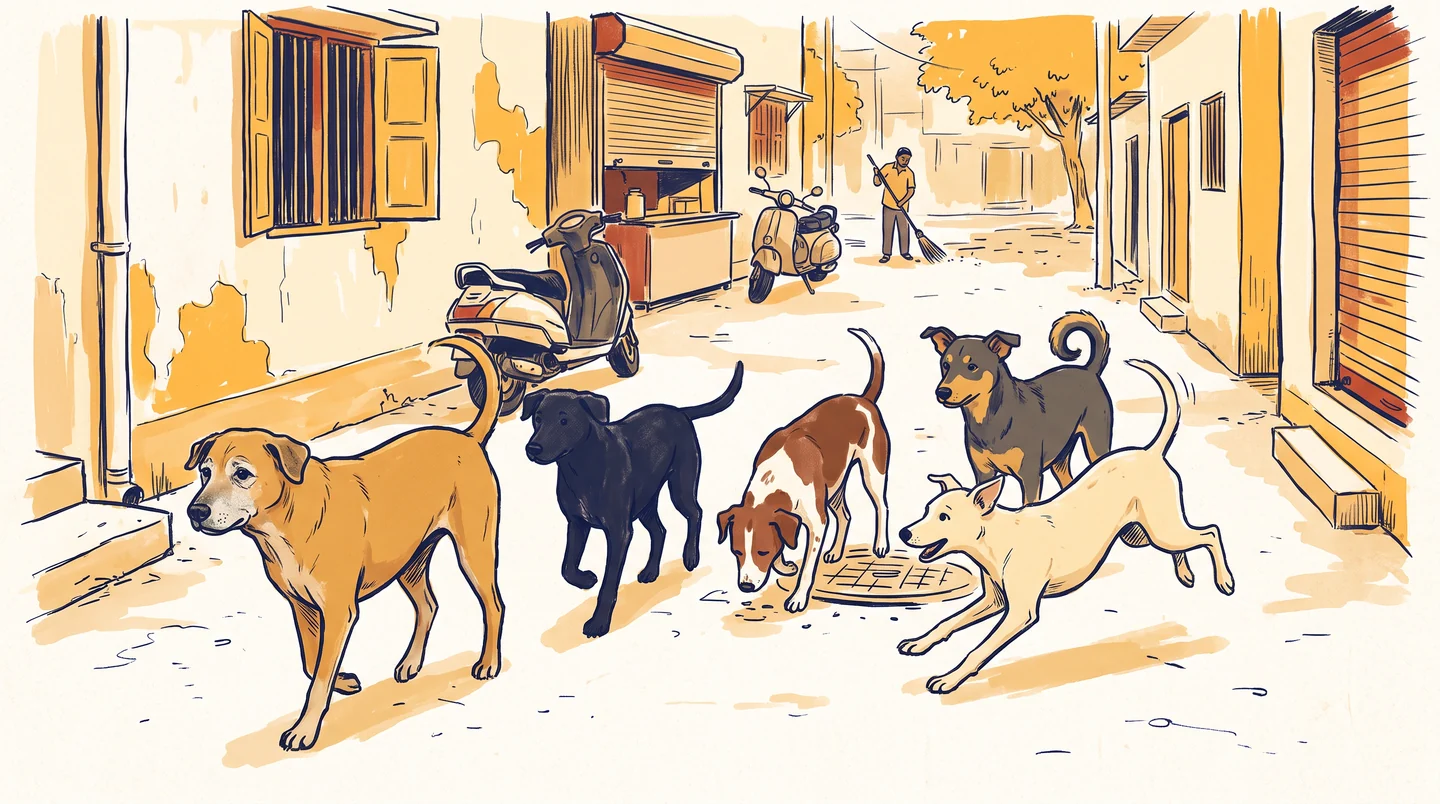
A follower, nearly always. The way I see it, a dog is born into one of two positions: follower or leader. In house after house, and in the free dogs I watch in the lanes, almost every dog is a follower. Only a very few are made to lead, which is how a pack stays balanced instead of falling into chaos, and the ones the rest follow are the calm ones they trust, not the ones who pick fights. Position is not energy, either. A hyper dog can be the bounciest follower you will ever meet. Keep this one in mind. It is the hinge of the whole model, and this book keeps coming back to it.
 , open the figure larger
That is the whole list. Notice what is not on it. Fear is not on it. Aggression is not on it. Hyperactivity is not on it, and neither is separation anxiety. Those are in the second column of the figure, and the second column is ours.
What the house adds
Let me show you the second column with three dogs, because I learned it from dogs and not from a book.
Buddy was adopted by Nupur. Eight homes had given him up before hers, for his aggression and his dominance. He was a high-energy dog, and he had been trained, in several methods, by several people, because everyone who met him agreed he needed training. The aggression was untouched by all of it. What nobody had asked was whether his needs were being met. A high-energy dog whose energy has nowhere to go every single day builds frustration, and frustration has to come out somewhere. His came out as anger.
And because nobody in the house was leading, he had taken the leading, which for a dog built to follow is a frightening job. Nupur did not learn a training method. She learned what Buddy needed and how to lead him, and she worked on her own anxiety, because Buddy was reading it. As his needs started being met, the aggression went, then the anxiety he had when left alone, and what was underneath was a goofy, affectionate dog who had been there the whole time.
 , open the figure larger
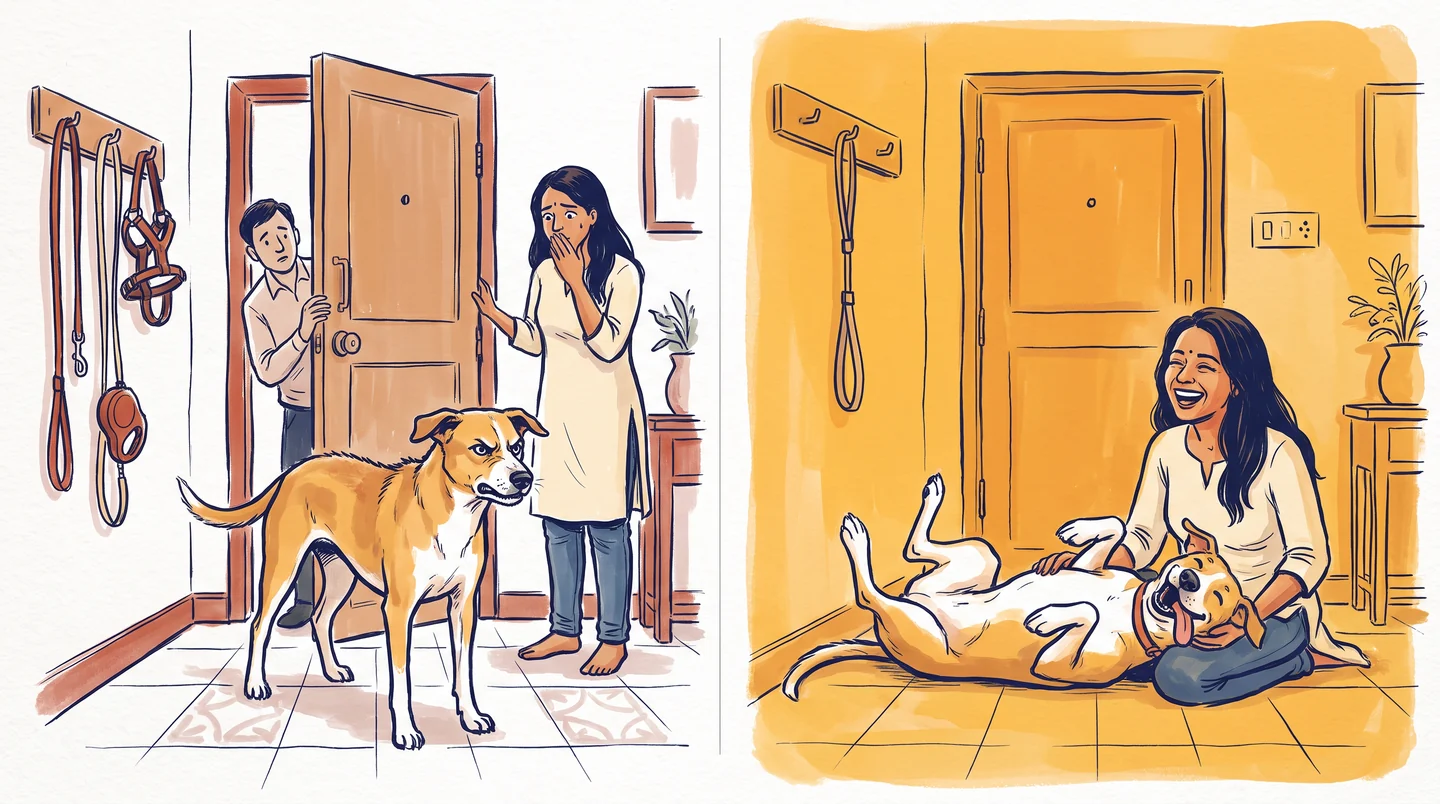
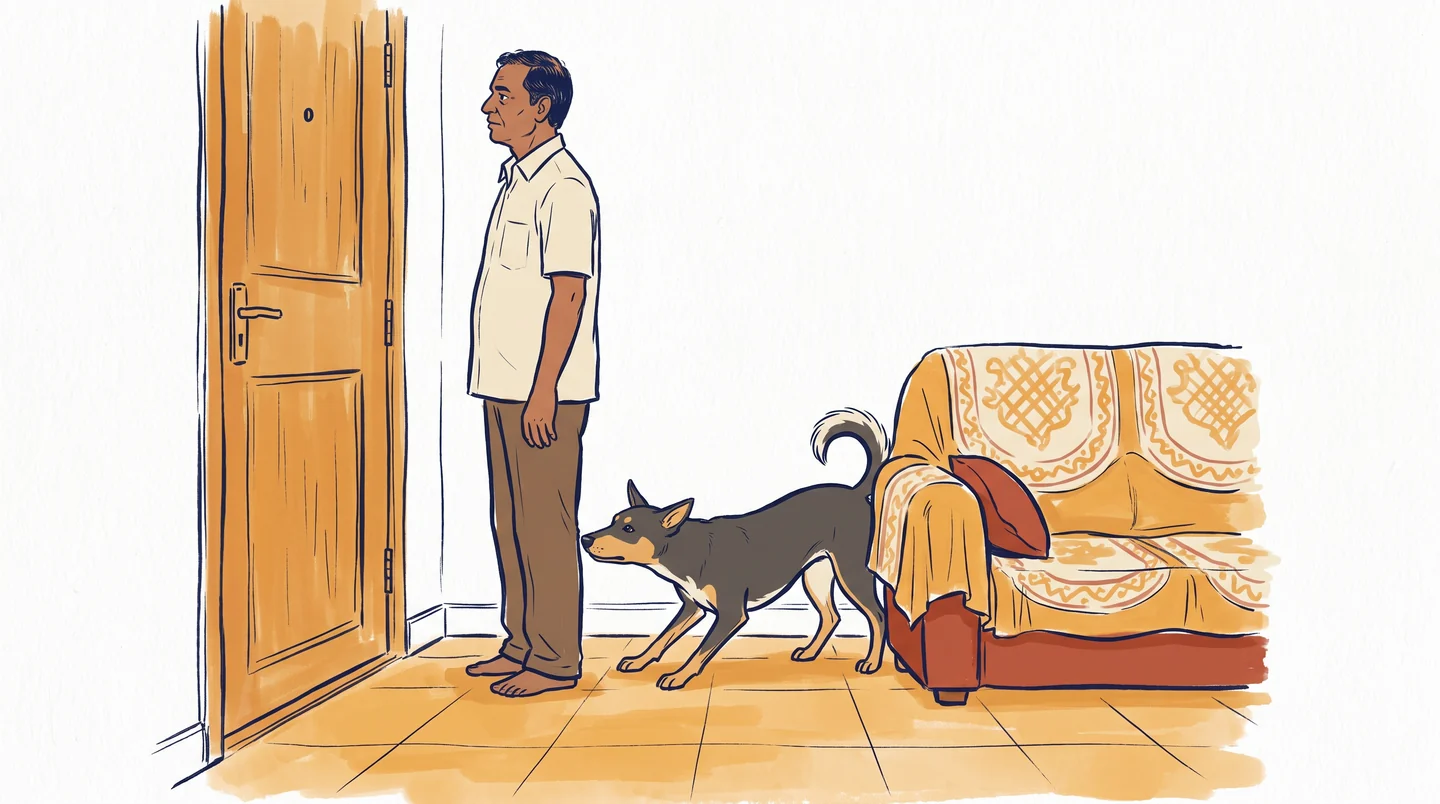
Shine was the opposite dog. Phobic of the sound of traffic, nervous, timid, barking at every guest who came through the door. The family had been meeting guests the way people do, and the guests had been meeting Shine the way people do, and every visit confirmed to her that the door was dangerous. We taught the family how a guest meets an insecure dog, and we worked on leadership. And the person at the centre of that house worked on their own fear, because Shine was reading it. As they got calmer, she got calmer. In time she could let people into the house and stay quiet, as long as they met her the way she needed. They are still working on it. A fear like hers is a long road, and they are walking it.
 , open the figure larger
Rio was hyperactive. A big dog who threw himself at anyone who opened the door, so that the family had stopped having people over, not because he was aggressive, but because his size made the jumping dangerous. I asked them one question. When he was a puppy and someone opened the door, what did you do? They laughed. They had loved it. He was tiny and running and jumping and licking, and they picked him up and gave him everything. That is the whole case. They had nurtured excitement, every day, from the day he came home, and he grew. The behaviour did not change. Only his size did.
Three dogs with three different issues, and the model was the same for all of them, because the model is not a method for the dog. It is understanding for the human. Once the human understands what is happening, they can adjust it themselves for their own dog, and they stop saying the most expensive sentence in dog parenting: "that is just his personality".
Affection grows whatever it lands on
Here is the rule underneath Rio's story, and underneath more cases than any other single thing I know.
Whenever a dog receives affection, the state of mind he is in gets nurtured. Not the dog. The state.
 , open the figure larger
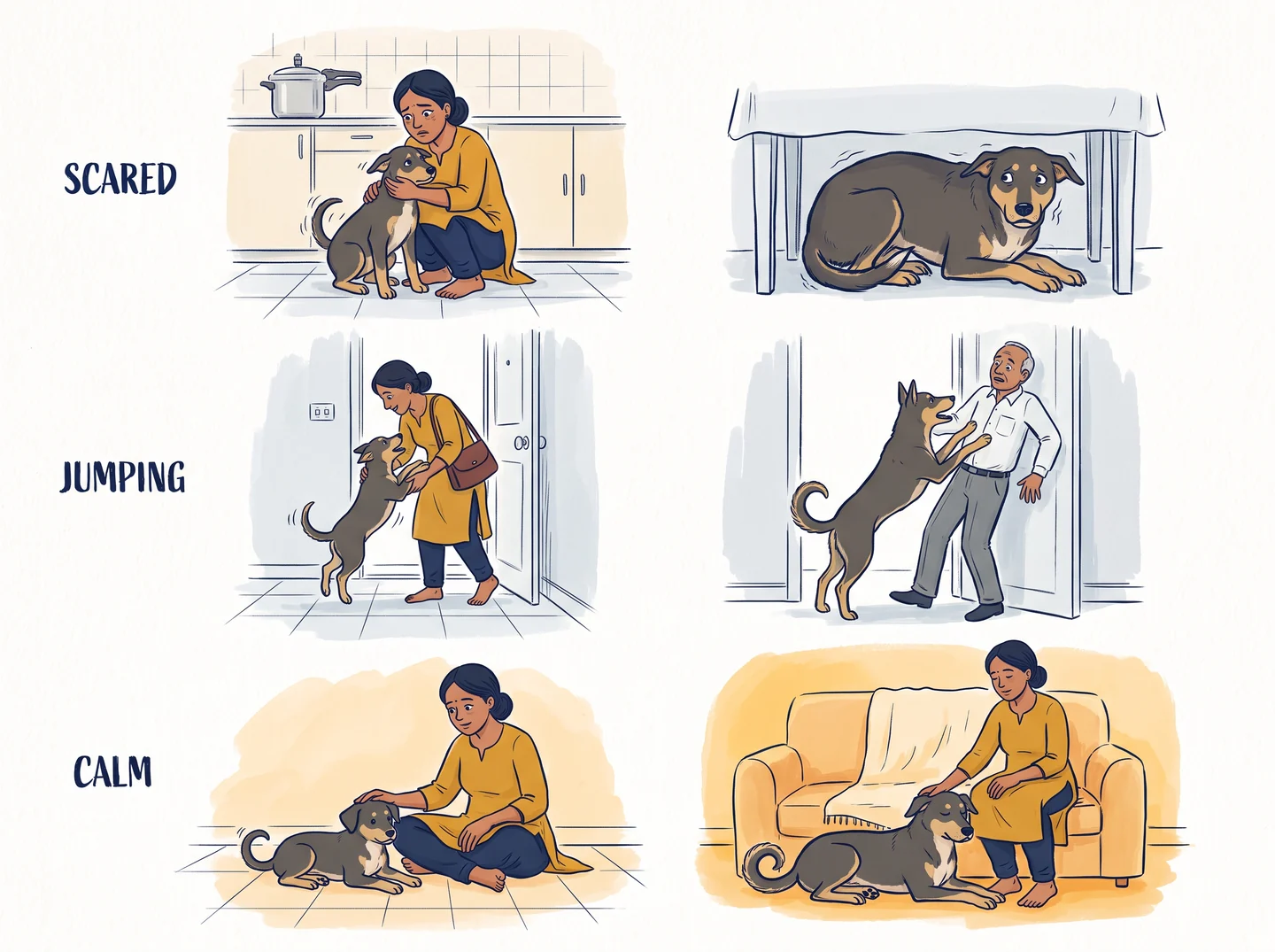
If I am scared and you hold me and speak softly, I can work out what is happening. I know I am being comforted so that I can come out of the fear. A dog cannot do that working out. He reads two simpler things: that he was scared and affection came, and what you were feeling while it came. When a puppy is frightened and we scoop him up with a worried face, and the baby talk comes out high and fast, which we do out of compassion, he learns that being afraid was right, and that this thing frightens even you. That is how we feed the fear. So when a puppy is scared, stay close and stay calm, keep your hands still and your voice low, and let him find his feet. The affection can come when he is steady. Do the opposite every day for a year and you have a dog who lives frightened, and a family who cannot understand why, because they have never done anything but love him.
The same with excitement. We treat excitement and happiness as the same emotion, and in the animal world they are not even close. Excitement is unstable energy. You will not see zebras jumping about with excitement in the wild, because the excited one is the one that gets eaten. A dog who is calm is a dog who is safe. When the puppy explodes at the door and we meet the explosion with affection, we are telling him, in the only language he reads, that this is how he should arrive.
And then he gets big, and the same jumping is no longer cute, and one day we meet it with frustration instead. Now the dog is confused, because the rule changed and nobody told him. Giving affection to the excitement was a mistake. Meeting it with frustration afterwards is a bigger one, because it was us who trained him to arrive that way. None of it was his fault.
The calm dog in the figure is the point of the figure. Affection is not the problem. Affection on calm is the best thing you can give a dog. The question is only ever what state he was in when it landed.
Aggression is a symptom
Of everything families brought to me, aggression was the one most misunderstood, because it is not an issue at all. It is a symptom.
If someone has malaria and a headache, nobody treats the headache. Yet with dogs, that is exactly what training does. It treats the growl. The growl is the headache.
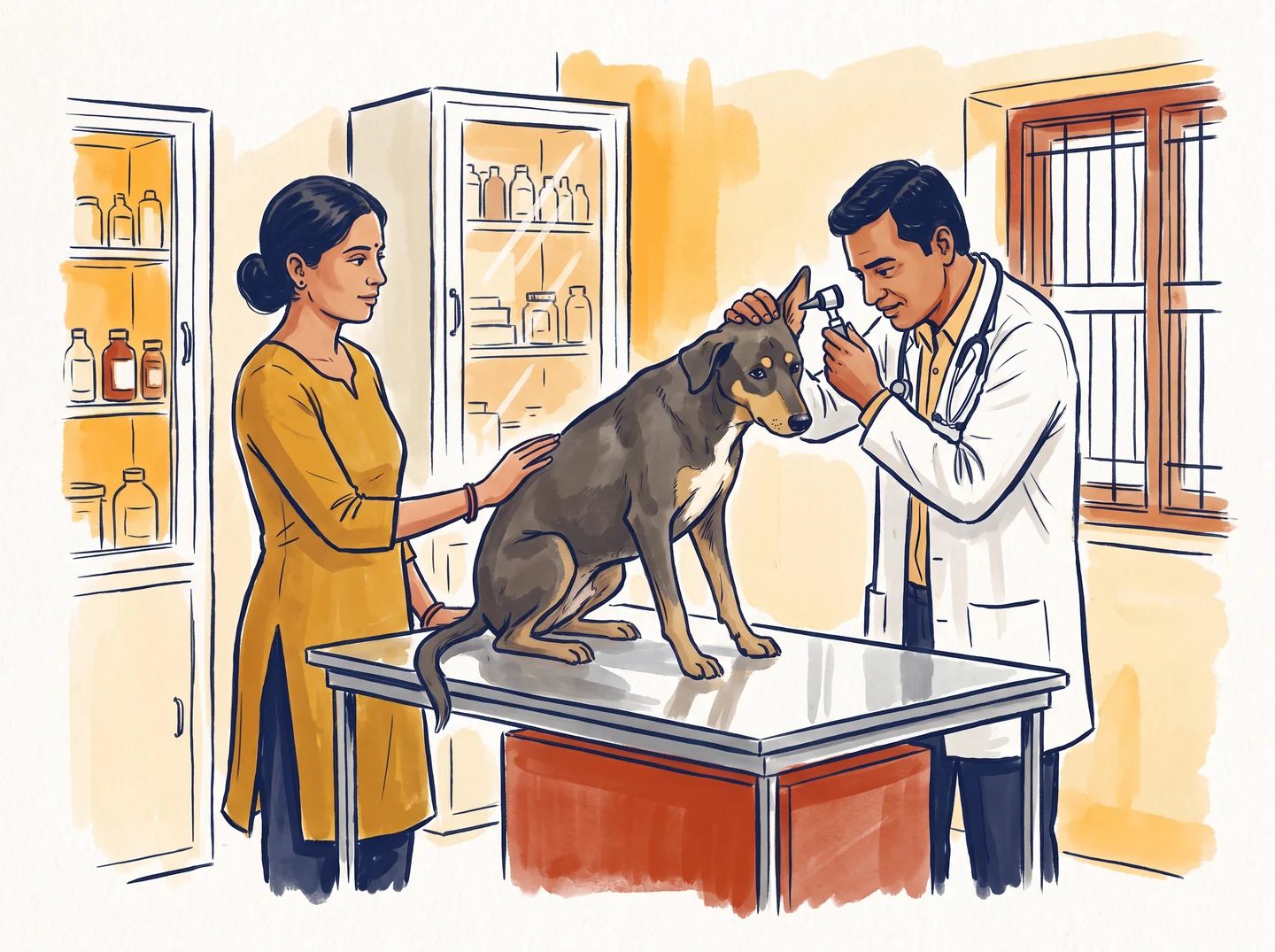
And sometimes the malaria is in his body. If the change in your dog came suddenly, or he growls when you touch one part of him, take him to the vet before you take him to this book. Pain makes a dog snap, and no routine fixes a sore ear.
 , open the figure larger
 , open the figure larger
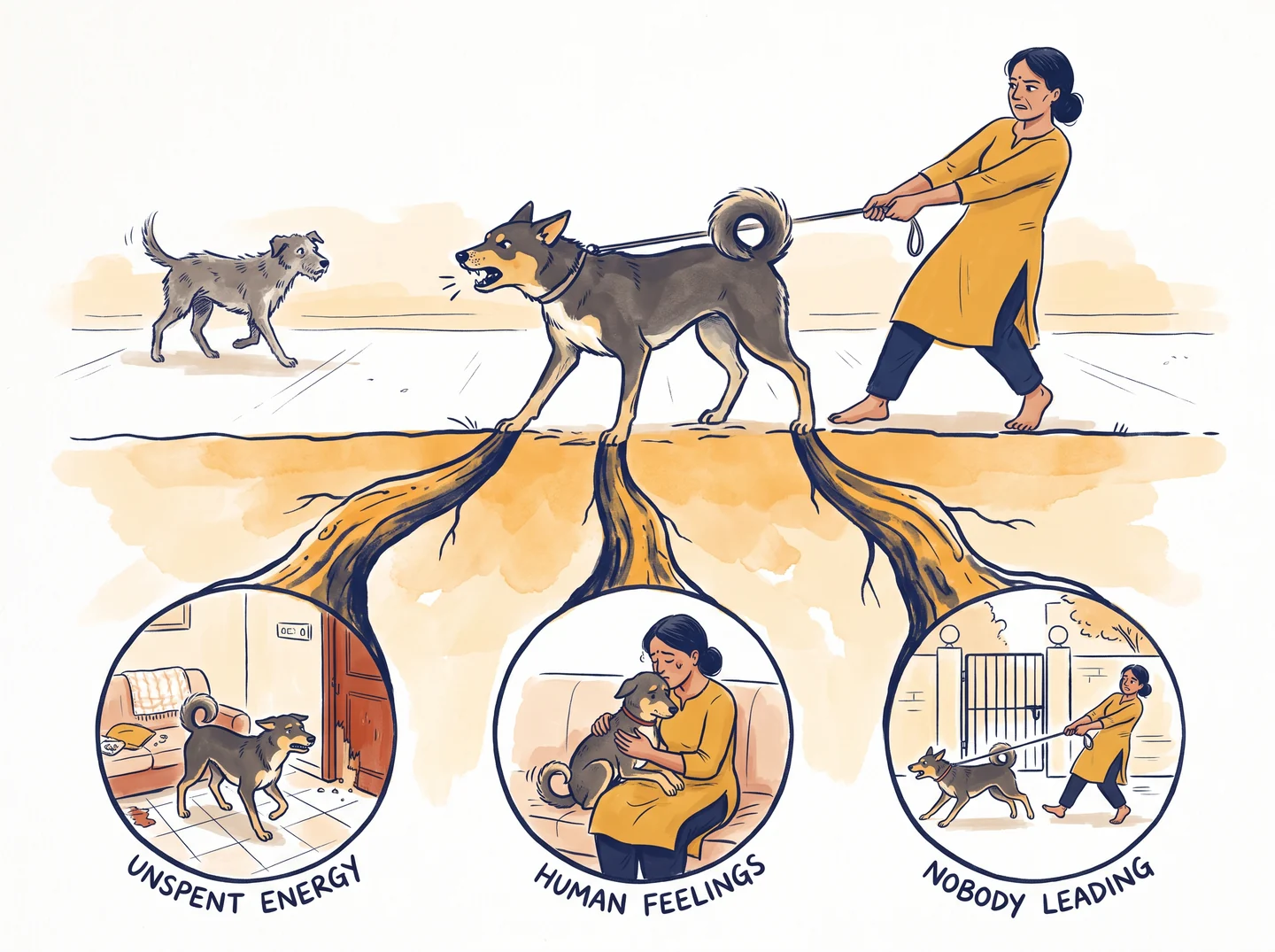
In my work I have met two kinds of aggression. One comes from dominance: a follower dog who was handed the leading because nobody else took it, and who became insecure, anxious and frustrated under a job he was never built for. He guards because he thinks he has to. The other comes from fear: a dog who was cornered one time too many, with no way out, who learned that the one thing that makes the frightening thing go away is to go for it. Both are terrible for the dog. Both grow from the same ground.
Under the ground line there are three roots, and I find at least one of them in every case.
Energy that was never spent. Our cities are now full of Huskies, Malinois, German Shepherds and Labradors living in flats. These are working lines, made to run and herd and guard for hours, and they get two short walks and a long day on the floor. Energy that has nowhere to go does not disappear. It becomes something.
Human feelings read onto a dog. Everything in the last section. Comfort for fear, affection for excitement, a bed and a sofa and a lap handed over without any structure, because that is how we would show love to a person. A dog is a different species. He is further from you than any person is. He needs to be understood as a dog, not loved as a small human.2
Nobody leading, so the dog does. In house after house I have seen the same thing. A pack does not run without a leader, and a dog will not leave the post empty. If the humans in the house are not leading, the dog takes it, and a dog made to follow who is forced to lead becomes frustrated, nervous and insecure. That is the state that turns into aggression the moment dominance enters the picture. Leadership, by the way, is not strictness. A strict, angry, shouting person is not a leader to a dog. He is a dictator, and a dog does not follow a dictator; he survives one. What a dog follows is calm and assertive energy, and chapter 05 is about where that comes from.
It was not his fault, and it is not yours
If your dog has an issue today, it is information. It is telling you something is missing, or something went wrong, in how he has been raised. And that is good news, because what a house made, a house can change. I have watched it change in Buddy's house, in Shine's, in Rio's, and in most of the houses I have worked in since.
So do not feel guilty about what you did not know. Nobody told you. Everyone told you to train the dog. And do not feel frustrated with the dog either, because the one thing I can promise you is that he did not plan any of this.
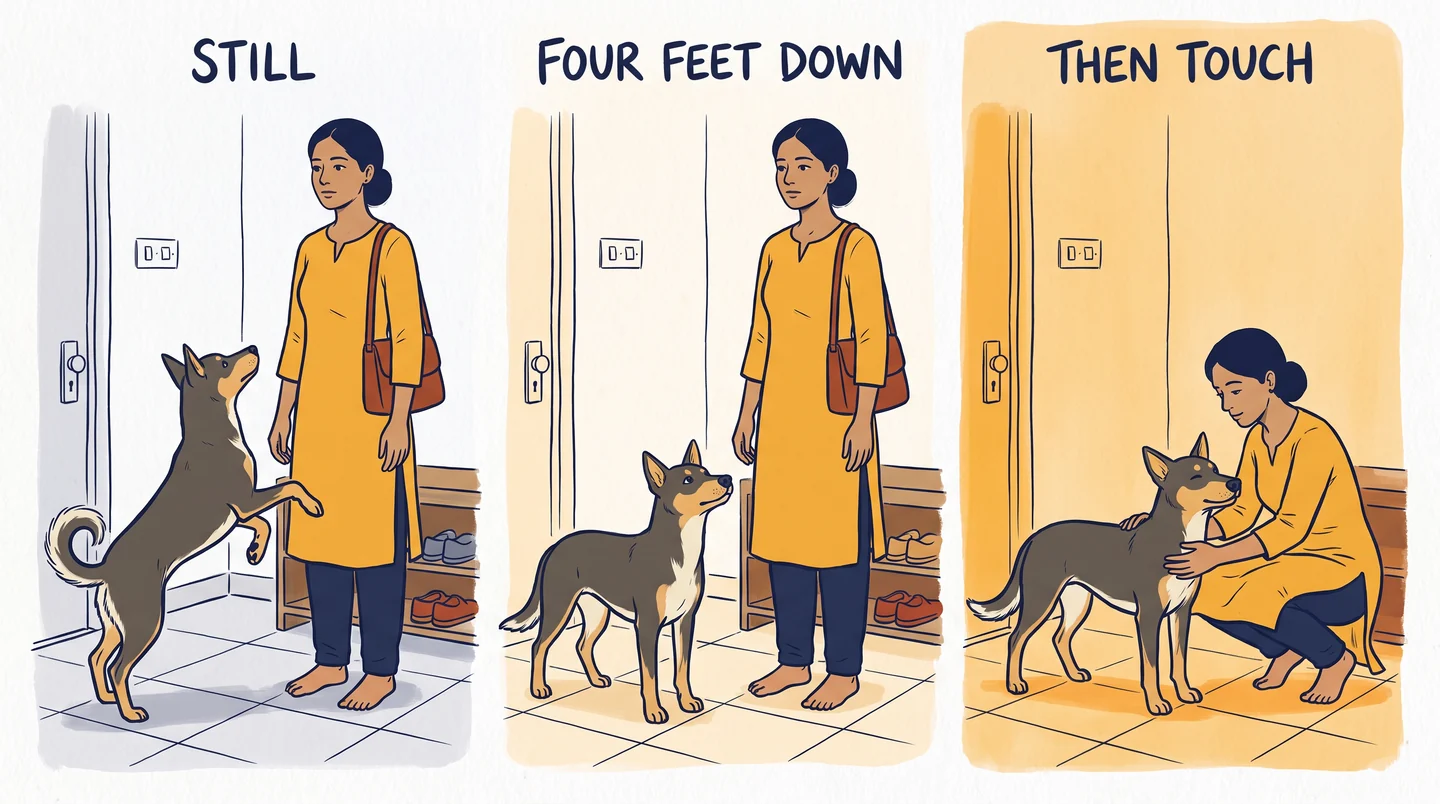
You can start tonight, with one small thing. When you come home, do not greet the excitement. No touch, no talk, until all four of his feet are on the floor and he is quiet. Then touch him, calmly. It is Rio's story the right way round, and it is the first piece of everything this book will ask of you.
 , open the figure larger
What I can tell you is what the rest of this book does. Part One is understanding: how a dog reads the world, the layers behind a behaviour, and where your own energy sits in all of it. Part Two is the rituals, the handful of things done every day, with respect, that meet a dog's needs so that he never has to go looking for a way to meet them himself. Part Three is what to do when something has already gone wrong.
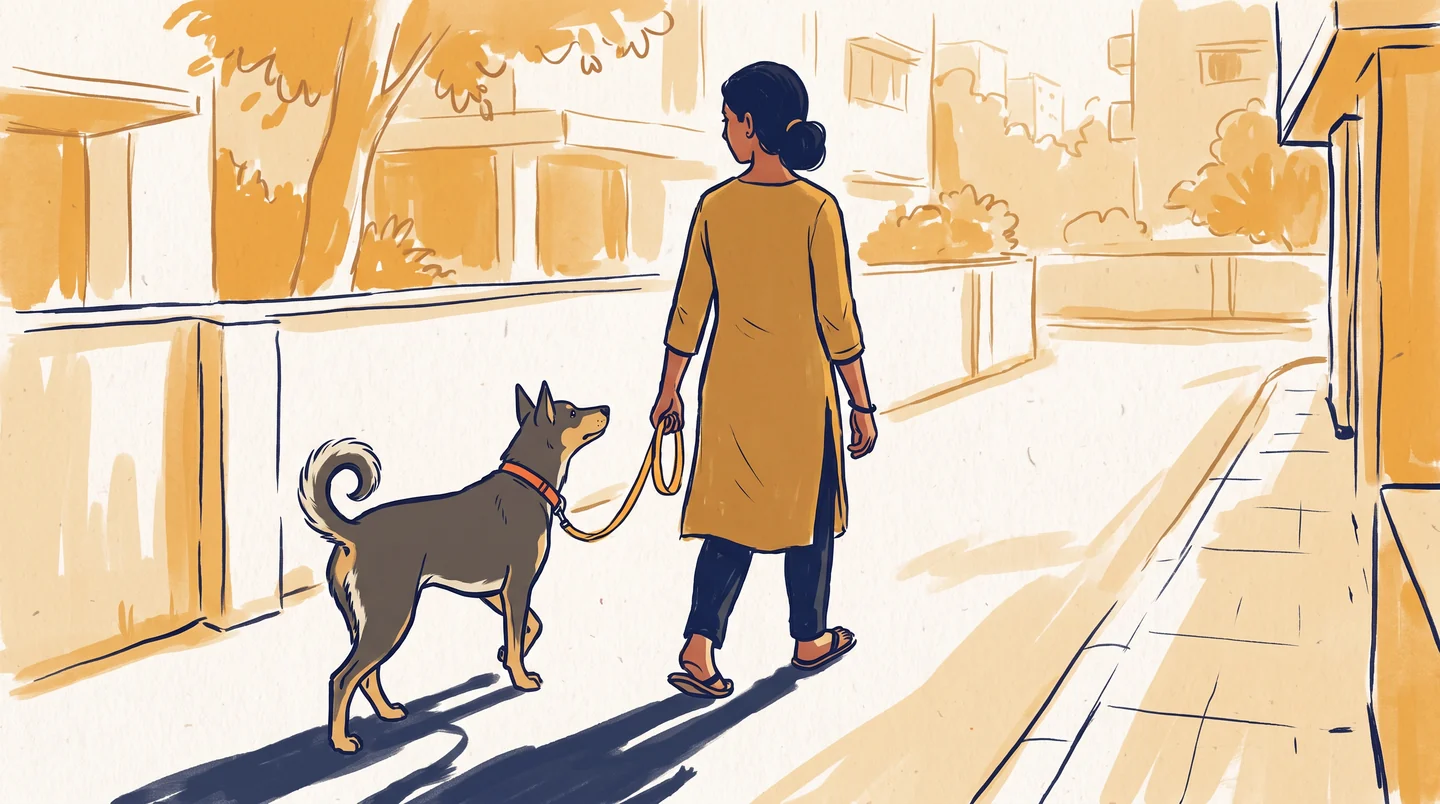
And one more thing, which the families in those three stories would tell you before I could. This is not only the dog's transformation. Nupur, and the family who worked on their own fear for Shine, and the people who stopped greeting Rio at the door the way they used to: every one of them changed first. The dog followed. He always does. That is what a follower is.
 , open the figure larger