


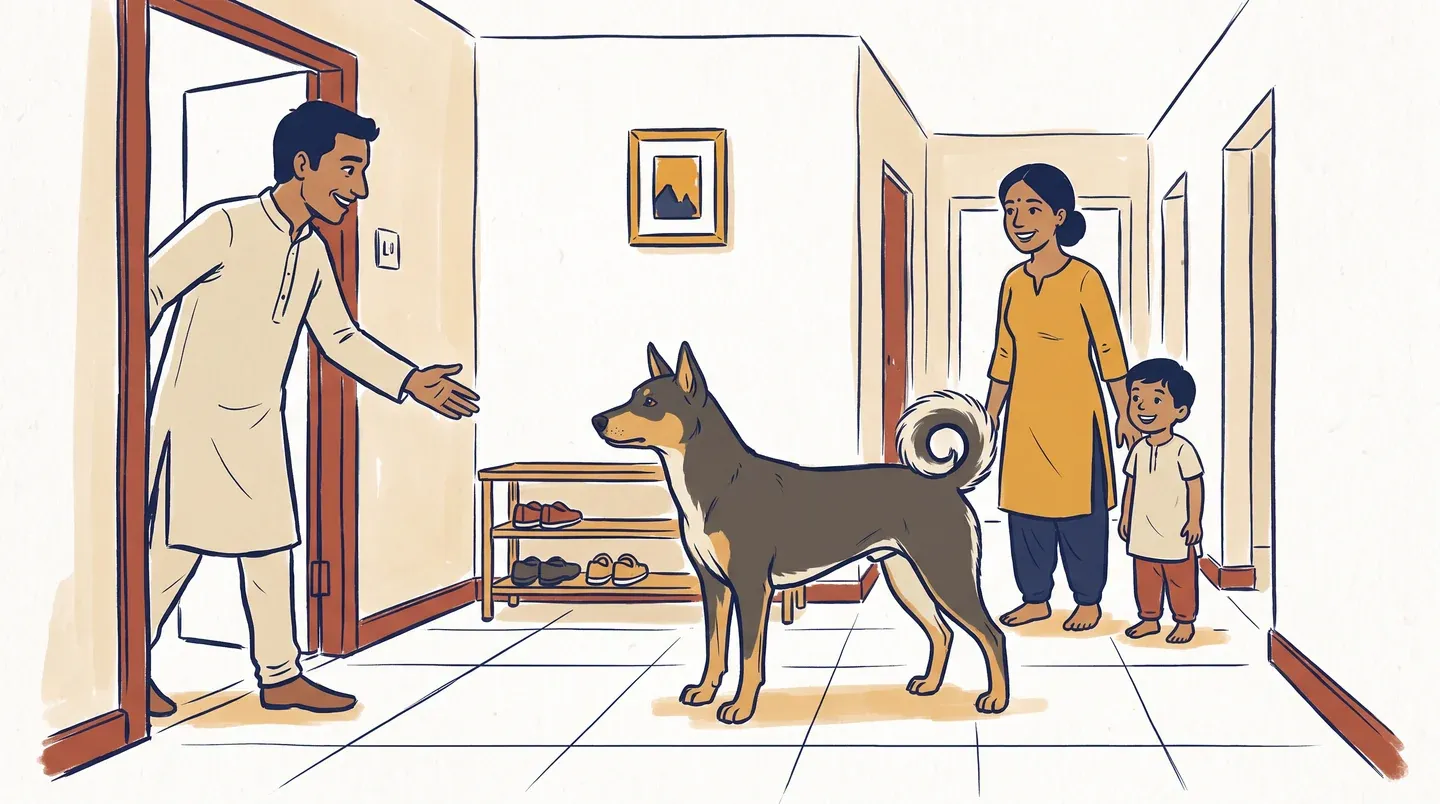
Families used to call me because of a sound. He barked at the guest. He growled at the child. He whined all night. By the time I reached the house I had usually heard the whole story of the sound, and nobody could tell me what his tail was doing.
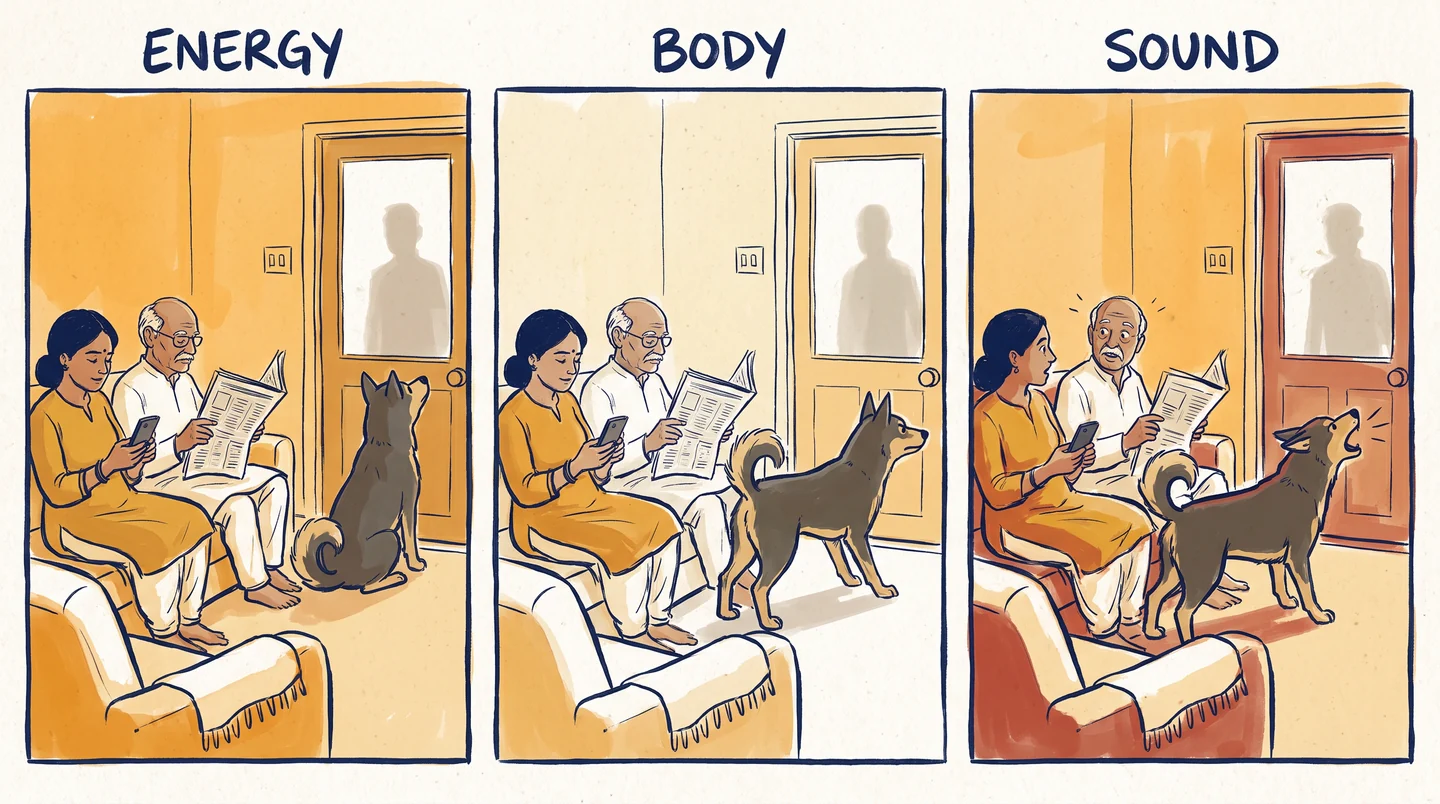
That is not their fault. A sound is the part of a dog's language we notice first. It is the part he uses last. He talks in energy first, which we met two chapters ago, and then in his body, and sound comes at the end, when the first two have been ignored for a while.1 Watch two dogs who live together. They look at each other, bring the body forward, step in front of each other, and almost nothing is said out loud. In my experience, by the time he barks he has been saying it for some time, and he has been saying it in a language that was in front of you the whole time.
 , open the figure larger
This chapter is the first of three skills, and it is the one the other two rest on. You cannot have a conversation with someone whose face you cannot read. So before I teach you what to say to him, I want to teach you to see him.
The words you need first
You cannot read a thing you have no words for. So here is the vocabulary, and it is short.
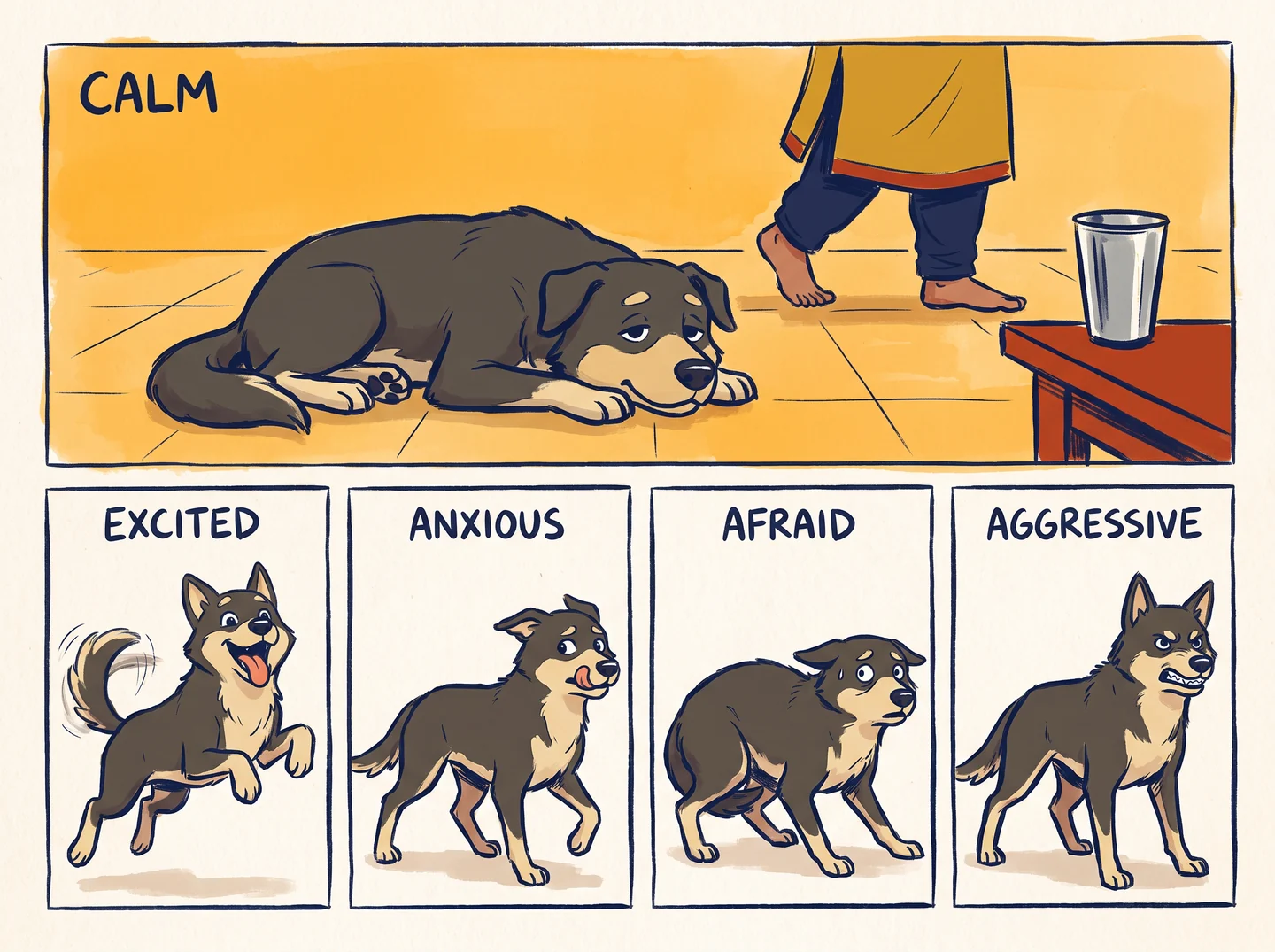
A dog has one natural state, and it is calm. I say calm submissive, because the dog in that state is not pushing on anything: not on you, not on the door, not on the other dog. Every puppy is born in it. It is also his happy state, which surprises people, because we have been taught that a happy dog is a bouncing one. A calm dog lying with his chin on his paws while the house goes on around him is a dog who is fine.
Everything else is a state he has gone into, and will come out of. Excited. Anxious. Nervous, insecure, afraid, which run into each other. Frustrated. Territorial, or dominant, which is a dog who has decided that something is his. And aggressive, which is never where he started and always where one of the others ends up if it is fed long enough. I call these symptoms, not issues, because each of them is what a need looks like when it has not been met. The issue is underneath. The state is what you can see.
 , open the figure larger
Why does naming it matter so much? Because of one rule from chapter 01 that I will keep repeating until it is yours: whenever a dog receives affection, the state of mind he is in gets nurtured. Pet an excited dog and you have raised excitement. With a frightened dog it is quieter than that. Your calm presence helps him. Your worry does not, and a worried hand stroking a trembling dog is mostly giving him your worry. So the first skill, before your hand goes on him, is to look at him and name his state, and then to name yours. If you cannot name his, do not touch him yet. Stay near him, keep your hands still, breathe, and let your calm be the comfort.
And notice a word families misuse. Hyper. In chapter 03 it is an energy, the dog who needs a job all day, and a few dogs really are that dog. But most dogs called hyper are not that dog. They are in a state, kept there most of the day by the house, and in my experience they come out of it once the house stops feeding it.
 The rest of the Foundation
 The Six Rituals
 When Something Is Wrong