

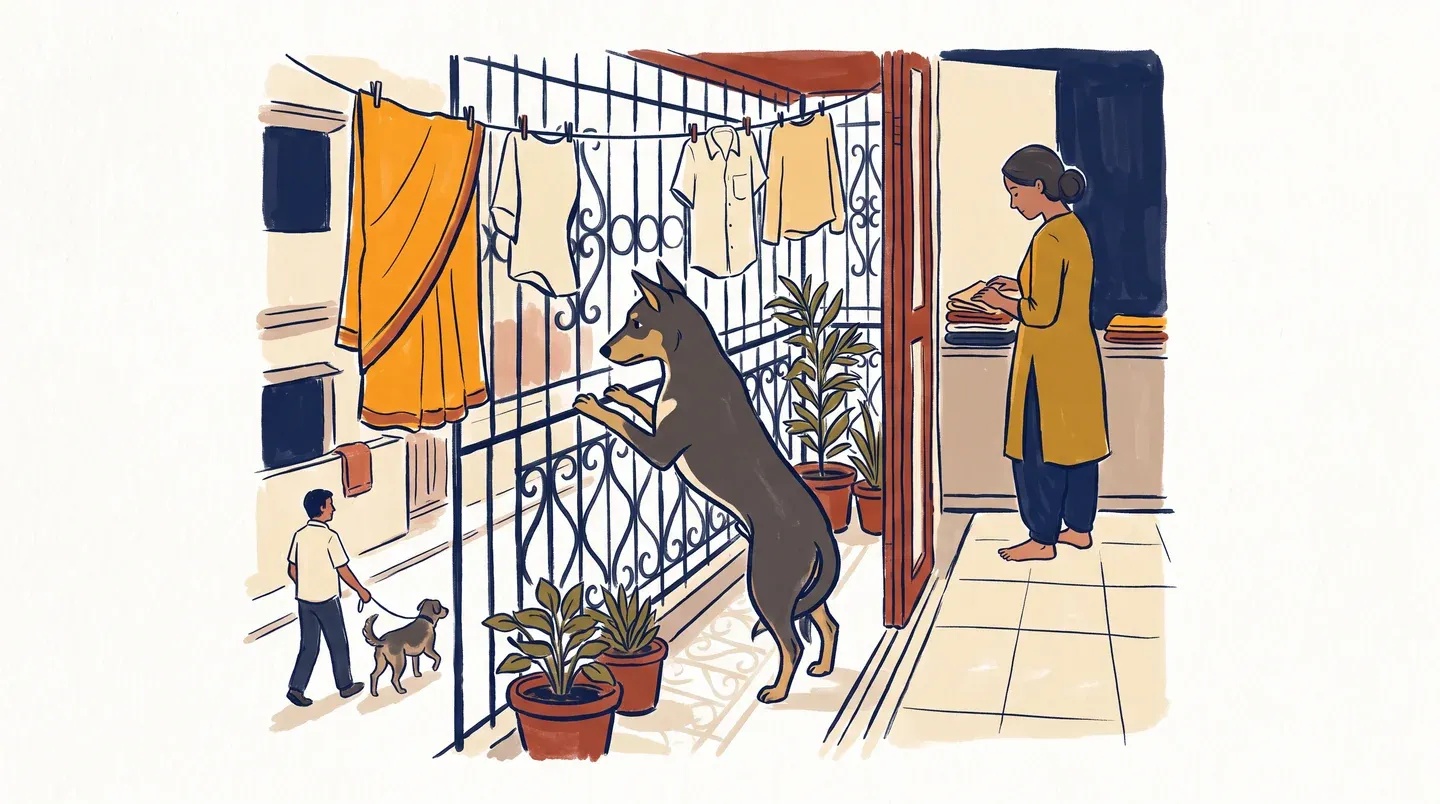
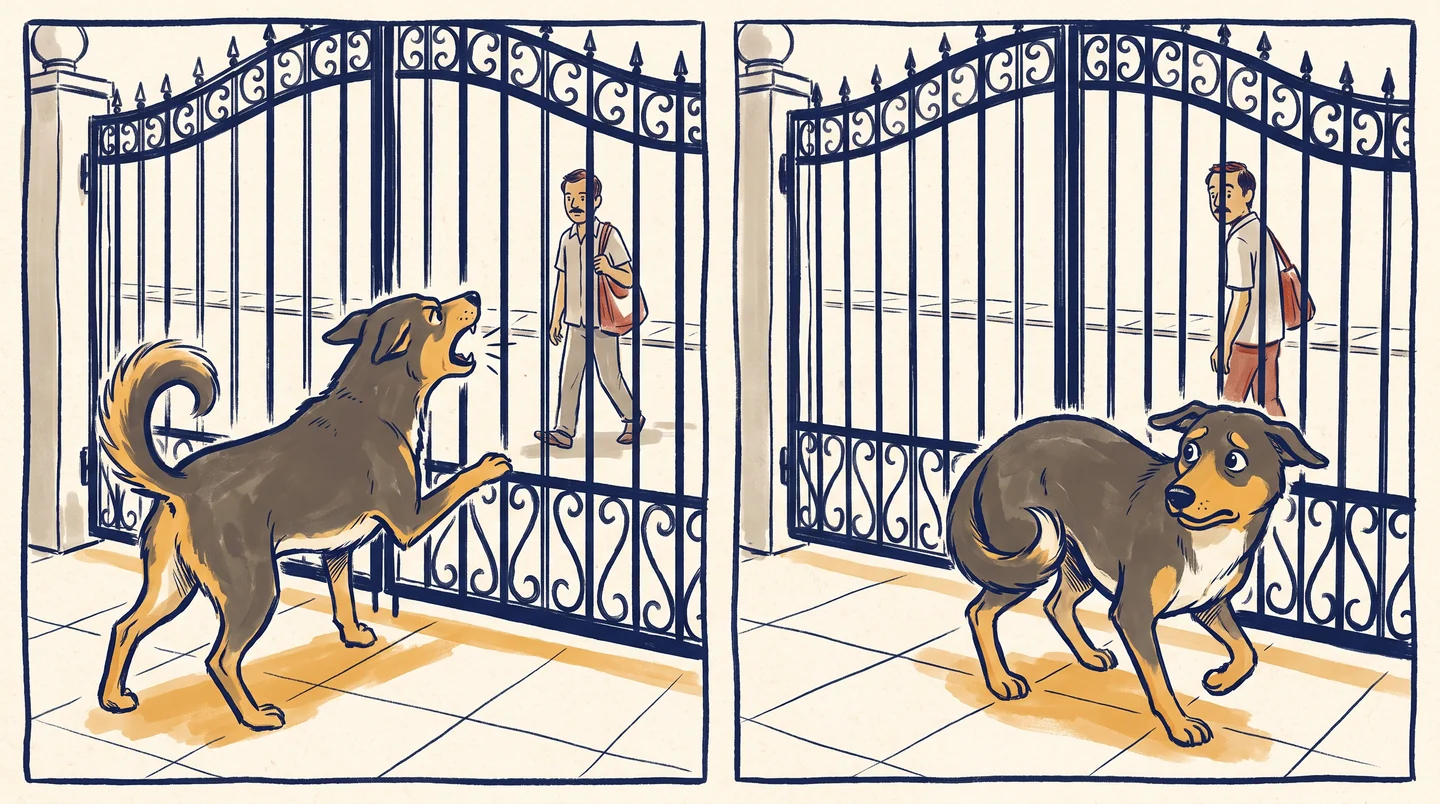
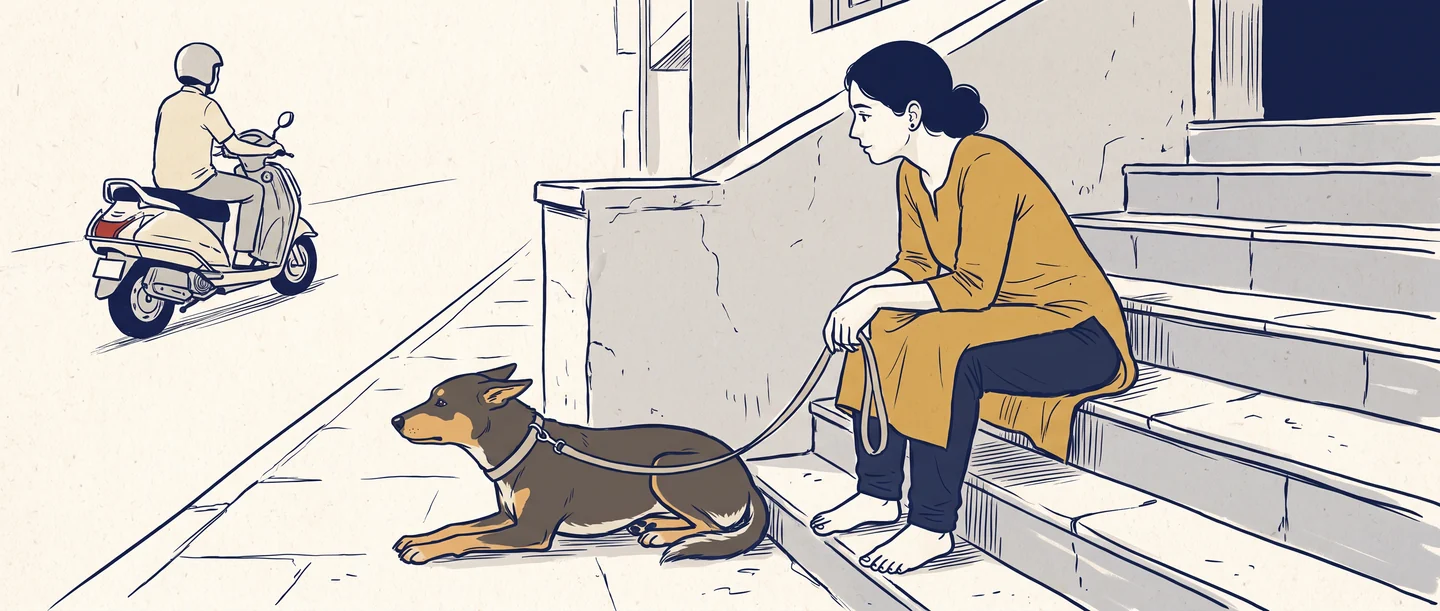
You know this dog. Maybe he lives with you. He sits on the balcony all afternoon, and every dog that goes by below gets barked at, and every stranger. When somebody comes to the gate he charges it. And then, sometimes, at the very moment you think he is about to go for someone, he turns and backs away, and you see that he is frightened.
Families find this confusing. Is he brave or is he scared? He is both. There are two things in him at the same time. One is territory: he has decided that this house, this gate, this balcony is his, and that it is his job to guard it. The other is insecurity: he is not at all sure he is able to. So he charges, because the place is his, and he backs off, because he is afraid. In my experience this is the dog who bites the most, and that is why it is so important to work with him, and to understand him before you do.
 , open the figure larger
Families end up frustrated with this dog. The neighbours complain, nobody can come over without worry, and slowly the relationship goes bad. It is not his fault. It is a gap in our understanding. Many dogs are born territorial, and many are born sensitive. When nobody understands that, the territory grows and the sensitivity turns into insecurity, and you get the dog on the balcony. Understood, both can be tuned down.
First, is it territory?
Before you do anything, make sure it is territory. Not every dog with his tail up and his hackles up is territorial.
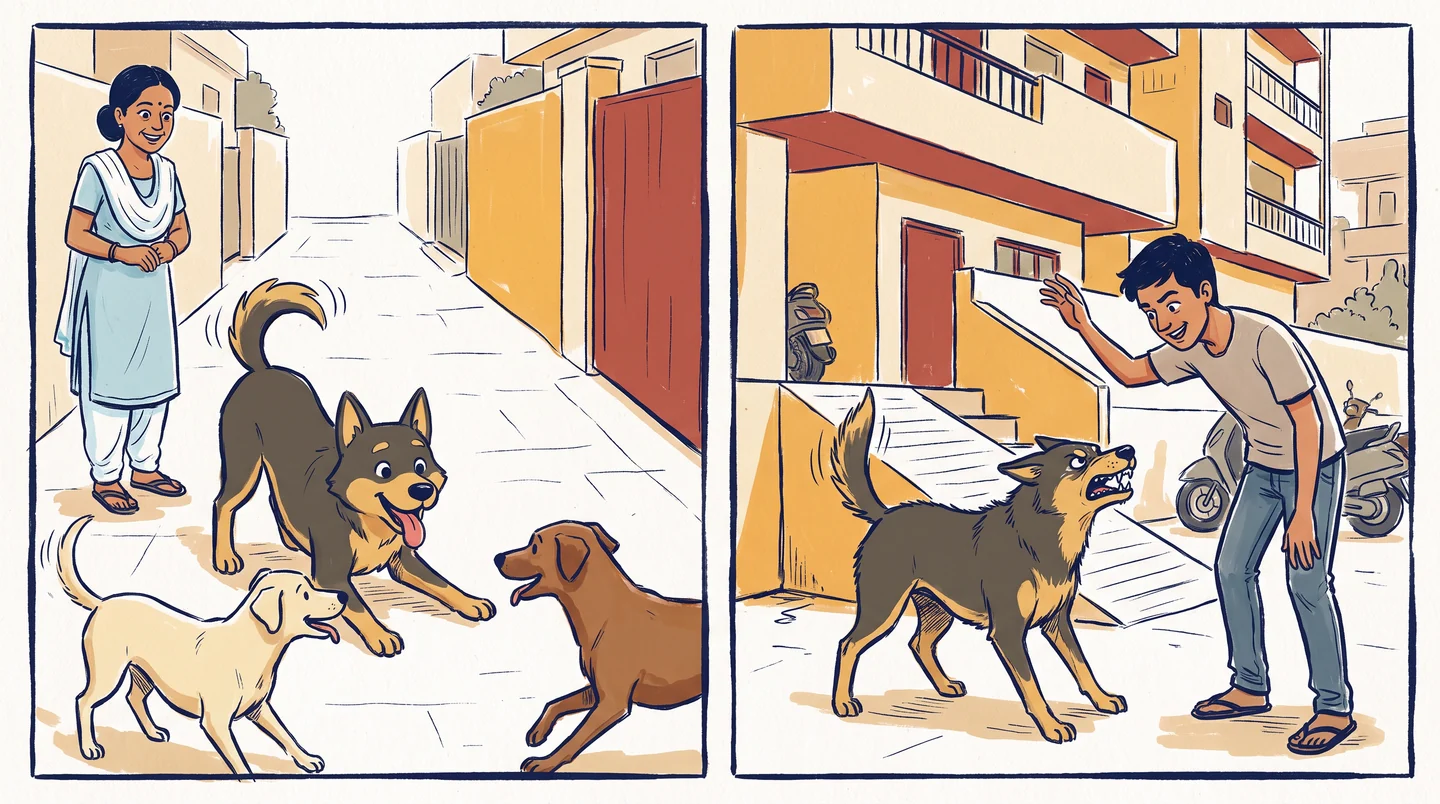
In our course, the group once watched a video together. A dog was being walked back towards his building, and as he came near the ramp he changed completely. Tail up, hackles up, growling, snapping at his own leash, going for one man. Everybody in the group had an answer straight away. Territorial. He is nearing his house, and he is guarding it.
I could not make sense of it. So we looked at the rest of the account, every video, and the story turned around.
With other dogs he was a sweet, happy-go-lucky dog. He played. With other people he was fine. He had a problem with exactly one person, the man in the videos, and the videos showed why. The man teased him. He loomed over him, raised his hand over him, walked at him, made him growl for the camera, and from the look of it had been doing that since the dog was a puppy. The dog had no wish to bite him. Some dogs are like that: biting a person is their very last option and they will not take it, so they put all of it on something else, the leash, a pillow, the door. But he was frustrated with that one man right through.1
 , open the figure larger
That dog is not territorial, and he is not insecure. Treat him as territorial and you will ruin him. Nothing needed to be done to him at all. Something needed to be done about the man.
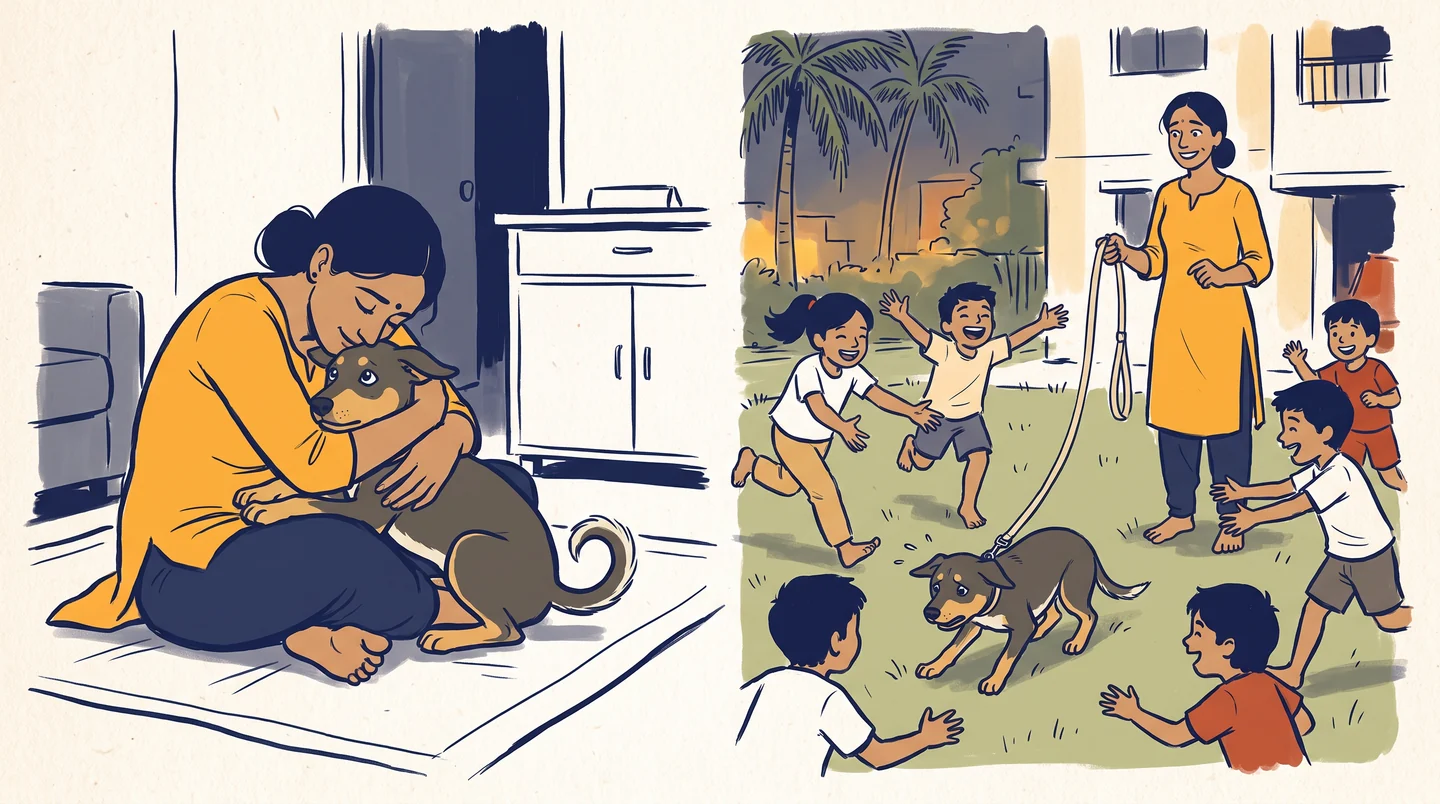
You will not see a case that extreme at home, but you will see smaller ones all the time, made by love rather than teasing. A dog who growls when you walk towards him while he is lying down. A dog who snaps when someone bends over him. So before you call it territory, ask about his puppyhood. Did somebody keep lying down next to him while he slept, or hugging him tight, or picking him up and kissing his face? Did somebody step on him in the dark once? Did the children in the society, the housing complex you live in, all run at him when he was small while we stood there too embarrassed to say no? Did anyone ever hit him? Each of these leaves a dog touchy about movement towards him, and it looks a lot like guarding.
 , open the figure larger
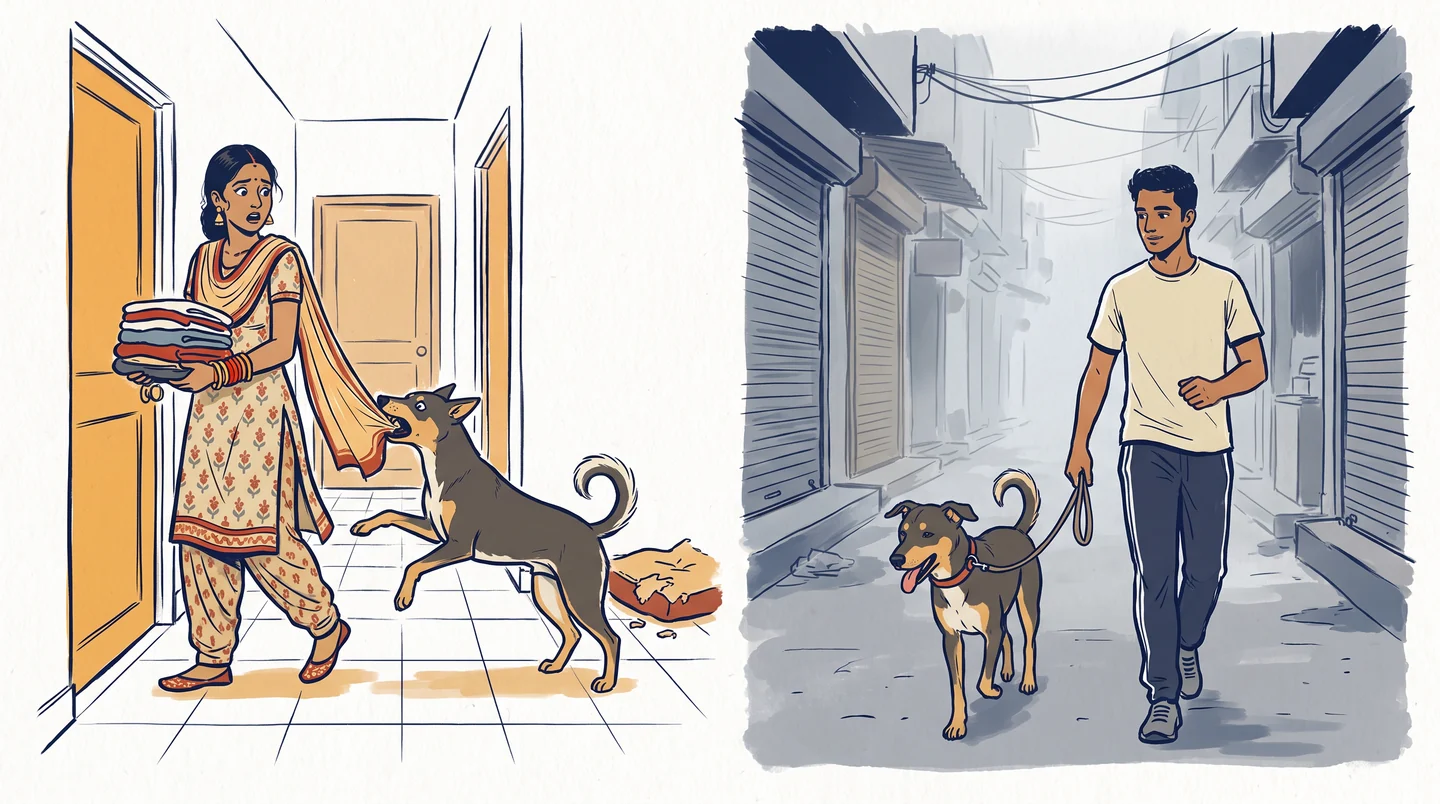
And sometimes it is only that he has too much energy in him. One of our students brought us a dog who would jump at the new wife's legs as she went towards the bedroom, and snap at the door, the sofa, whoever was nearby. He had bitten nearly everyone in that house, he guarded his food, and a small child there laughed when he growled. The family was sure it was territory. He was getting ten or fifteen minutes of walking a day. He was frustrated, and a new person with bangles and swaying clothes, carrying things out of the room, was more than he could put up with. The family started an hour's walk morning and evening and gave him a corner. That is where the work began. Until it is done, a child in a house like that stays away from the dog and is never left with him.
 , open the figure larger
So investigate before you decide. The moment you are sure you have worked a dog out from one video or one evening, your mind closes, and nothing new comes in after that. And if it started suddenly, in a dog who used to be easy, take him to the vet first. Pain makes a dog guard.
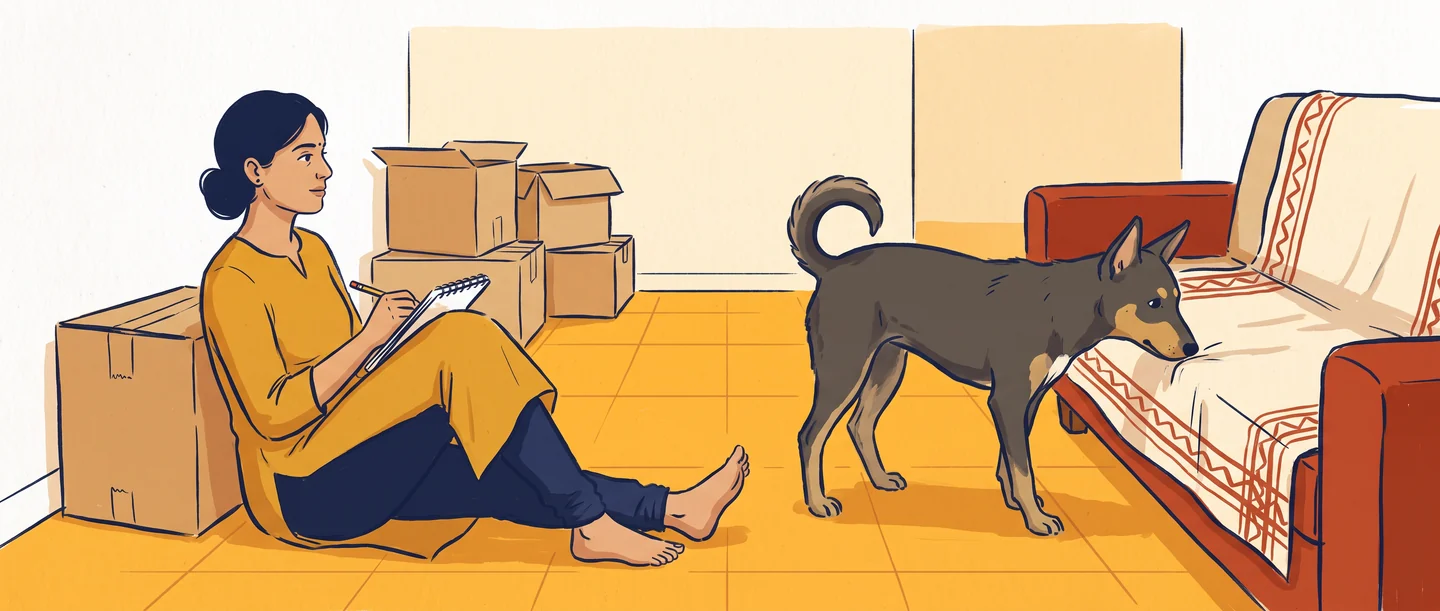 The rest of the Foundation
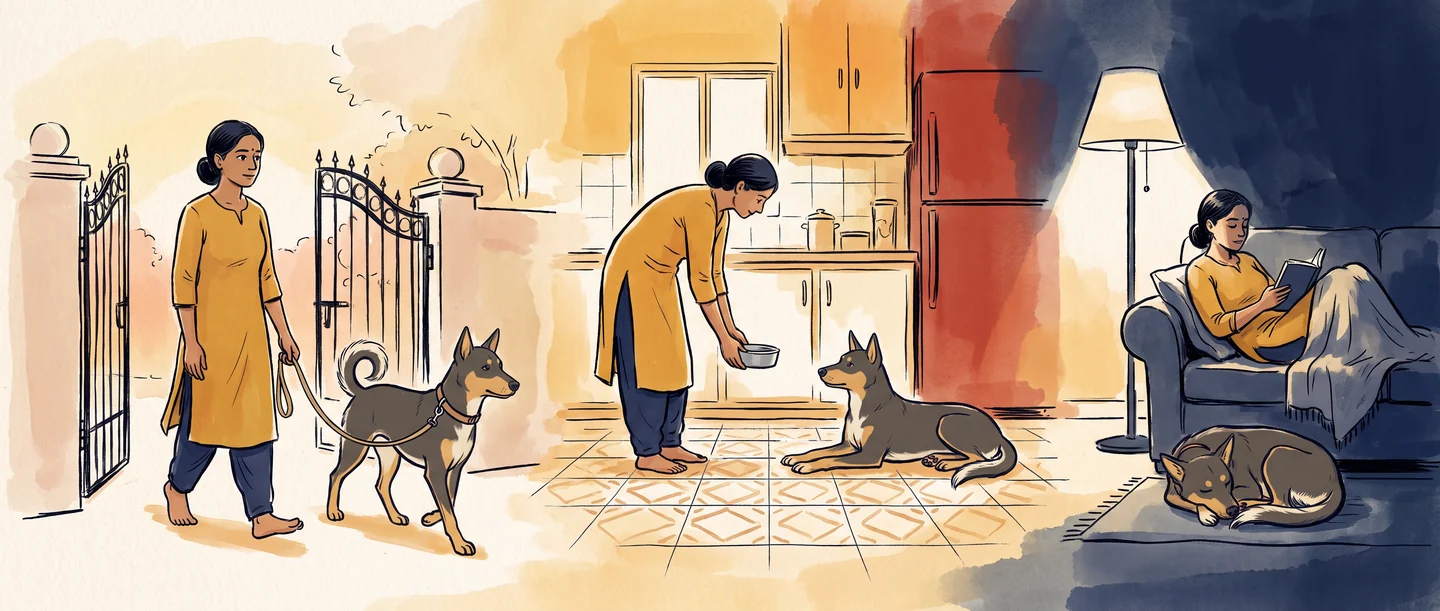 The Six Rituals
 When Something Is Wrong