This is the story I tell my students about where dogs came from. Nobody wrote it down, so take it as a story, not a record.
For a very long time we were not at the top of anything. We had no claws and no speed, and the big cats hunted us, some with teeth shaped for pulling a skull apart. Much later, in the Ice Age, we were hunters ourselves, but our kills were stolen, and someone stayed awake every night to watch.
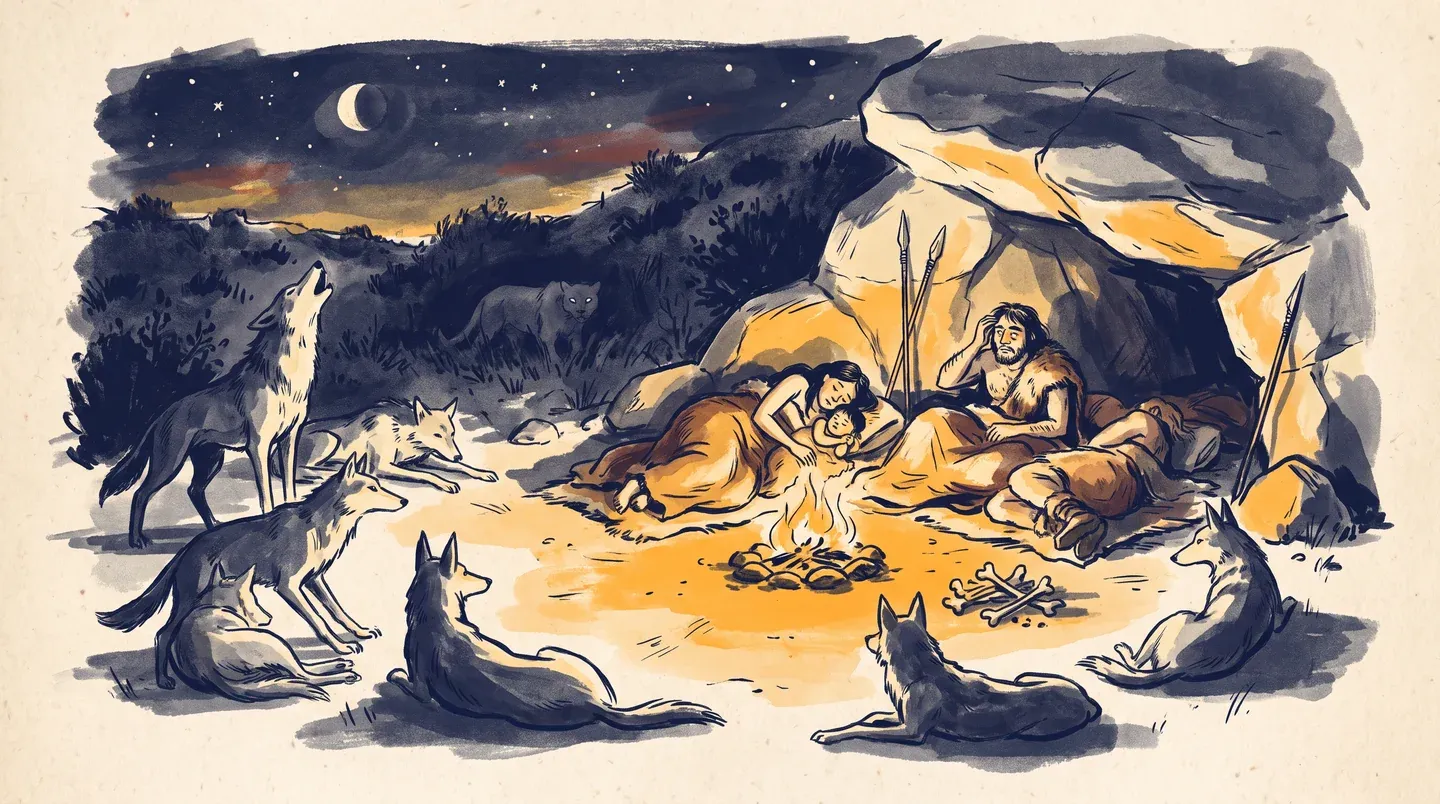
Then some wolves came. Not the boldest ones. The quieter, more submissive wolves, who started living on what we threw out of the camp, the bones and the leftovers. In the hardest winters there was meat we could not eat, and they could. They made a loose ring around the edge of where we slept, and when a predator came in the dark, the ring howled. The camp woke. For the first time, we had a warning. That ring of wolves worked for us, and in return we fed it, and over a very long time we started choosing the gentlest pups and breeding them, and every dog you have ever met, from a Pomeranian to a Rottweiler, came out of that.
I tell you this first because it is the frame for everything else. Inside your dog there is a wolf, and the wolf's job was to work and to watch, and he was paid in food. He has been living on that arrangement for longer than we have had cities. We have forgotten it. He has not.
He has his own psychology
Every animal has a psychology of its own. A bird's life has flying in it the way a dog's life has walking in it. Nobody argues with the bird about this. But with the dog, who lives in our house and answers to a name, we quietly decide that his mind must work like ours, and almost every behaviour problem I have ever seen starts in that decision. A dog is further from you than any person is. When everyone in the house uses a human's psychology on him, he ends up insecure and nervous, because nobody is meeting him as what he is.
The whole model rests on turning that around. Not "what is my dog thinking?" He is not thinking in the way you mean. "What is my dog communicating to me?" That question has answers, and the rest of this chapter is the beginning of them.
He does not live in yesterday
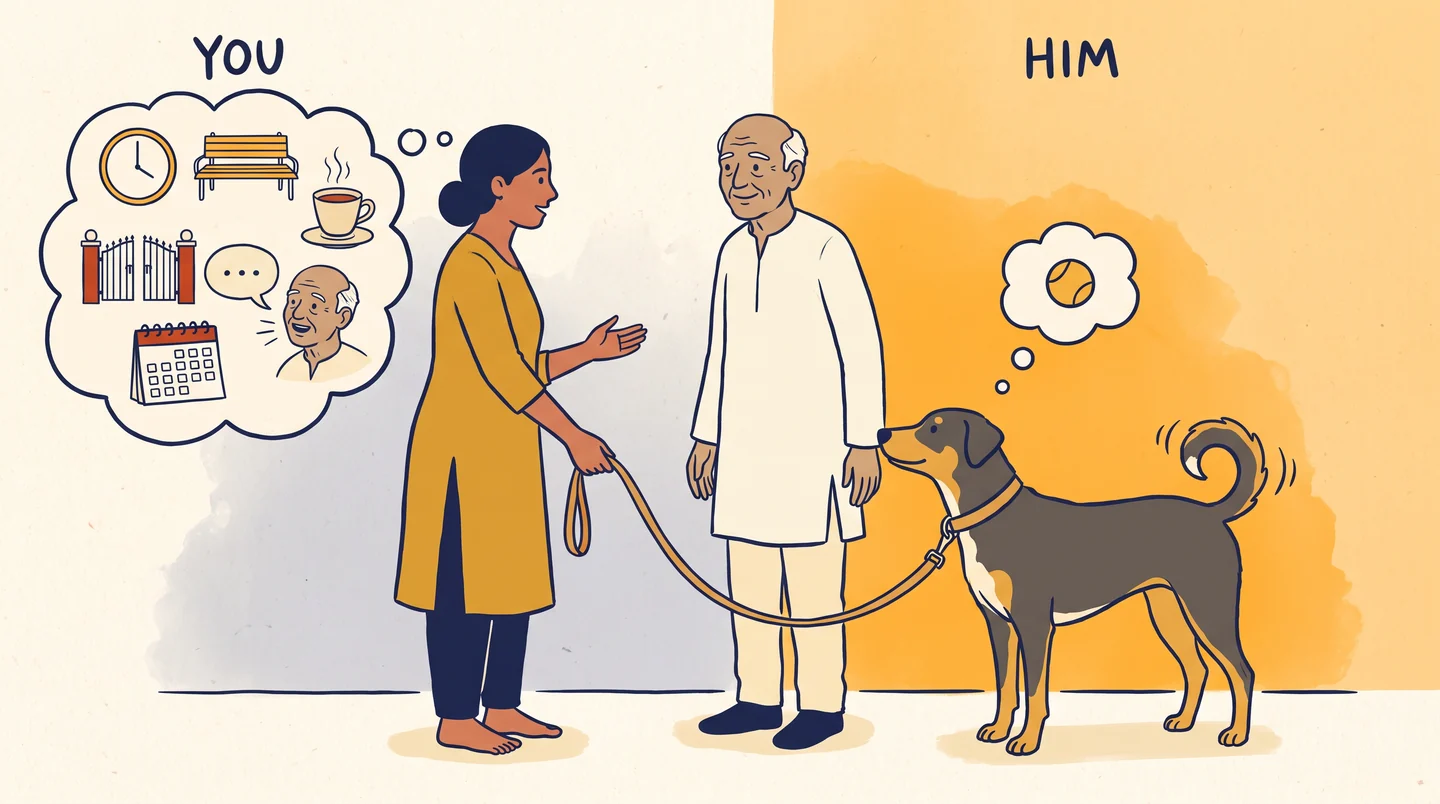
Everybody says a dog lives in the moment. Very few people know what that means, so let me say it plainly. It is not that he chooses to. The human mind can travel into the past and the future. We replay what someone said ten years ago, we worry about next week, and that gift is also our curse. As far as anyone can tell, his mind does not do that, not the way ours does, and he is happier for it.
I used to say a dog has no memory, only association. I say it differently now. He remembers more than people think: in one study, dogs repeated something they had watched a person do an hour earlier, without knowing they would be asked. What nobody has shown is a dog thinking, this happened to me once, the way we do, and the research on that is still going on. What runs his life is association.1 If I meet you today and again in a month, I will remember the date, where we were, and what we talked about. He carries this: this scent, this energy, means play. Or threat. Or calm. When your family tells you he went mad with joy because you were away for two months, I smile, because it is a sweet story and only half of what happened. Some of that joy may be the time. Much of it is you. He always met you with excitement, because that is the association you built, and this time you walked in carrying two months of your own excitement, and he matched it.
 , open the figure larger
Now see what this does to the way we work. A family tells me their dog attacked another dog, and in their minds he is now a dog who attacks dogs. They carry the story of that day. He carries an association: a dog of that kind appears, and this fires in me. He is not planning it on the walk. He is not thinking about the last one. He is triggered, and that is all.
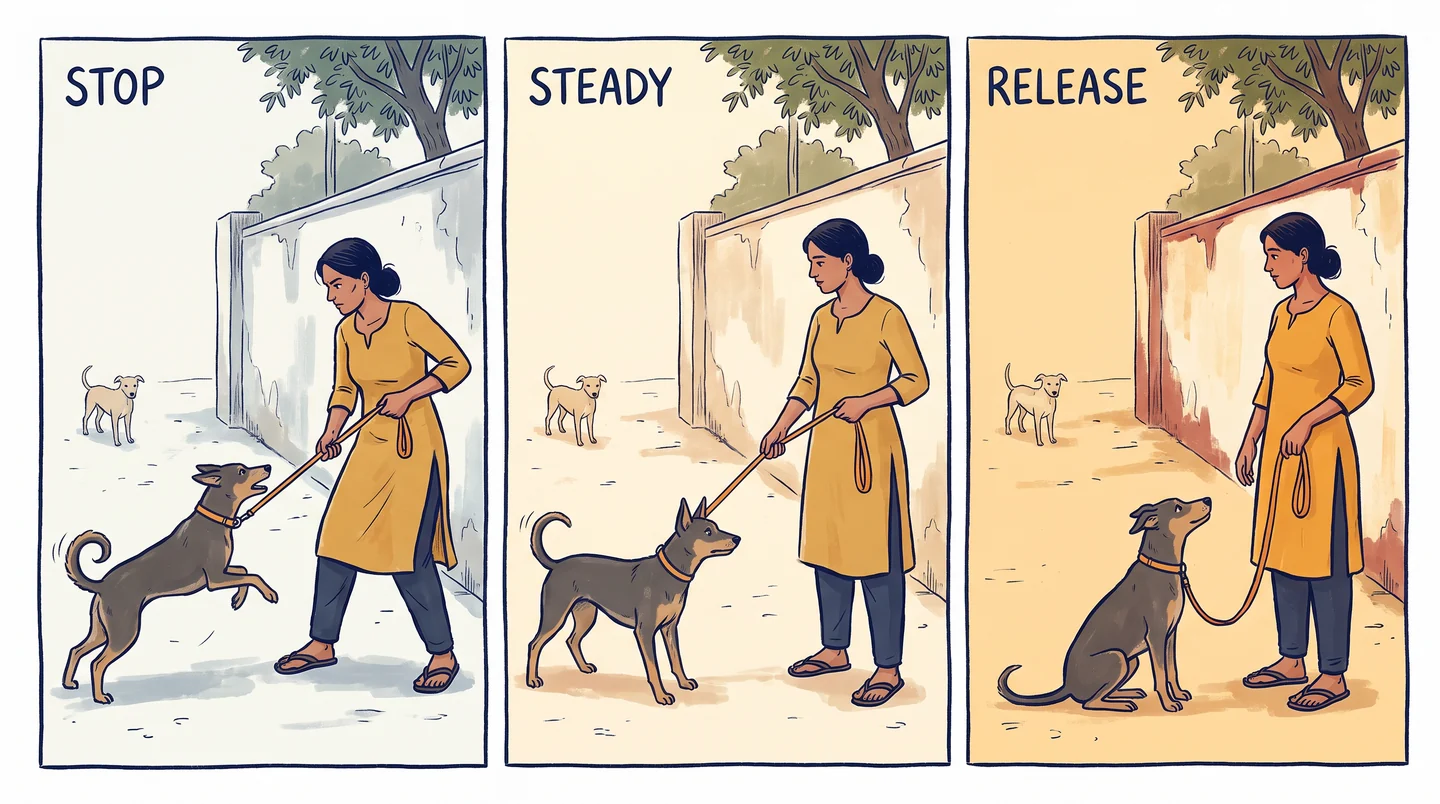
So I do not work on the history. I work on the association, and I do it by stopping him. He lunges, I stop him: no, you cannot. My hands stay on the leash, nowhere near his head, because a dog stopped mid-lunge can turn and bite whatever is closest. No jerk. I bring him back with steady tension, and when he settles, I release it. If he reacts, I let him react, then with that tension I bring him round again and have him sit. There is no nudging. And I work far enough from the other dog that he can still hear me. He lunges again, I stop him again. I will do it a hundred times if the association is a hundred deep, because every time I stop him calmly and he does not get to finish the act, a new meaning is written over the old one.
 , open the figure larger
Know this before your first bad day: the old one does not vanish. An association goes in with a feeling, the stronger the feeling the deeper it goes, and fear goes very deep. The new one is young. On a stressful day, or in a new place, the old one can fire again, and he lunges the way he did in the first week. That is not the method failing. It is how association works. You stop him again, calmly, and the new one goes a little deeper. Some of the families I worked with saw a change in the first session. Most needed weeks, and a few bad days along the way. I am not training a trick. I am changing what a sight means.
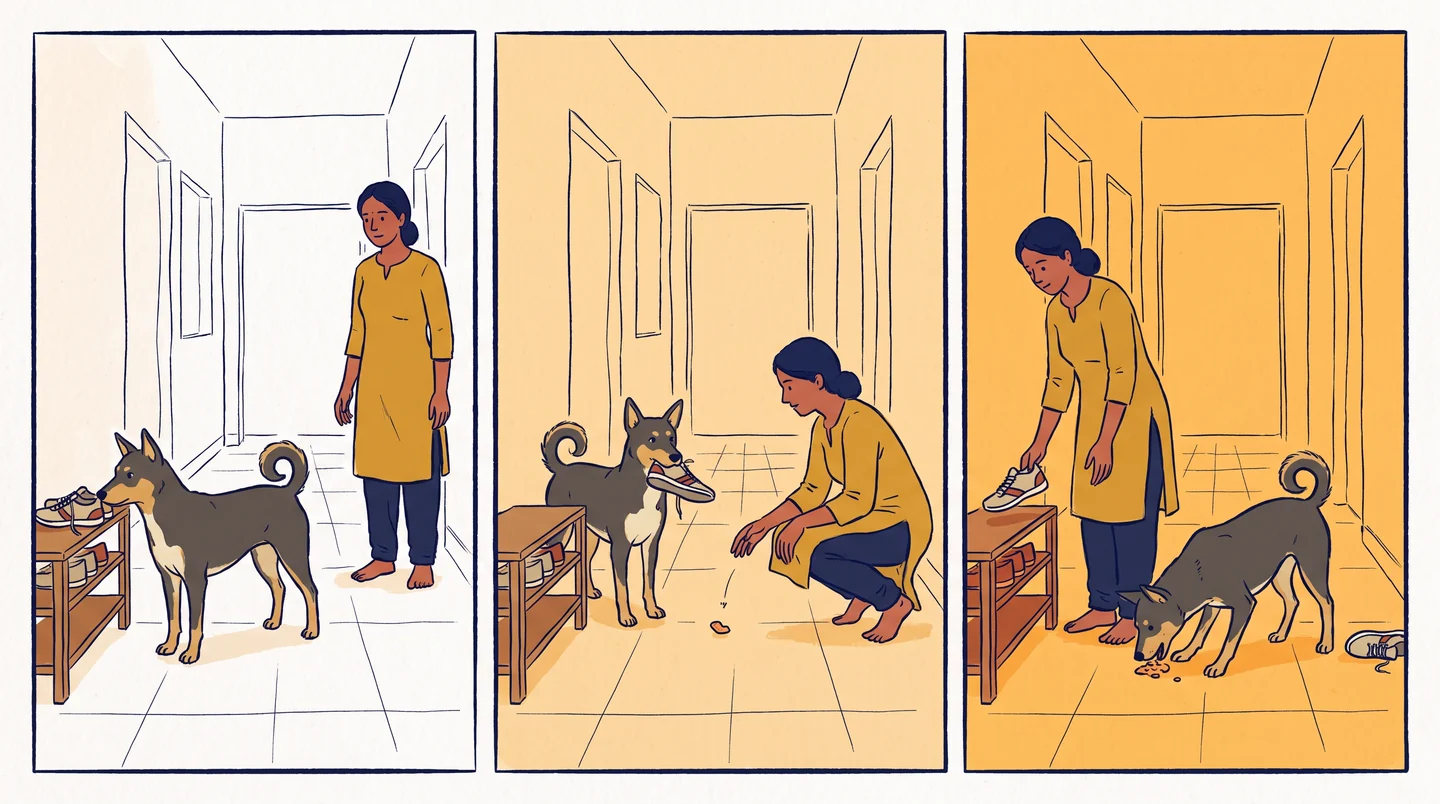
The same with the dog who grabs a shoe and runs, so that you chase him. He has an association: shoe, grab, run, and my human plays. Most people solve this by hiding the shoes. That changes nothing in him. Leave the shoe where it is, and when he goes for it, tell him no, as many times as it takes. If it is already in his mouth, do not chase him and do not pull it out, because snatching from his mouth is how snapping starts. Toss a piece of his food a little way off and put the shoe back while he eats. If he stiffens or growls as you come near, that is guarding, not a game: keep your hands away, step back, and get help. You are not managing a dog. You are writing a new meaning onto a shoe.
 , open the figure larger
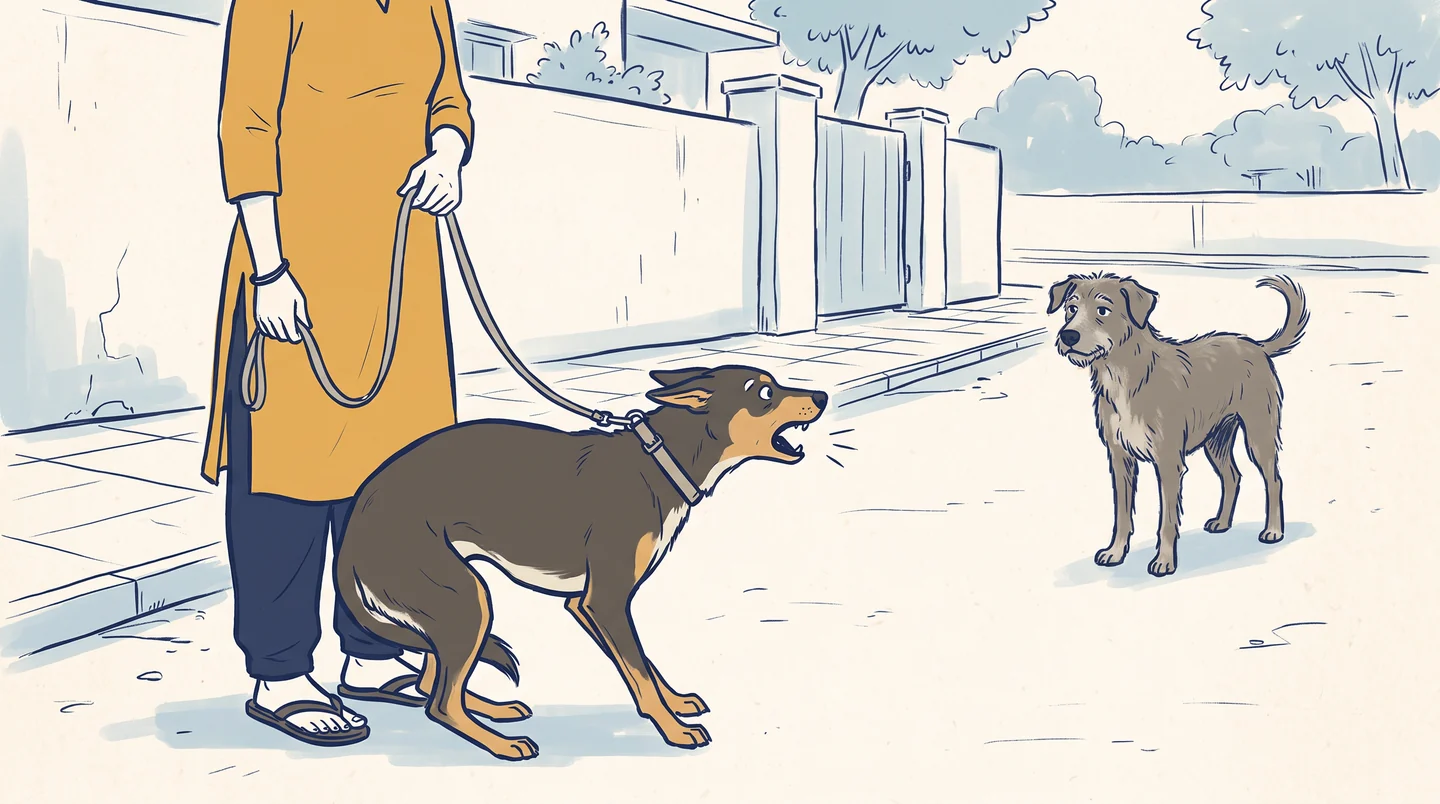
The puppy who was grabbed by a street dog, and now barks and lunges at every dog he sees, is not aggressive. He is frightened. He has learned that if he looks dangerous enough the other dog stays away, and he is telling you: get me out of here. Hold on to the word trauma and you will carry it around for him for years. If you call it what it is to him, an association, you can start changing it this week.
 , open the figure larger
He meets you with his nose
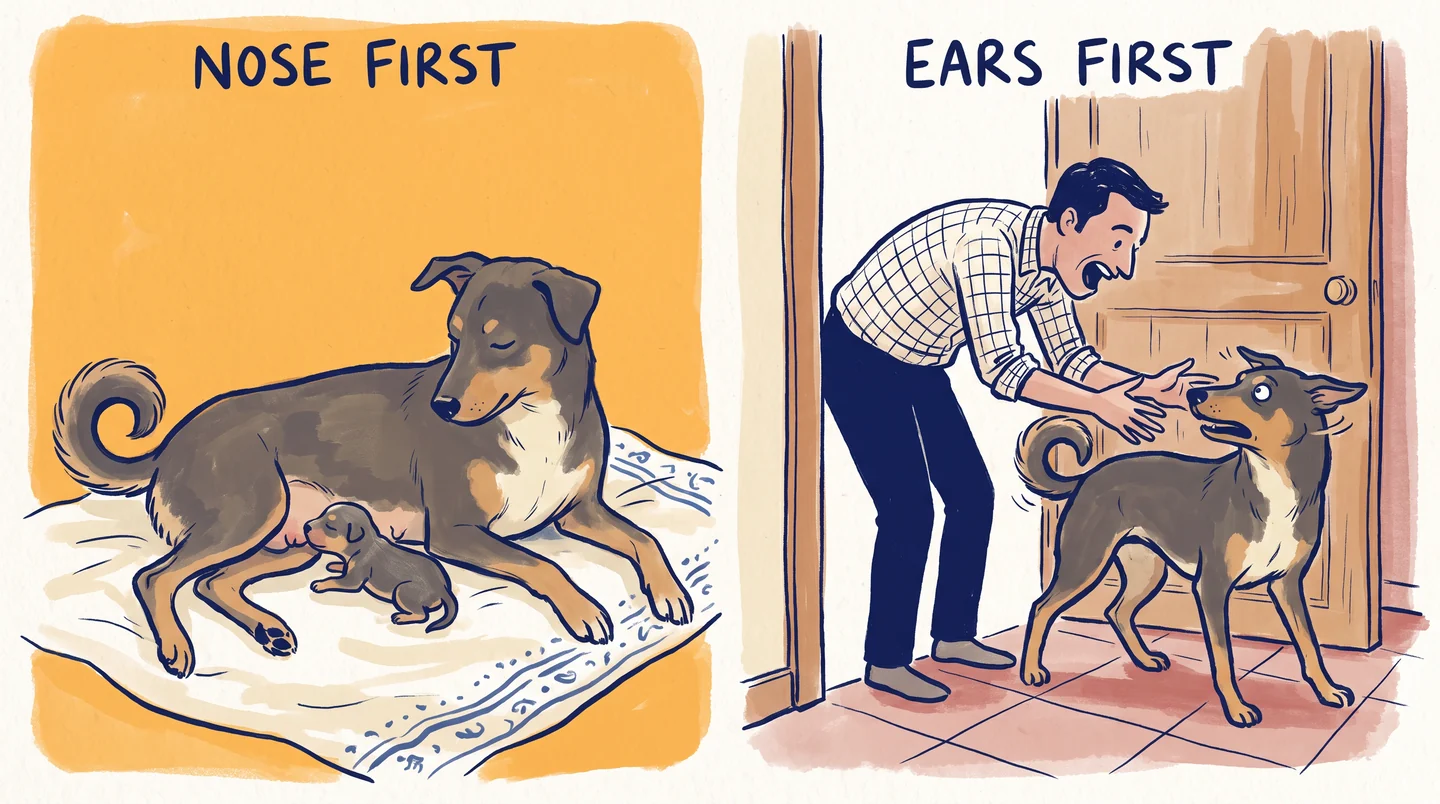
A puppy is born with his eyes and ears sealed. He finds his mother by touch, warmth and smell. His eyes open at about two weeks, and he starts to hear about a week after that. For his first three weeks, most of what he knows about his mother, and his mother is the source of all safety and all calm, comes to him through his nose. Nose first, then eyes, then ears. That order is built into him.
 , open the figure larger
Now watch what we do when we meet him. Hi baby! Hello baby! That is his ears. Then we look straight into his face and hold it. That is his eyes. His nose never gets a turn, because by now he is so excited he could not use it if he tried. We have taken the order he was built in and run it backwards.
It matters more than it sounds. In the dogs I work with, a dog who lives through his ears, because everyone arrives with noise and excitement, is a more nervous, more insecure dog. A dog who lives through his eyes, because we keep giving him eye contact, is on alert, barking the moment anything shifts. A dog who gets to use his nose settles. In one study, two weeks of sniffing games made dogs more hopeful about an uncertain bowl, and two weeks of heelwork did not. Nose, eyes, ears is the structure of a balanced dog.
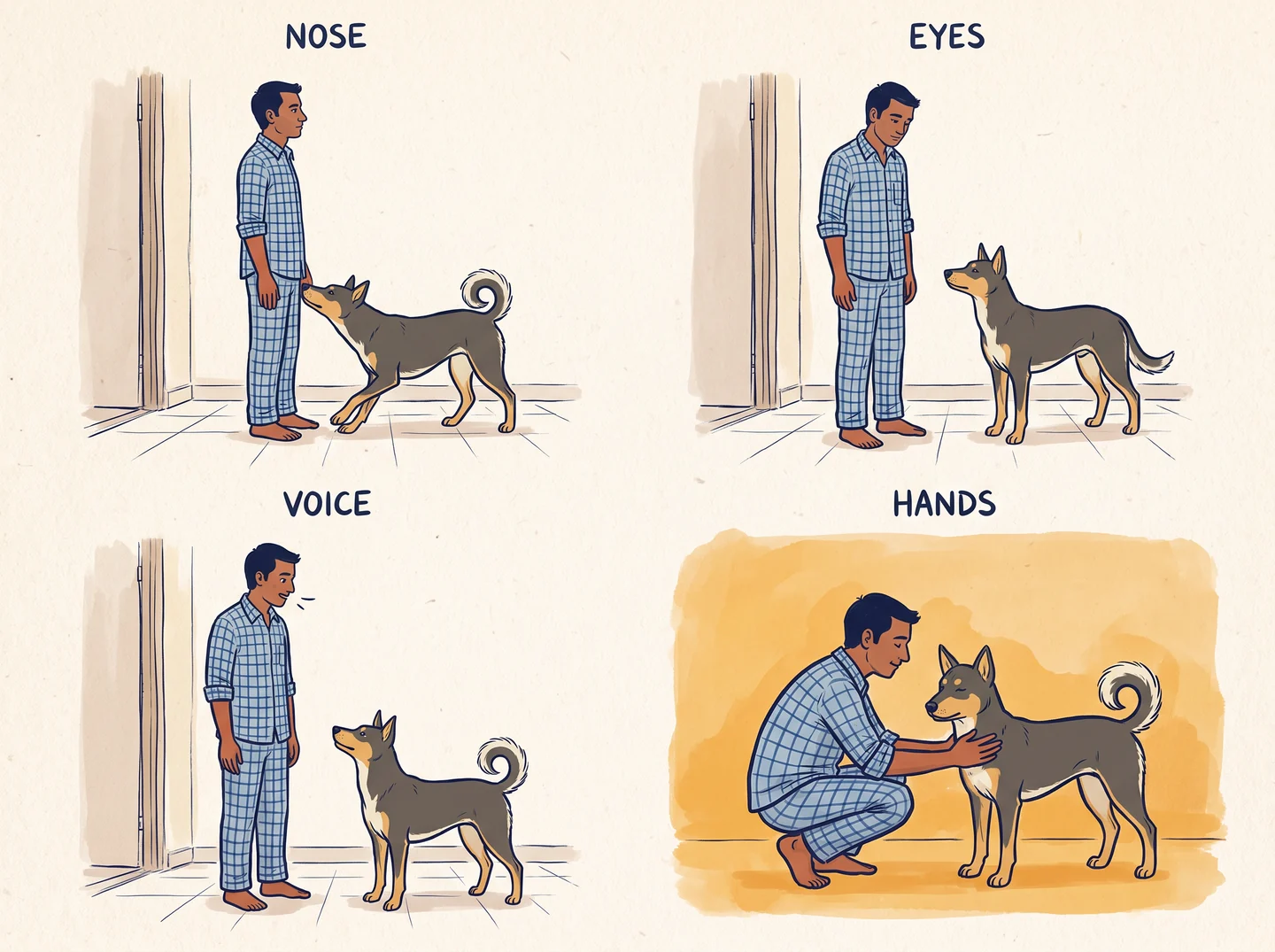
So when you meet a dog, any dog, including your own at the door: no touch, no talk, no eye contact. Not to ignore him. To respect what he is. Stand there, calm, and let him come and smell you. When he has smelled you and settled, then give him your eyes. Then your voice. Then your hands, calmly, on a calm dog. What he learns from this is that these people let me use my nose, and when I am calm, I am loved. You are raising a well-behaved dog with a greeting.
 , open the figure larger
He reads energy, not words
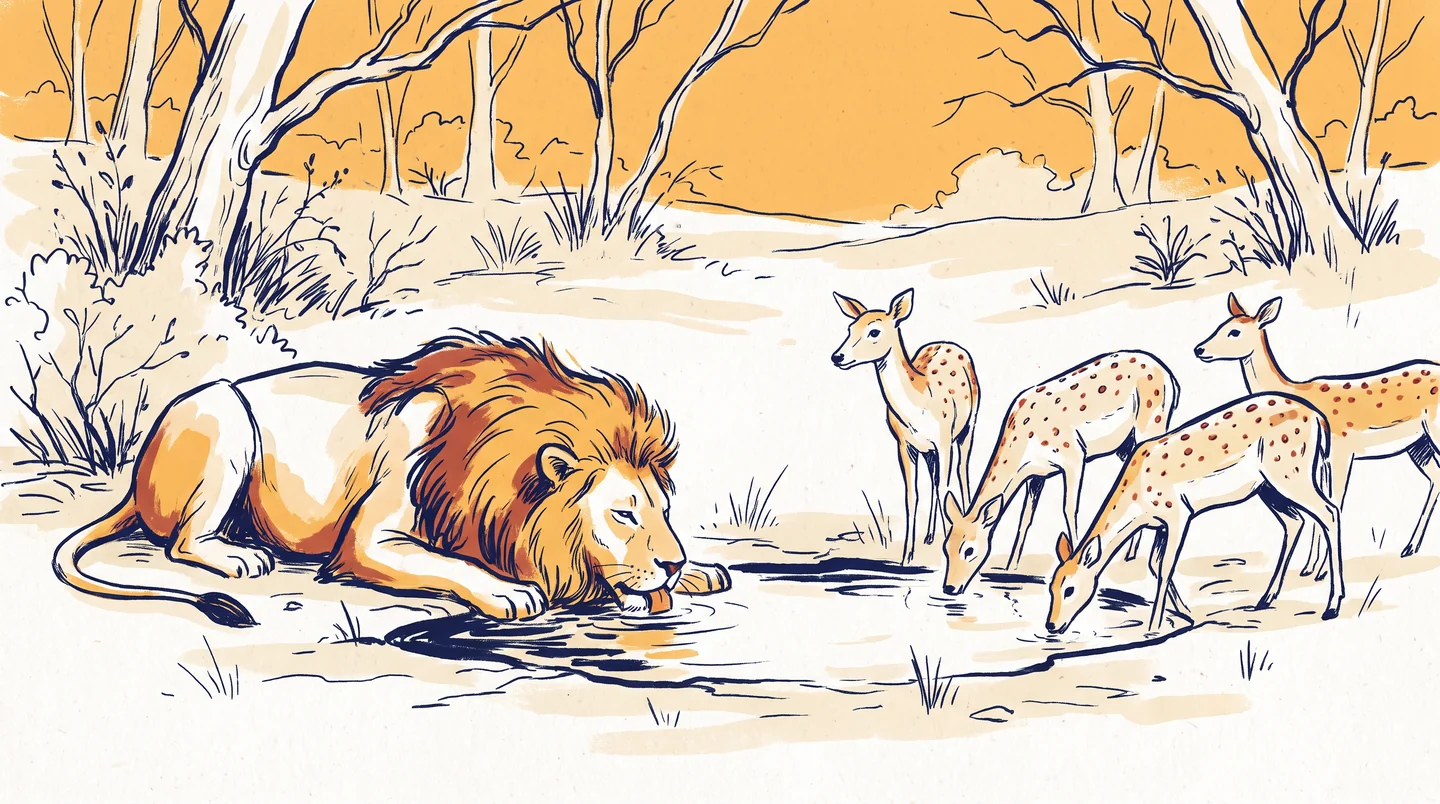
You may have seen the videos: a lion and a deer drinking from the same water, metres apart. The lion is not projecting a predator in that moment, and the deer knows it. The moment a cheetah does, the deer runs, long before it knows which animal is coming. Animals read energy. It is how they tell predator from prey from friend, and it cannot be faked, because energy does not lie the way words do.
 , open the figure larger
Your dog reads you the same way. Not your size, not your face, not your position in the house. Your energy. What you are feeling, right now, with him on the other end of the leash. One study measured the stress hormone in dogs' hair over months, and a dog's rose and fell with his person's. And in everything I have watched, dogs and every other animal respect, trust and follow the same thing: a calm and assertive source of energy, the phrase I took from Cesar Millan.2 It is the energy his mother carried when he was born with his eyes and ears sealed and found her with his nose. Calm and assertive means safe. It is written into him from his first day.
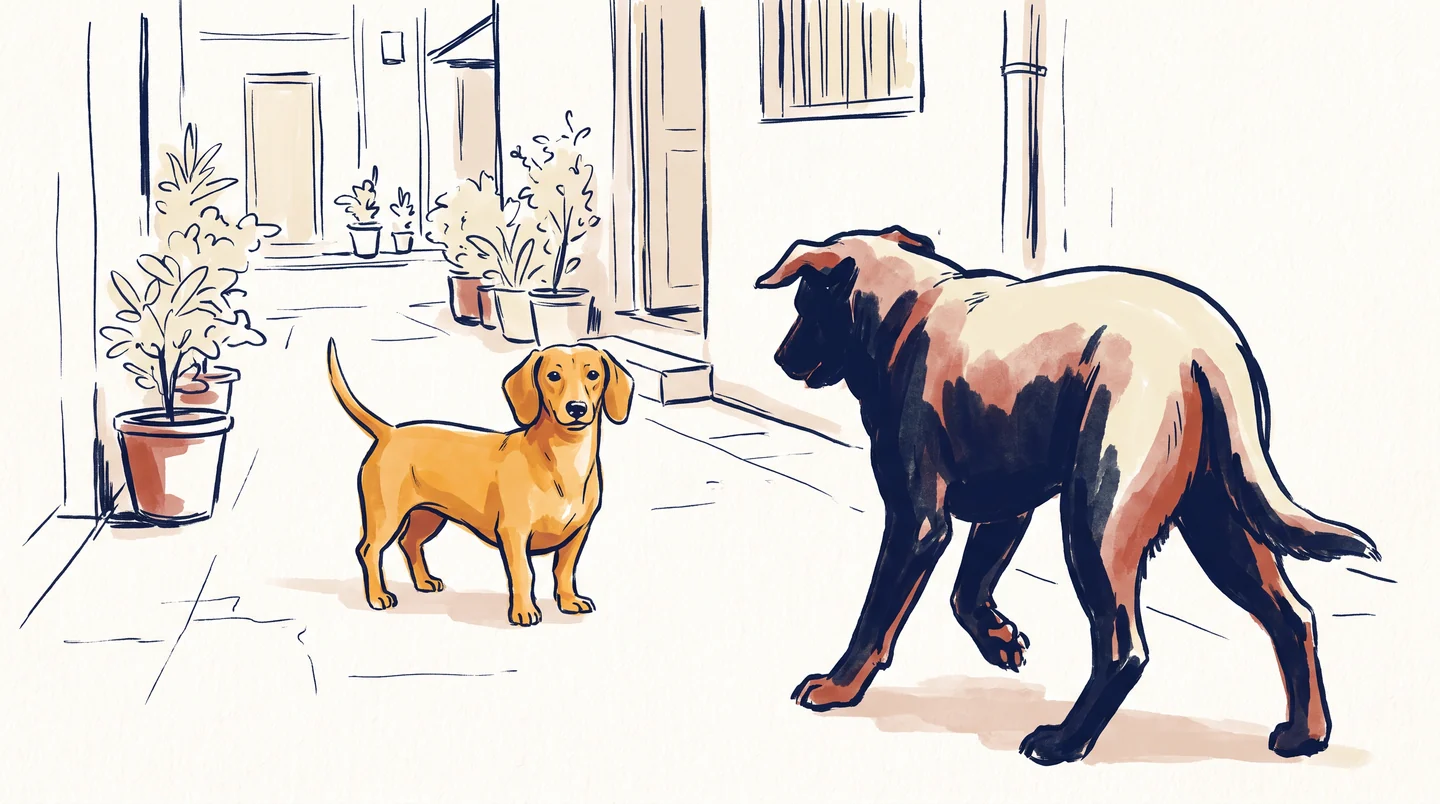
This is why a small dog can send a large one backing away. The big dog could flatten him, and both of them know it, and it does not matter, because the small dog is the calmer and the more assertive of the two in that moment, and that is the only thing being measured. Humans follow unstable leaders all the time, people who run on anger and jealousy and frustration. In everything I have seen, animals do not. They follow stability.
 , open the figure larger
And excitement, which we keep mistaking for happiness, is not stability. It is the least stable energy there is. When we meet our dogs with excitement, and reward their excitement, we are asking them to live in the most unstable state an animal knows and then wondering why they are not calm. Chapter 05 is about where calm and assertive comes from in you. For now, only know that this is what he is reading, all day, and that your words are the smallest part of it.
He arrived at a level
The last thing to know is that he came with an intensity, and it is his, and it is not his breed. People ask me which breed they should get, and I tell them there is no such thing as the right breed, because breed is only a skill set. A German Shepherd carries herding. A Husky carries distance, a capacity to travel for days. An Indie, the Indian street dog, carries the street: his parents were the high-energy pair who survived out there, and he carries territory and the finding of food. These are tools the breed hands him. They are not his temperament. In every breed, you will find four levels of energy, and the level tells you far more about the life he needs than the breed does.
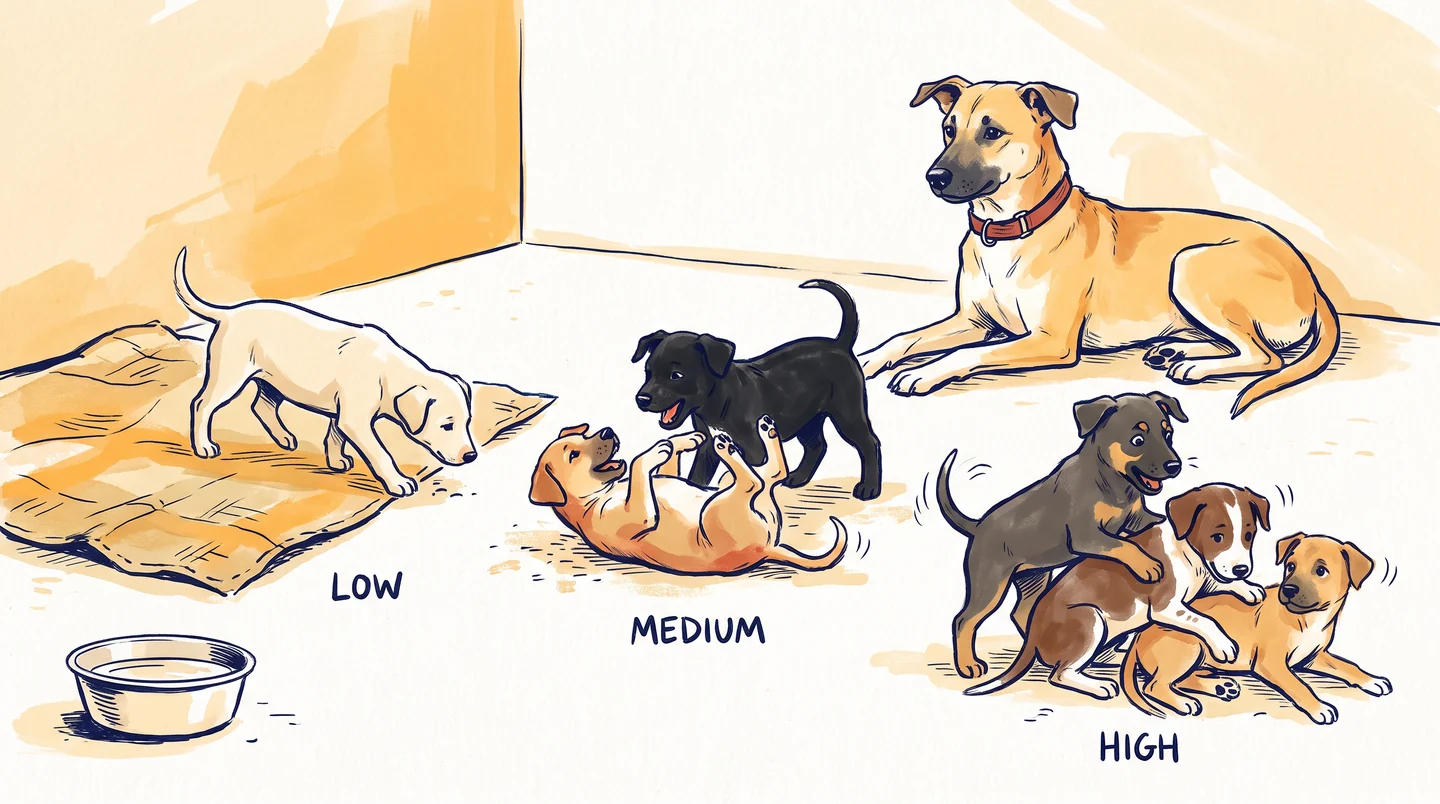
Low. Fifteen to twenty minutes of walking, twice a day, meets him. He is nearly always a follower, and a passive household suits him.
Medium. Forty-five to fifty minutes, twice a day. If you can walk briskly or run for three quarters of an hour, this is the dog for you. Also a follower.
High. An hour to an hour and a half, twice a day, and some of it with structure, not only sniffing. Often leader material, though a high-energy dog can be the happiest, bounciest follower you will ever meet.
Hyper. He needs a job. Not a walk, a job, all day, every day. Without one, nothing about his life works, and no flat in a city was built for him.
For a puppy, an old dog, a flat-faced breed, or in summer heat, go shorter, and walk at the cool ends of the day.
The power breeds, Rottweilers, Shepherds, Indies, lean towards high and hyper, which is why they need the most mental work and suffer most in a flat with two short walks. The soft breeds, Labradors and Goldens, lean towards low and medium, and a hyper Labrador was almost always made hyper by a family who greeted him with excitement every day until his brain was hard-wired for it. The baseline is his. What a house does to it is ours.
If you are choosing a puppy from a litter, do not read the breed. Watch the litter, and meet the mother if you can. The one moving slowly through everything is low. The one playing is medium. The one climbing onto all his brothers and sisters is high. A puppy at eight weeks gives you a hint, not a promise. Then match him to the energy of your family, not to the picture in your head.
 , open the figure larger
Where the free part ends
Everything above is the animal in him, the deepest of four layers. Above it he is a species, with its own needs: to work for food and shelter, to wait, to live under rules. Then a breed, with its skill set. And last the name, and the one dog behind it. Every behaviour comes up through those layers, and that is chapter 04.
For this one, carry three things to bed with you. He runs on association, so what you do today is what he becomes. He meets the world with his nose, so let him. And he reads your energy before he hears a word, so the first thing to change in any house is never the dog.
This is where the free part of the book ends. You have the idea, a way to look at your own dog, and how he reads you. The rest of Part One goes deeper: the four layers, where calm and assertive comes from in you, one puppy followed until he was grown, and the first skills of reading his body, getting his focus and setting clear expectations. Part Two turns the six places you looked at in chapter 02 into rituals, the walk, meeting, discipline, feeding, play and affection, with socialising beside them. Part Three is for when something is already wrong: the shy dog, anxiety, the dog who guards his house, the dog who cannot be left alone, the reactive dog who bites, and last, what changes in you. The book is not on sale yet. Until it is, the three things above are enough to start with tonight.