
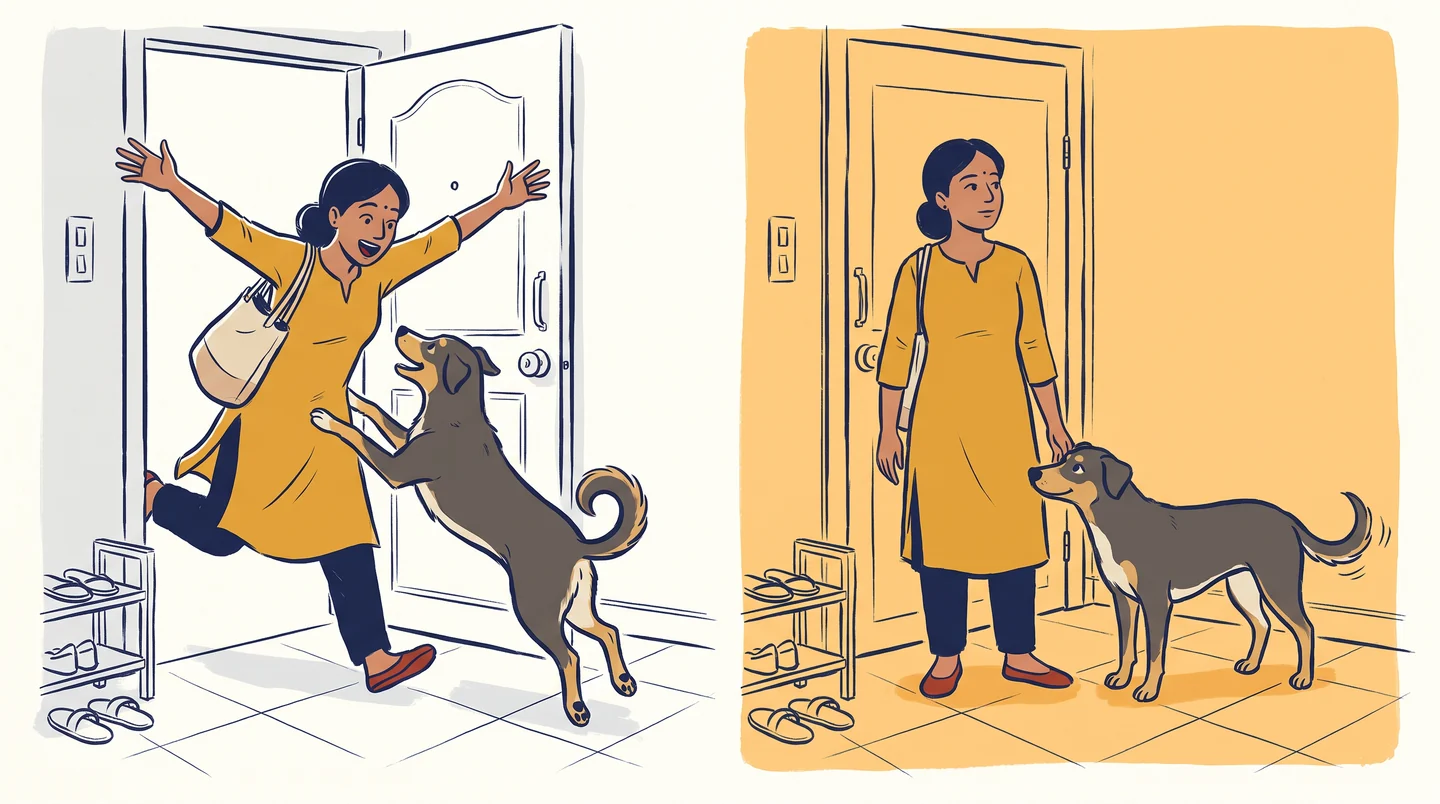
Watch how people come home to a dog. The door opens. Before they are through it, the voice goes up. Hi puppy! Hi baby! The dog hears the key, is already at the door, and now explodes. He runs, he leaps, he lands on their chest, and they catch him and love him and say the sentence I heard in house after house: look how happy he is to see me.
He is happy to see you. He is also excited, and those are two different emotions, and the second one is the one you are building. You did this yesterday and you will do it tomorrow, and so will everyone else who comes through that door, and a dog who practises excitement every time a human appears becomes a dog who lives in it. In the houses I worked in, more problems started at the front door than anywhere else except the leash.
This chapter is the third ritual, and I put it third on purpose. Walk first, because a walked dog can learn. Rules second, because he needs to know what is wanted. Then this, because the way he is met is the way he learns to meet the world, and it is decided in the first five seconds of every arrival. Meeting is the daily half of socialising, at your own door, each time you, your family or a guest comes in. The other half, his meetings with other dogs, is a session of its own in chapter 16.1
Happy is not excited
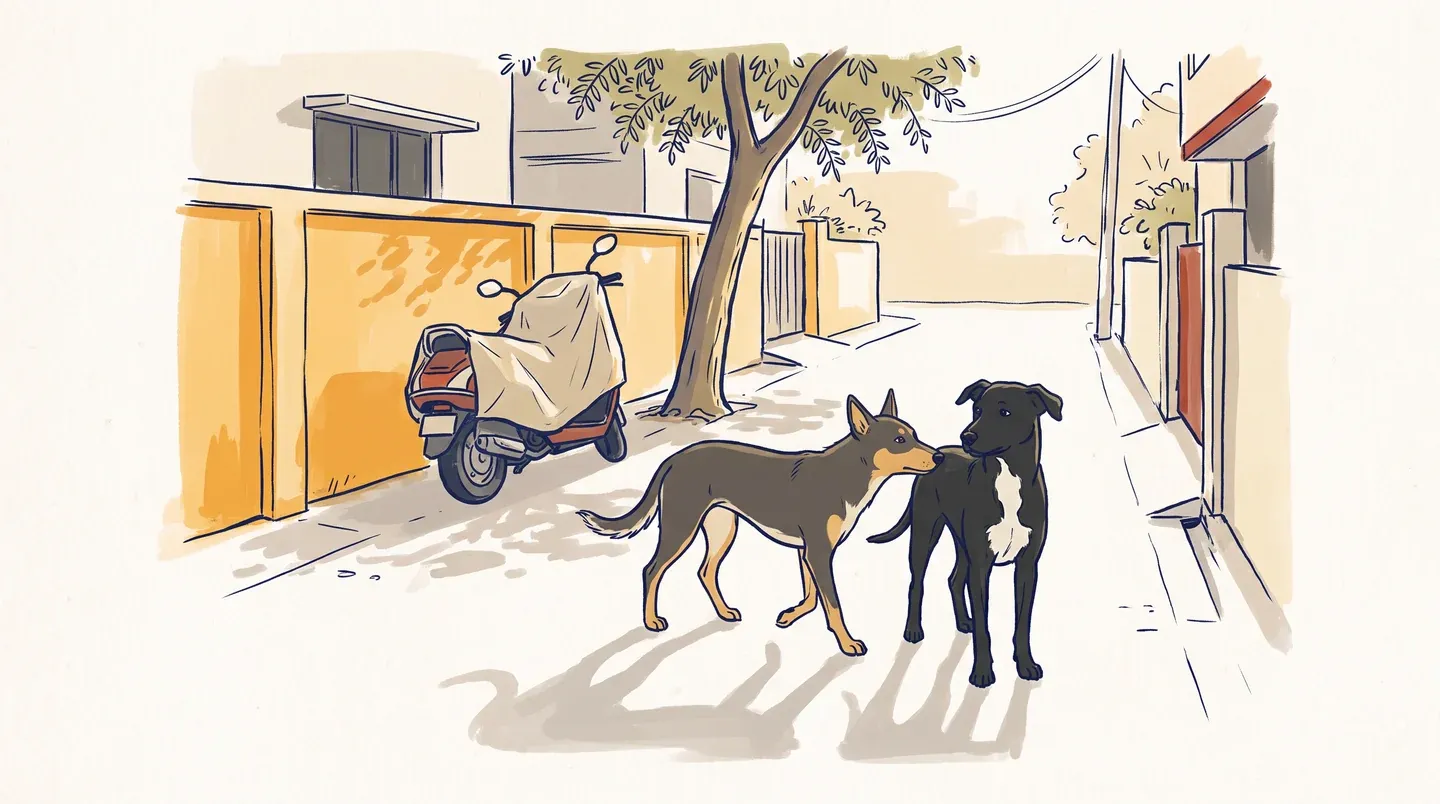
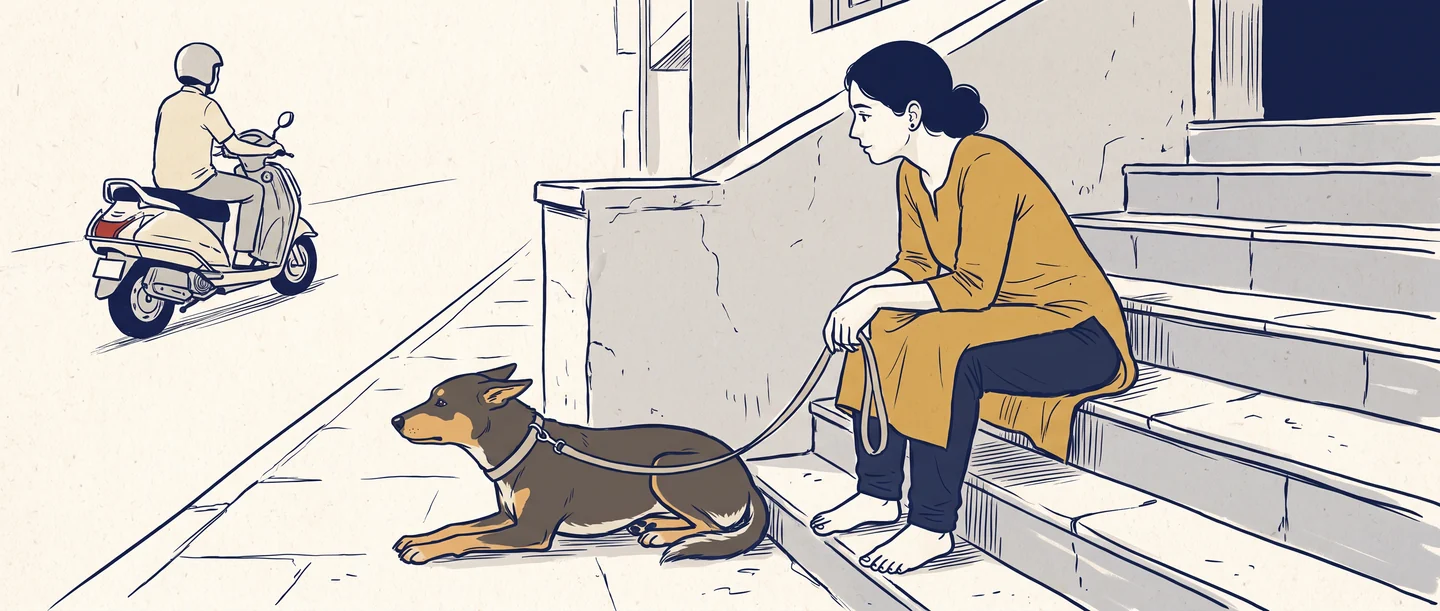
You met this in chapter 07, so I will only say the part that matters here. Excitement is an unstable energy in the animal world. Watch a grown dog when a puppy comes bouncing at him. He does not bounce back. He turns his face away, and he waits. In dog after dog I have seen the same thing: left to their own kind, their natural state of mind is what Cesar Millan calls calm and submissive, and excitement is not met with excitement. In a litter, the puppies are allowed to be excited for a while, and then they are not, and the adults make that clear. So a dog knows how to meet calmly. It is we who teach him the other way.
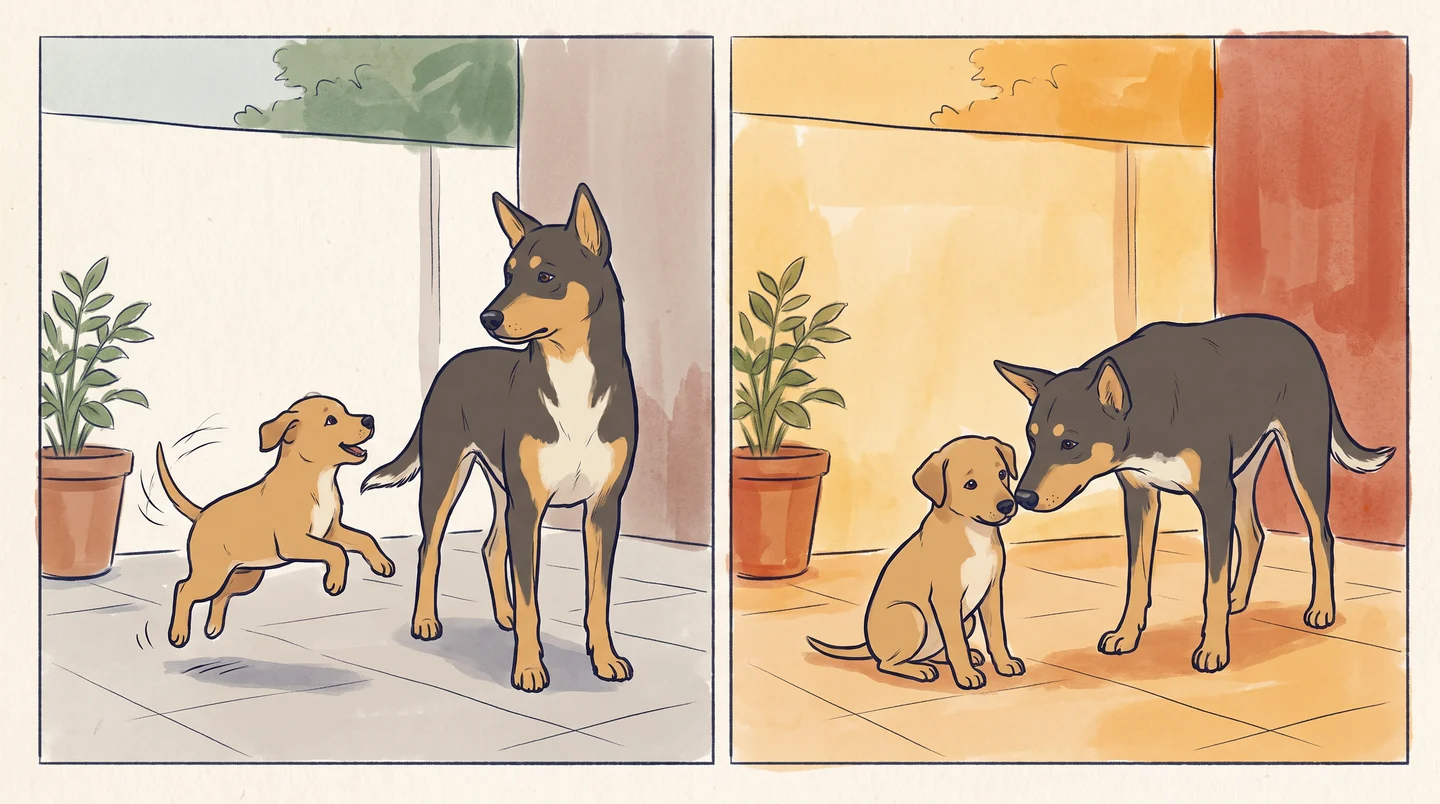 , open the figure larger
And we teach it fast. A puppy who jumps and gets loved for jumping is learning, every day, that arrival means leaping and leaping means affection. In six months he is a big dog and he is still doing it, and now the family calls him hyper. He is not hyper. He has been in a school of excitement since he was eight weeks old, and he is a good student.
 , open the figure larger
Here is where it goes, in house after house I saw. Excitement is a precursor. Put tension or frustration into an excited dog and you get aggression: he jumps, somebody screams and waves their hands, he snaps, and from that day he has a label. Keep an excited dog in a small flat with a doorbell and you get anxiety. Add a nervous temperament and you get a dog who hides when the bell goes. None of these are what the family meant when they shouted hello. But that is what the hello was teaching.
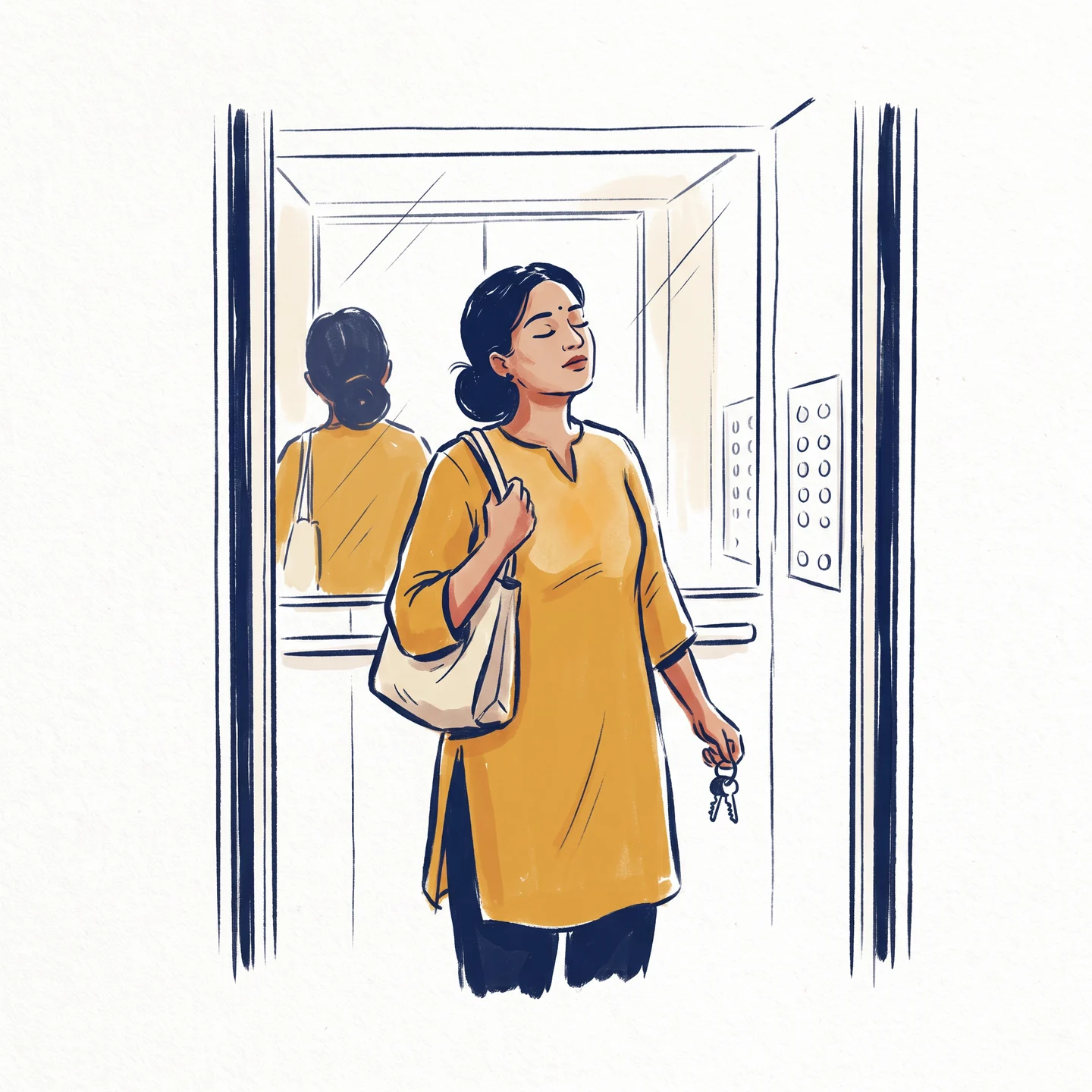
And I want to say one more thing about the hello, because people do not hear it the first time. When you come through the door shouting, you are already excited. Your excitement and his meet, and what they make together is a dog who is completely out of control at the door, and you call it love. So part of this ritual is yours. You have to come in calm. Some of us need to take a breath in the lift.
 , open the figure larger
 The rest of the Foundation
 The Six Rituals
 When Something Is Wrong