

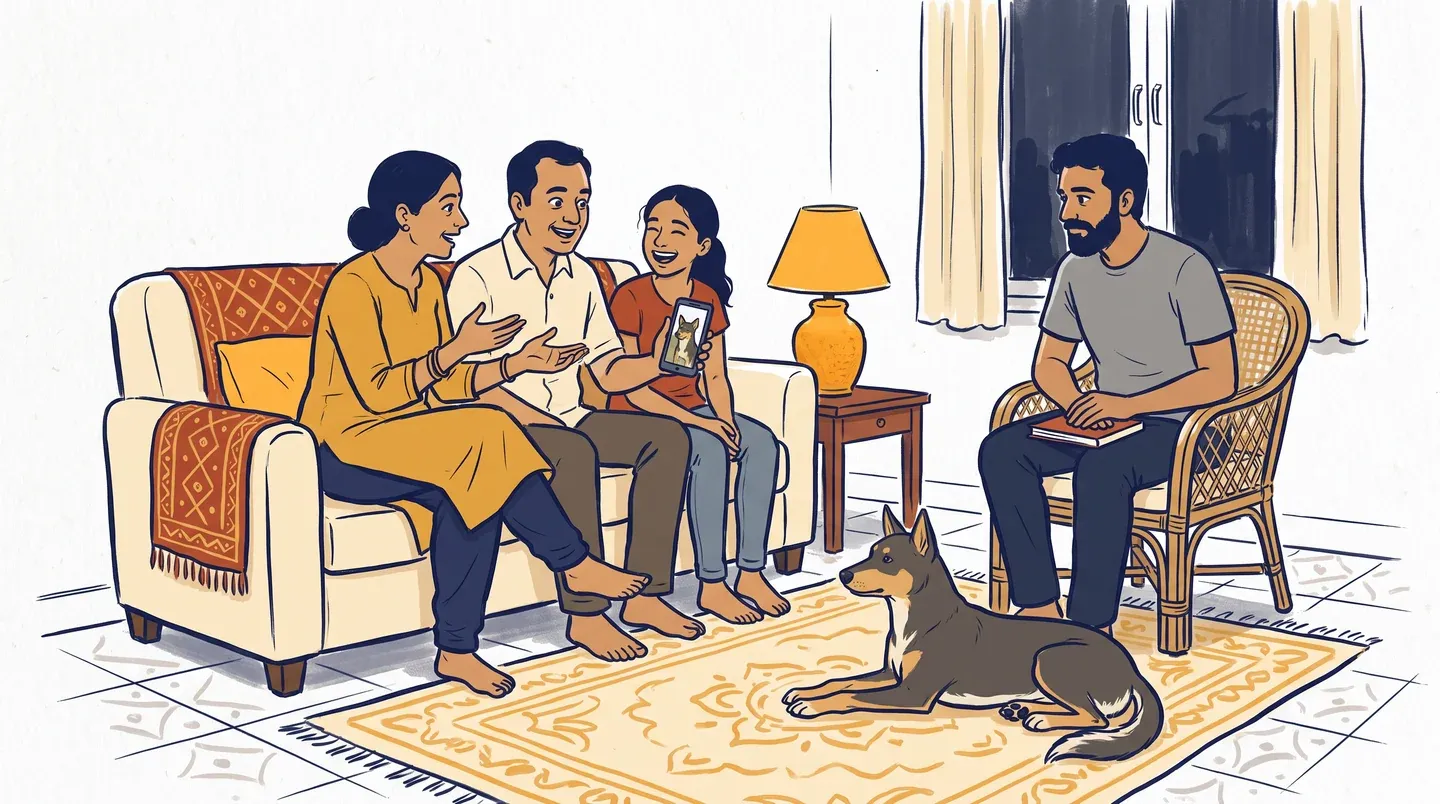
When a family called me, the first thing they told me was his name. Donna. Becky. Buddy. Sheru. Then they told me what Sheru did, and how Sheru had been since, and what Sheru was like with the children, and in ten minutes I knew a great deal about Sheru and almost nothing about the dog.
I do not say this to be unkind. The name is how we love him. But a name is a human invention, made for a human's comfort. In a dog's natural habitat there are no names, and the dog you are living with has never once thought of himself as Sheru.1 When the whole relationship runs through the name, the family is connecting to the one layer of the dog that the dog did not bring with him, and they are using human psychology on an animal, and that is where most of the behaviour I was ever called about began.
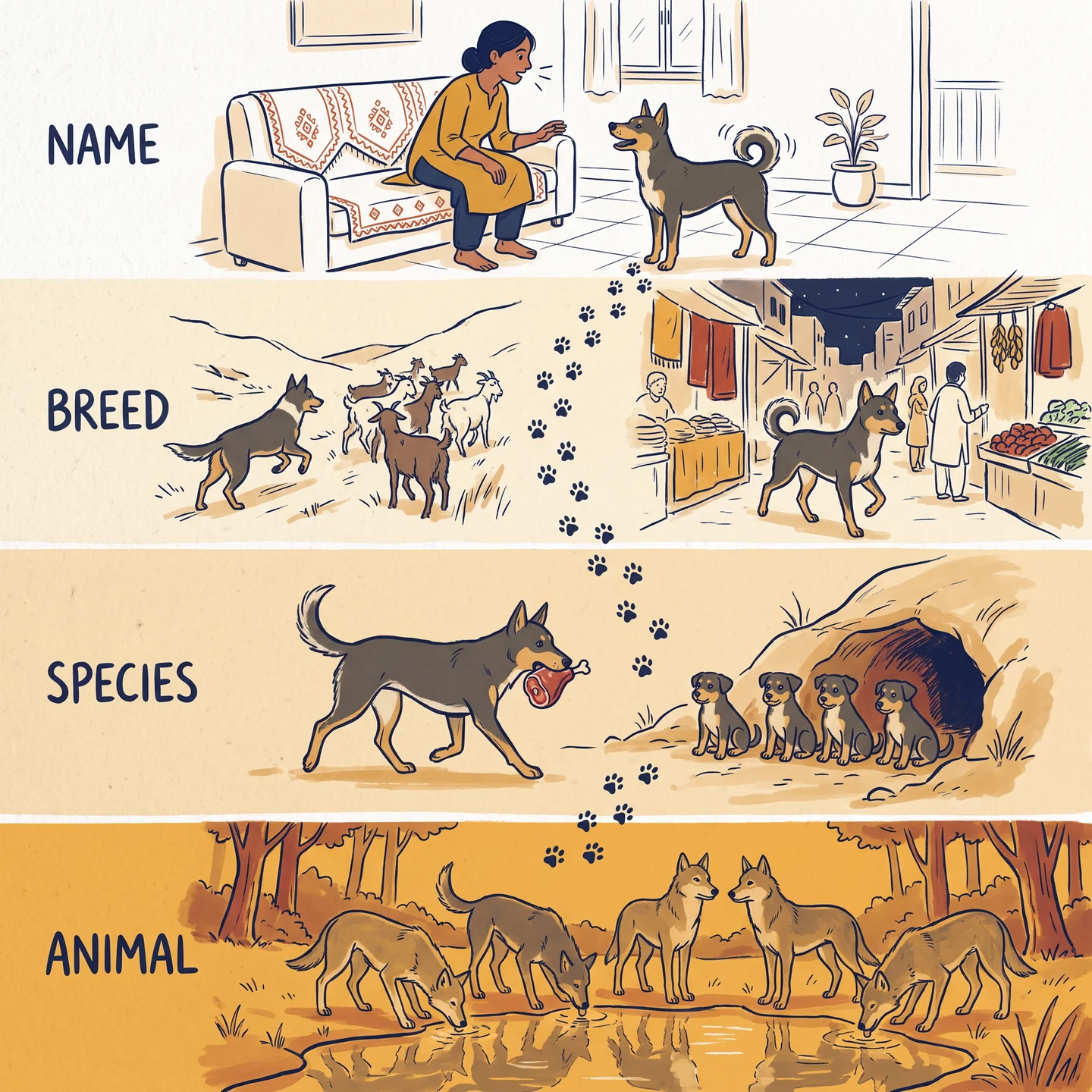
This chapter is the stack underneath the name. I learned the frame from Cesar Millan, and the years of houses since have taught me what each layer asks for in an Indian home. There are four. Animal, species, breed, name, from the oldest to the newest, and every behaviour you will ever see in your dog comes up through them in that order. If you want a deep connection with him, which is what every family told me they wanted, the formula is simple and it runs the opposite way to the one you are using. Connect to the animal first. Then to the species. Then to the breed. The name comes last.
 , open the figure larger
One growl
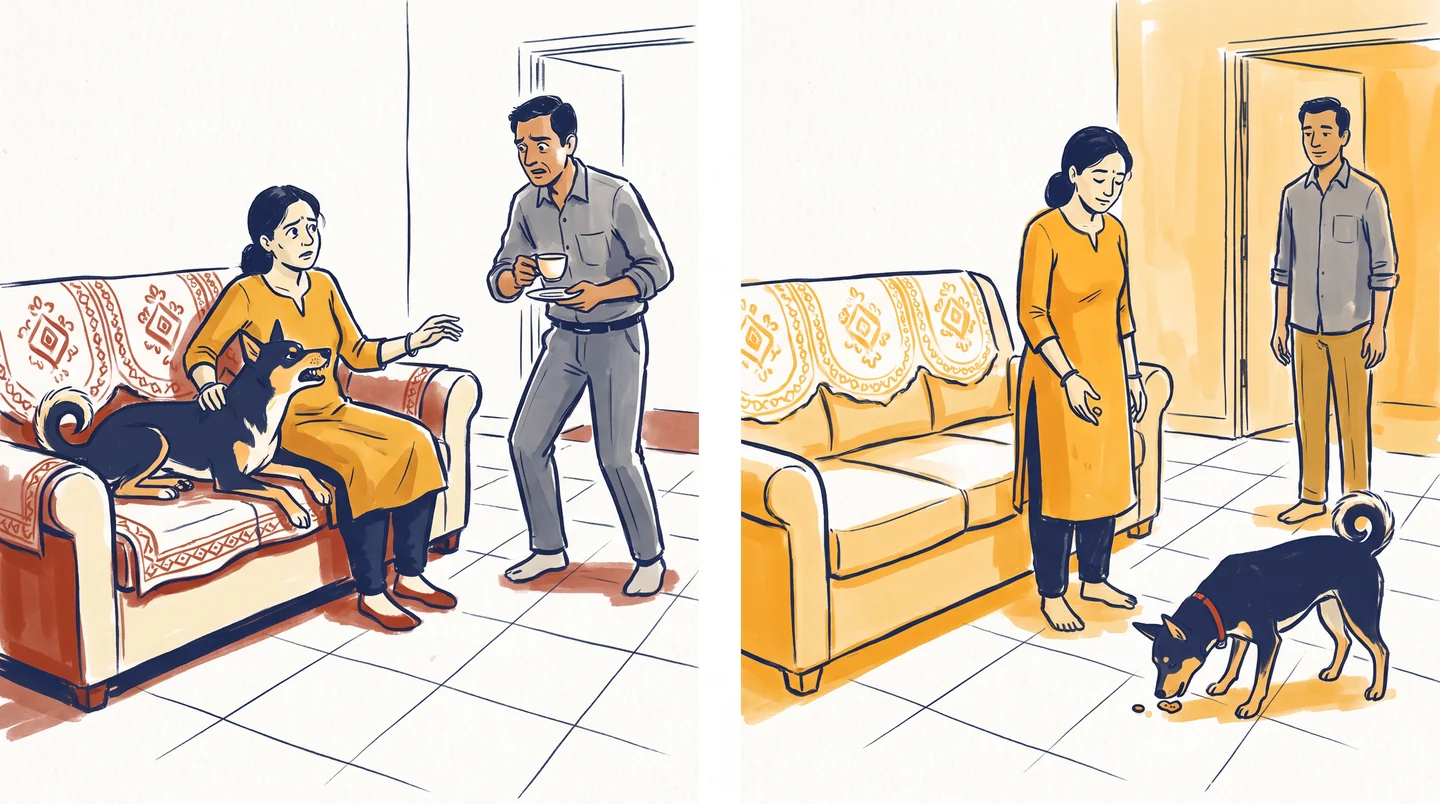
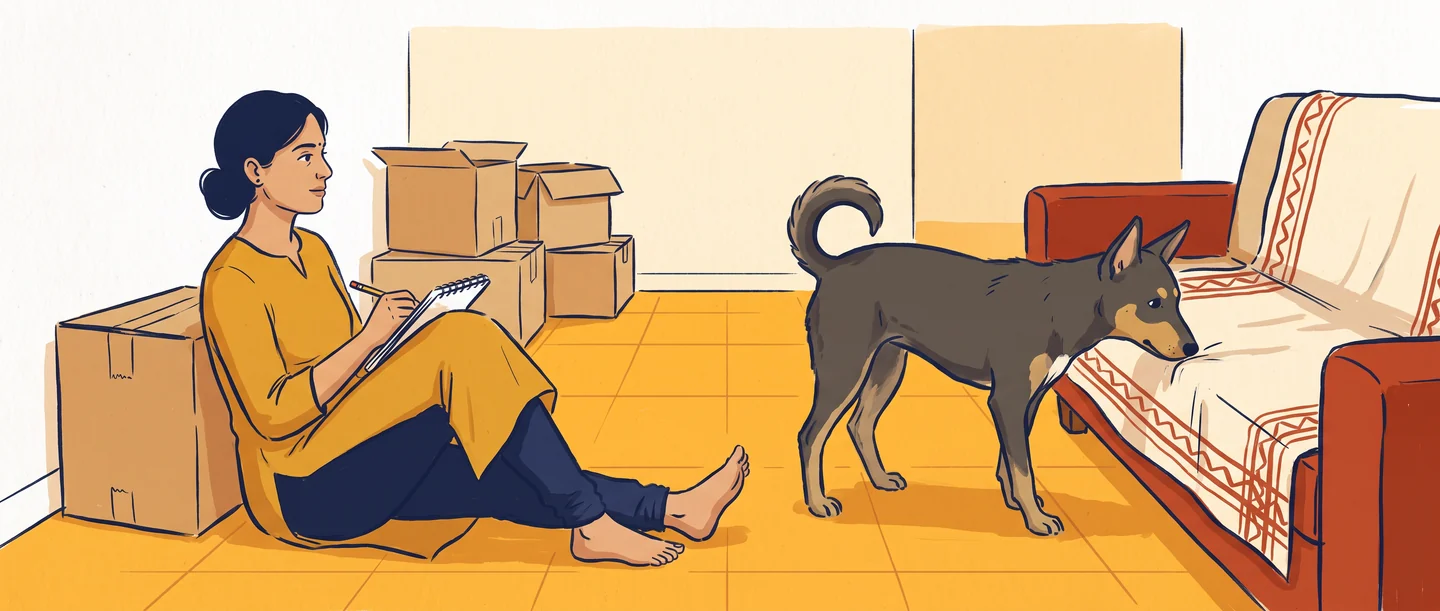
Here is a case that came to me again and again, in one form or another. A dog growls at the husband whenever he comes near the wife on the sofa. Sometimes he has snapped. The family reads it at the name. He is protective. He loves her so much. He is her baby. Every word of that is about Sheru, and none of it is about the dog. If yours is that dog, then for now the sofa is closed to him, and if he is already up there, call him down with a treat tossed on the floor. Nobody reaches for him.
 , open the figure larger
Read the same growl at the breed, then the species, then the animal, and it becomes a different story, with a different fix, and the fix is nowhere near the top. That is what this chapter is for. By the end of it you can read your own dog's worst habit the same way.
 The rest of the Foundation
 The Six Rituals
 When Something Is Wrong