Two sentences come up in nearly every first visit, and they come up in the same order.
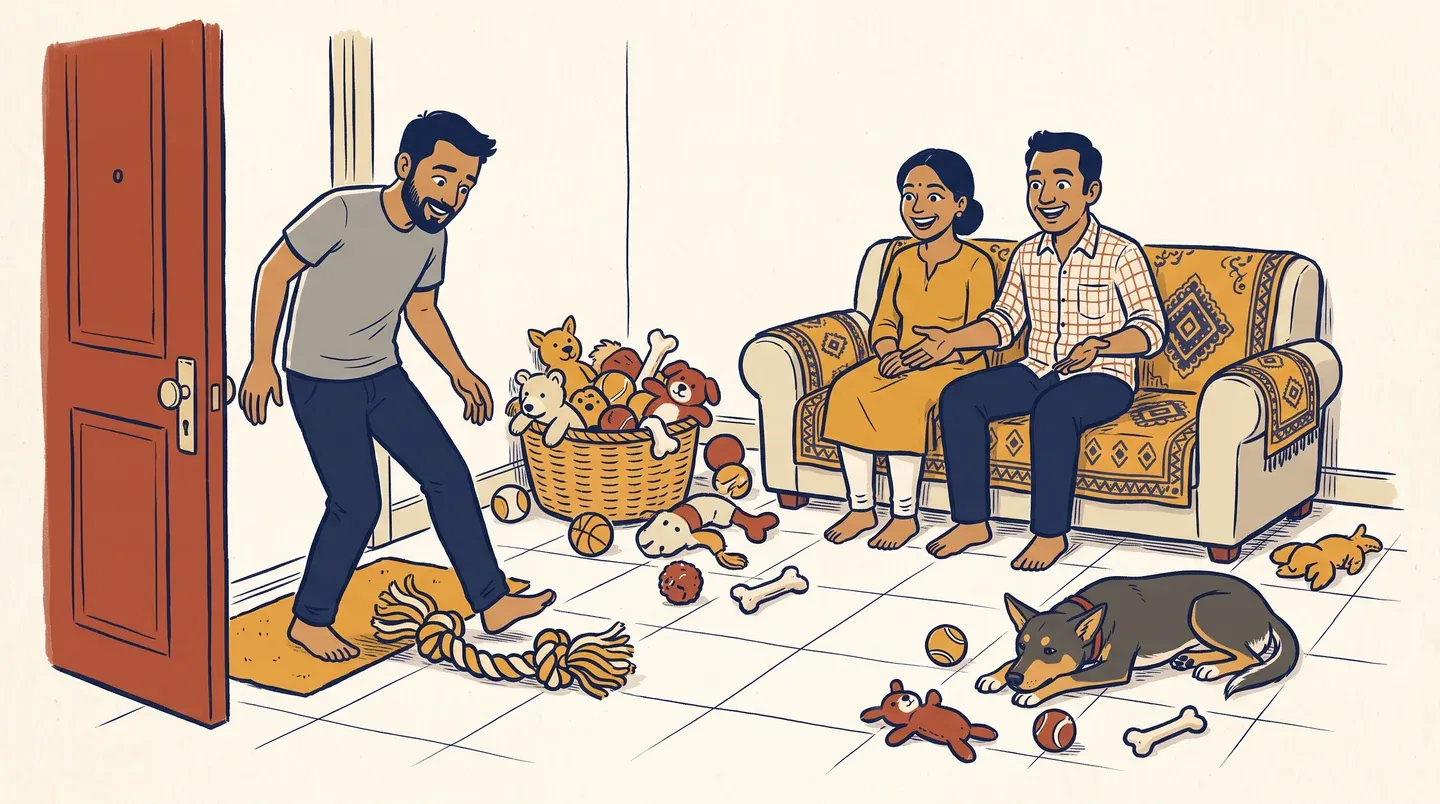
The first is said as I walk in and nearly trip on a rope toy. We play with him all the time, look at all his toys. The second is said later, usually by the person who feeds him and sleeps nearest him, in a quieter voice. We love him so much. Why does he growl at me?
This chapter is both sentences. They are the last two of the six rituals, and they are the two that families are most certain they already do well. Nobody has ever told me they walk their dog perfectly. Everybody tells me they play with him and love him. And in nearly every house, the toys are in the corner and nobody is holding the other end, and the love is landing, with the best intentions in the world, on exactly the moments it should not.
The circuit
Mammals that play, rats and dogs and us, have a system deep in the brain for it. The neuroscientist Jaak Panksepp mapped it in young rats. It is a system for playing with someone, and it runs on the brain's own feel-good chemistry. Watching you is not what it is waiting for, and neither is a toy chewed alone in a corner, or a run around the garden on his own. It is waiting for a game, with somebody. And the need builds. Keep a young rat from his playmates for a day and he plays harder when he gets them back.
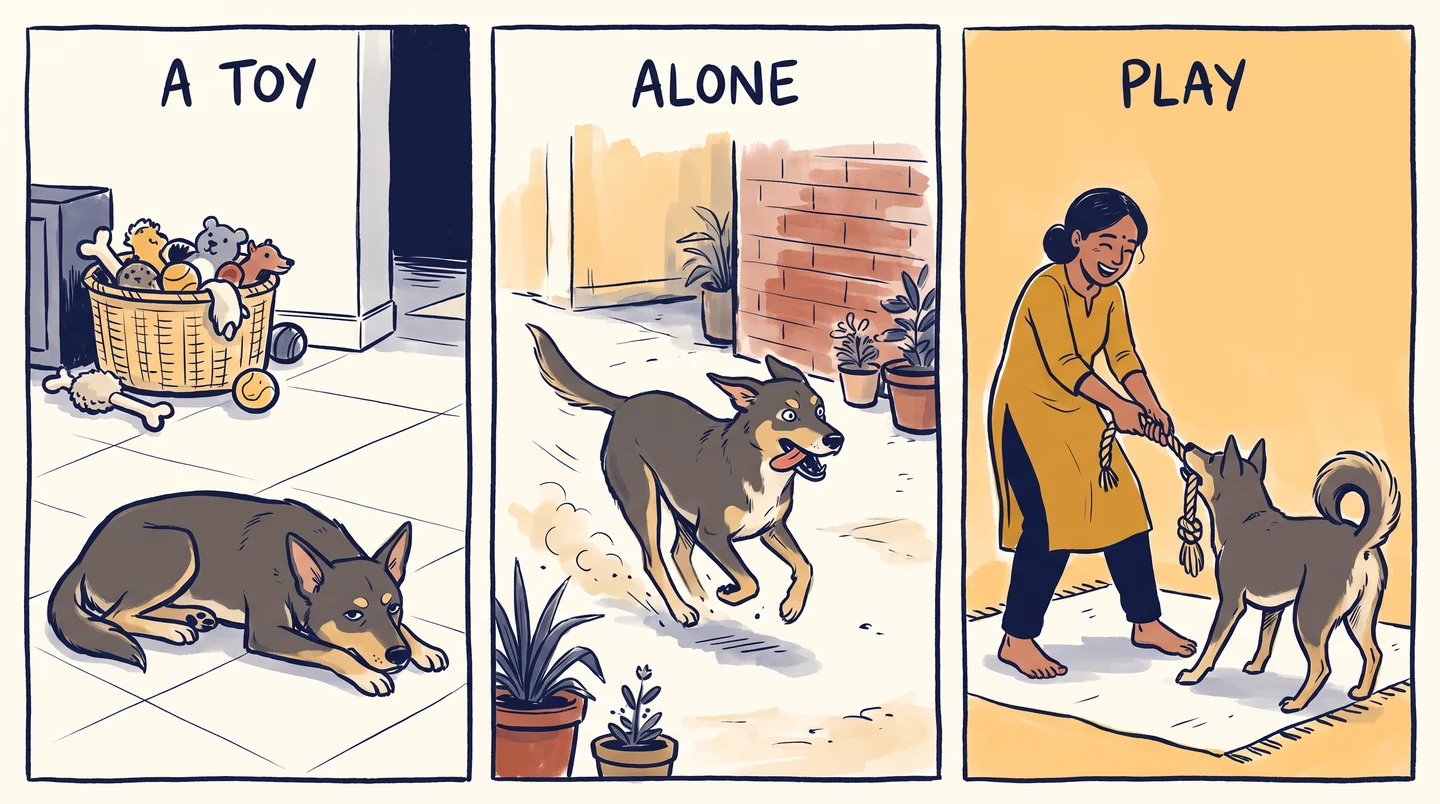
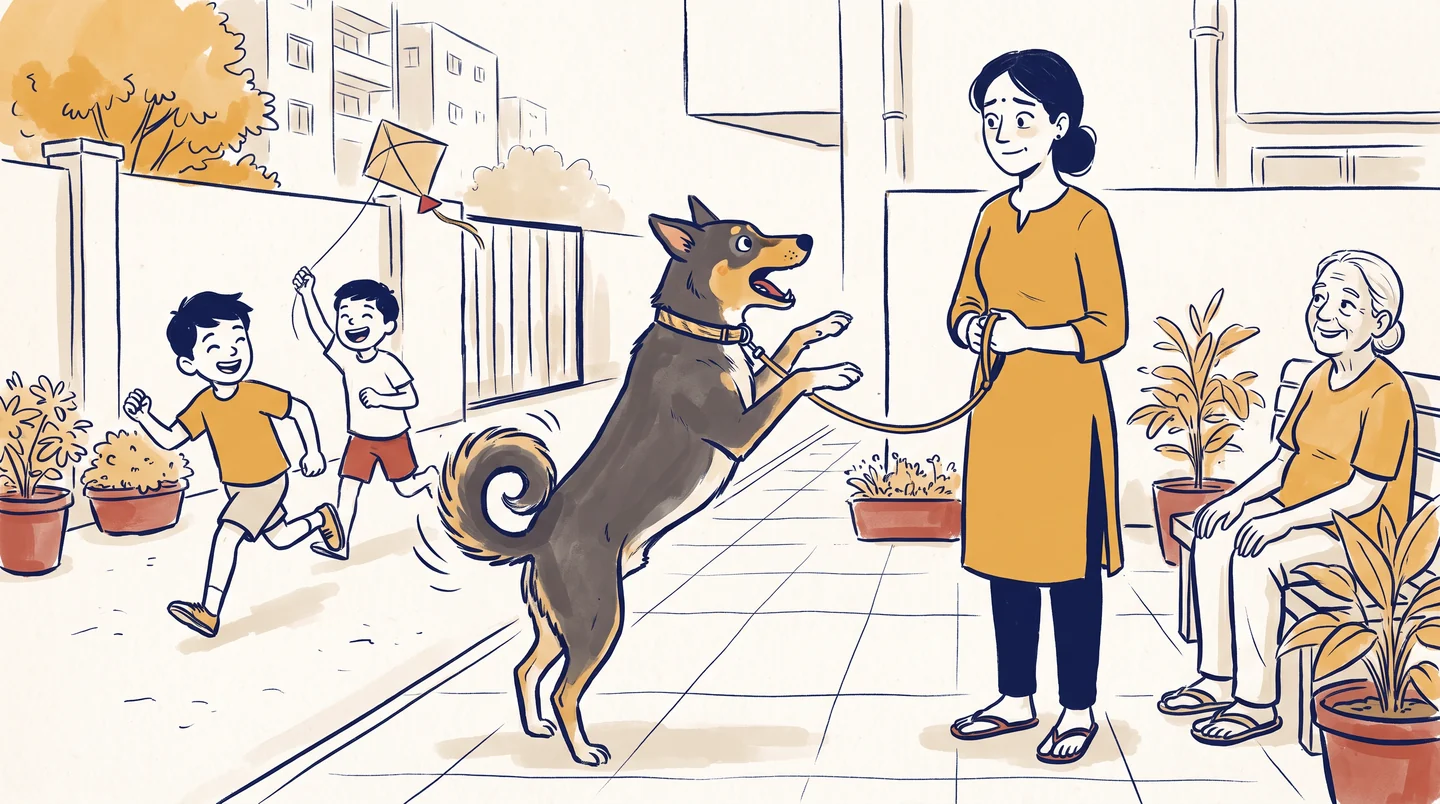
In the houses I work in, the dog who has no game is very often the dog who goes wild at the first thing that might be one. He loses his mind at the sight of another dog, or a child, or anybody who moves quickly. The family calls it friendliness. It is not. It is a dog who has not played properly in months meeting the first thing that looks like it might play with him, and the arousal that comes off him in that moment is the same arousal that feeds so much of Part Three. Very often he is not hyper because he is a hyper dog. He is hyper because one of his six needs has a basket of toys where a game should be.
 , open the figure larger
 , open the figure larger
So the first thing to say about play is what it is not. A toy is not play. A toy thrown into the corner so that he has something to do is a toy in a corner. Running loose in a park is not play either, and I would go further: a dog running wild on his own with nobody to bring him down is practising hyperness, and gets very good at it. Play is a specific thing. It is you, with him, holding the other end, in a game that has a way to win and a way to lose, every day, at a time.
 The rest of the Foundation
 The Six Rituals
 When Something Is Wrong