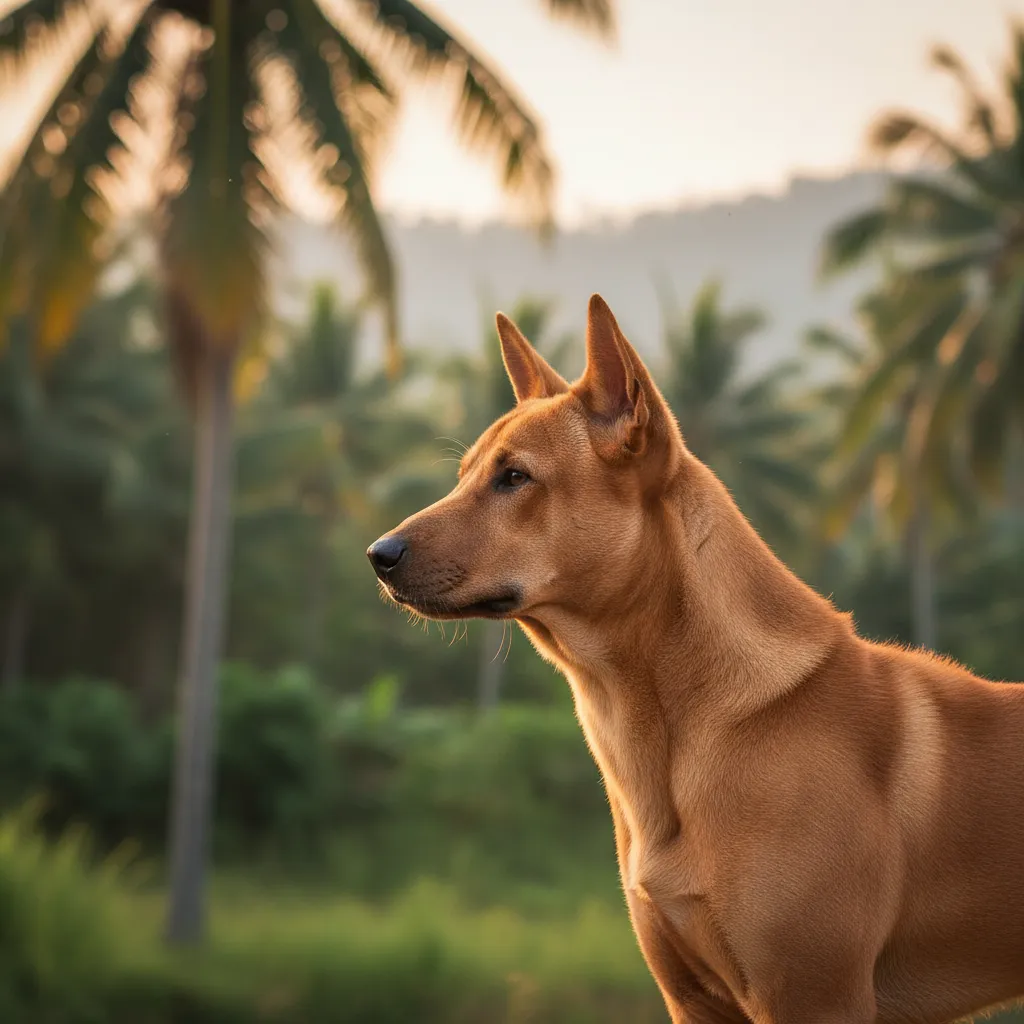
The account
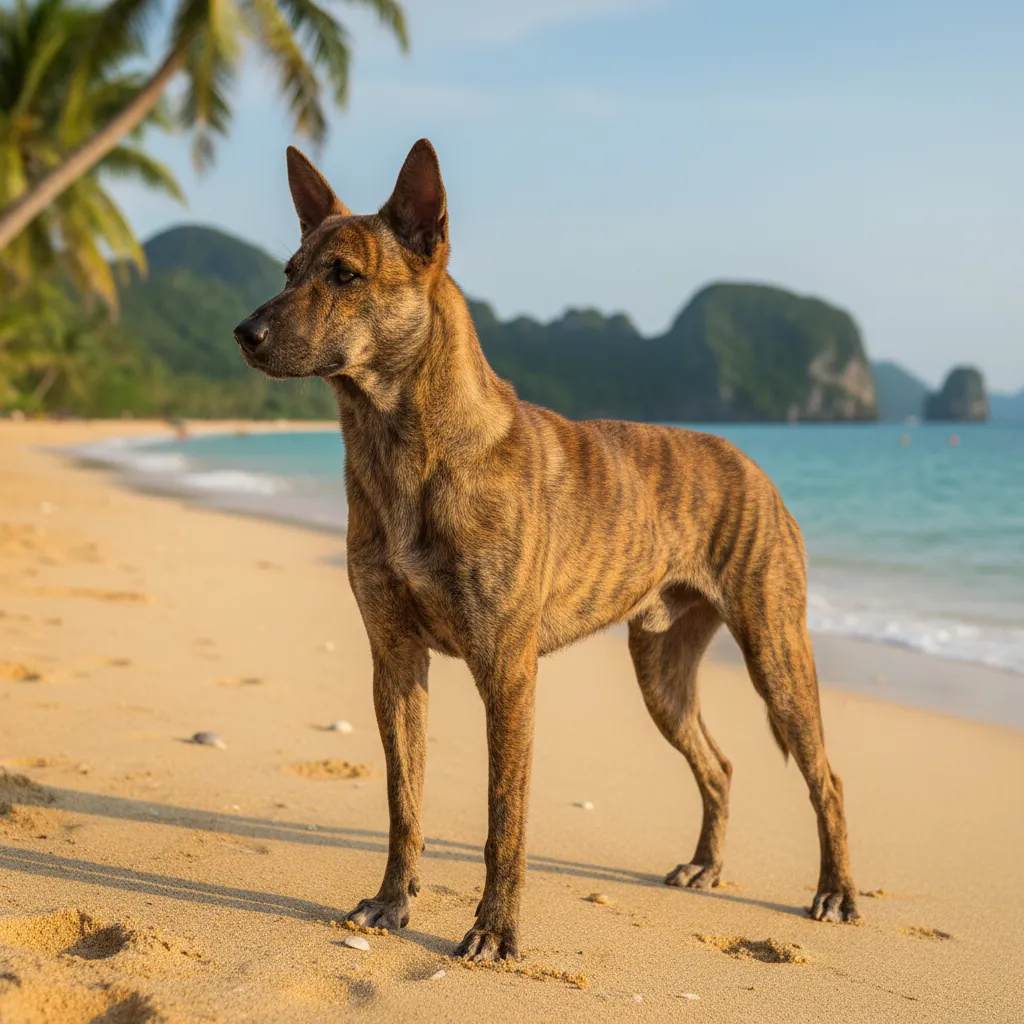
The Thai Ridgeback spent centuries in eastern Thailand doing three jobs at once, hunting boar and small game, guarding the house, and escorting carts on roads where escort meant something. It was isolated enough in that corner of the country that it stayed close to a primitive landrace, and dogs of the type were only formally standardised and exported in the last few decades. What you get is a dog with very little of the pliability that four hundred years of European breeding put into working dogs.
The ridge, a strip of hair growing in the opposite direction along the spine, comes in several recognised patterns and is the breed's signature, shared with only two other populations worldwide. The coat is very short and hard, close to velvet, and the skin is notably loose and thick, which is generally understood as protection during boar work. Blue is a common and striking colour in the breed and is a genuine dilute rather than a novelty.
The temperament requires real experience. Thai Ridgebacks are intelligent, athletic and completely self-directed: they assess situations independently, they do not seek approval, and they will ignore commands they see no reason for. They are strongly territorial and aloof with strangers, which makes them effective guards and difficult neighbours. They are also outstanding jumpers and escape artists, and the prey drive is intense. Early and continuous socialisation, secure high fencing and a confident handler are all baseline requirements, not refinements.
For Indian conditions the fit is one of the best on this list. A short-coated Southeast Asian dog handles heat and humidity as well as any breed in the world, needs almost no grooming, and carries a low inherited disease burden, dermoid sinus, common to ridged breeds, and hip dysplasia are the two to ask about. The limits are availability, which is poor, and suitability, which is narrow: this is a rewarding dog for an experienced owner with land and a poor choice for anyone else.