The account
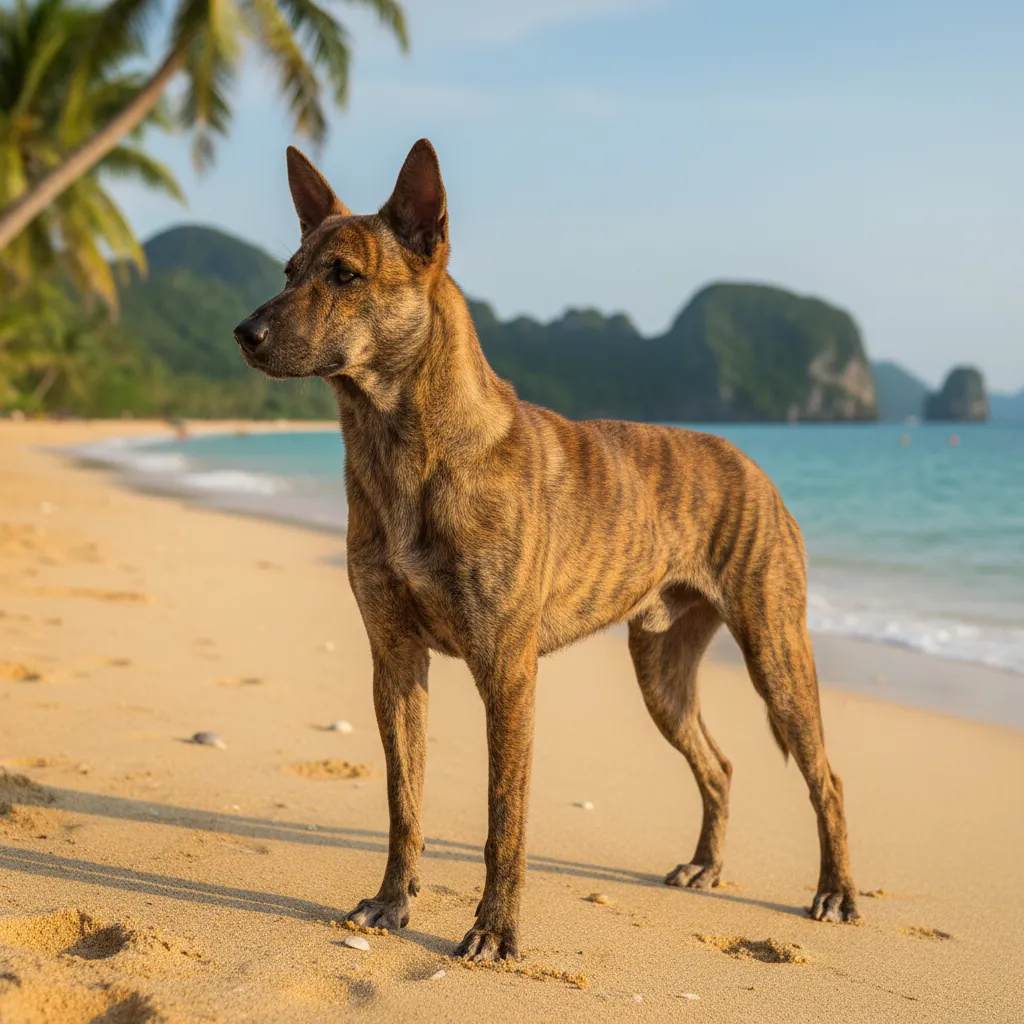
There are only three ridgebacked dog breeds in the world, and this is the smallest and least known of them. The Phu Quoc Ridgeback developed on an island in the Gulf of Thailand, isolated enough for a distinct population to hold together, and it carries the same reversed strip of hair along the spine as the Thai Ridgeback and the Rhodesian, three separate populations that arrived at the same unusual trait, with the relationship between them still unsettled.
Island life produced a dog with an unusual skill set. Phu Quoc dogs swim genuinely well, with partially webbed feet, and they are reported to fish and to dig for buried prey, behaviours you do not find in most primitive hunting breeds. They are also agile climbers. On the island they hunted small game and boar in dense tropical forest, and they doubled as village dogs, which is why the modern breed is somewhat more socially open than the Thai Ridgeback despite belonging to the same primitive group.
The temperament is intelligent, alert and strongly independent. These are dogs that solve problems, including problems you would prefer they left alone, and they will not perform obedience for its own sake. They bond closely and are reserved rather than hostile with strangers, and the prey drive is high enough that small pets and poultry are at real risk. Given work, space and an owner who is consistent, they are highly capable; given boredom and a small flat, they escape.
The climate fit is essentially perfect, a tropical island dog with a short coat and full heat and humidity tolerance, which puts it far ahead of any northern breed for Indian conditions. Health is generally excellent, with the caveat that ridged breeds carry a raised risk of dermoid sinus. The obstacle is supply. The population is small even in Vietnam, where recognition and organised breeding are recent, export is minimal, and there is no route to one in India that does not involve substantial cost and a long wait.