The account
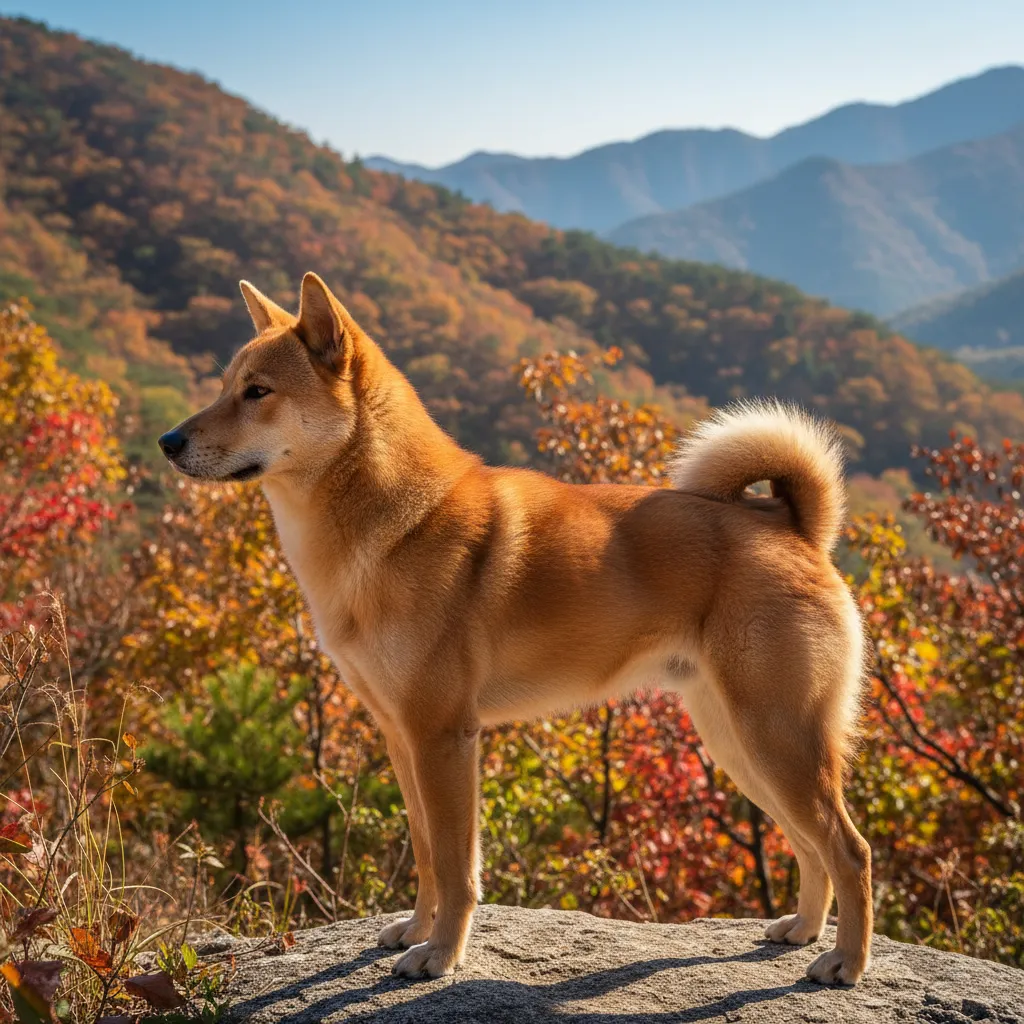
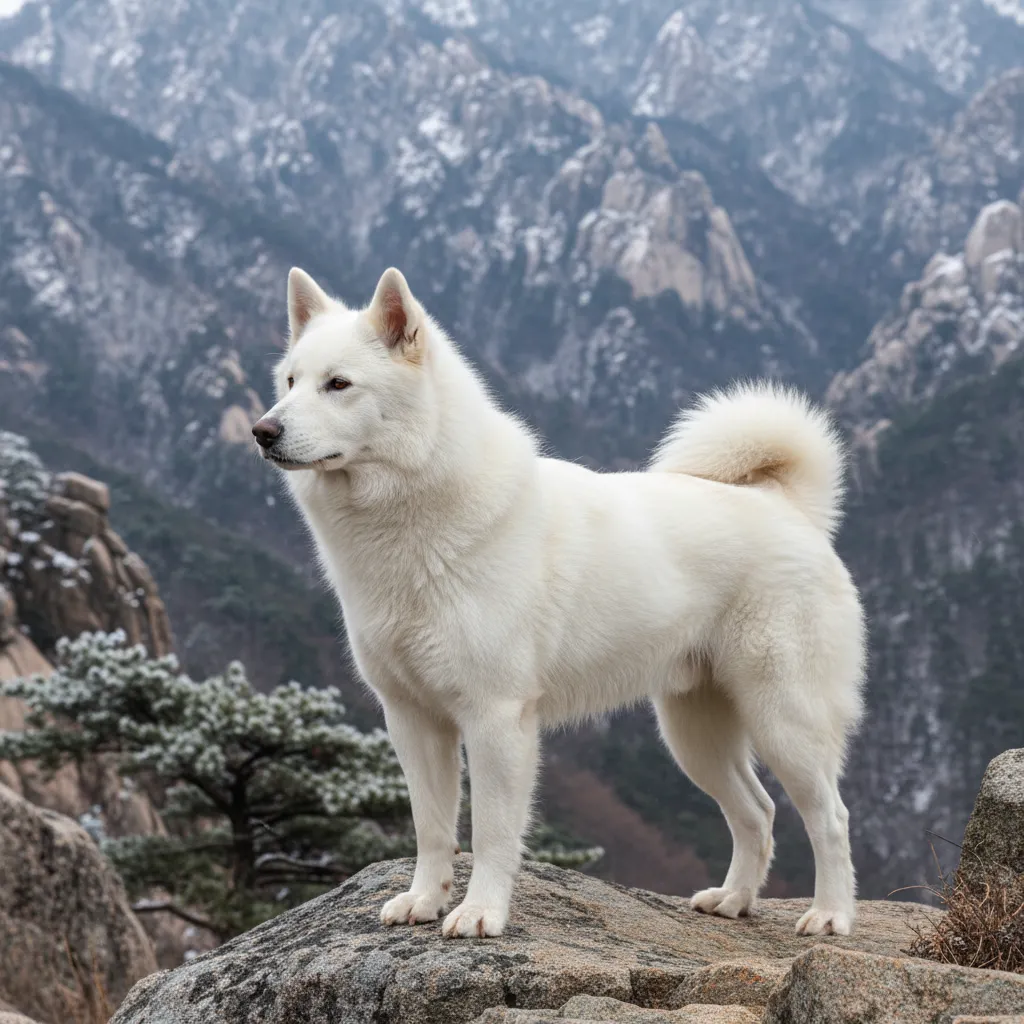
The Pungsan is a dog most people will only ever read about. It comes from Pungsan county in what is now Ryanggang Province, North Korea, where it was bred as a large-game hunting spitz, deer and boar routinely, and by persistent tradition tigers, though that claim belongs to the same category of national legend as most tiger-dog stories anywhere. It is designated a natural monument in North Korea and functions there as a state symbol.
That symbolic status is also why it exists in the outside world at all. Pungsans have been used as diplomatic gifts, most visibly the pair presented to South Korean president Kim Dae-jung after the 2000 summit, and a small South Korean population descends from dogs that crossed before the peninsula was divided. Outside the Koreas the breed is essentially absent, and it is not recognised by the FCI or the AKC.
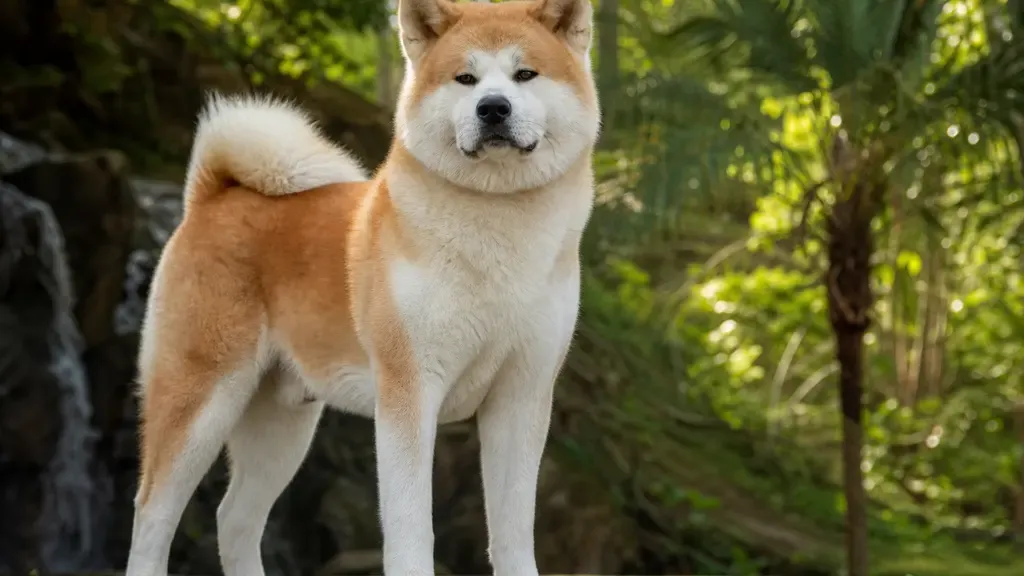
The dog itself is a heavy-boned white spitz, larger and rangier than a Jindo, with the very high energy and hard prey drive of a breed selected for pursuing large animals through mountainous terrain. Accounts consistently describe a fearless, physically formidable animal that bonds tightly to its household and is reserved to the point of hostility with strangers. Independence is high, biddability is low, and the exercise requirement is beyond what most households can meet. This is a dog built to work all day in cold hill country.
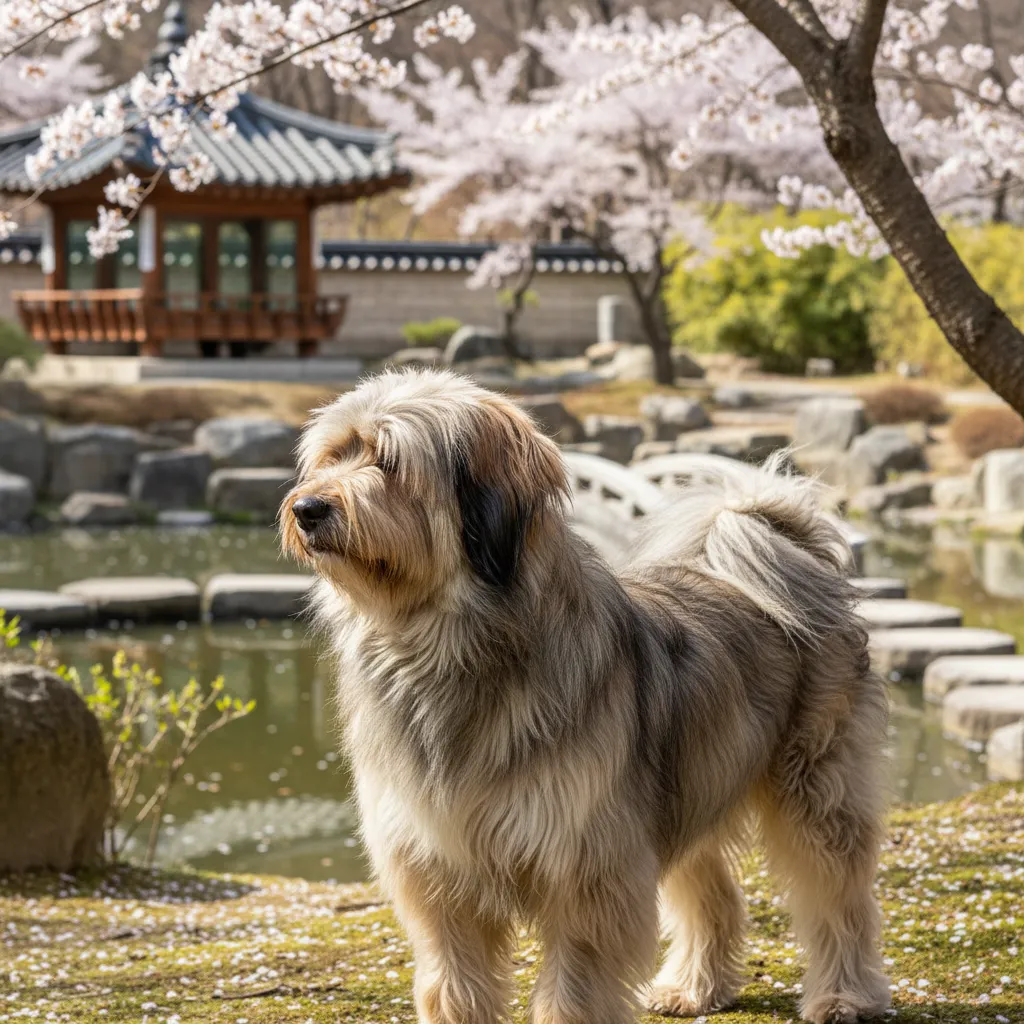
For a reader in India the assessment is short. There is no legitimate route to acquiring one, and the northern Korean physiology, dense double coat, heavy build, cold adaptation, would make an Indian summer a serious welfare problem even if there were. The breed's interest is comparative: set beside the Jindo and the Sapsali, it shows how three quite different dogs emerged from one peninsula, and how completely political geography can seal a population off.