Skip to content

FCI Group 5 Section 5 (Asian Spitz and Related Breeds); AKC Foundation Stock Service · Japan (Kii Peninsula: Mie and Wakayama Prefectures)

Kishu Ken

The Kishu Ken is a rare, loyal Japanese hunting dog known for its white coat and devotion to one owner. Explore care tips and suitability.

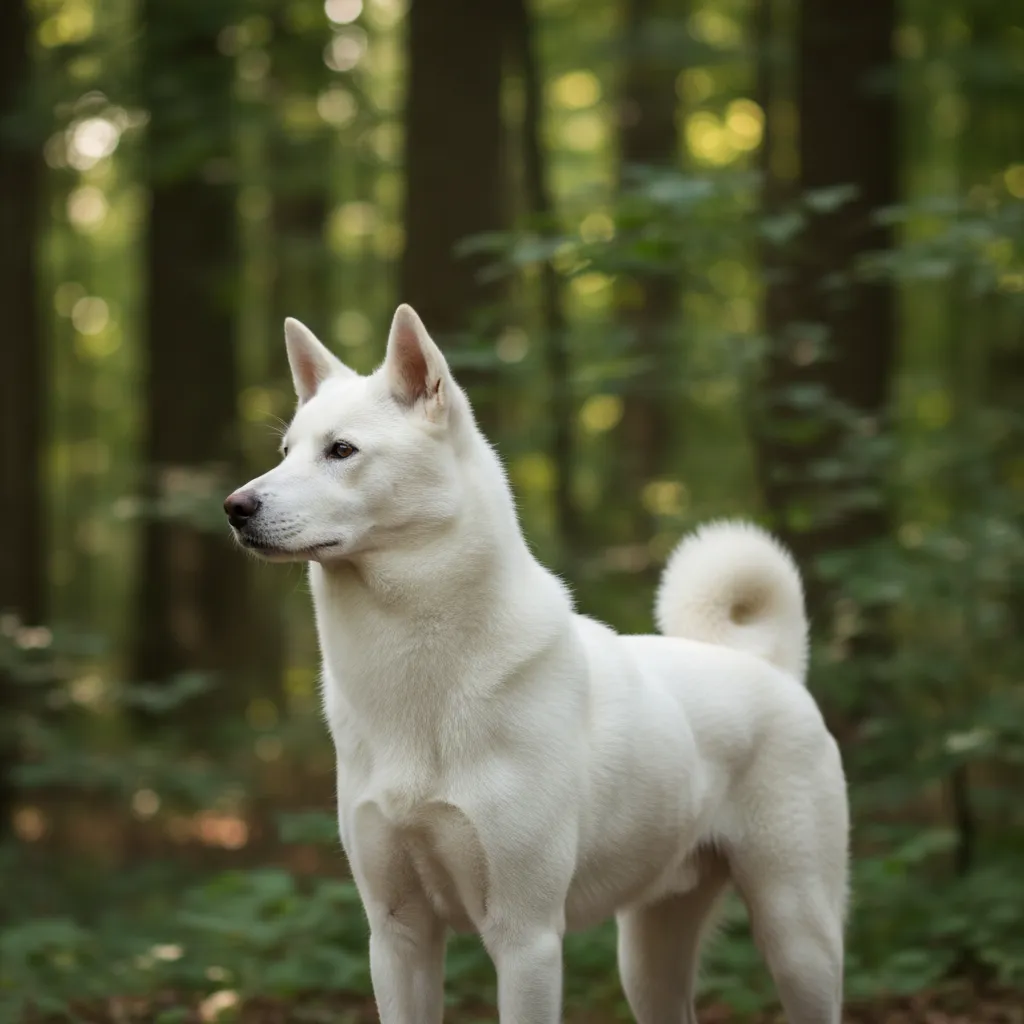
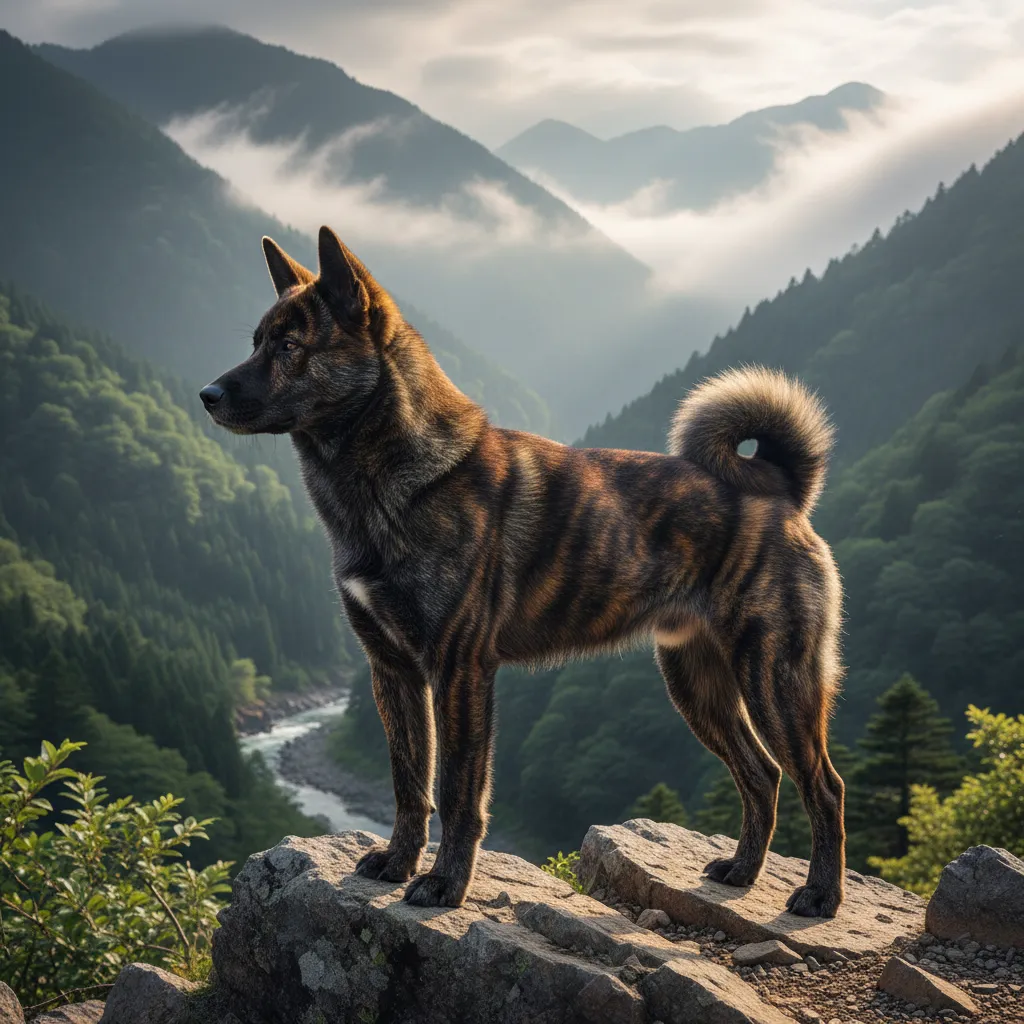
Kishu Ken, an illustrated specimen plate
Plate, Kishu Ken

The record

Size
Medium
Height at shoulder
17-22 inches
Weight
14-27kg
Lifespan
11-13 years
Group
FCI Group 5 Section 5 (Asian Spitz and Related Breeds); AKC Foundation Stock Service
Origin
Japan (Kii Peninsula: Mie and Wakayama Prefectures)
Period
Ancient, thousands of years old, designated Natural Monument in 1934
Bred for
Hunting boar and deer in the dense, mountainous forests of the Kii Peninsula
Energy
High
Shedding
High
Trainability
Medium
Prey drive
High
Pack drive
Medium
Protectiveness
Medium
Sociability
Medium
Independence
High

A silent, determined hunter famously known as a one-person dog, the Kishu Ken is fiercely loyal to its chosen human, aloof with strangers, and naturally clean.

TemperamentFaithfulSilent HunterIndependentClean

3 recorded ancestors stand behind this breed, nearest first. Open any one of them for what is known about it.

The account

The Kishu Ken hunts silently. Most hunting dogs bay to signal a find; the Kishu stalks, closes and holds without giving voice, which is why hunters on the Kii Peninsula valued it for boar work in dense forest where noise moves game before the hunter arrives. That quietness carries into ordinary life. This is a notably undemonstrative dog that watches far more than it announces.

The white coat that now defines the breed is recent. Historically Kishu came in red, sesame and pinto as well, and white was standardised in the 1930s partly because it separated the dog visually from boar in cover. The breed was designated a Natural Monument in 1934 and remains concentrated in Mie and Wakayama Prefectures, where working lines still exist alongside the show population.

Temperamentally the Kishu is the archetypal one-person dog. It selects a human and organises its life around that choice, treats the rest of the household with polite tolerance, and treats strangers as furniture at best. It is also famously clean, a trait owners raise constantly, along with the ease of house-training. What accompanies that is a hard prey drive, real same-sex dog aggression in many individuals, and an independence that makes obedience a negotiation. The Kishu is not stubborn out of contrariness; it simply has its own assessment and sees no reason to abandon it.

Both the practical obstacles are severe for readers here. The double coat and mountain physiology mean a hot, humid Indian summer is a welfare problem, not a management task. And the breed barely exists outside Japan, a few hundred registrations a year at home, limited export, and no established line anywhere in South Asia. Health is generally robust with a low burden of inherited disease. This is a dog worth knowing about for what it shows of how narrowly a breed can be shaped by one landscape.
Questions people ask

Can I find a Kishu Ken?
The Kishu Ken is virtually impossible to find. Even globally it is one of the rarer Nihon Ken. Importing from Japan would is expensive total.
Is the Kishu Ken good for hot, humid climates?
Like all Japanese spitz-type dogs, the Kishu has a dense double coat unsuited to tropical heat. They require air-conditioned environments, especially from March to June.
Are Kishu Kens good with children?
Kishu Kens are devoted to their family and generally gentle with children they know well. However, their high prey drive means interactions with small children should be supervised.
Why is the Kishu Ken usually white?
The predominantly white coat was selectively favoured by Japanese hunters because it made the dog visible against dark forest undergrowth during boar hunts.
What would a Kishu Ken cost?
No domestic Kishu Ken breeding exists. An imported puppy would is expensive total. Monthly upkeep would be.

Nearby in the register

Back to the plate