The account
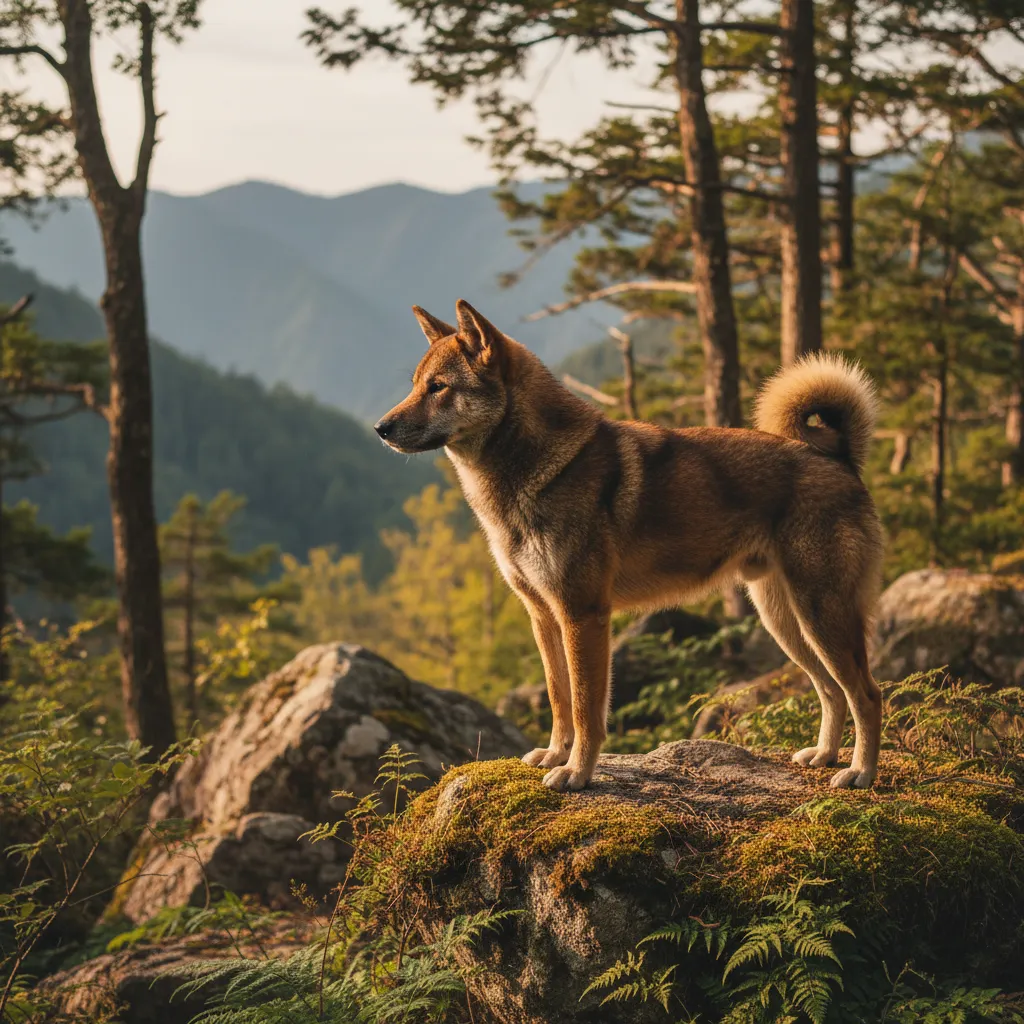
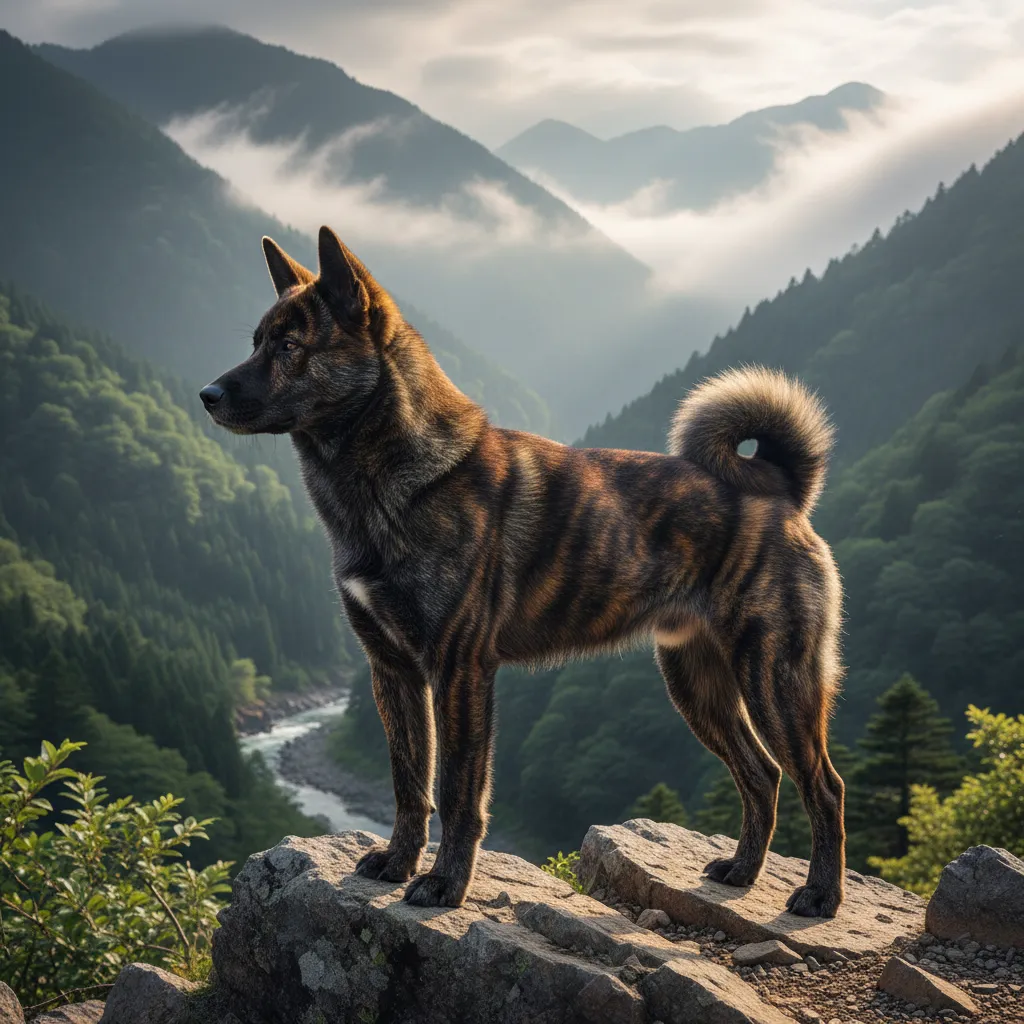
The Kai Ken is called the tiger dog for its coat, and the brindle is not a cosmetic quirk. In the steep forested mountains of what is now Yamanashi Prefecture, a black-and-red streaked dog working in dappled shade is very hard to see, and the pattern was retained because it was useful. It darkens with age, so puppies often look plain and only develop the striping over their first year or two.
Its isolation is the other defining fact. Kai Province was mountainous and cut off enough that the breed stayed largely unmixed while other Japanese dogs interbred, and the Kai Ken is generally held to be the least crossbred of the six native Japanese breeds. It was designated a Natural Monument in 1934. Hunters used it on boar and deer in terrain that rewarded agility over power, and the dogs are famously sure-footed, well documented climbing trees and rock faces and swimming after quarry, which is unusual behaviour for a spitz.
As a companion the Kai Ken is regarded as one of the more manageable nihon-ken, which is a relative statement. It tends to be a one-family dog rather than a strict one-person dog, is less prone to the dog aggression that troubles Shiba and Shikoku owners, and is quiet, not a barker. What it is not is biddable. The independence is high, the prey drive is intact and instant, and containment has to account for a dog that genuinely climbs. Recall around wildlife should not be relied on at all.
For Indian owners this comes down to climate and supply, and both are unfavourable. The dense double coat is built for cold mountain winters and sheds heavily twice a year; lowland heat is a serious welfare issue rather than an inconvenience. Numbers outside Japan are very small, export is restricted, and the realistic path is an import at substantial cost with a long wait. The breed is generally healthy and long-lived, which is small consolation given how difficult it is to obtain one honestly.