Skip to content

FCI Group 5 Section 5 (Asian Spitz and Related Breeds); AKC Non-Sporting Group · China (Northern)

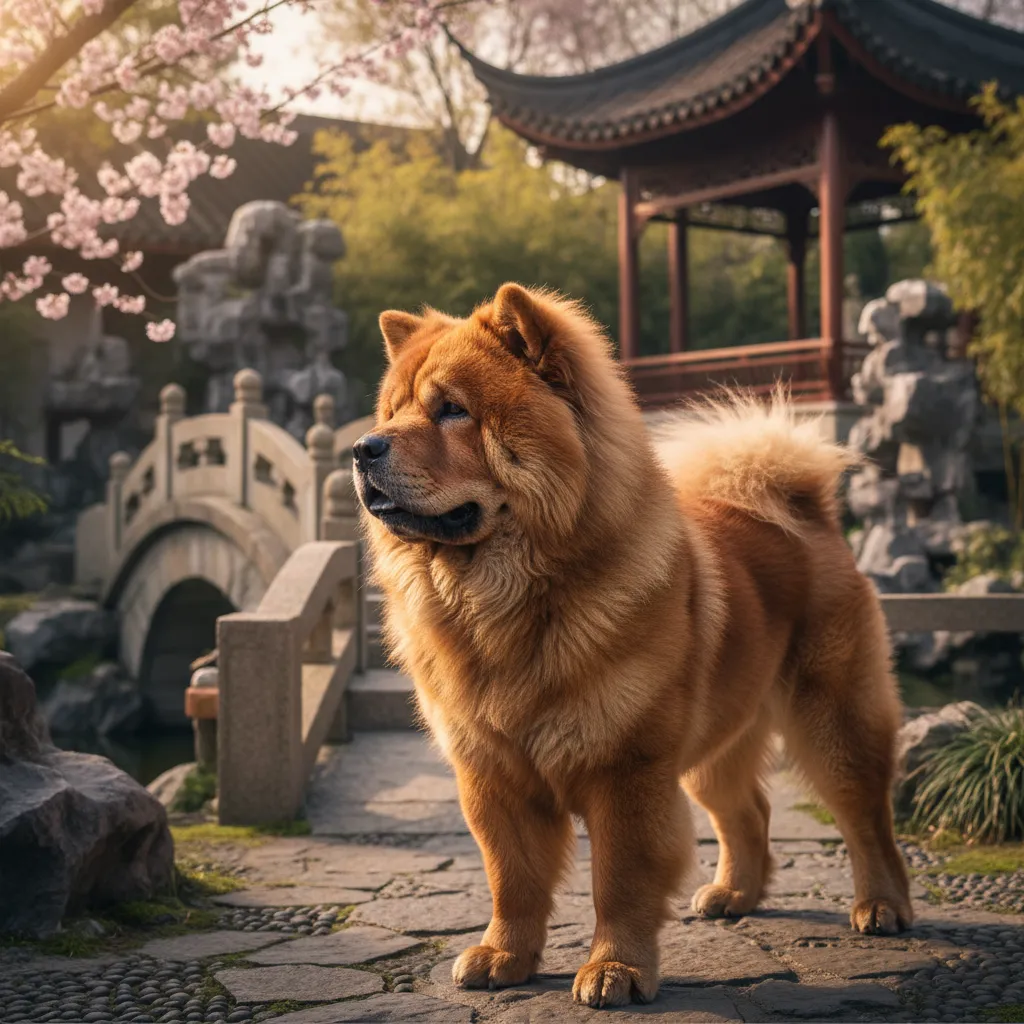
Chow Chow

The Chow Chow is an ancient Chinese breed with a lion-like mane and cat-like personality. Discover care tips, health risks, and suitability.

Chow Chow, an illustrated specimen plate
Plate, Chow Chow

The record

Size
Medium-Large
Height at shoulder
17-20 inches
Weight
20-32kg
Lifespan
8-12 years
Group
FCI Group 5 Section 5 (Asian Spitz and Related Breeds); AKC Non-Sporting Group
Origin
China (Northern)
Period
Ancient (Han Dynasty, 206 BCE-220 CE; possibly 2000+ years old)
Bred for
Hunting, guarding, herding, and pulling carts; later companion to Chinese nobility
Energy
Low
Shedding
Very High
Trainability
Low
Prey drive
Medium
Pack drive
Medium
Protectiveness
High
Sociability
Low
Independence
High

A dignified, aloof, and fiercely independent breed with cat-like personality, deeply loyal to family but suspicious of strangers and demanding of experienced, patient handling.

TemperamentAloofLoyalIndependentDignified

2 recorded ancestors stand behind this breed, nearest first. Open any one of them for what is known about it.

The account

The Chow Chow is one of the oldest and least biddable breeds in general circulation, and the honest starting point is that most people who want one want it for the way it looks. That is understandable, the lion mane, the scowling expression, the blue-black tongue and the stiff, stilted rear gait produced by unusually straight hind legs make it unmistakable. It is also a poor guide to what living with the breed involves.

Its history in China spans at least two thousand years and includes almost every job a dog can be given: hunting, herding, cart-pulling, guarding, and, grimly and unavoidably, being raised for meat and fur in some periods. What it was rarely selected for was cooperation with a handler. The Chow was valued for self-sufficiency and territorial reliability, and the modern breed retains exactly that. It is dignified, undemonstrative, loyal to a small circle, and profoundly indifferent to instruction. Owners describe cat-like behaviour, and the comparison holds: affection on the dog's terms, on the dog's schedule.

That makes early socialisation more important here than in almost any other breed. A Chow that has not been extensively and positively exposed to strangers, children and other dogs as a puppy grows into an adult with a low threshold and a great deal of physical power behind it. This is not an aggressive breed by nature but it is a suspicious and possessive one, and the combination punishes casual ownership. Energy needs are genuinely low, a couple of moderate walks a day, which is one of the few things that makes it viable in an apartment.

The health and climate picture is where Indian owners need to be most careful. The double coat is one of the densest in dogs and makes heat a first-order welfare problem, not a comfort issue; entropion, hip and elbow dysplasia and skin-fold infection are all common; and the somewhat shortened muzzle reduces cooling efficiency further. If you keep a Chow in the Indian plains, air conditioning is not a luxury, grooming is a several-times-weekly commitment, and a vet who knows the breed's eye problems is essential.
Questions people ask

Can Chow Chows handle tropical heat?
Chow Chows are extremely heat-sensitive due to their thick double coat and brachycephalic facial structure. They require air-conditioned environments in hot, humid summers and should only be walked during early morning or late evening hours.
How much does a Chow Chow cost?
Chow Chow puppies typically is expensive from reputable breeders, with show-quality lines exceeding. Monthly maintenance is limited.
Are Chow Chows good for first-time owners?
Chow Chows are strong-willed, independent, and stubborn. They are not recommended for first-time dog owners. They need an experienced, confident handler who uses positive reinforcement consistently.
How much grooming does a Chow Chow need?
Chow Chows require brushing 3-4 times per week minimum, and daily during shedding season. In high humidity, their dense coat is prone to hot spots and fungal infections. Professional grooming every 4-6 weeks is expensive per session.

Nearby in the register

Back to the plate