
At this age 4 to 8 weeks
- many puppies are sold and taken home at thirty to forty-five days
- at one month, most of what the litter teaches has hardly begun; by two months a lot of it is in him
- on the hill, a puppy has to start looking after himself at about one and a half to two months
- in one study, dogs taken from the litter at thirty to forty days were reported to have more problem behaviours as adults than dogs taken at sixty
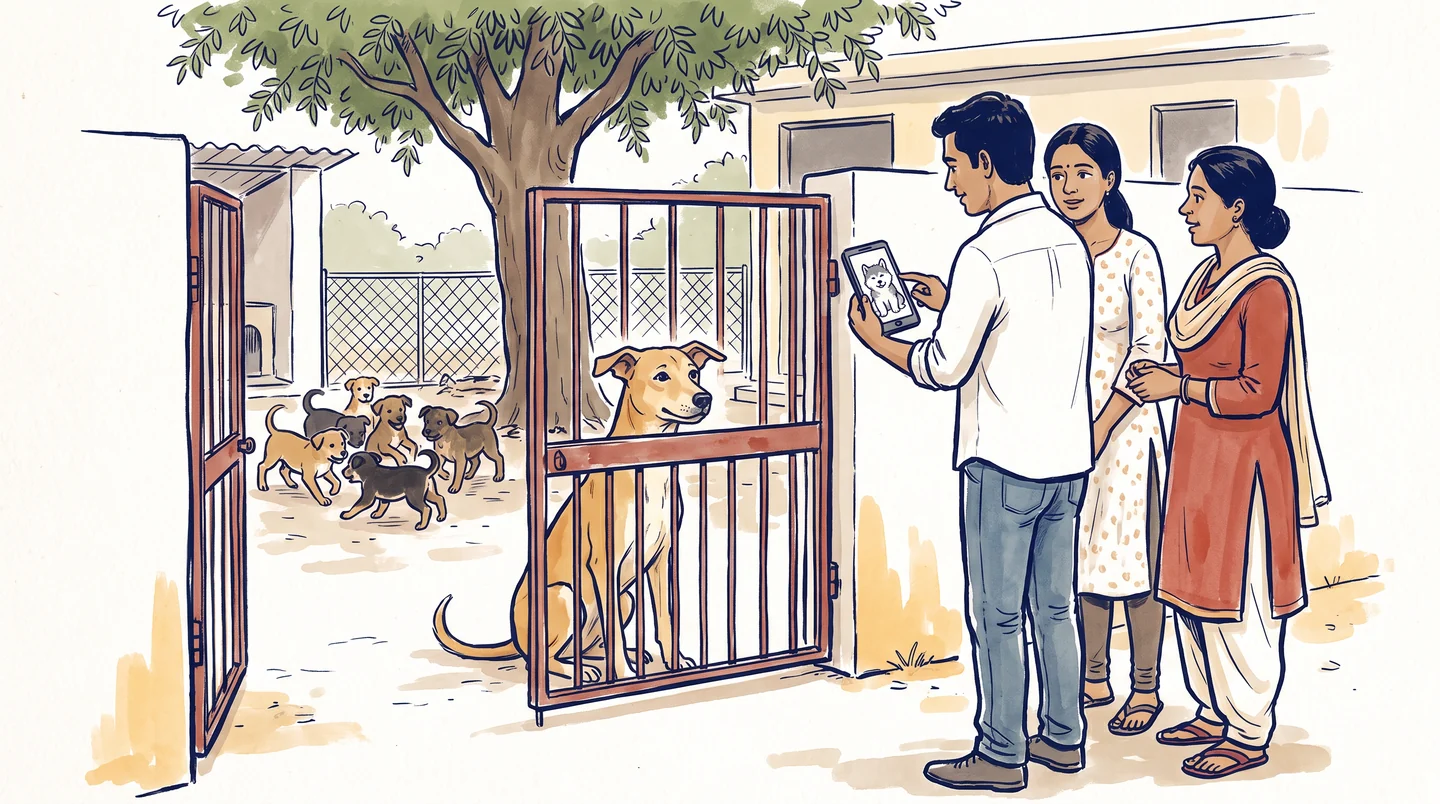
I am in a lot of adoption groups, and over the years I have handled a lot of adoption cases. One conversation comes again and again.
Someone writes that they want to adopt a dog. Good. We have an Indie for adoption. No answer. Then: no, we only want a Husky. All right. It has to be four months old. No, six. We have an adult. No, we do not want an adult. This one has some issues. No, not that one either. Do you have puppies?
Sometimes, under the word adopt, there is a family who wants a breed and does not want to pay for one. They want it free. That is not adopting a dog either.
So I ask them one question, and I ask you the same one before this book ends. Do you want to adopt a dog, or do you want to adopt a Husky? Be clear with yourself. There is no shame in either answer. What goes wrong is not knowing which one you are giving.
 , open the figure larger
And then, nearly always, the second thing they want is a puppy, and the younger the better. That second thing is what this chapter is about, because young has a number, and the number most puppies leave at is wrong.
What he leaves behind at thirty days
Puppies are sold and taken home at thirty days, forty days, forty-five. Look at what that means.
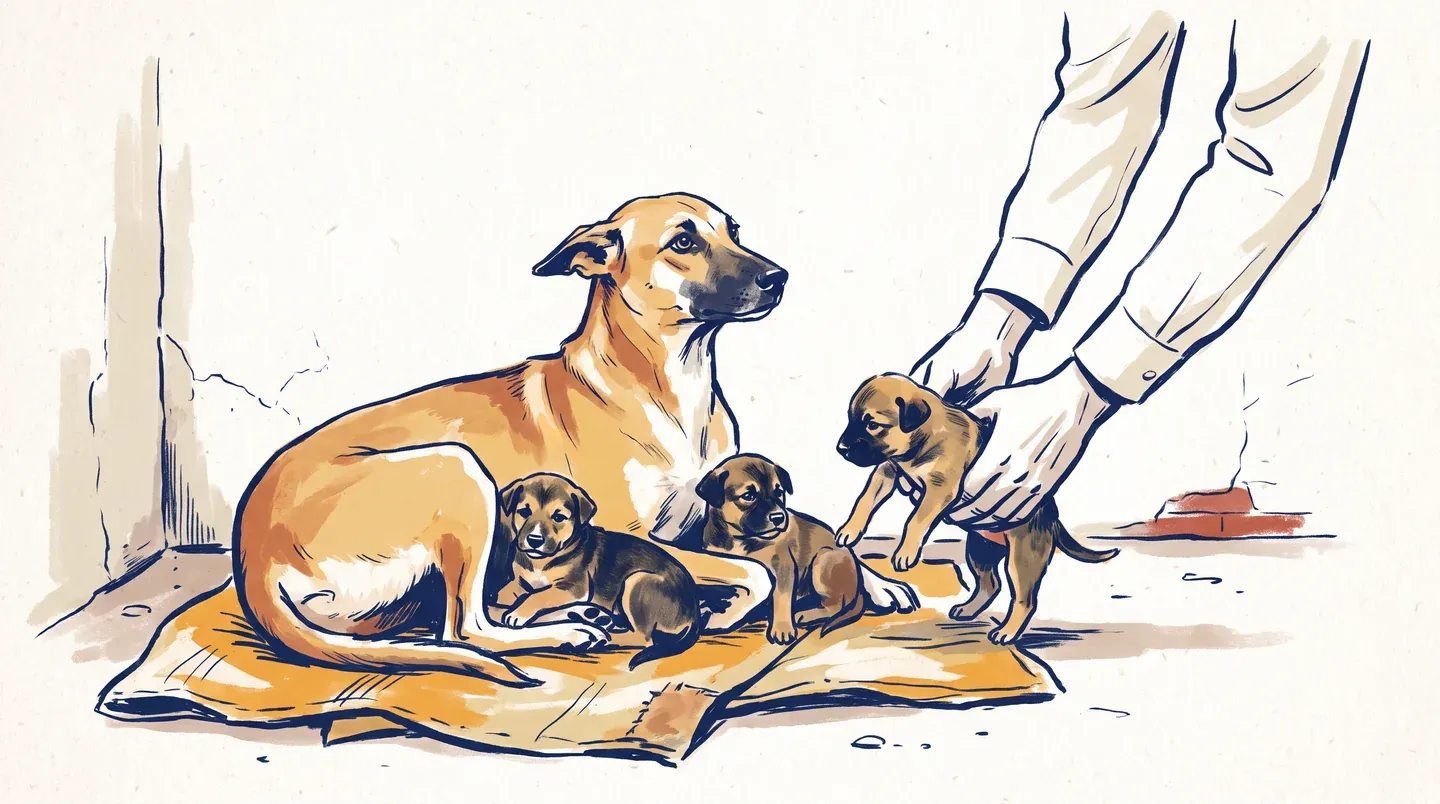
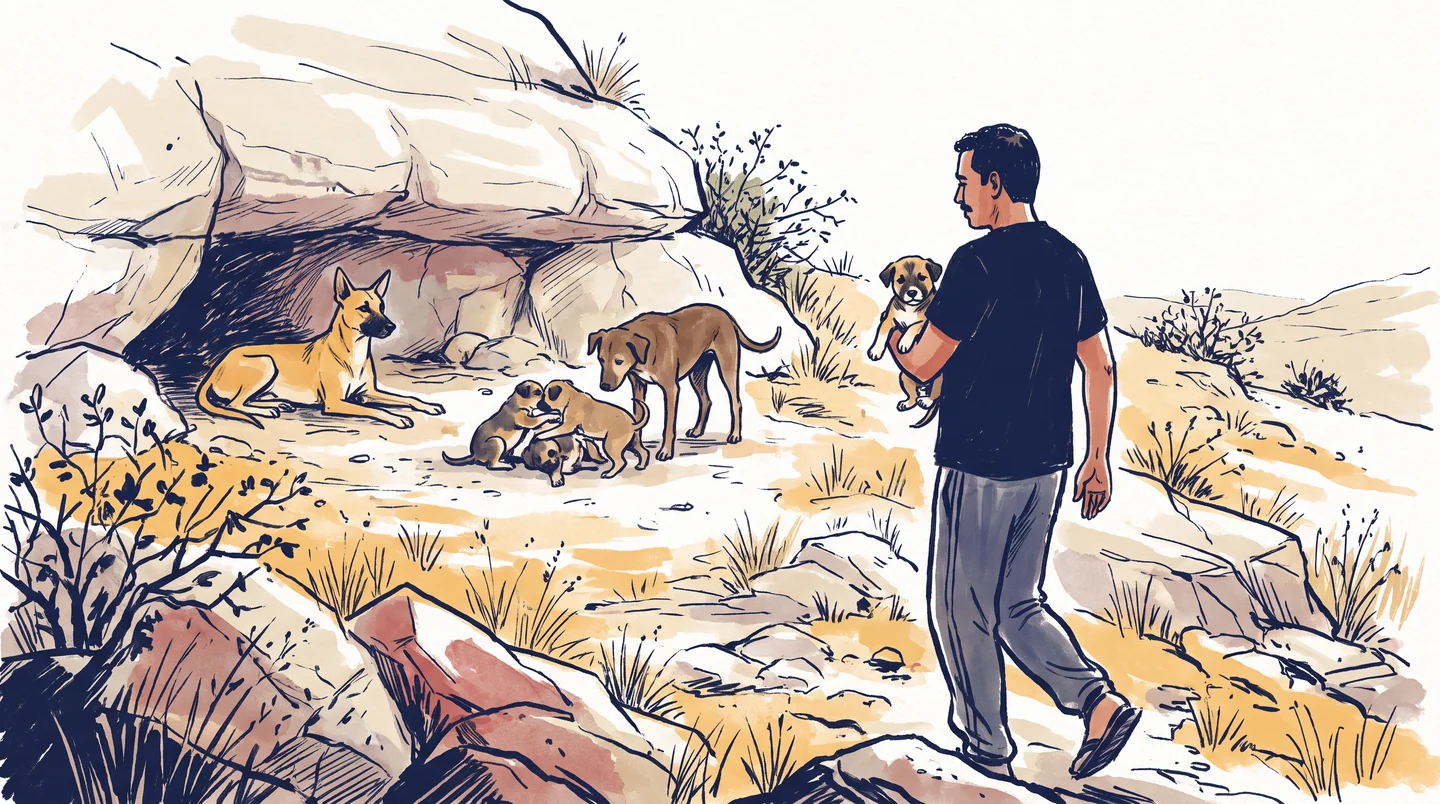
You saw in chapter 4 what the litter teaches him in his second month. The cry under his teeth. The first meat, landing in the middle of four brothers and sisters. The ring of puppies and the way out of it. The ladder of the pack, the gentlest dog first. At one month most of it has hardly begun. By two months a lot of it is in him.
So a puppy who leaves at thirty days does not leave in the middle of his schooling. He leaves at the gate. Everything after that, the family he goes to has to teach, and usually nobody has told them so.
 , open the figure larger
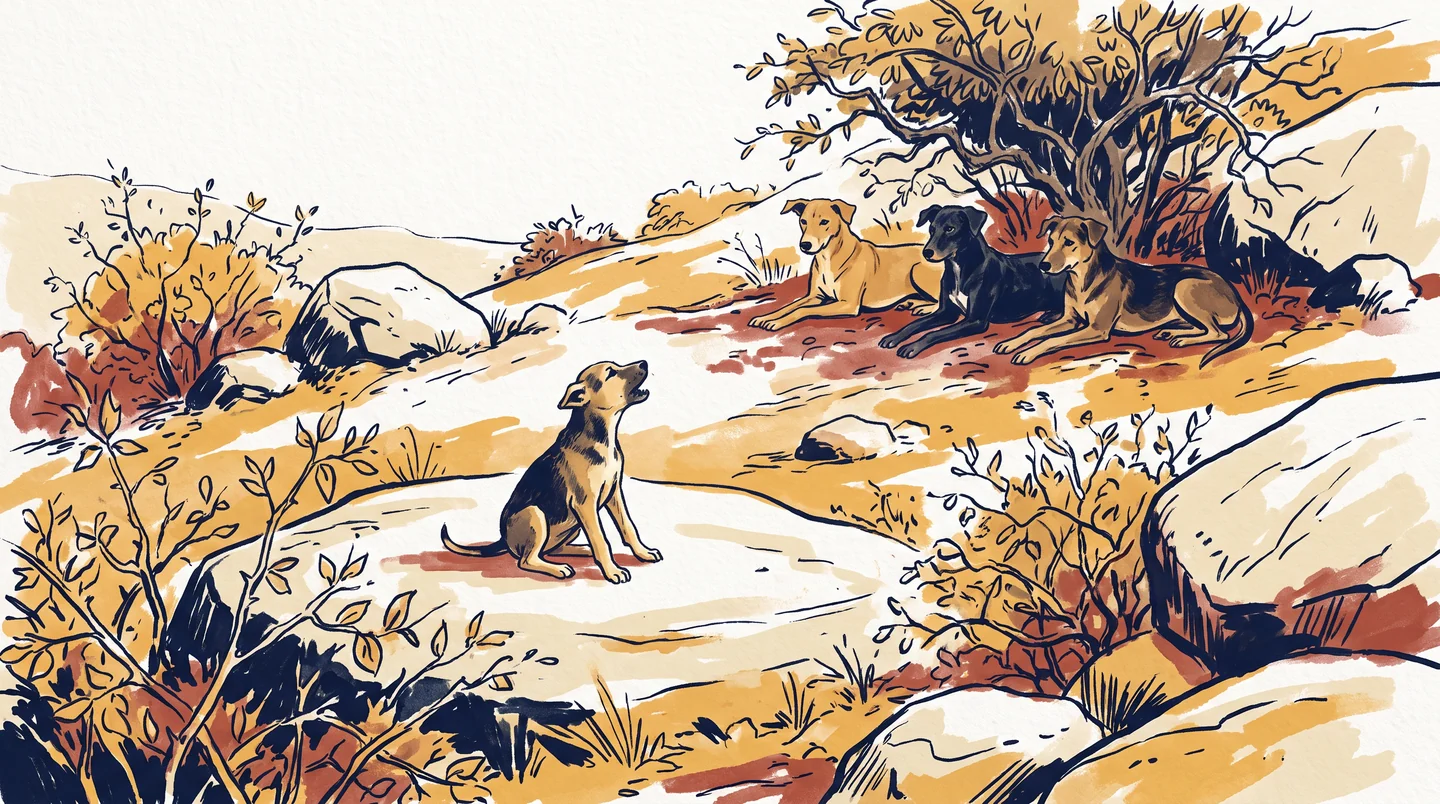
Look at the dogs on the hill. Out here a puppy has to start looking after himself at about one and a half to two months. There are no feeders, no one putting down a bowl in the lane. Most of them do not make it. The ones who do are the strongest dogs you will ever see. They do not look like city dogs at all, from their emotions to the way their bodies are built. And when a puppy that age sits and cries for his mother, the pack does not run to him. They look at him as if to say, don't you want to grow up? Bear it.
 , open the figure larger
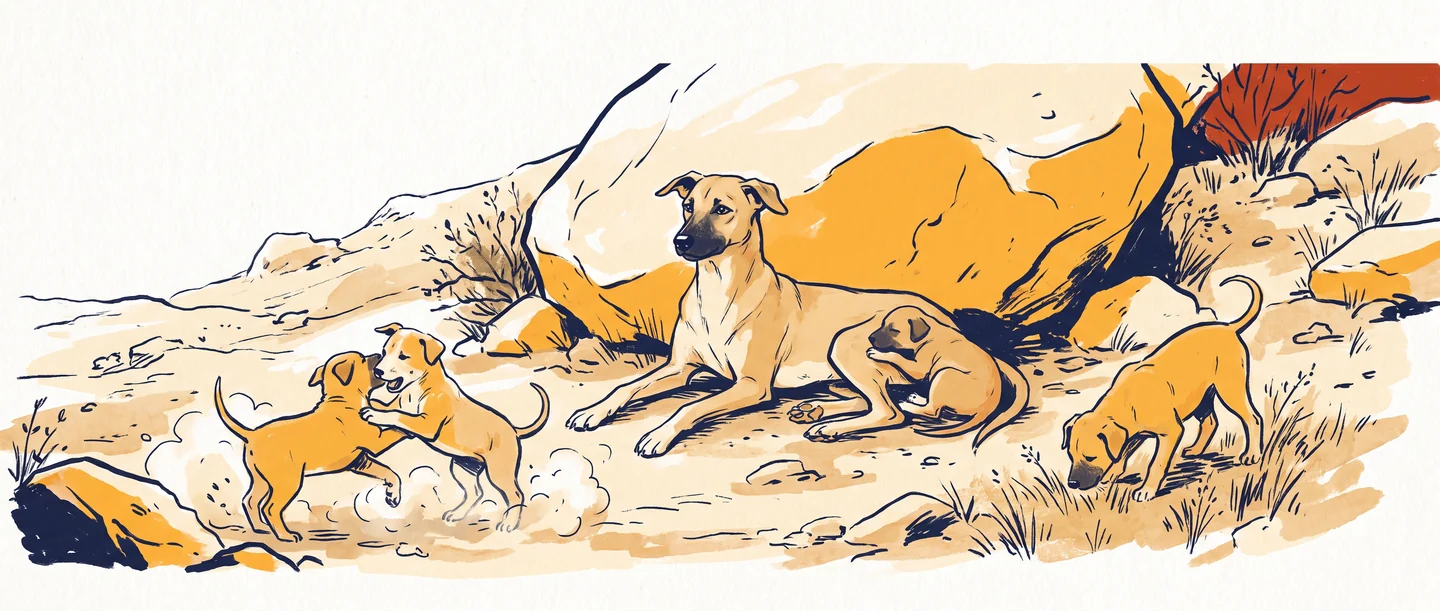
The way I see it, nature does not send a puppy into the world at a month. Even here, where life is hard, he gets his mother, his litter and his den first. He is not on his own until about two months, and he still has the pack around him.
 The rest of Birth to eight weeks