

At this age before birth
- a dog is pregnant for about nine weeks
- half of what a puppy is born with comes from his mother, and nearly everything he learns in his first eight weeks comes from her and his litter
- heavy stress on a mother while she is pregnant is linked to puppies who are more fearful and cope less well with stress later
- in a wild pack, as a rule, only one female has puppies, and she is the most confident one
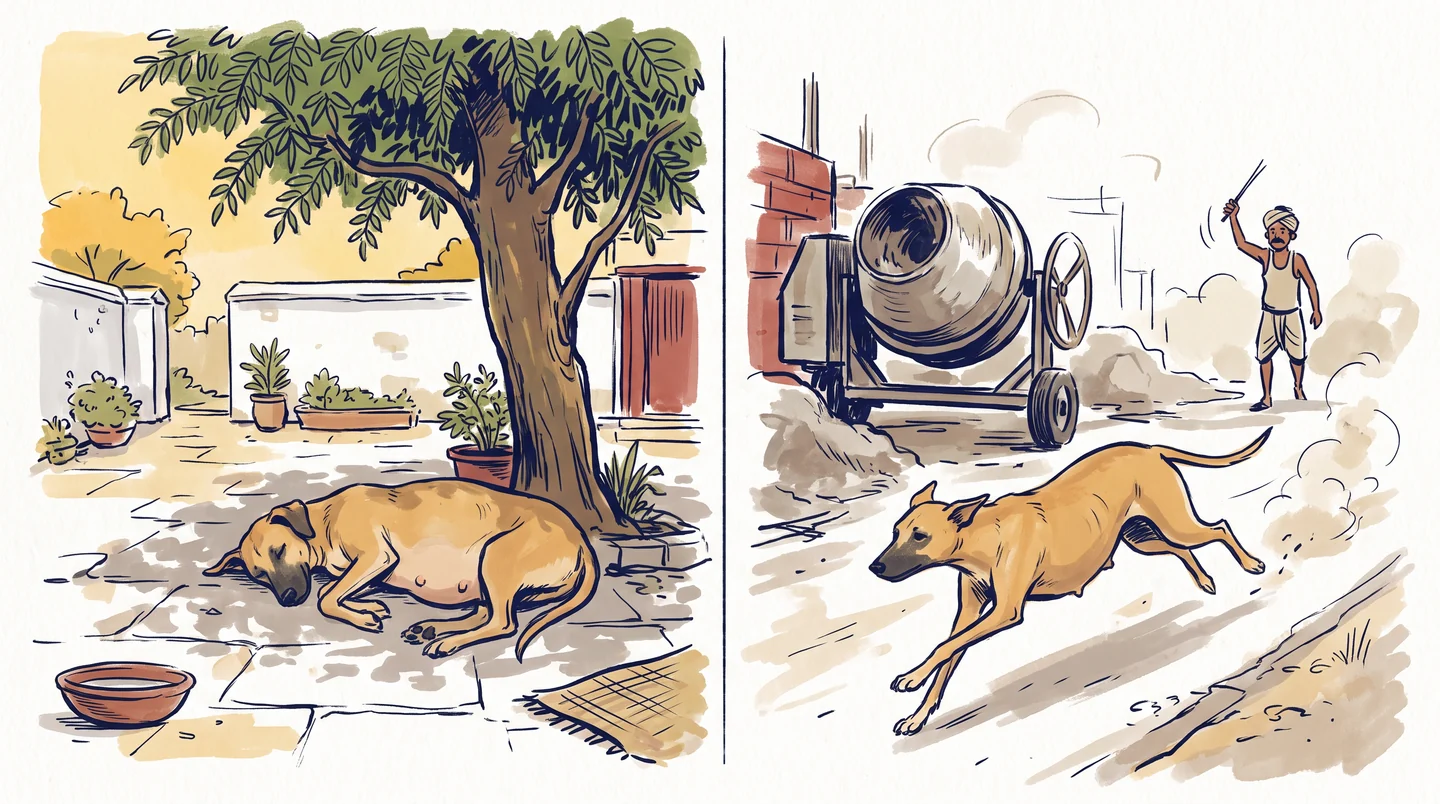
One morning this October I woke up early and saw one of our young females licking herself behind. She was about to have her first litter. There was a thread hanging from her, the kind you see after a puppy has come out. But there was no puppy anywhere.
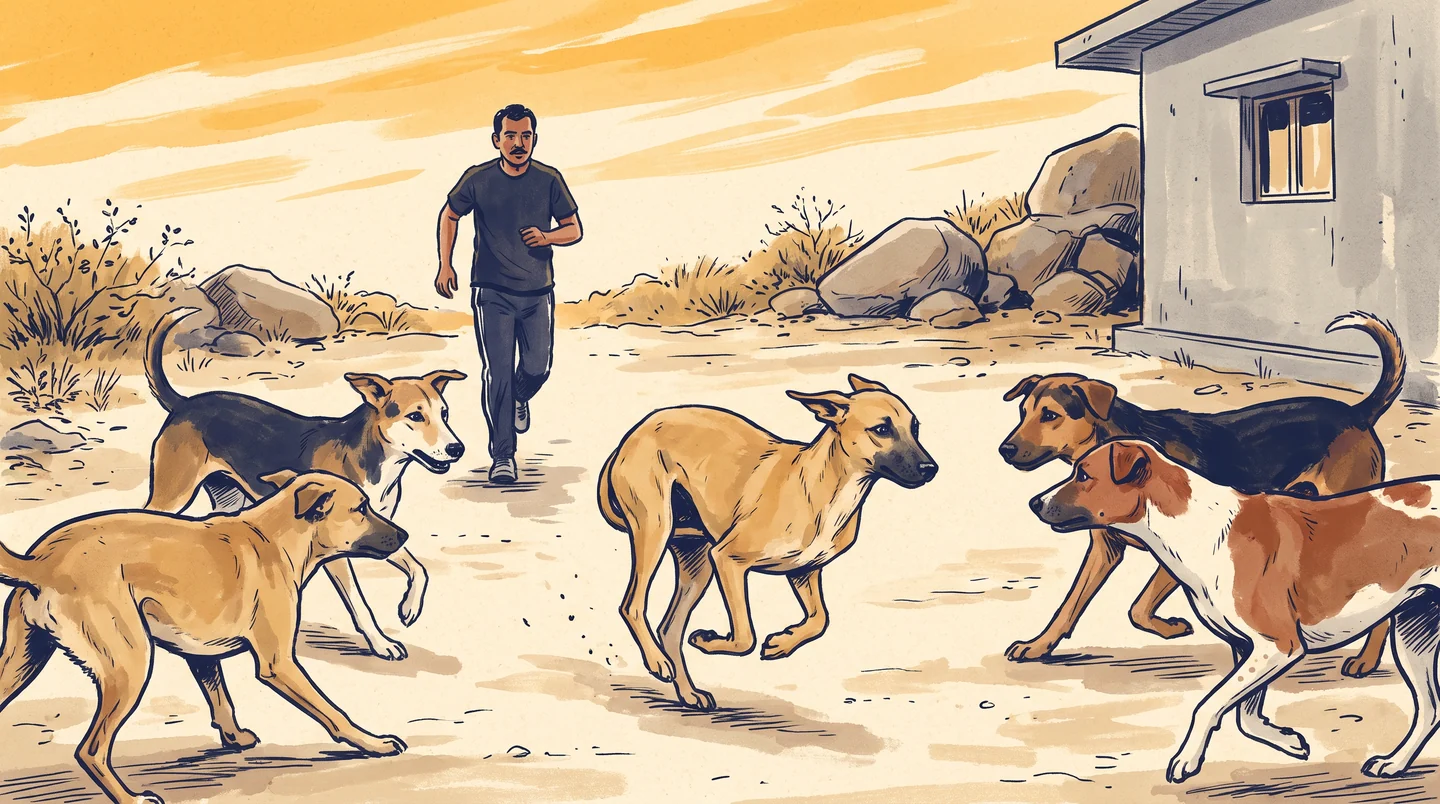
Then she ran. And the whole pack went after her: the females, the males, everyone. They surrounded her and kept trying to hold her in one place. At that moment I did not understand what they were doing. When I got to her, the next puppy was coming out, and she was still running with it hanging behind her. It fell, and I caught it.
 , open the figure larger
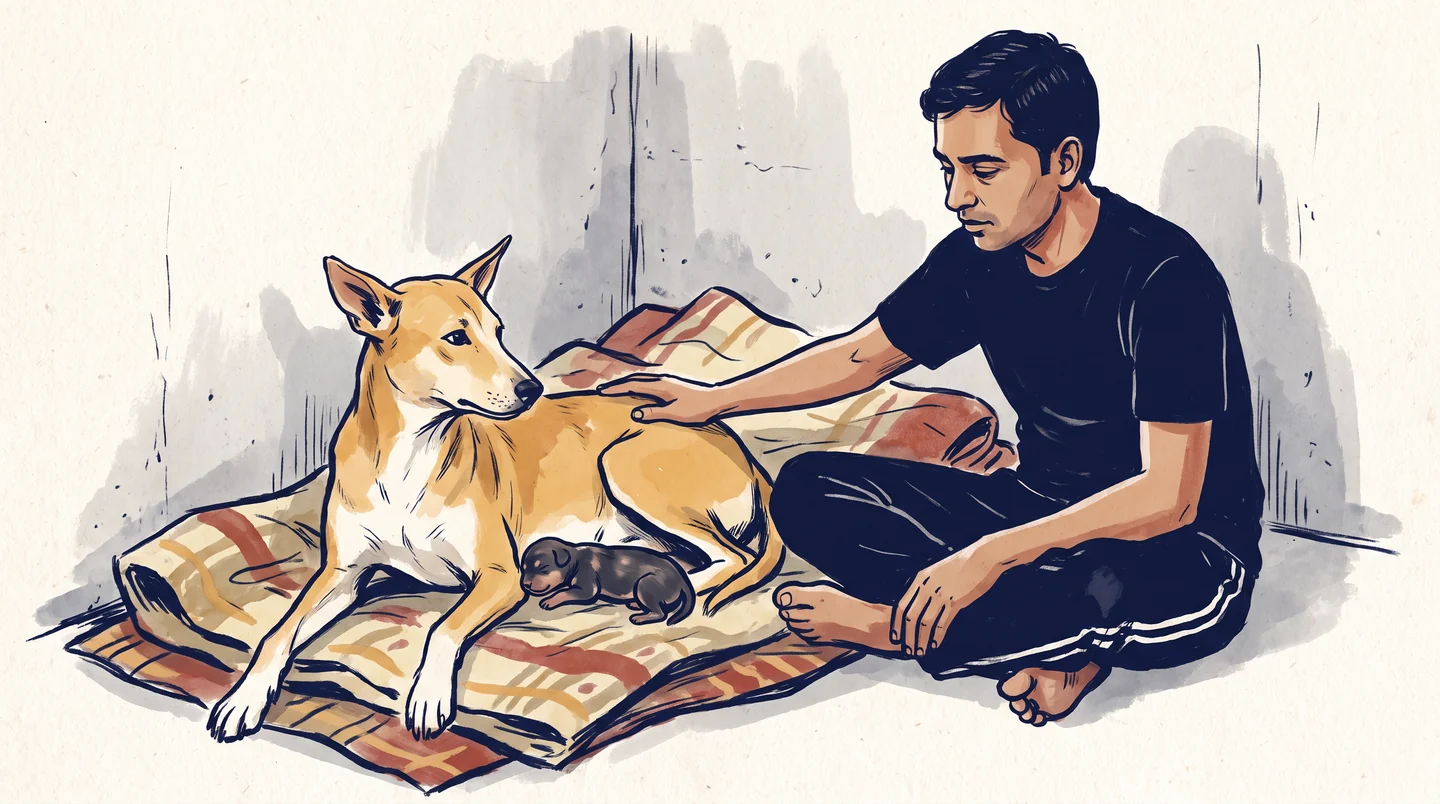
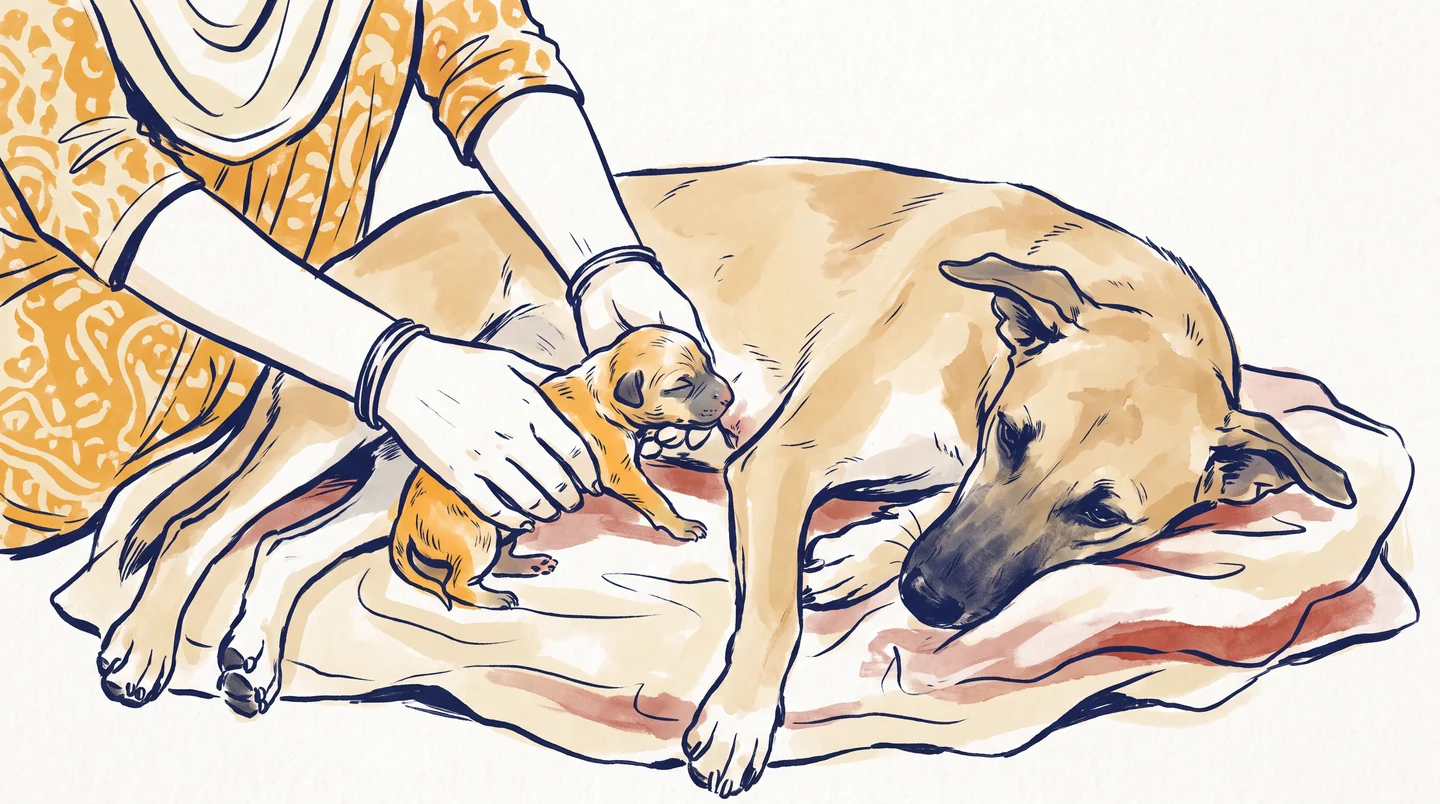
She had no idea what was happening to her. I picked her up, with the puppy, and carried her to the place we had made ready for her. Then I sat with her for a long time, about an hour and a half, keeping her company and reassuring her.
The puppies kept coming, and she did not know what they were or what to do with them. She would smell one and flinch away from it. I was frightened of what she might do. Then a puppy was put at her belly, and it started to drink. That felt good to her, and she began to calm down. Slowly, something started to form between her and them.
 , open the figure larger
 , open the figure larger
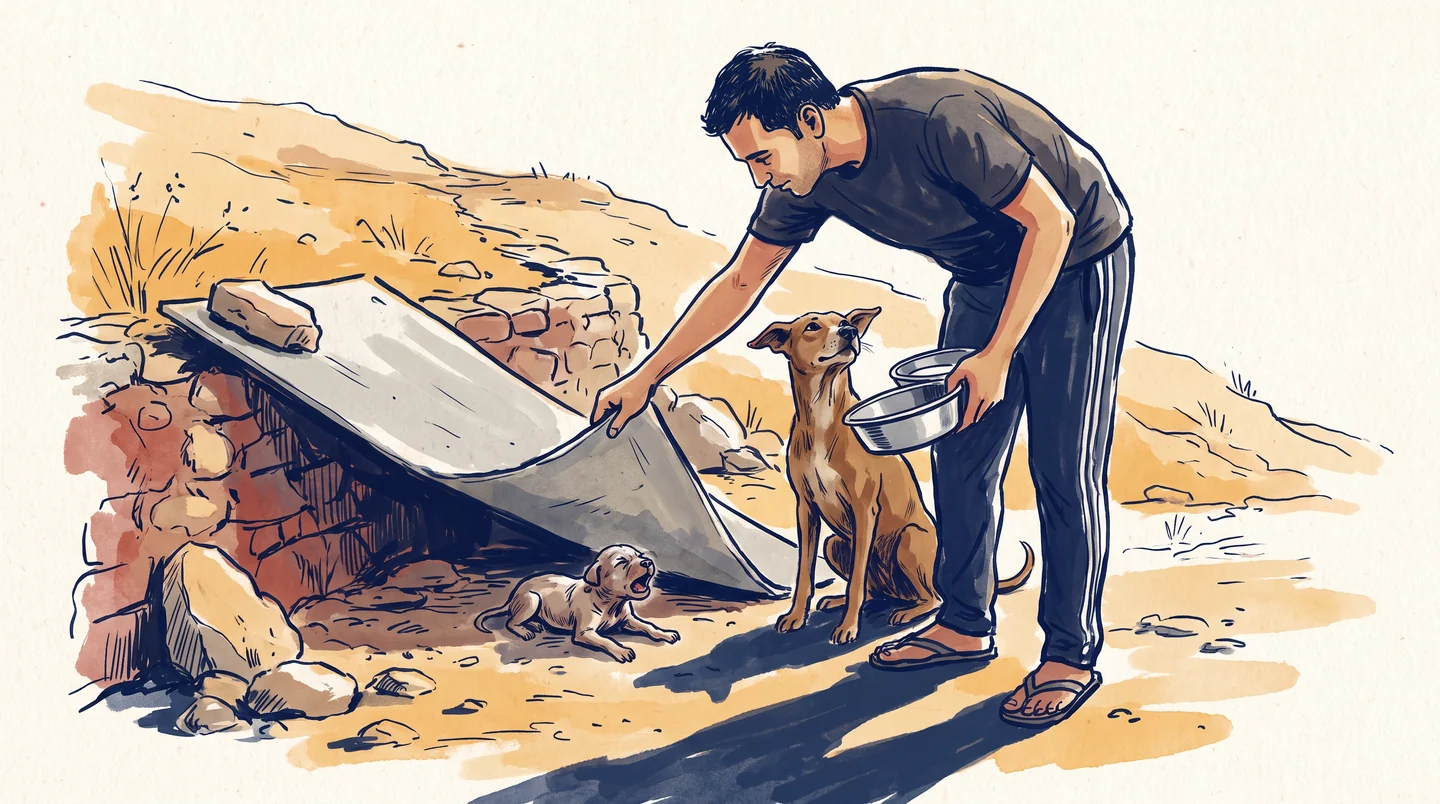
That was the morning. In the evening I went out to bring back the bowls of a dog I feed down at the farmhouse below us. On the way back I heard a puppy crying, from behind a cement sheet leaning against a wall. I went round it, and there was a newborn puppy, trying to dig its way out.
She had already given birth once that morning, outside, before any of us knew. That was the thread I had seen. The puppy had been lying there from morning till evening, crying, and nobody knew. One of our other females was sitting next to it. I took it in, put it with its mother, and now she had four.
 , open the figure larger
The other mother
That same year another of our females had her first litter, and she did everything differently.
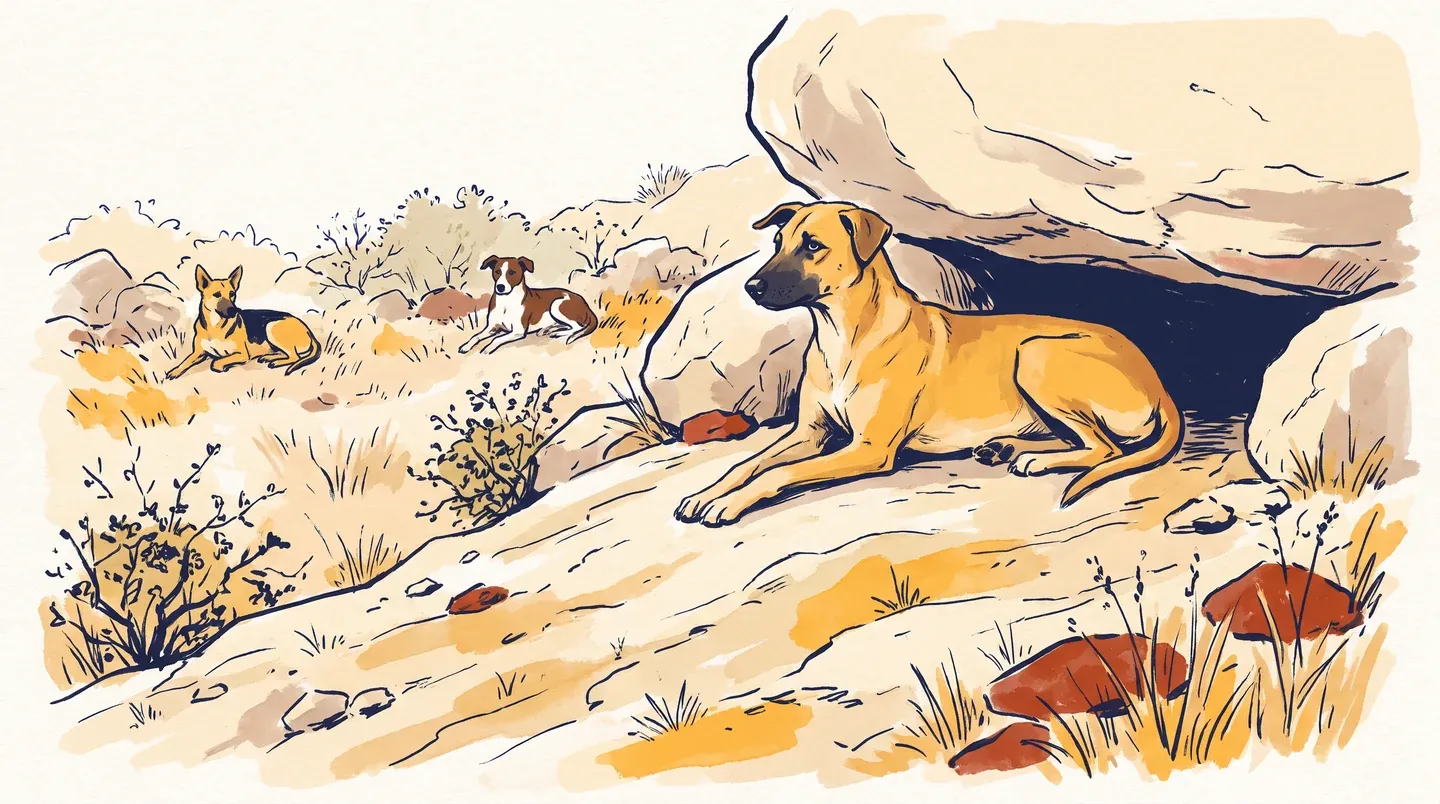
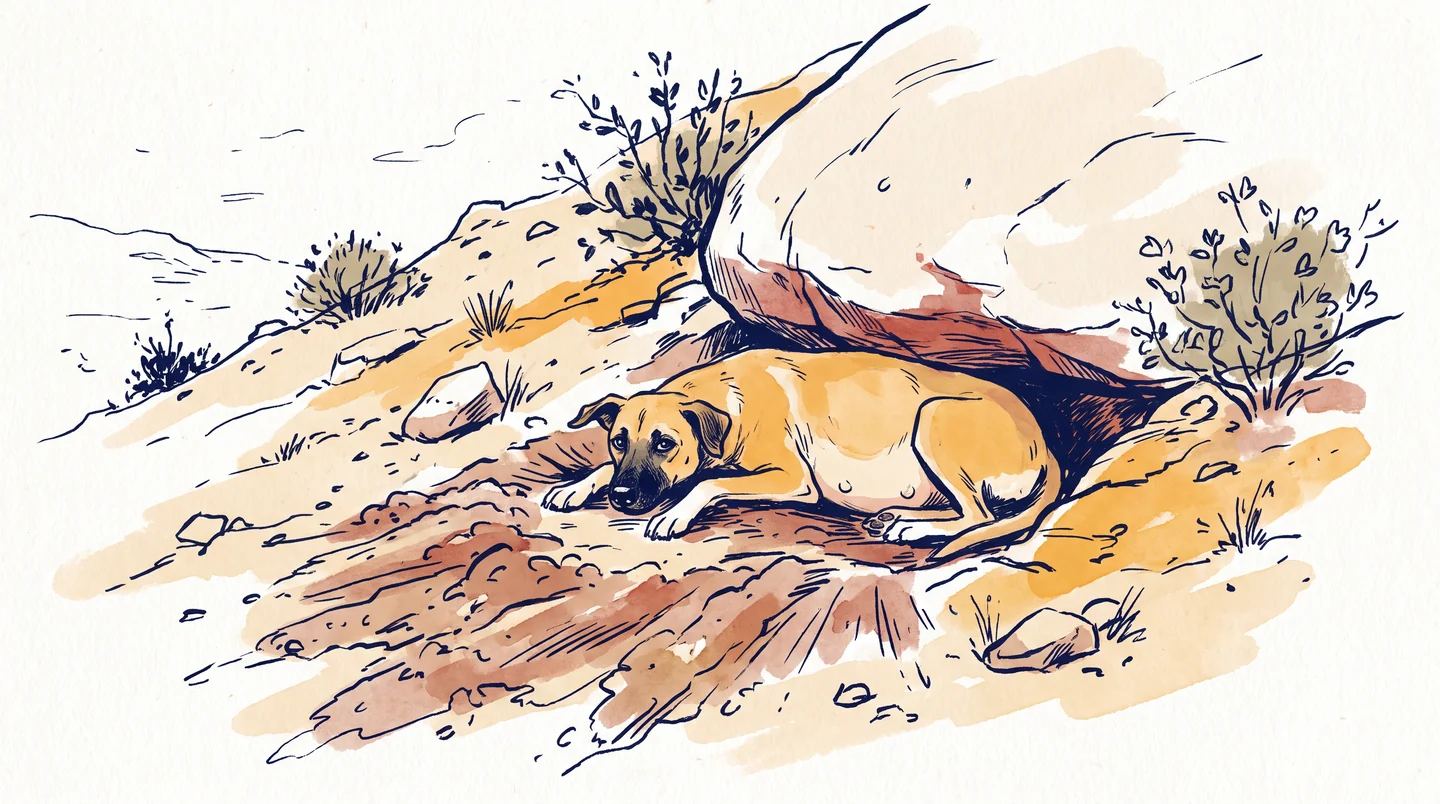
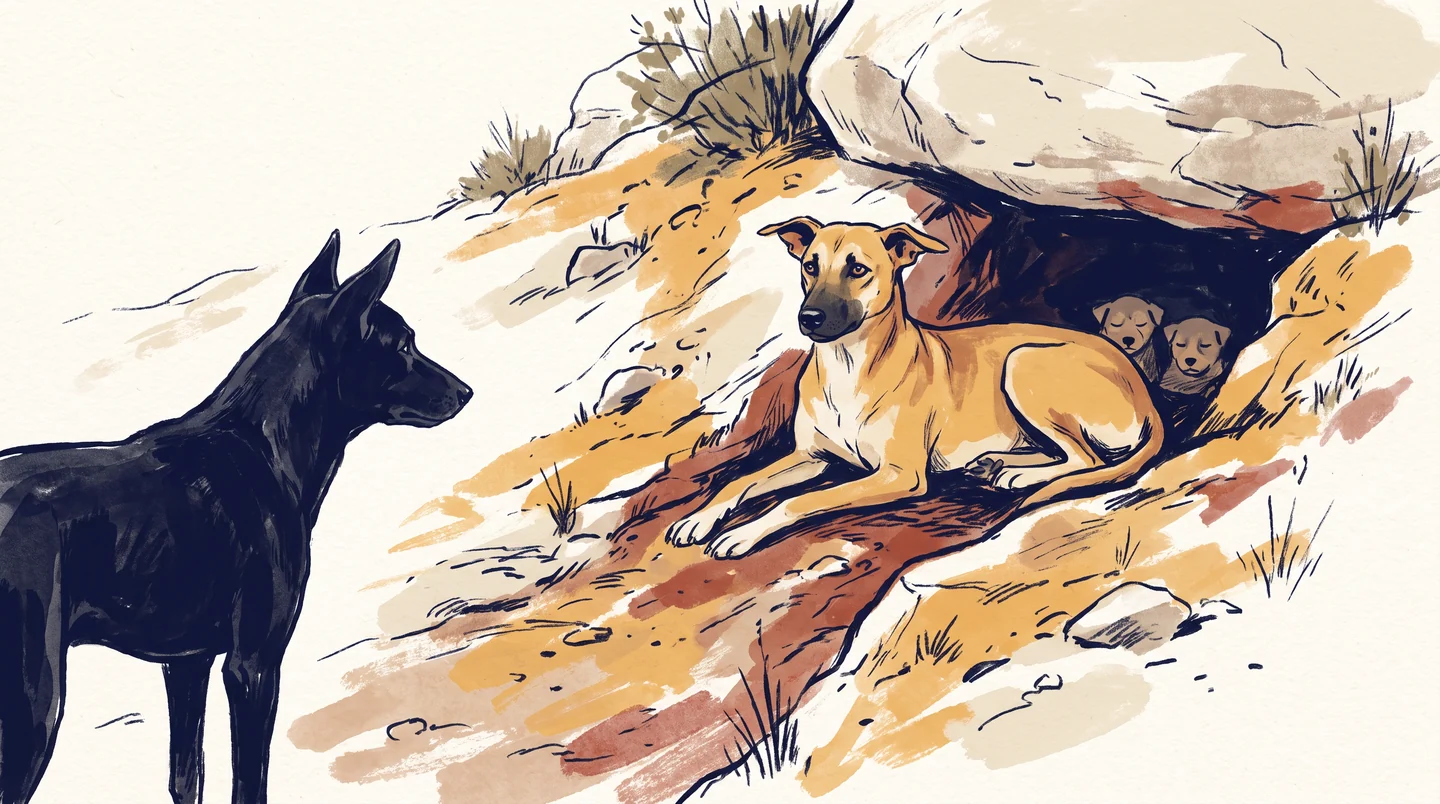
She had found her spot well in advance. She had decided where it would be, how it would be, where the puppies would come, and she had gone and settled there two days before. When the time came, she did not run anywhere. She made her den with an opening so small that she could guard it with her mouth, and nobody could get in. For two months she did not leave her puppies. At the slightest sound she came running. She decided how far away the pack must stay and how close it could come, and she fought for that. None of the other mothers did anything like it.
 , open the figure larger
 , open the figure larger
With her we did not have to do anything. There was zero intervention. With the first mother we had to step in again and again, and we still have to. She comes to her puppies now and then, as if it were a duty, and then she goes off and stays on her own. Her puppies are healthy, but if we had not been there, I do not think they would have lived.
There is a difference between mother and mother. Both were first-time mothers. And here is the thing that surprised me. The one who became the most responsible mother I have ever seen was the most wild of all our dogs, a hunter. I had worried about her more than any of them. She turned out to be the opposite of everything I feared.
Why nature lets only a confident mother breed
Afterwards I kept thinking about it. Why does it work like this?
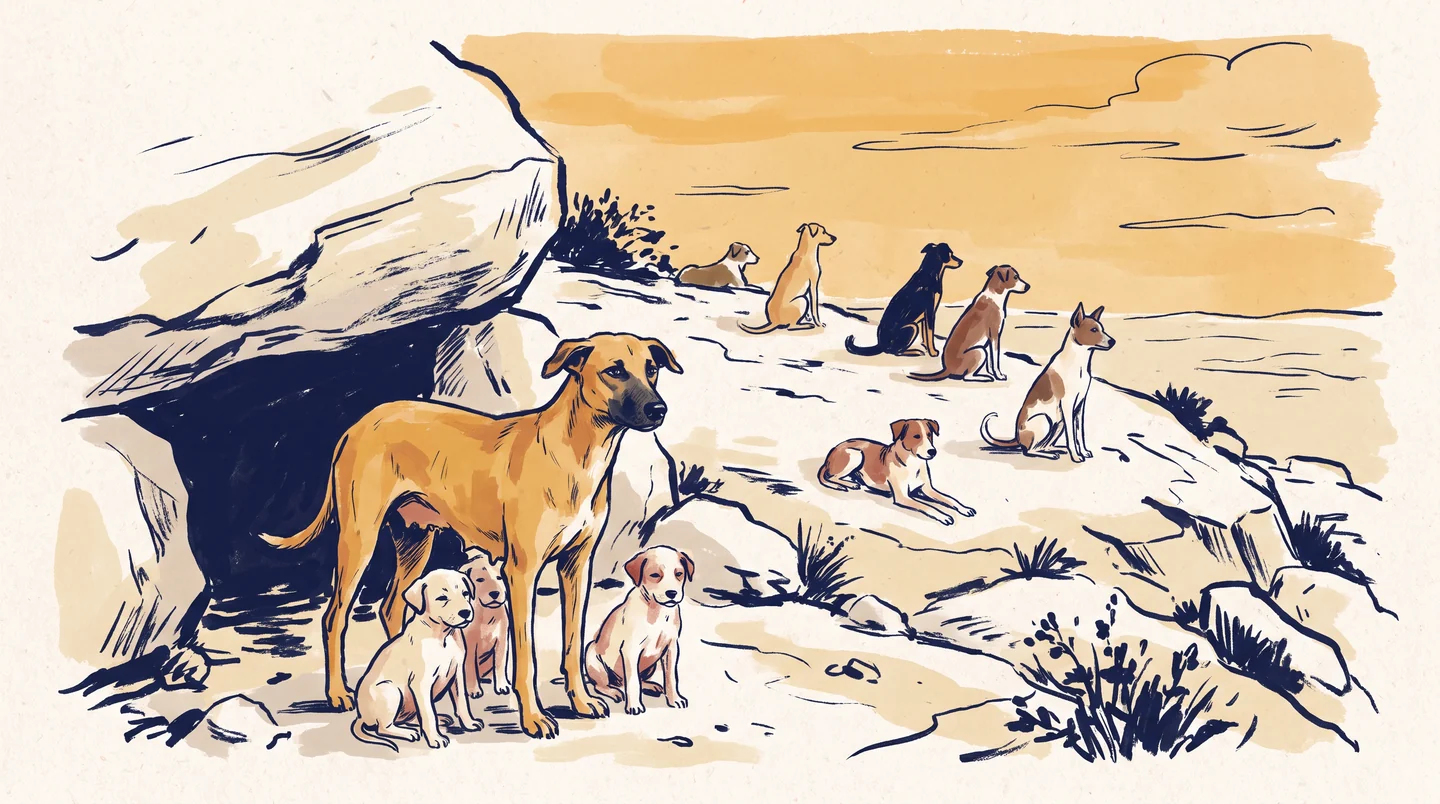
Watch a pack of wild dogs, the primal ones. In a wild pack, as a rule, only one female becomes a mother: the confident one who leads. The others do not breed. If another female wants puppies, she has to leave and make a pack of her own. If our frightened young mother had lived in a pack like that, I do not think she would ever have become a mother.
 , open the figure larger
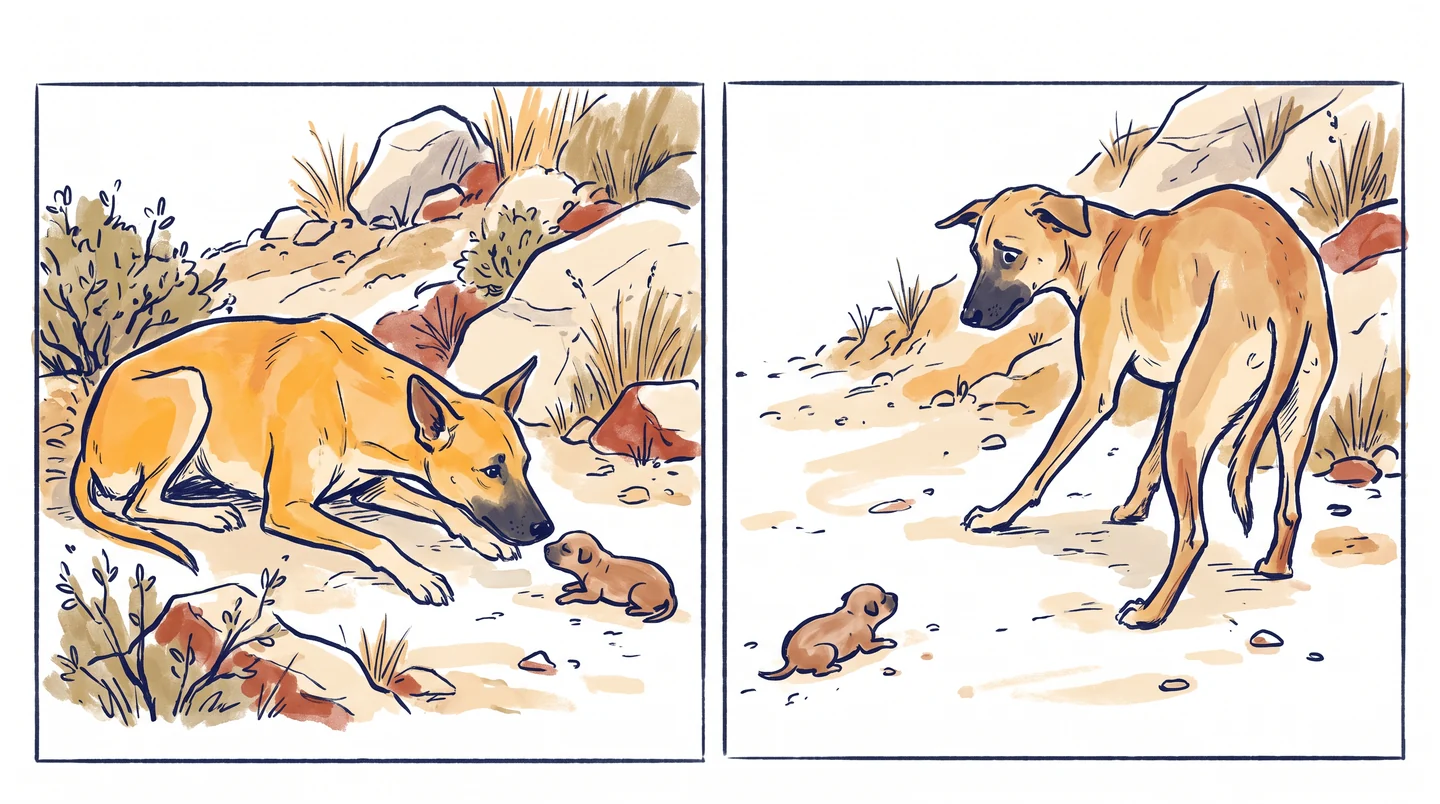
The way I see it, there is a reason. When puppies come out of a mother, they bring something with them she has never felt before: a discomfort, a strangeness, a kind of fear. And when a dog meets something unfamiliar, she goes one of two ways. She goes towards curiosity, or she goes towards flight. A dog with low confidence goes towards flight. She may run, and she may leave her puppies. Fear can take over instinct.
A confident dog meets the same strange thing and gets curious about it. She smells it, she licks it, she stays. Only a dog with a certain amount of confidence in her can be curious at a moment like that.
 , open the figure larger
So nature made a system. If fear comes, these dogs run, and if a mother runs, how will her puppies survive? Only the confident ones have puppies, and so only the confident ones pass themselves on.
The instinct to mother is very old. Earlier this year, in June, another of our females had her first litter in a corner of a room I had cleared for her, and I watched her do things nobody had ever taught her. You will see some of them in the next two chapters. But having the instinct in you is one thing. Being steady enough to follow it, while your own body is doing something it has never done before, is another. Not every female has that, and having puppies does not give it to her.
Any dog can have puppies now
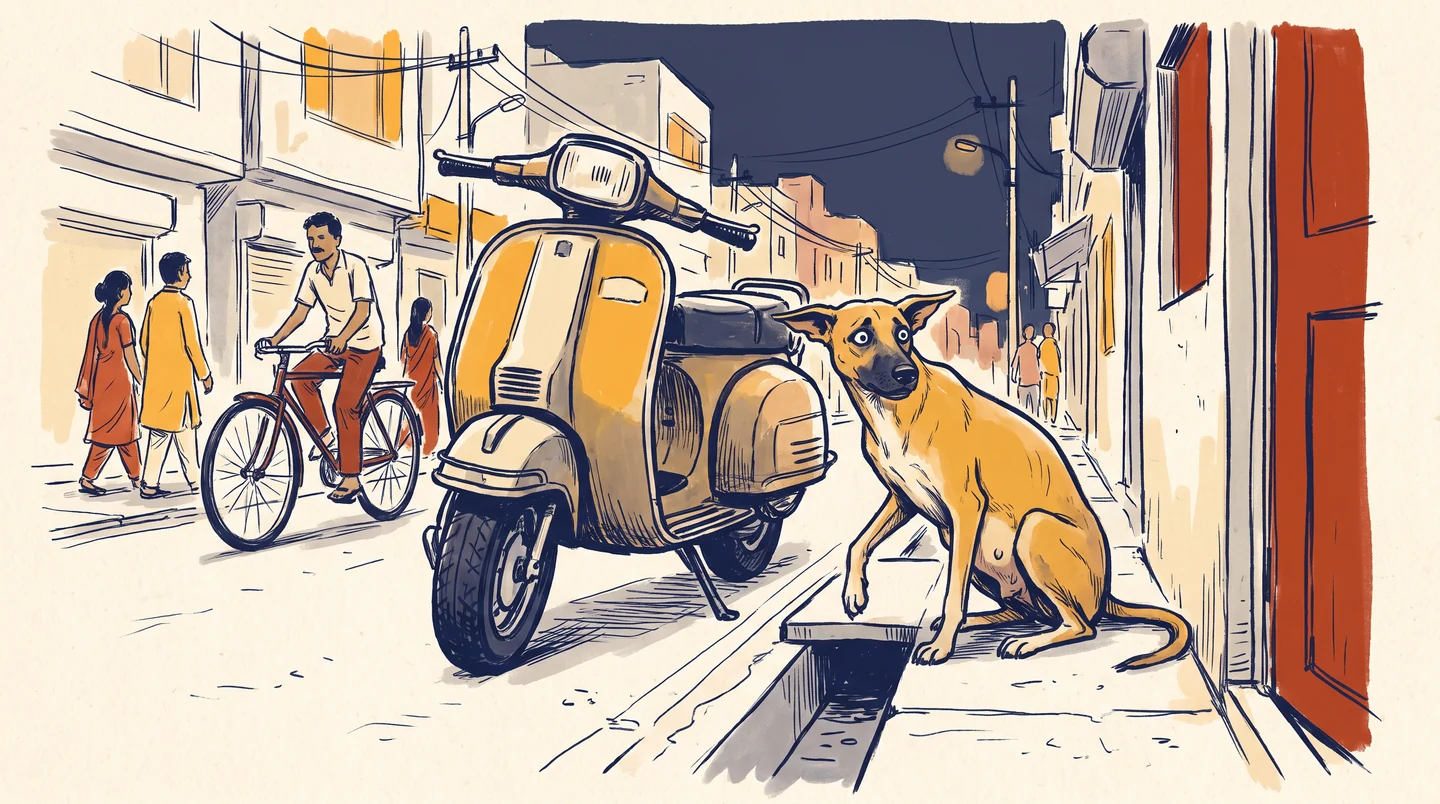
That system is gone for our dogs. With dogs who live among people, any female can mate and get pregnant, confident or not. And having puppies does not mean she will look after them.
 , open the figure larger
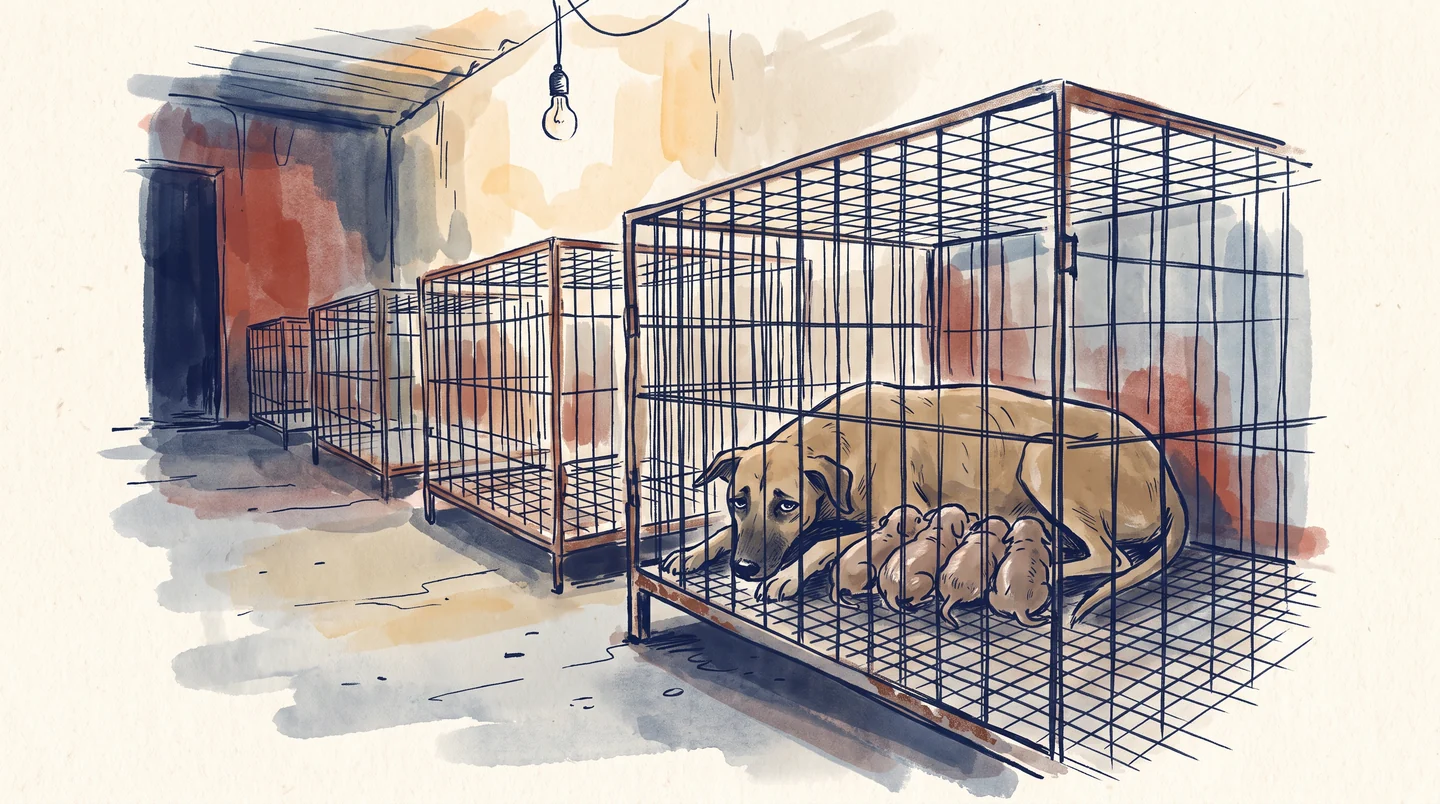
And then there are the mothers people breed for selling. In a puppy mill, a female lives her whole life in one cage, and she gives birth in it, again and again. In India most breeding happens in somebody's backyard. Very few breeders here will tell you anything about the temperament of the mother and the father.
 , open the figure larger
What she passes on
So what does a mother like this give to her puppies?
Some of it comes in the blood. Dogs carry genes, and the chance that something shows up in a puppy goes up with what his mother and father carry. A mother with a strong prey drive is more likely to have puppies with strong guarding and hunting drives. More likely, not certain. A gene test can tell you something about his body, but if I want to know his mind, I look at his parents. And how he lives, everything around him, plays the biggest part, eighty or ninety per cent of it. The first part of everything around him is her.
It starts before he is born. Research on dogs and on other animals has found that when a pregnant mother is under heavy stress, her puppies are more likely to grow up fearful and reactive, and less able to cope with stress. The thinking is that her stress hormones reach the puppies and set their own stress system. A lot of that detail comes from studies on rats and mice, not dogs, so it is not settled science for dogs. But it points the same way as everything else in this chapter.
 , open the figure larger
Then she gives birth, and what she is shows in every hour after that. A mother who flinches from her puppies, who wanders off, who comes back only to feed them, is still their mother. She is what they first learn the world from. A mother who settles, who stays, who decides how close the others can come and holds that line, is teaching them something else from their first day: that this place is safe, because she is not afraid in it.
- His mother
- Chooses her place before the puppies come, stays with them, and decides how close anyone may come.
- What most of us do
- Think a mother is a mother, and that her puppies come out the same whatever she is like.
- What you do
- Before you take a puppy, look at his mother. If your own dog is pregnant, give her a quiet place of her own and leave her in it.
If your own dog is pregnant
Some of you will have a pregnant dog at home. First, a vet confirms it. Some females go through a false pregnancy, with many of the same signs, and only a vet can tell you for sure.
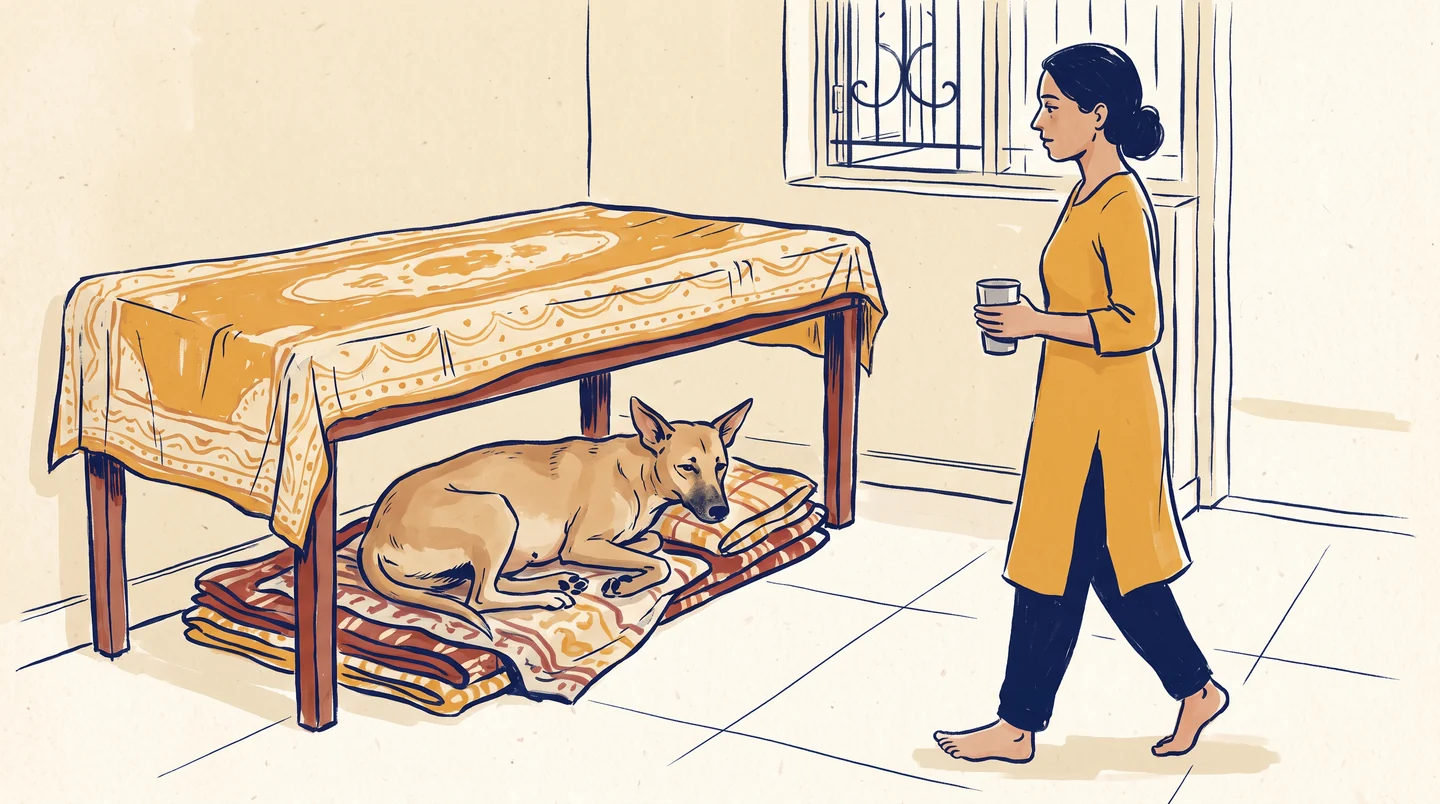
Then make her a den: a secluded, safe place in a quiet corner of the house, with no one walking through it. When she is resting there, nobody walks straight up to her. As the birth gets close she will start protecting that place and making it ready. She may not let other dogs near it, and that is normal. Pregnancy is hard on a dog. Her body goes through many changes, and it makes her more territorial.
 , open the figure larger
Keep her days steady, and keep yourself calm around her. She reads you. A house that fusses over her, worried and excited, every time she lies down, is adding to what she is carrying. If she is a confident dog, she will need very little from you; the best thing you can do is stay out of her way. If she is a nervous one, she may need you near her, quiet and calm, the way that young mother on the hill needed us.
And if she is in labour and straining for a long time with no puppy coming, or she seems unwell, call a vet. Do not wait to see.
What this means when he is yours
Most of you reading this will not have a litter at home. You will go somewhere and bring a puppy back. So why does any of this matter to you?
Because the puppy you take home has already had a mother, and he has already been shaped by her. Some of it came in the blood. Some of it came in the nine weeks inside her. All of it came in the weeks after, because she was the whole world he knew.
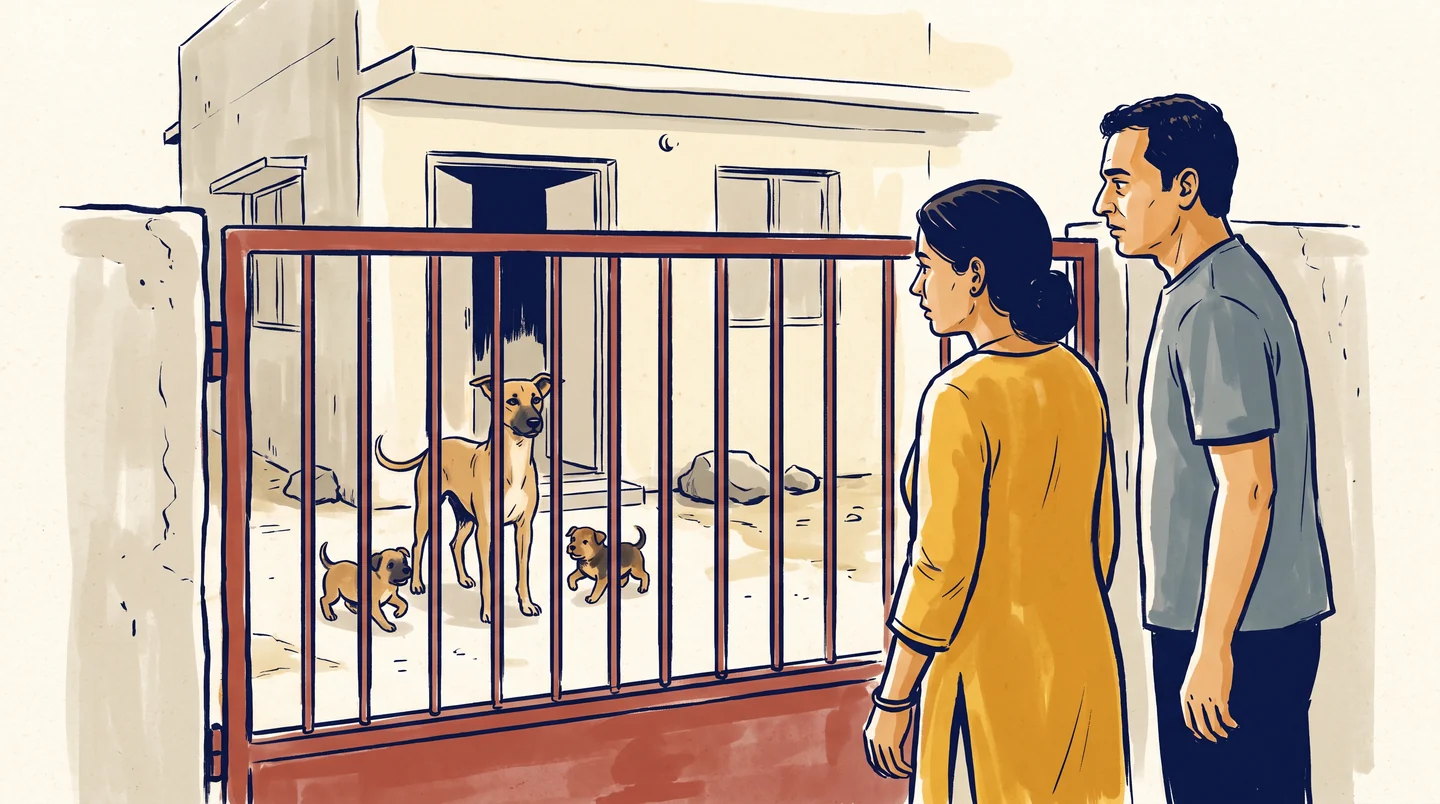
So if you can, look at her. Not at the puppies first: at her. Look at the people around her too: how they keep their dogs, how the dogs are with them, whether they seem calm to you or tense.
 , open the figure larger
The way I look at a mother is simple. Can she settle? Does she stay with her puppies, or keep going off? When you arrive, does she watch you and hold her ground, or does she shake, hide, or run? A mother who keeps you at a distance from her puppies is not a bad sign. That may be exactly the mother you want.
You cannot change who his mother was. But knowing her tells you what he started with, and what he started with is what you will be working with.
The assignment
- If you are going to choose a puppy. Ask to see his mother. Spend ten quiet minutes just watching her before you look at the puppies. Write down what she did when you arrived.
- Watch what she does, not how she looks. Does she settle? Does she stay with them? Does she decide how close you come? Her coat and colour tell you nothing about this.
- Look at the people too. How do they keep their dogs, and how are the dogs with them? Do they seem calm to you?
- If your own dog is pregnant. A vet confirms it first. Then give her a quiet den in a corner nobody walks through, keep her days steady, and nobody walks straight up to her while she rests there.
- Whoever you are. The next time you see a mother dog with her puppies, watch her from a distance for five minutes. Where did she choose? How close does she let other dogs come?
What she is, he starts out with. What she does with him in his first three weeks comes next, and it reaches him through the only doors he has when he is born. That is chapter 2: born with a nose and a face.