
At this age birth to 3 weeks
- a newborn puppy cannot see or hear; he has his nose, and touch mostly on his face
- his eyes start to open in his second week, his ears at about three weeks
- for his first weeks he cannot keep himself warm, and he cannot pee or poop without his mother
- what reaches him through smell and touch in these weeks means one thing to him: safety
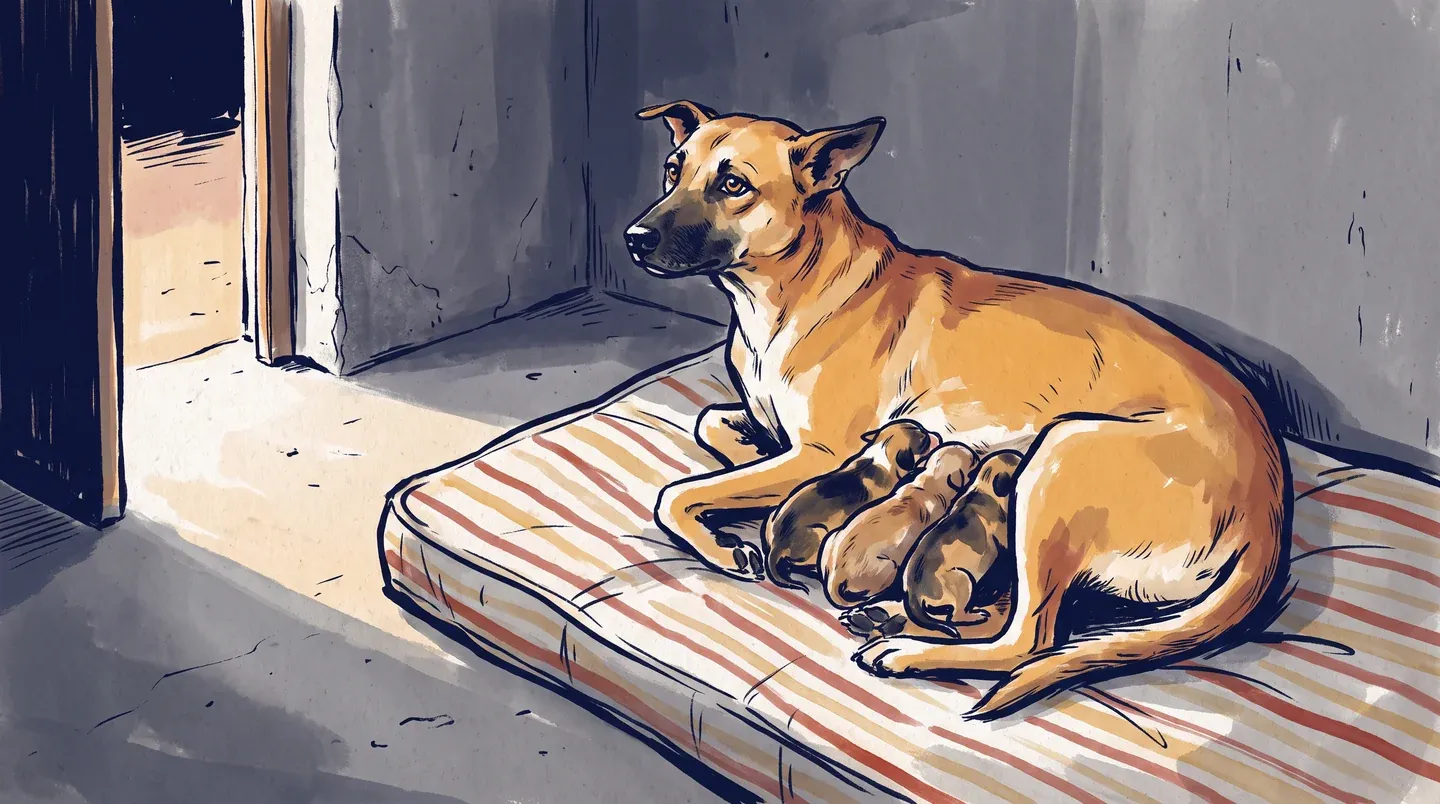
This June, a mother had her first litter in my care. Four puppies, born on the fourth or the fifth; I checked and I still cannot say which. I had put an old mattress down for her in a corner, and I watched them every day.
For the first ten days they did almost nothing you could call doing. They drank, they slept in a heap, and they crawled. Their eyes were shut. They made a sound only when they were hungry. If you had walked in and looked at them, you would have said nothing is happening here yet.
Everything was happening. It was just happening through a door we do not use.
 , open the figure larger
What he is born with
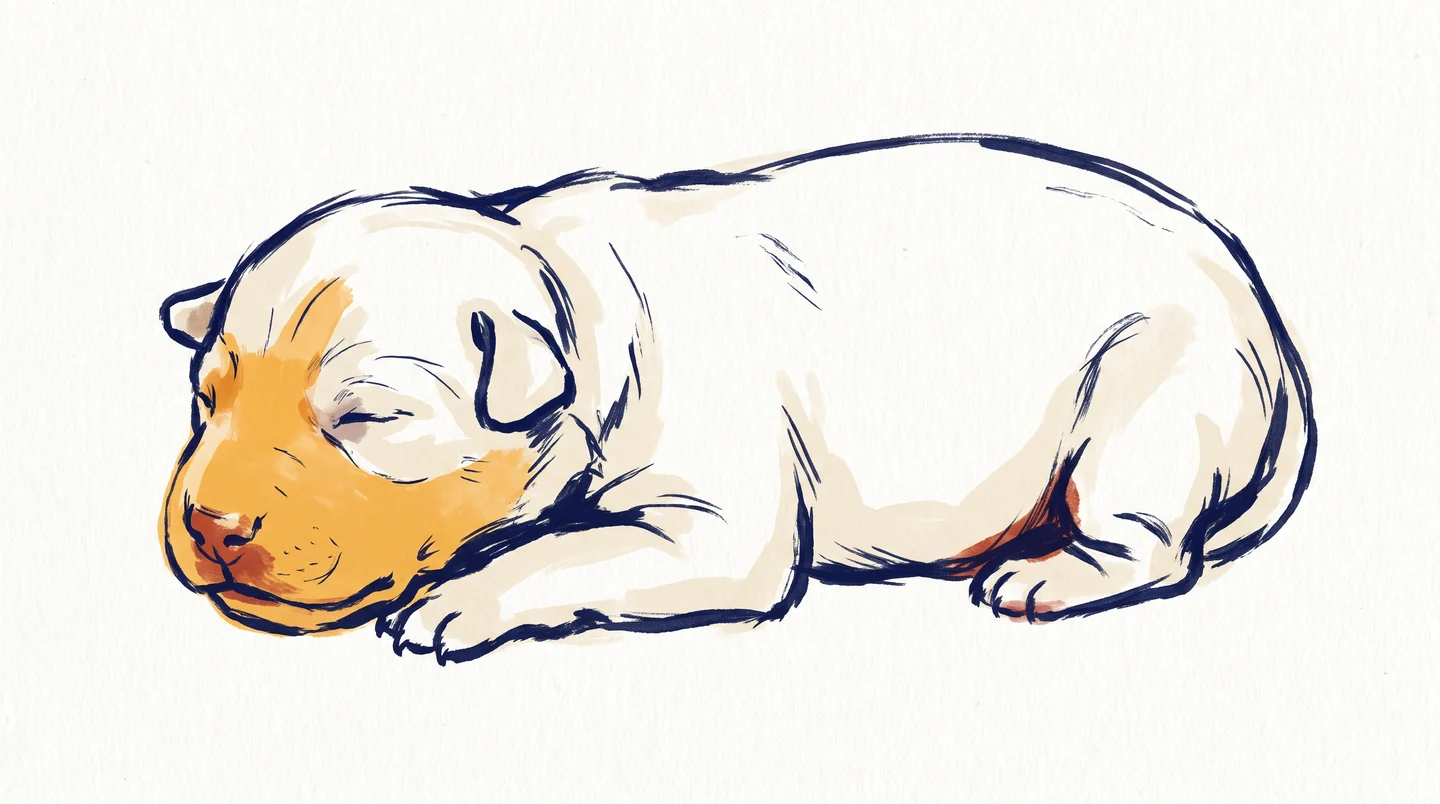
When a puppy is born his eyes and ears are not working. They are not only closed. They are not finished. They finish growing after he comes out, over the next weeks. A human baby arrives with eyes that see a little and ears that hear. A puppy arrives with neither.
What he does have is his nose, and touch. And even the touch is not all over him. When he is born, most of his feeling is in his face: his muzzle, around his mouth, the front of his head. The rest of his body feels very little. So for the first days of his life, his face is how he finds his way. He pushes it forward like a probe, into his mother, into his brothers and sisters, into whatever is in front of him, looking for one thing.
 , open the figure larger
Think about why nature would build him like that. Dogs are born in the dark. In a cave, a hole, a tunnel, a hollow under a rock, a corner under a stair. There is nothing to see there. What a newborn needs to find is his mother and her milk, and both of those he can find with his nose and his face.
He has been learning with that nose since before he was born. In one study in Belfast, mother dogs were given food flavoured with aniseed in the last part of their pregnancy. When their puppies were a day old, and again weeks later, they turned towards the smell of aniseed. Puppies whose mothers had eaten plain food did not. So the nose is not only working at birth. It already knows something.
Wrapped, and silent
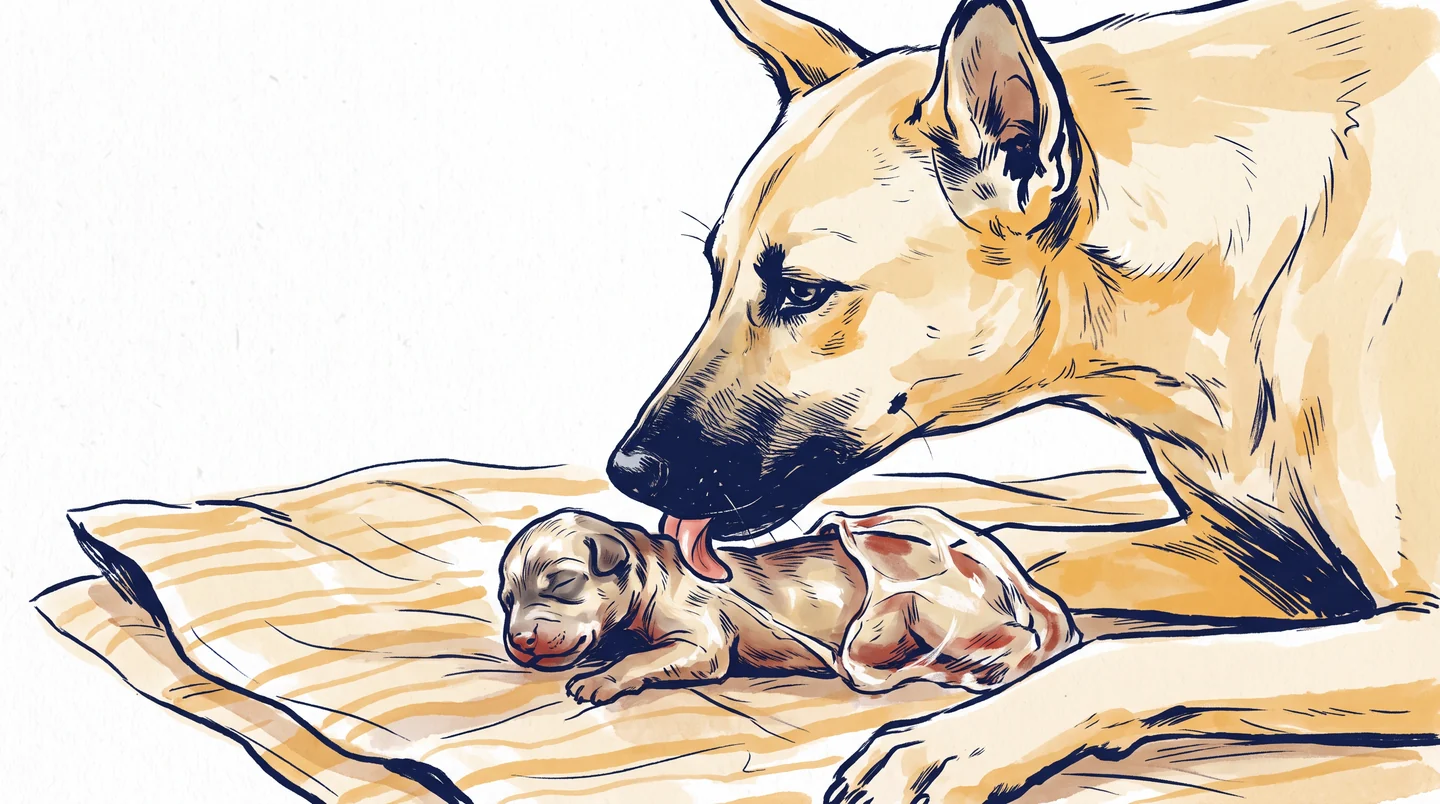
A puppy comes out wrapped, and he comes out silent. He makes no sound at all. If you have never seen a birth, imagine a sausage in a thin plastic film. That is very nearly what it looks like: a small, damp body inside a thin sac, and he cannot get out of it by himself.
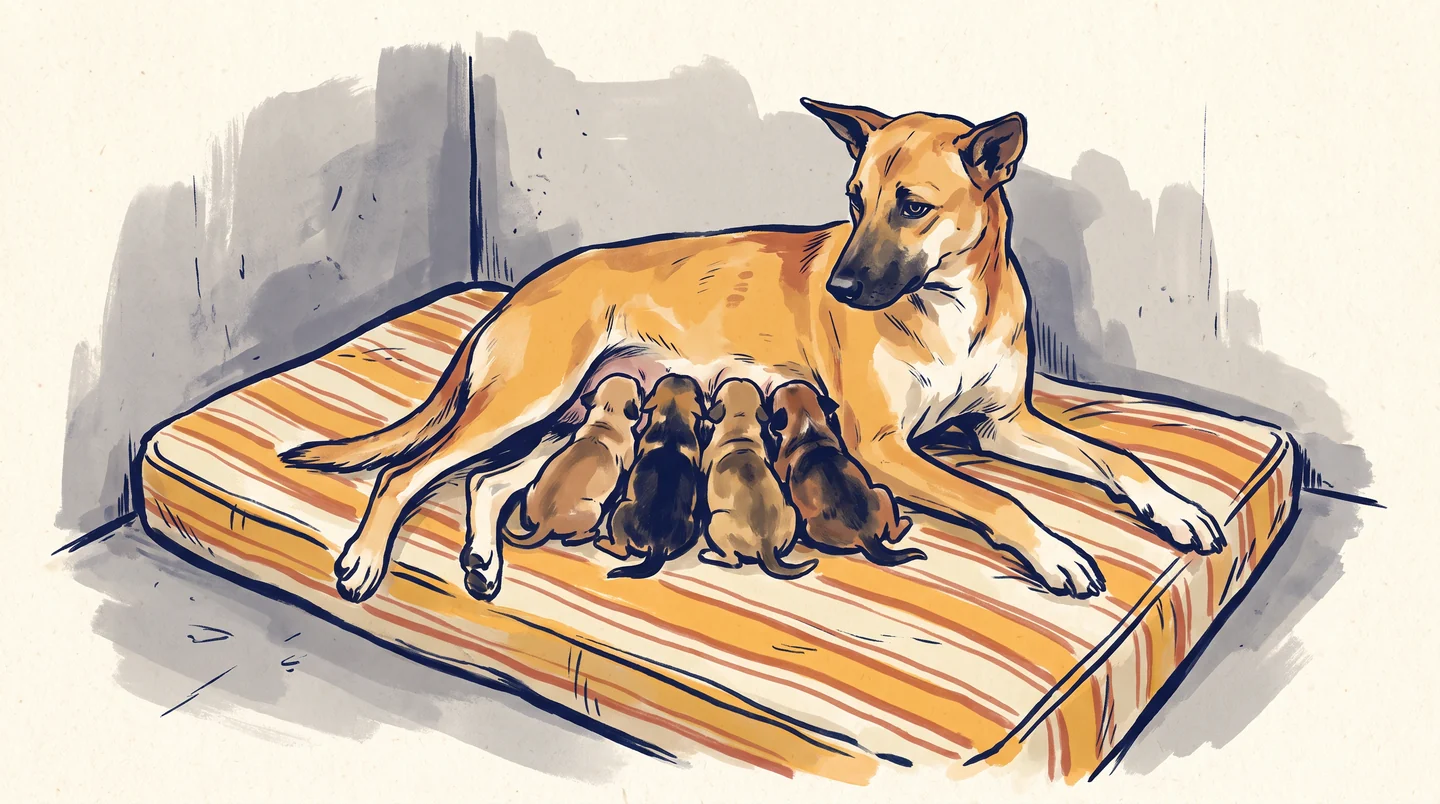
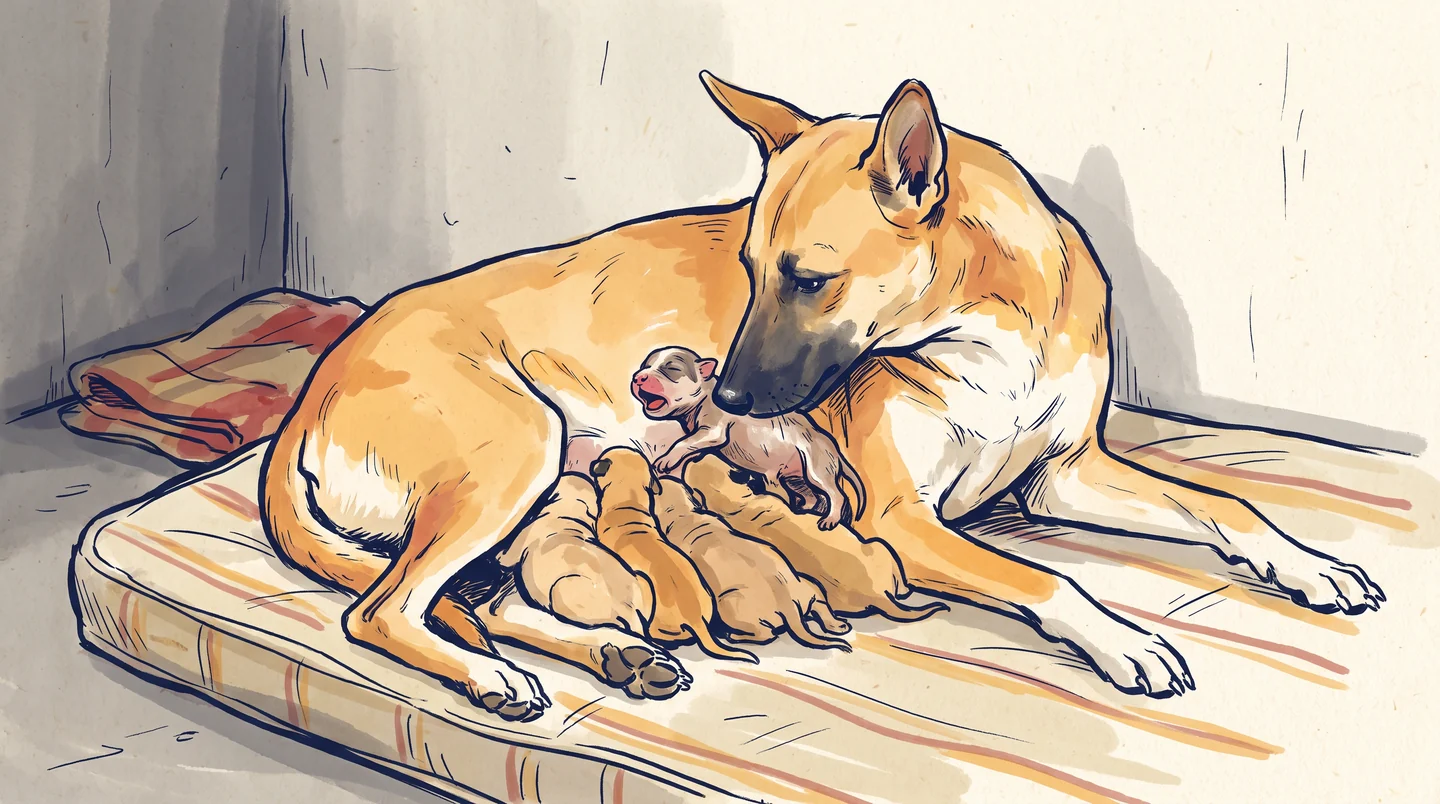
His mother does it. She breaks the sac and licks him, his face, his body, his belly, firmly, all over. That licking is the first touch of his life, and it is hers. Then he starts to cry for milk, and she reaches out with her snout and pulls him in against her, and he finds a teat and drinks.
 , open the figure larger
 , open the figure larger
At that moment a mother who is closer to the wild does not let anybody near. Her whole body is telling her that nobody comes close to them now. A mother who has lived her whole life among people, or who has had litters before, may let you come near and even touch the puppies while they are being born. Either way, this is her time, not ours.
The first imprint
Now think about what reached his brain in that first hour. He could not see her. He could not hear her. What came in was the smell of her, the smell of her saliva on his face, the warmth of her belly, her tongue, and milk.
So what did smell and touch mean to him, the very first time they meant anything? Calm. Warmth. Food. Safety. Nothing else came in through them. Nobody kicked him. Nobody grabbed him. He was never touched and hurt. Every time he smelled something or was touched in those weeks, it was her, and it was good.
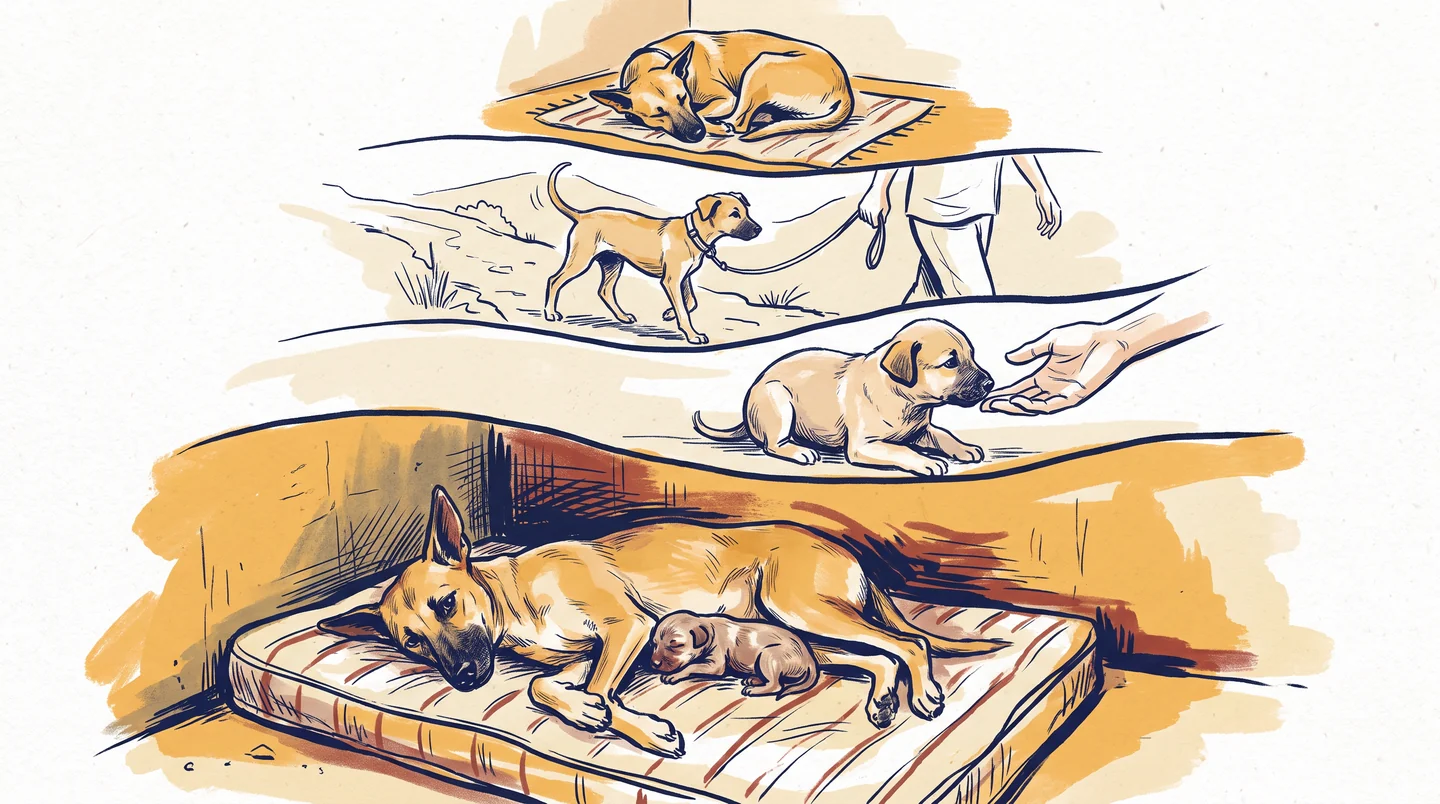
I think of this as the first imprint of his life, and to me the first imprint goes the deepest. Everything he learns later is laid on top of it, in layers. And what that first layer says is very simple: what comes to me through my nose and my skin is safe.
 , open the figure larger
A face that finds milk
Watch a litter of newborns for half an hour and you will see this nose and face at work.
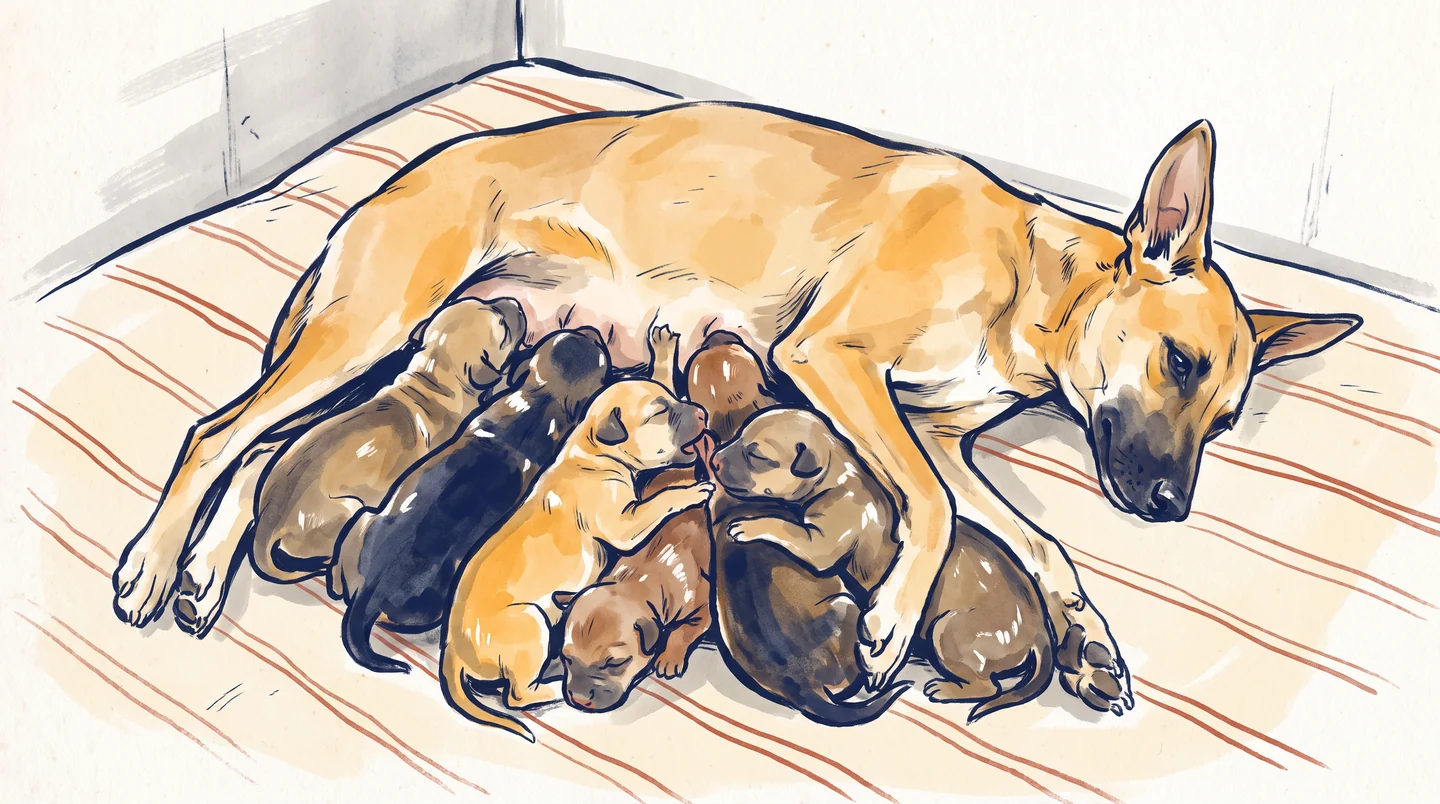
They drink, and they crawl, and they push. A puppy who wants milk does not know that the warm thing in front of him is his brother. He only knows it is warm and it is in the way. He pushes his face into it, and if there is milk on his brother's mouth he will push his face into his brother's mouth. They burrow into one another, they climb over one another, and to a human it looks like a heap of puppies cuddling. It is not cuddling yet. Each one is going for the milk, and the others are only in the way.
 , open the figure larger
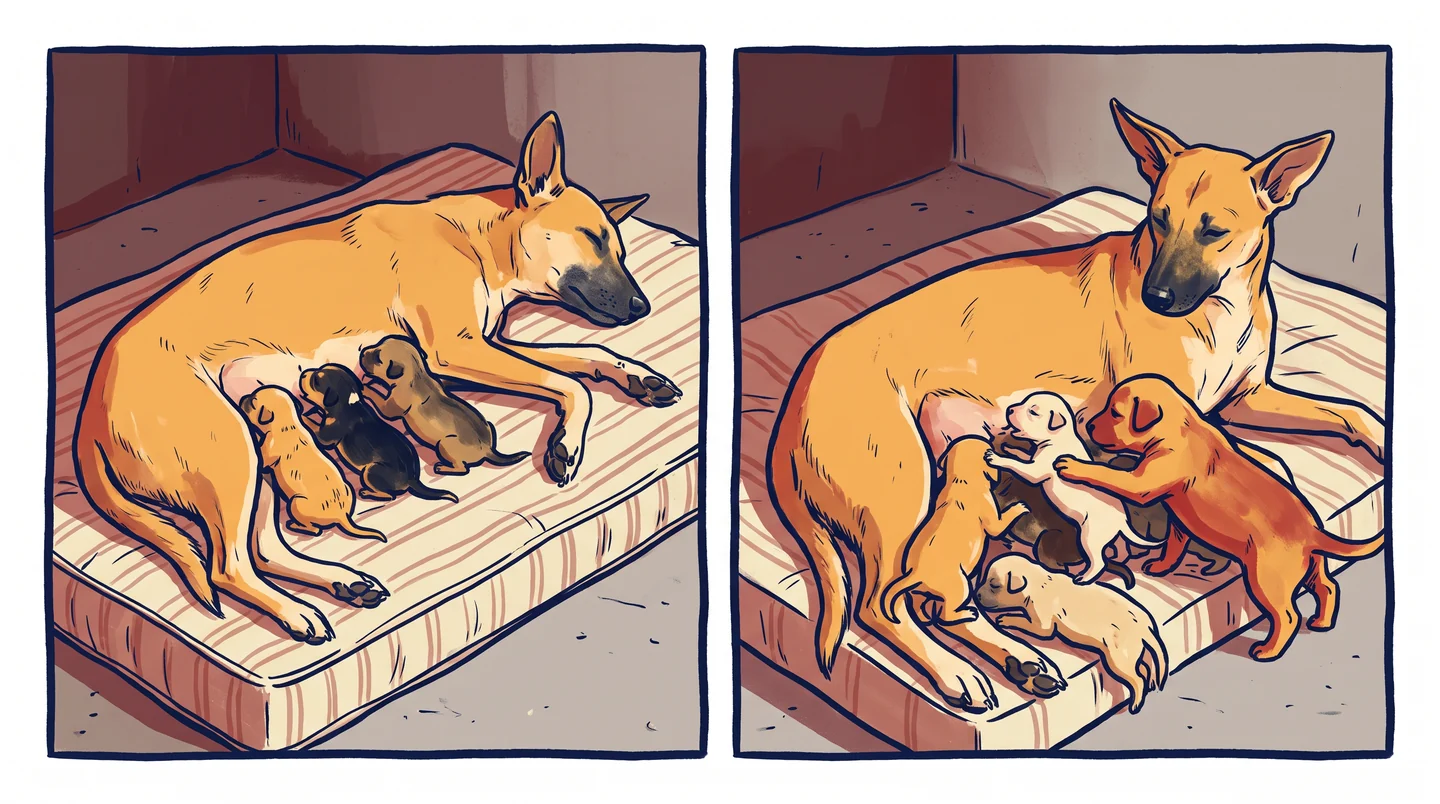
The mother in my care in June had eight teats and four puppies, so there was enough for everyone and there was no fight. In a big litter it is different. When there is not enough to go round, the strong ones push the others off with their paws, and you will see tiny scratches on the puppies from the claws. The puppy who is pushed off drinks less and grows more slowly, and next time he is pushed off more easily. A strong puppy gets stronger and a weak one gets weaker. That is not cruelty. It is what happens wherever there is not enough.
 , open the figure larger
He cannot keep himself warm
There is one thing about that feeling-only-in-his-face that families with a litter must know.
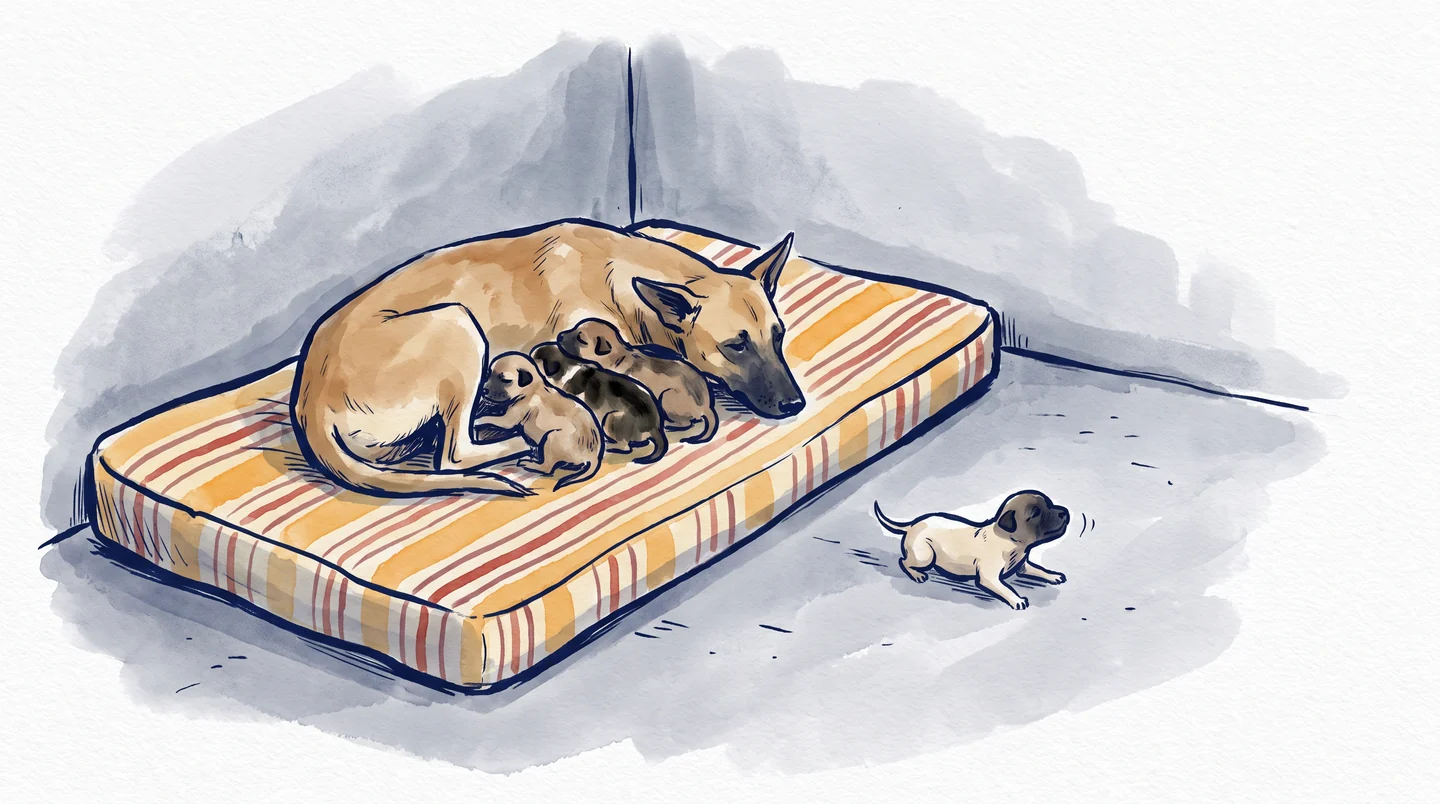
Because so little of his body can feel, a newborn puppy does not know when the rest of him is cold. He can lie with his face on something warm and his body on cold tiles and not know. And for the first weeks he cannot keep himself warm the way a grown dog can; for the first days he cannot even shiver. His warmth comes from his mother's belly and from the heap of his brothers and sisters. A newborn puppy who crawls away from them onto a cold floor can get cold very fast, and newborns die of cold.
 , open the figure larger
So if your own dog has a litter, the den has to be warm. Not hot: warm, and out of a draught, with the floor covered. And a newborn who is cold to your touch, or who has stopped crying for milk, or who is not drinking, goes to a vet the same day. Do not wait to see.
She cleans them, and she keeps them in
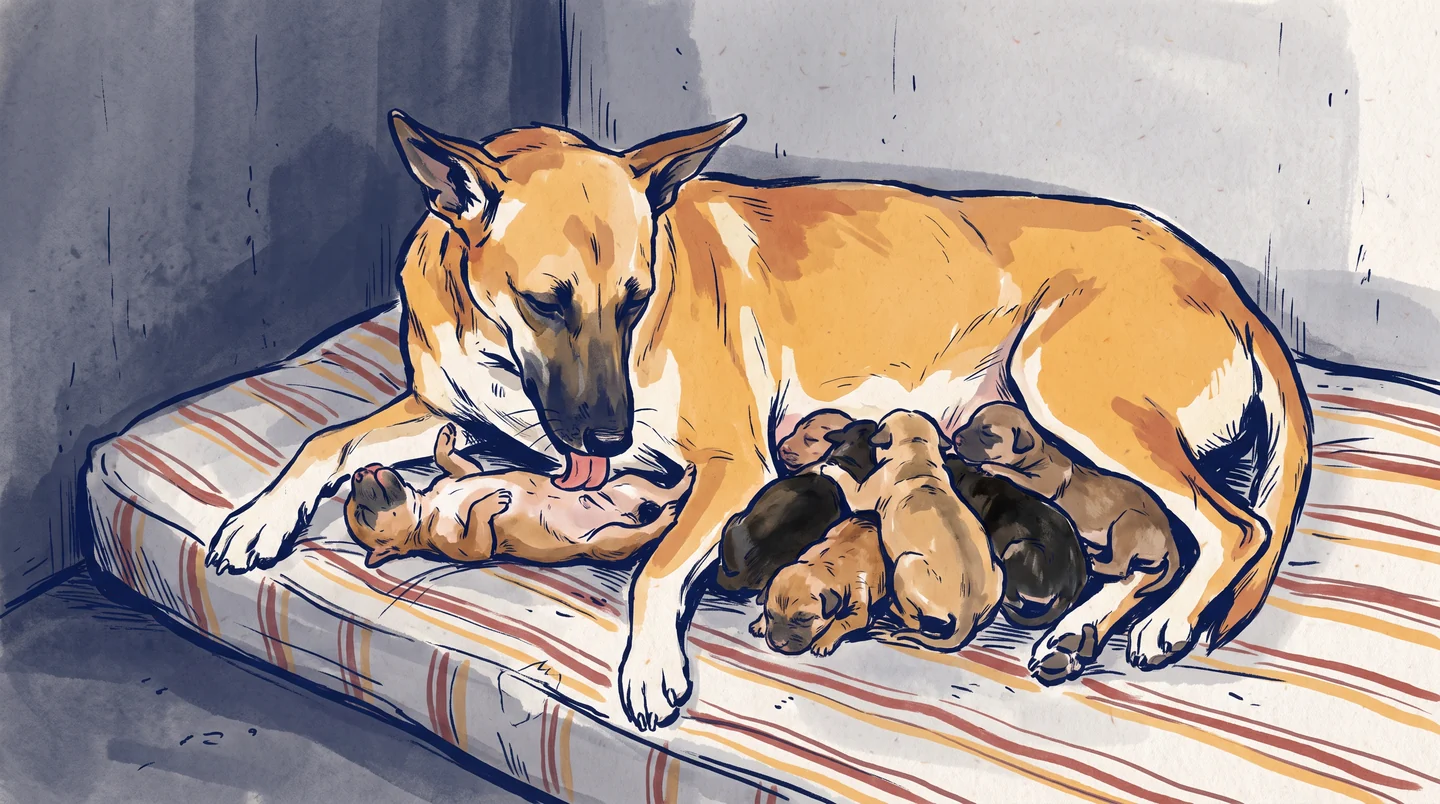
A newborn puppy cannot pee or poop by himself. His mother does that for him. After he drinks, she licks his belly and under his tail, again and again, until he goes, and then she cleans it all up. She drinks the pee and eats the poop, every bit of it, and the bed stays clean. She does this for about the first three weeks, until he can walk out of the bed and go on his own.
When I first watched this closely, my mind was blown. She was a mother for the first time. Nobody taught her any of it. How does she know that it is time to run back and sit with them for milk? How does she know they cannot pass it themselves? She just knows. It is in her, from every mother before her.
 , open the figure larger
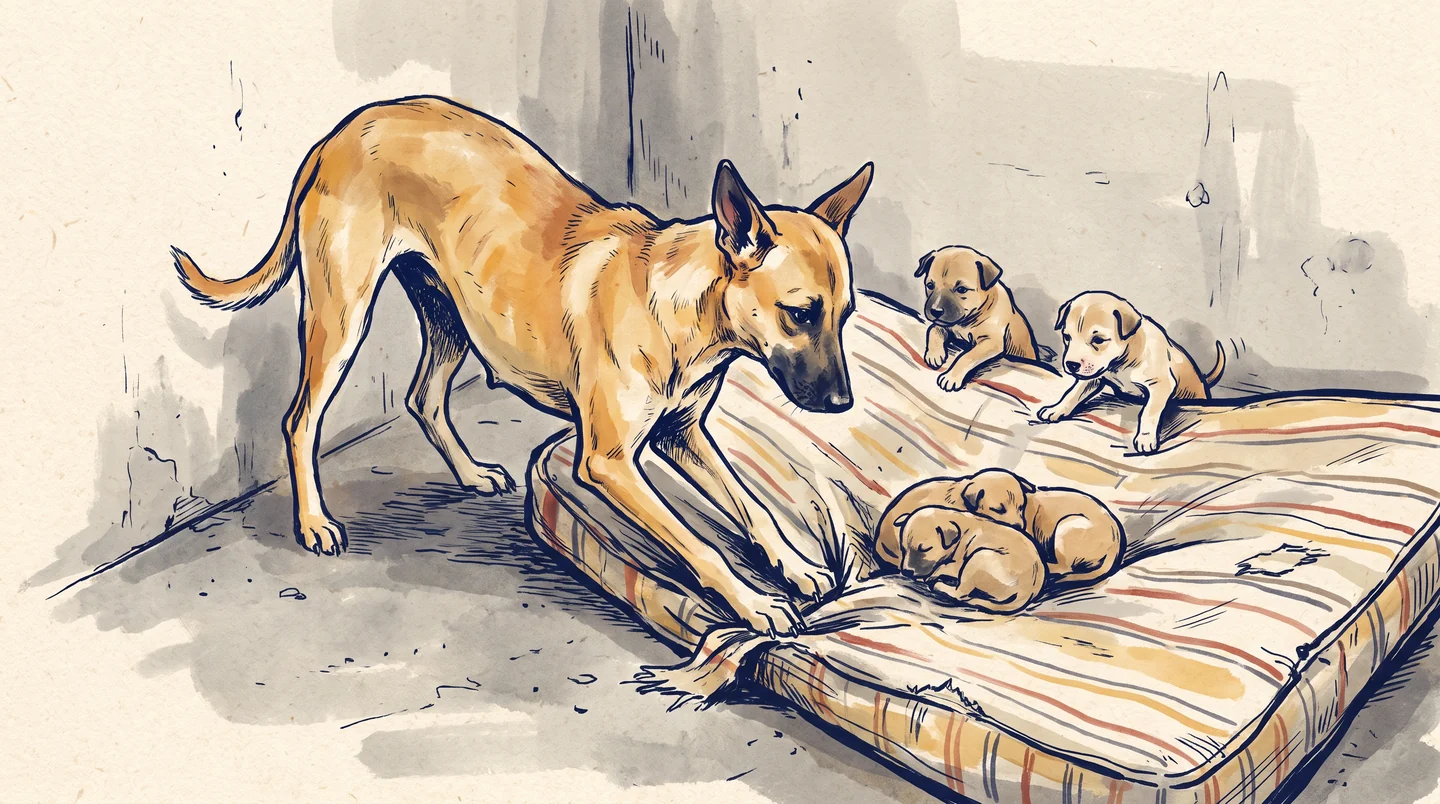
Then, at about two weeks, my litter changed. Their eyes had started to open a few days earlier. At first they were only slits, milky and pale, not seeing much yet. Now they opened more, and some of the puppies started to stand. Not well, not all of them, but they stood, and they started to crawl out of the place where I had put them.
And their mother got worried. You could see it. She went to the mattress and started to dig in it. She went to the bathroom and tried to dig there. She went to other corners and dug. She was trying to make a hole with a slope at its edge, so that a puppy who climbed out would slide back in. The floor was concrete and she could not dig into it. But she kept trying, because everything in her said: if they get out while I am away, they are gone.
 , open the figure larger
That is what a den is for. It is not a bed. It is the walls that keep him in while he cannot look after himself.
- His mother
- Licks him free, warms him with her belly, feeds him, cleans him, and keeps him in a place he cannot crawl out of.
- What most of us do
- Want to hold him, pass him round, speak to him and show him off, from the first day.
- What you do
- If he is born in your house, give her a warm, quiet den with sides and leave the first weeks to her. Watch that every puppy is drinking.
Eyes, then ears
Somewhere in his second week his eyes start to open, and at about three weeks his ears. Only then does the world of sight and sound start to come in, and there is a reason it comes in that order. That is the next chapter. For now, hold on to this: by the time he first sees his mother, he has known her for two weeks.
What this means when he is yours
You may be reading this months before you meet your puppy. So why does it matter to you what happened in his first three weeks?
Because it tells you which door into him is the oldest.
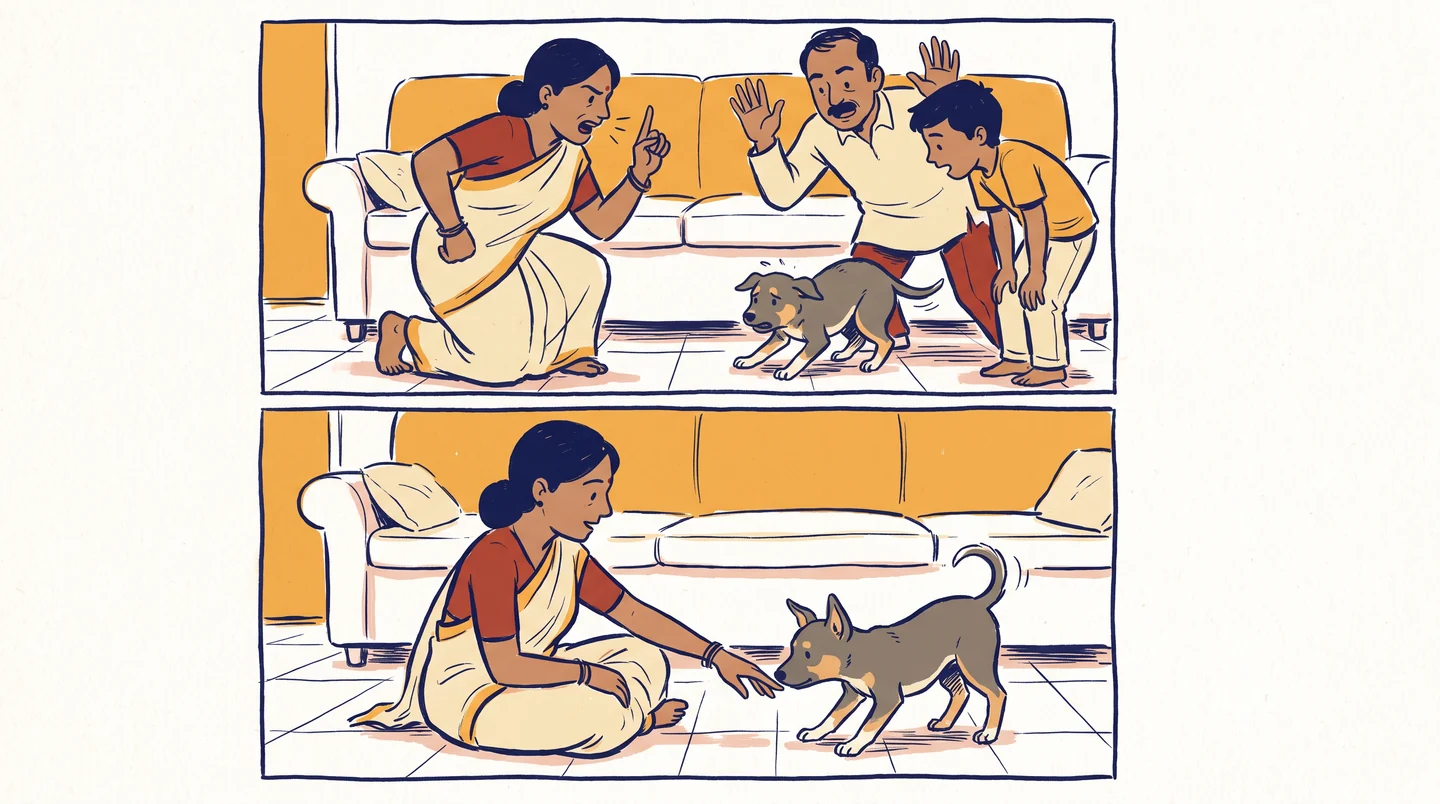
Nose and touch came first, and the first thing they ever meant to him was safety. Eyes and ears came later. That is the order in which the world reached him. And we do the opposite. We talk to dogs all day: on the walk, at the bowl, at the door. We wave our hands at them. We say no, no, no, no, no in front of their faces. We put everything in through their eyes and ears, which are the newest doors he has. And a dog who is talked at all day gets confused, and a confused dog has more problems, not fewer.
 , open the figure larger
This is why, when he comes home, I ask you to let him meet you with his nose first. It is why the hand you put on him matters so much. Touch is one of the first things he ever knew. He reads it before he reads anything else.
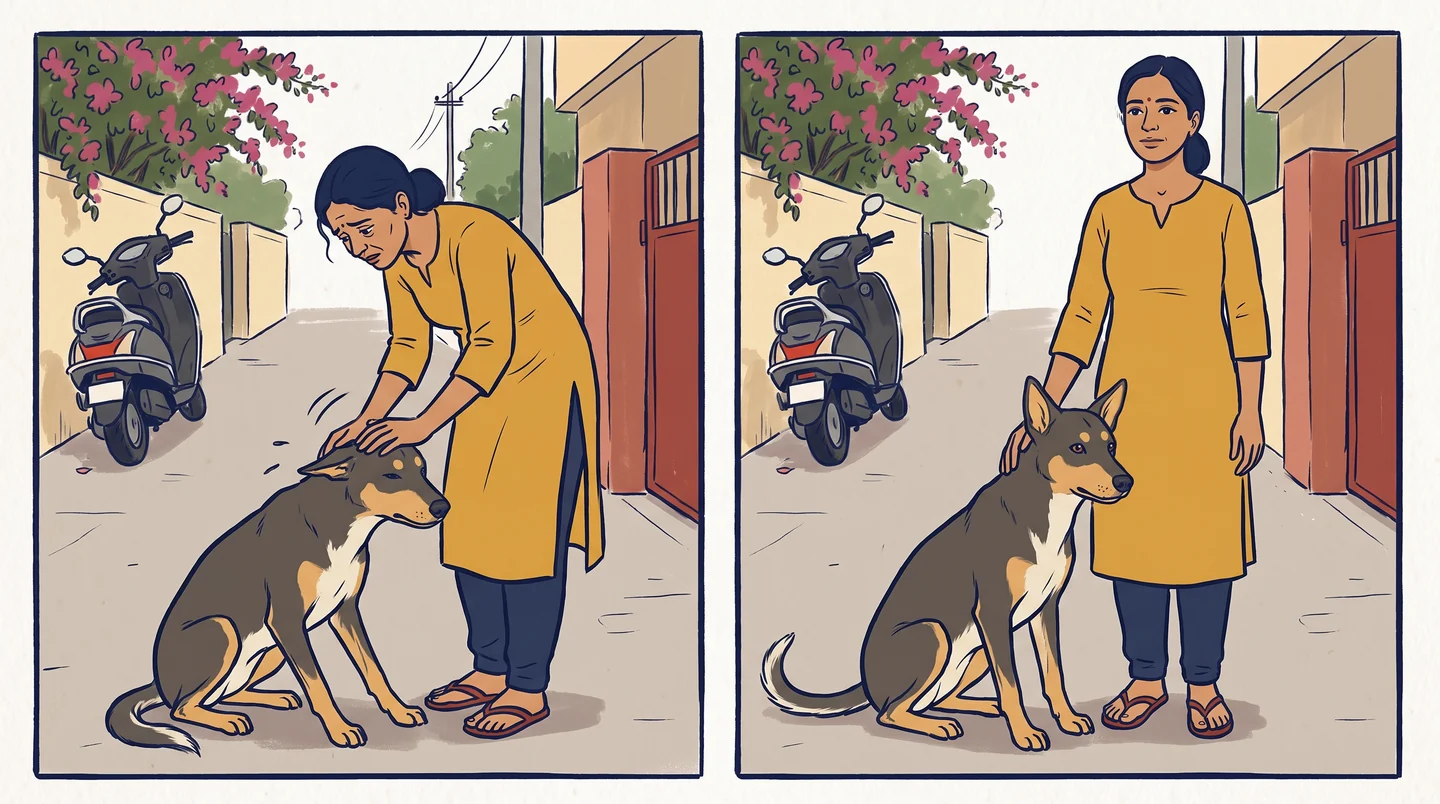
And he reads what is in it. Think of a dog who is frightened. Most of us go to him the way we would go to a frightened child: worried, stroking, saying oh baby, what happened. A child understands why he is being comforted. A dog does not. What reaches him through your hand is your worry, and it tells him that whatever is frightening him is real and is still going on. Now think of a hand put calmly and firmly on his back, by someone who is not worried at all. That hand says it is fine and it will be fine. The same touch, two different messages, and he gets the message first.
 , open the figure larger
That is the thing about these weeks. You were not there for them, and nothing you do can change them. But they tell you how to speak to him: through the doors his mother used, in the way she used them, from calm.
If you are going to see a litter
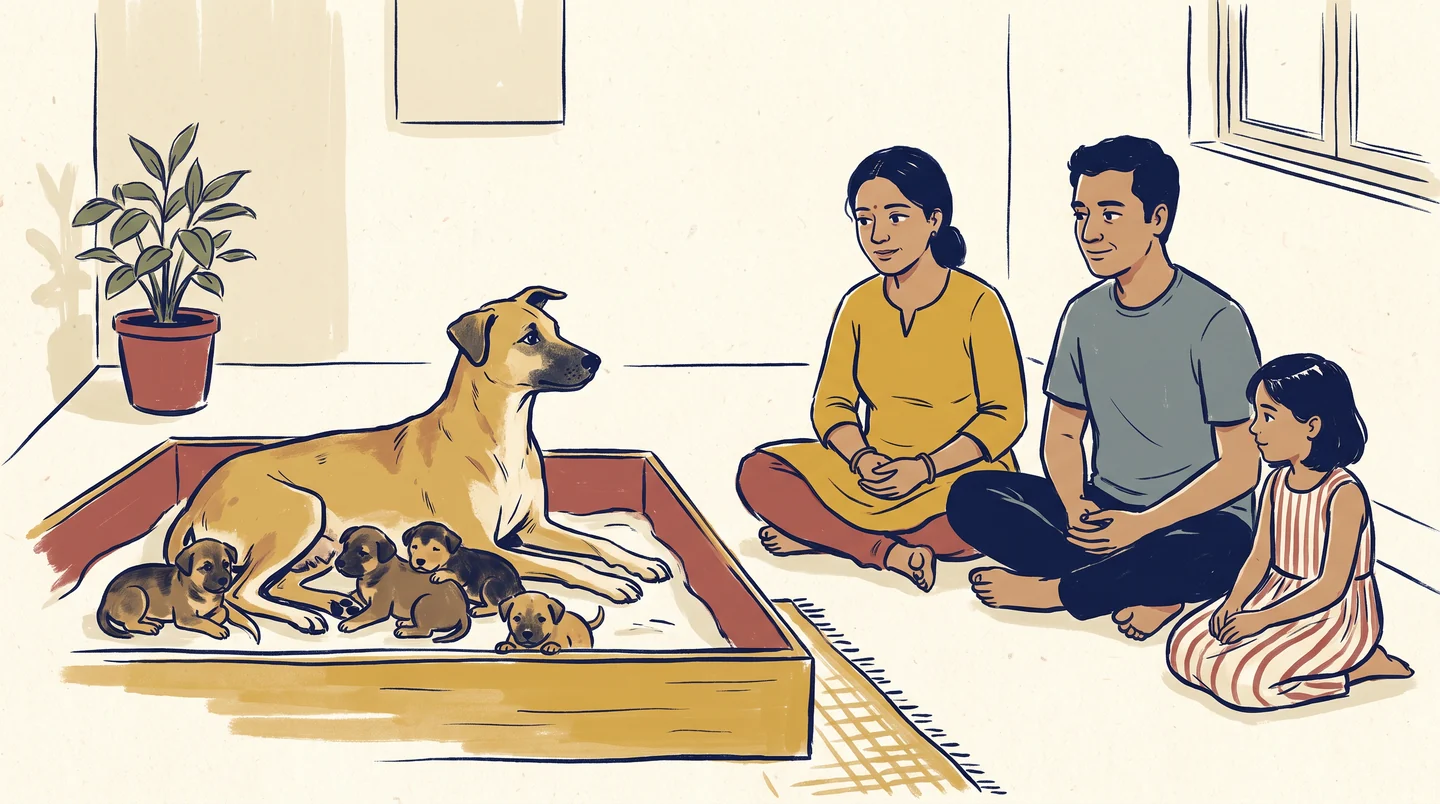
Some of you will meet a litter in its first weeks. If you do, remember whose time it is.
 , open the figure larger
Let the mother decide. If she is uneasy with you there, you are too close or you have come too soon; step back or come another day. Sit down, hands in your lap, voices low. Nobody picks up a puppy to pass him round for photos, and nobody uses a flash. Every family who wants to see a litter wants to hold one. Holding him can wait. He does not know you yet, and the first thing he will ever know about you is your smell.
The assignment
This one depends on where you are.
- If your own dog is going to have a litter. Set up her den now, before it starts: a box or a pen with sides the puppies cannot crawl over, in a quiet corner out of a draught, the floor covered with an old mattress or thick blankets. Show it to her for a week before the birth.
- When the puppies come. Leave the first weeks to her. Check twice a day that every puppy is warm and drinking. A puppy who is cold, has stopped crying for milk, or is not drinking goes to a vet the same day.
- If you are visiting a litter. Sit, hands in your lap, voices low, no flash, nobody passing puppies round. Let the mother decide how close you come.
- Whoever you are. For one day, notice how much you talk to the dog in your life, if you have one, or to any dog you meet. Then try one walk with almost no words, and see what he does with your silence.
- Your hand. Practise putting a hand on a dog calmly and leaving it still, instead of stroking. Notice what your hand is saying before you put it on him.
His mother taught him with her nose and her tongue for three weeks before he saw anything at all. Then his eyes open, and his ears, and a second world starts coming in on top of the first. That is chapter 3: eyes, then ears.