
At this age 3 to 8 weeks
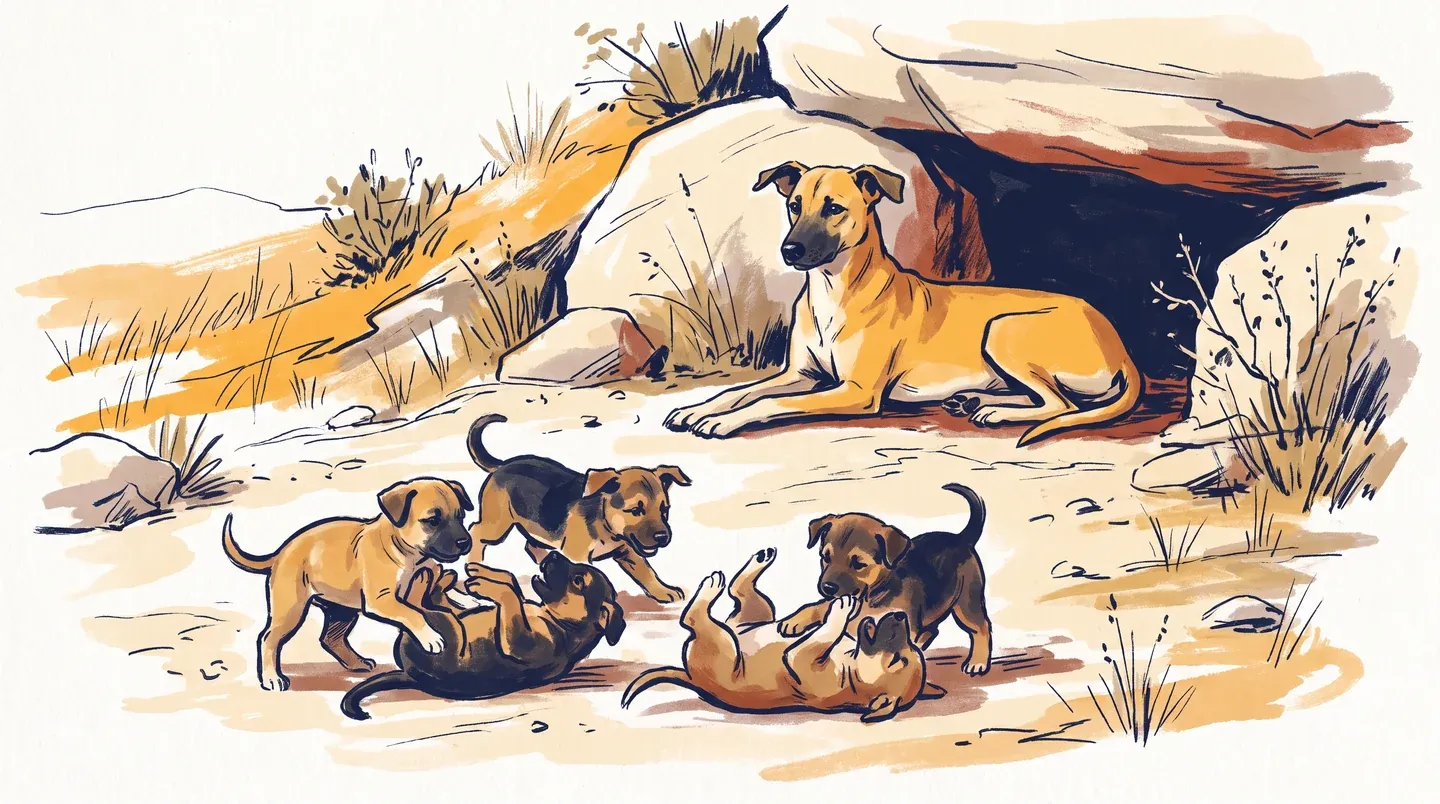
- from about three weeks the puppies start to notice each other, and play begins
- under a month, a puppy keeps biting through a cry; by two months he lets go
- at about a month his teeth are through, feeding him gets harder, and his mother starts bringing him meat
- the lessons get firmer as he grows: gentle while he is small, more as his energy gets bigger
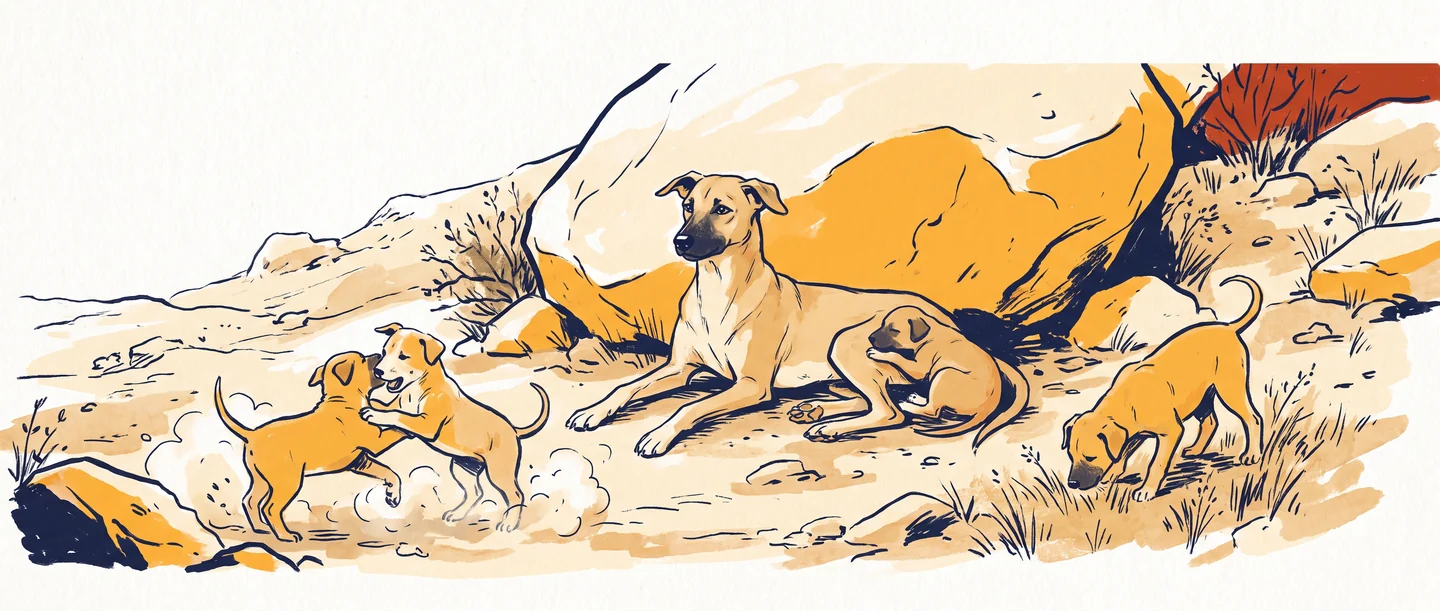
This autumn there are two litters on the hill. One is about two months old. The other was not yet a month when I tried this.
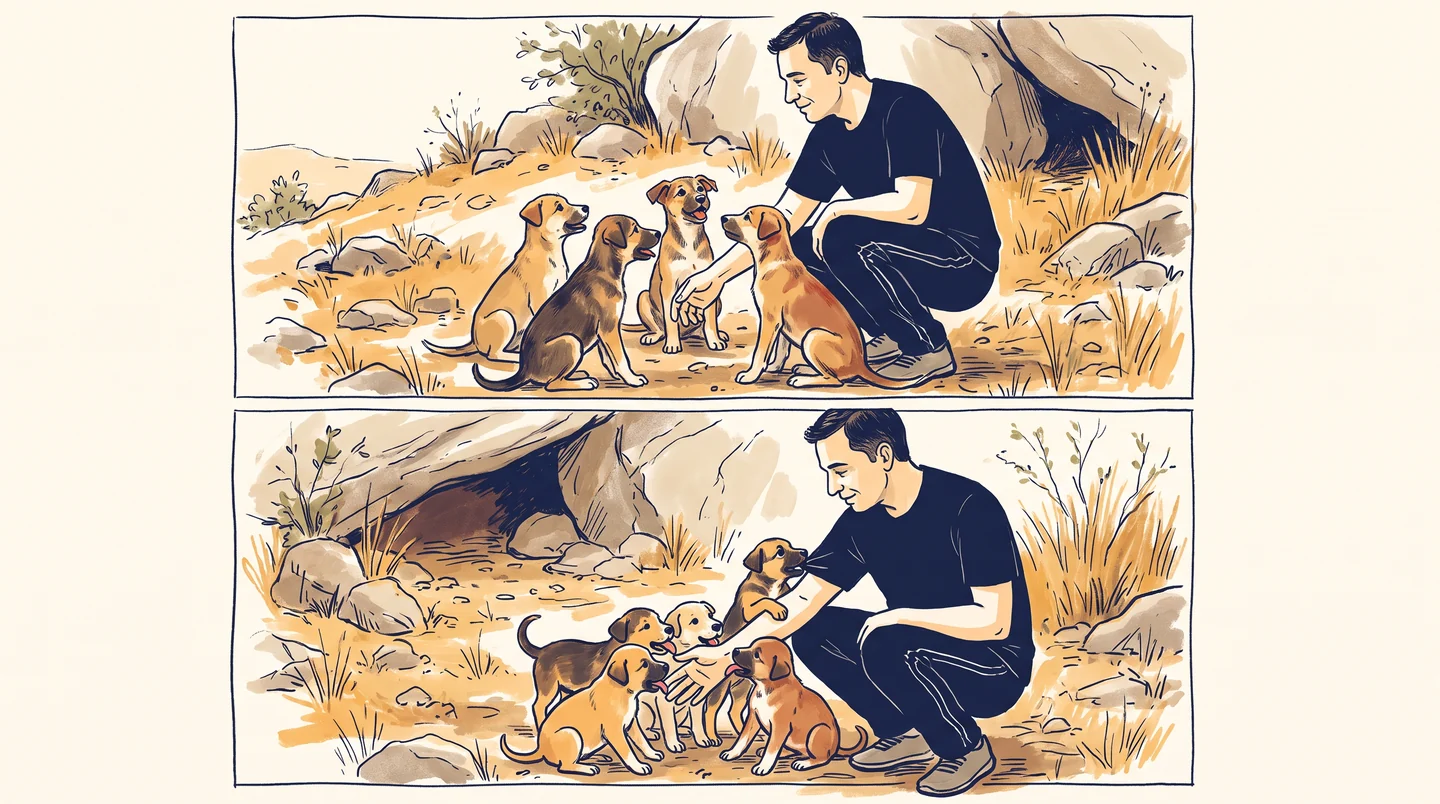
I went to the older ones first and put my hand down among them. They came at it the way puppies do, mouths open, chewing on my fingers. I made a sharp little cry, the sound a puppy makes when he is hurt. Every one of them let go. They sat back and looked at me.
Then I went to the younger litter and did the same thing. They chewed on my fingers. I made the same cry. Nothing. They did not let go. They chewed harder.
 , open the figure larger
How do the older ones know? Nobody can tell a puppy that a cry means let go. He was not born knowing it; the younger litter is the proof. Somebody taught them, in the weeks between the one litter's age and the other's.
If you have read The puppy at home, you have met these two litters before. There I asked what the test means for your hand. Here I want to know who did the teaching.
That is this chapter. By three weeks his eyes are open, sound is reaching him and he is up on his legs. From here until he leaves, his mother and his brothers and sisters are teaching him every day. The litter is a school.
From a heap to a litter
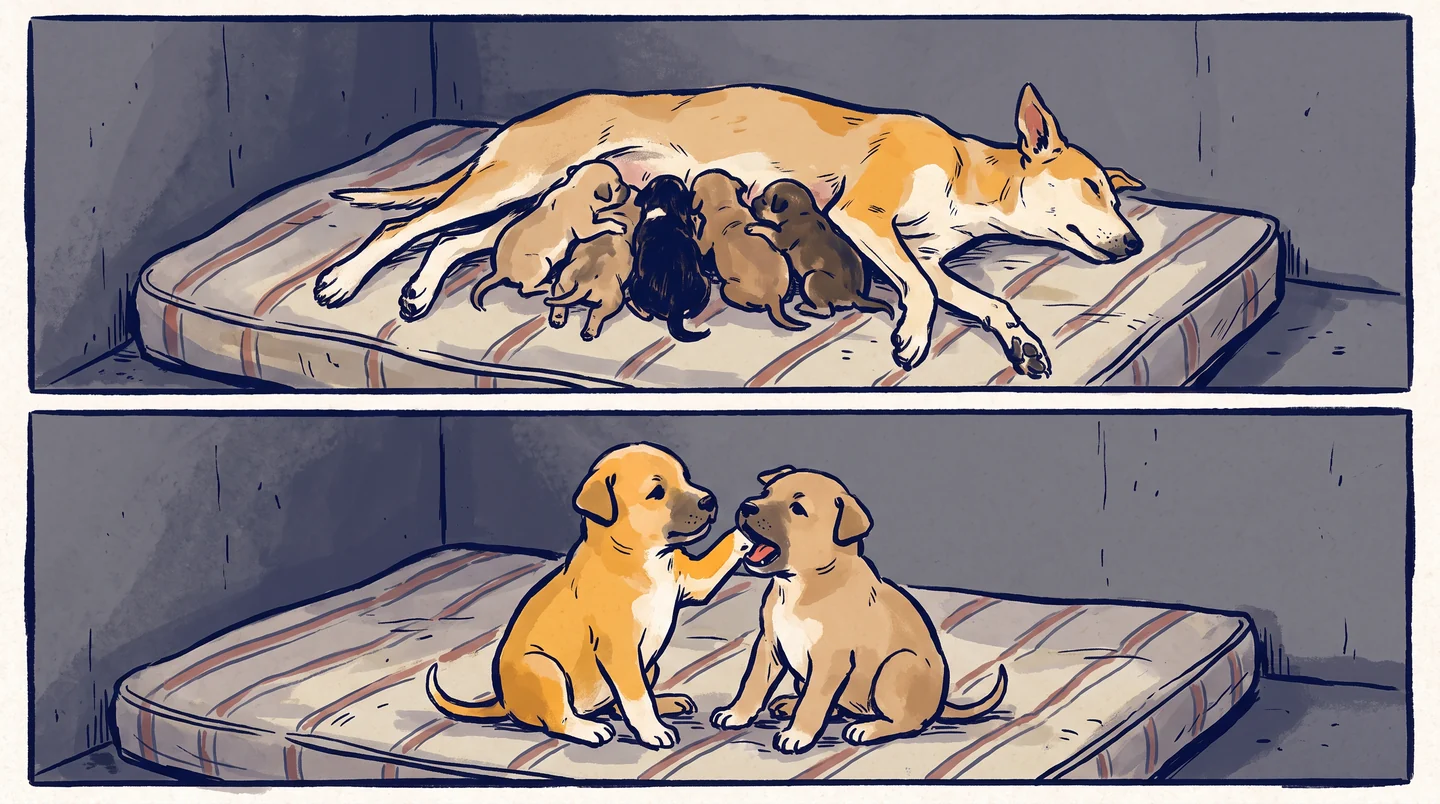
In chapter 2 the newborns were a heap. Each one was going for the milk with his face, and his brothers and sisters were only in the way. Even in a big litter, where they push each other off the teats, I do not think they are competing. A puppy going for milk has his eyes on the milk. He is not looking at anyone else. The others are just what he has to get past.
Then, at about three weeks, it changes. He can see them now, and hear them, and stand. For the first time a brother is not something in the way. He is something to paw at, to climb on, to grab by the ear. The researchers who first mapped puppy development, John Paul Scott and John Fuller, put the start of this stage, the one they called socialisation, at about three weeks.
 , open the figure larger
 The rest of Birth to eight weeks