The account
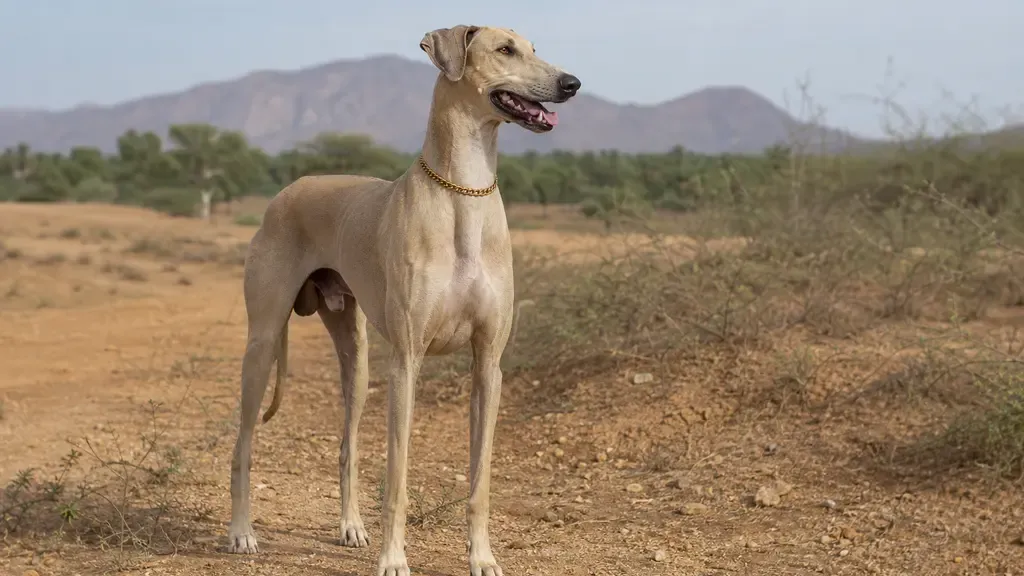
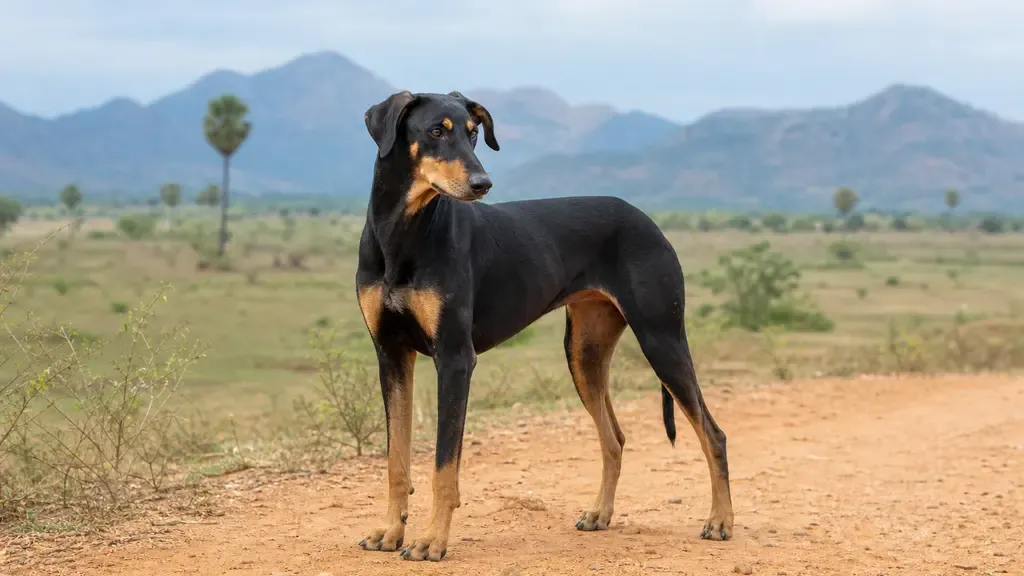
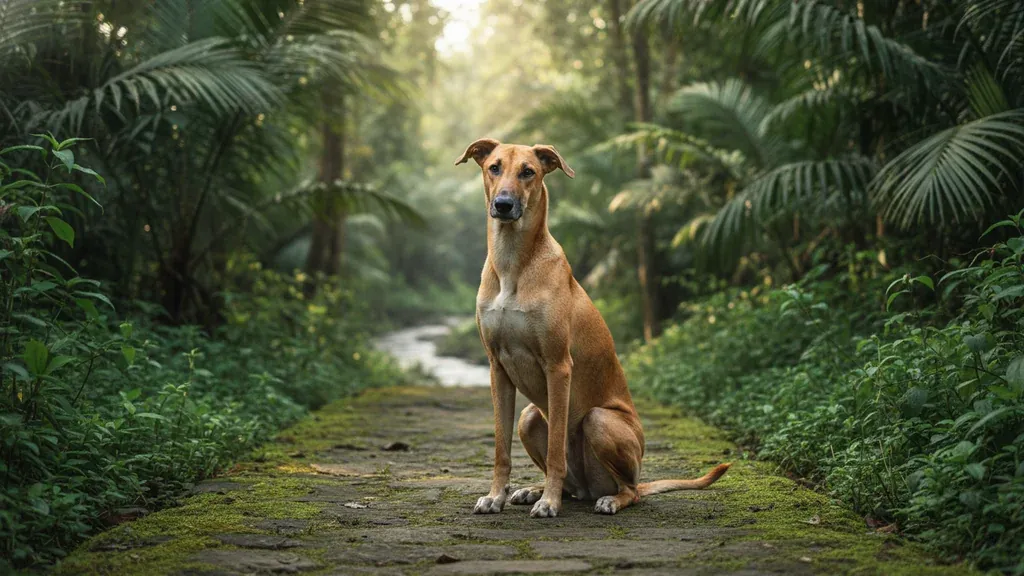
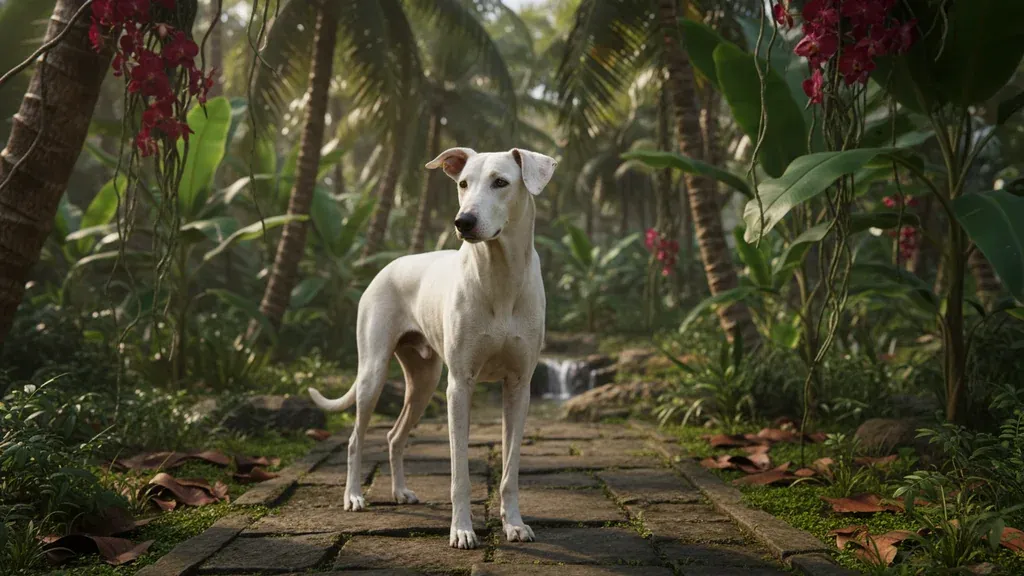
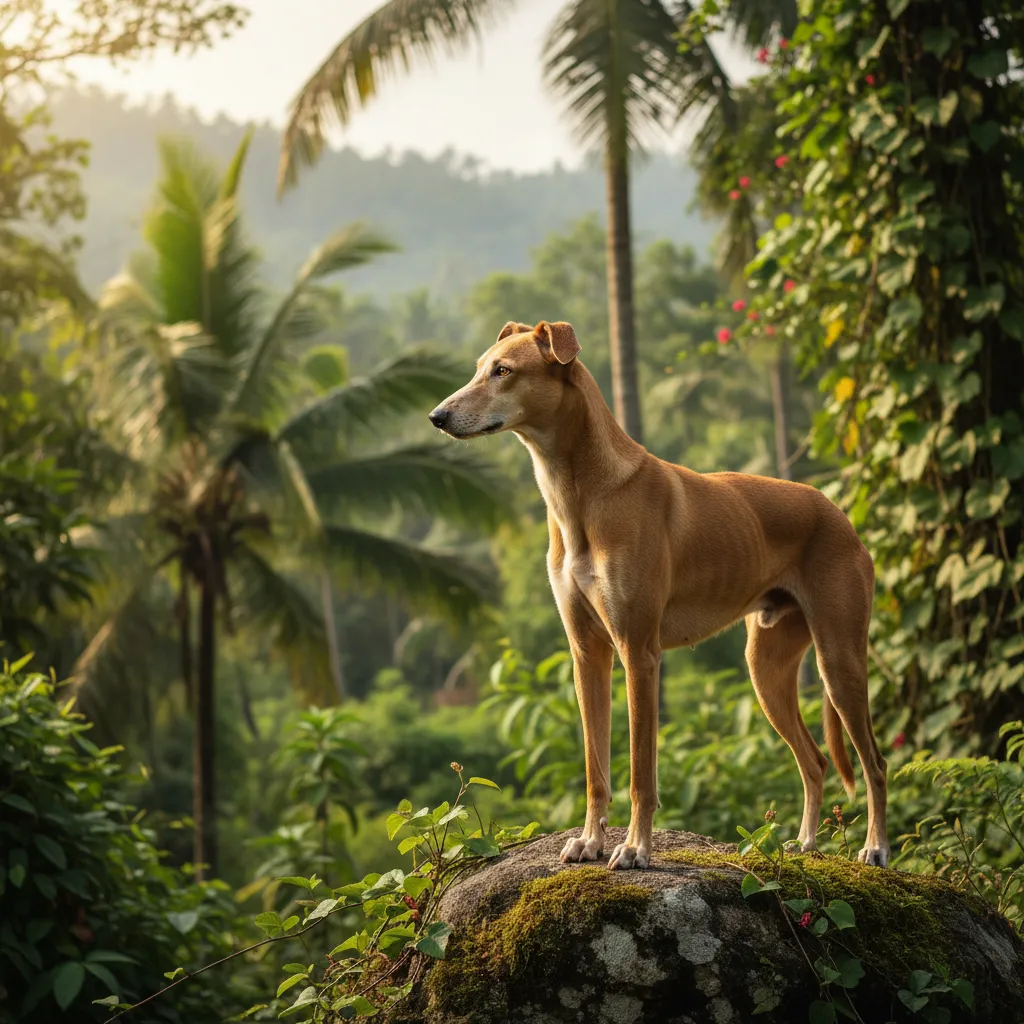
The Taji is recorded as a sighthound of Kerala and the Western Ghats, kept by tribal and forest communities for coursing hare, deer and boar. The name is the immediate complication: taji, tazi and tazy are variants of a word used from Anatolia to Central Asia to mean, roughly, an Arab-type hunting hound, and it attaches to several distinct populations. What is described in Kerala is a tall, very lean, short-coated hound of the classic desert-hound outline, which is what the word has always meant, whoever was using it.
The presence of such a dog in the far south is less strange than it first appears. Sighthound types moved with trade and conquest along the western coast for two thousand years, and coastal Kerala had continuous contact with Arab and Persian shipping throughout that period. A hound landed at a southern port and left to breed with local pariah stock in a hot climate converges on much the same animal it started as, long-legged, thin-coated, fast in a straight line, which is why sighthounds across three continents look related whether or not they are.
Practically, the Taji behaves like the rest of its group. High prey drive, high independence, a low interest in obedience for its own sake, and complete devotion to a small circle of people. It needs enclosed ground to run on and gets nothing useful from a lead walk. In the Western Ghats it worked in hillier, wetter country than most Indian sighthounds, which makes it somewhat more sure-footed and rather more vulnerable to the skin and ear problems that humidity brings.
The breed is not standardised or registered anywhere, and the overlap with the Tazi record in this register reflects a genuine ambiguity in the sources rather than a duplication. Treat the Taji as a documented type rather than an established breed: real dogs, a real function, and a naming tradition too broad to pin down. Acquiring one means going to Kerala and asking people who keep them.