The account
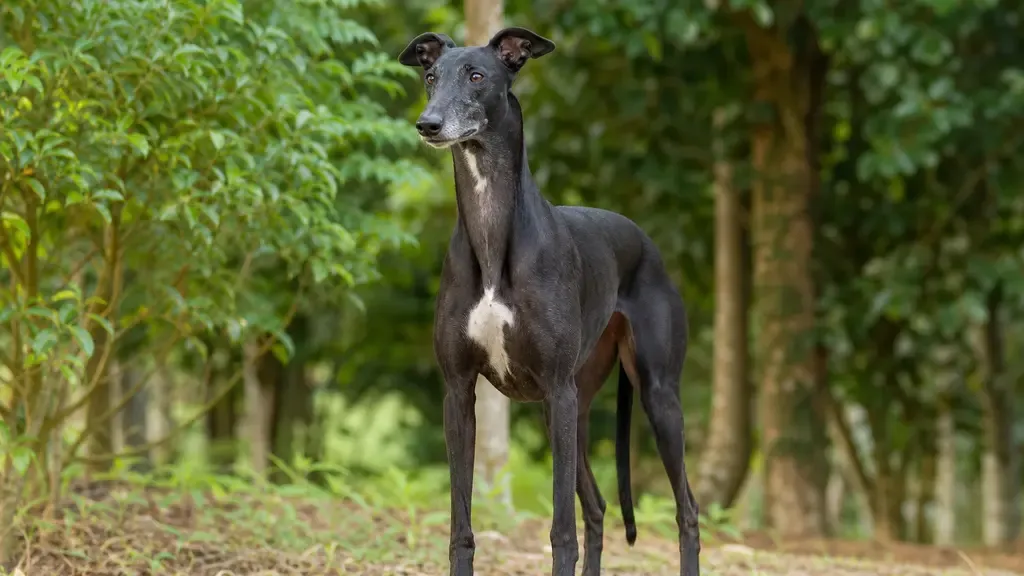
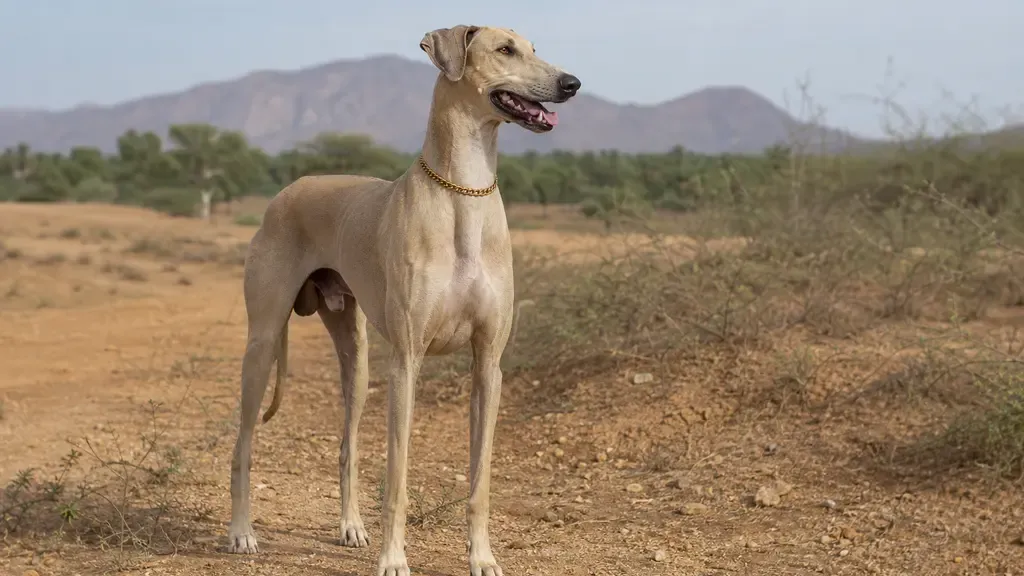
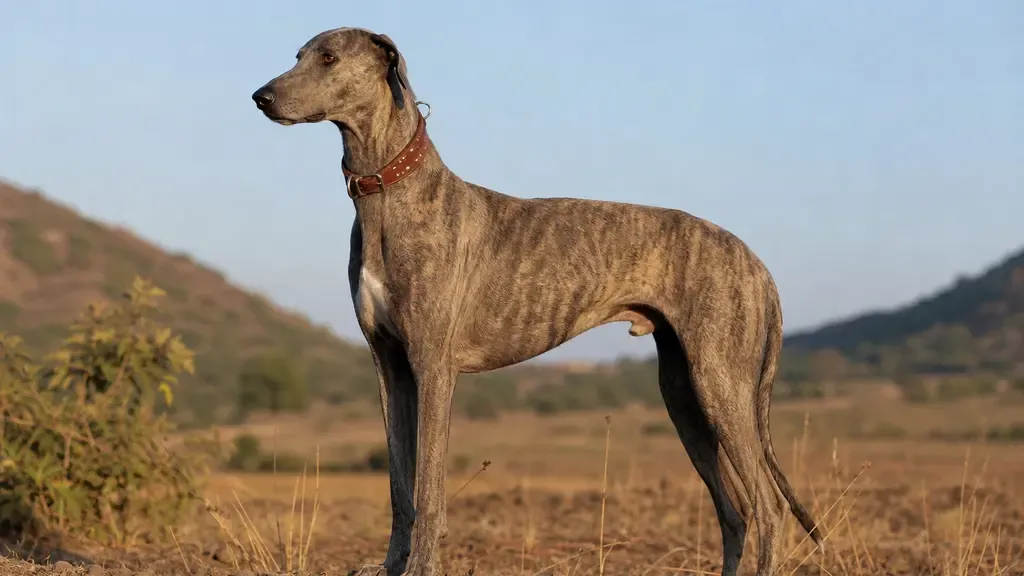
The Rampur Greyhound was engineered for a single quarry. In the nineteenth century the Nawabs of Rampur wanted a hound that could take a jackal alone, and neither the imported English Greyhound nor the local Afghan-type Tazi could do it, one lacked the substance, the other the flat speed. Crossing them produced a dog with the Greyhound's running gear on a heavier, more courageous frame, and the result was fast enough to catch a jackal and hard enough to finish the job.
That origin explains a build that surprises people who know European sighthounds. The Rampur stands taller than a Greyhound, carries more bone, and has a broader skull and a distinctly hooded, forward-set eye. It was bred for the plains of Uttar Pradesh, and the short, almost hairless coat and lean frame make it one of the few large breeds genuinely comfortable through a north Indian summer. Historically the Nawabs' packs also hunted deer and boar, and the dogs were expected to work in the heat of the day.
The temperament is the classic royal-kennel sighthound: dignified with the family, indifferent to visitors, and entirely unimpressed by obedience for its own sake. Rampurs are gentle at home and quiet indoors, which misleads people into thinking the exercise requirement is negotiable. It is not. This is a dog built to reach roughly 60 km/h, and one that is denied that will not settle. Secure fencing of at least six feet and lead-only walking in open areas are basic safety, not caution.
Independence and the end of princely hunting nearly finished the breed. Numbers collapsed through the twentieth century and the Rampur is now among India's rarest native dogs, kept by a small number of enthusiasts mostly in Uttar Pradesh and Punjab. Health is generally excellent, few inherited problems, minimal grooming, low food cost for the size, but as with all sighthounds, any vet operating on one should be told in advance that anaesthetic is metabolised differently.