

At this age 8 weeks to 6 months
- a puppy can only hold his bladder for a short time, so toilet training is timing, not obedience
- pee pads in two or three places, never one, and no treat for every pee
- three or four meals a day, at fixed times
- a puppy needs long, unbroken rest through the day, and a puppy who does not get it gets stressed
A Maltese puppy, three months old, had learnt a trick.
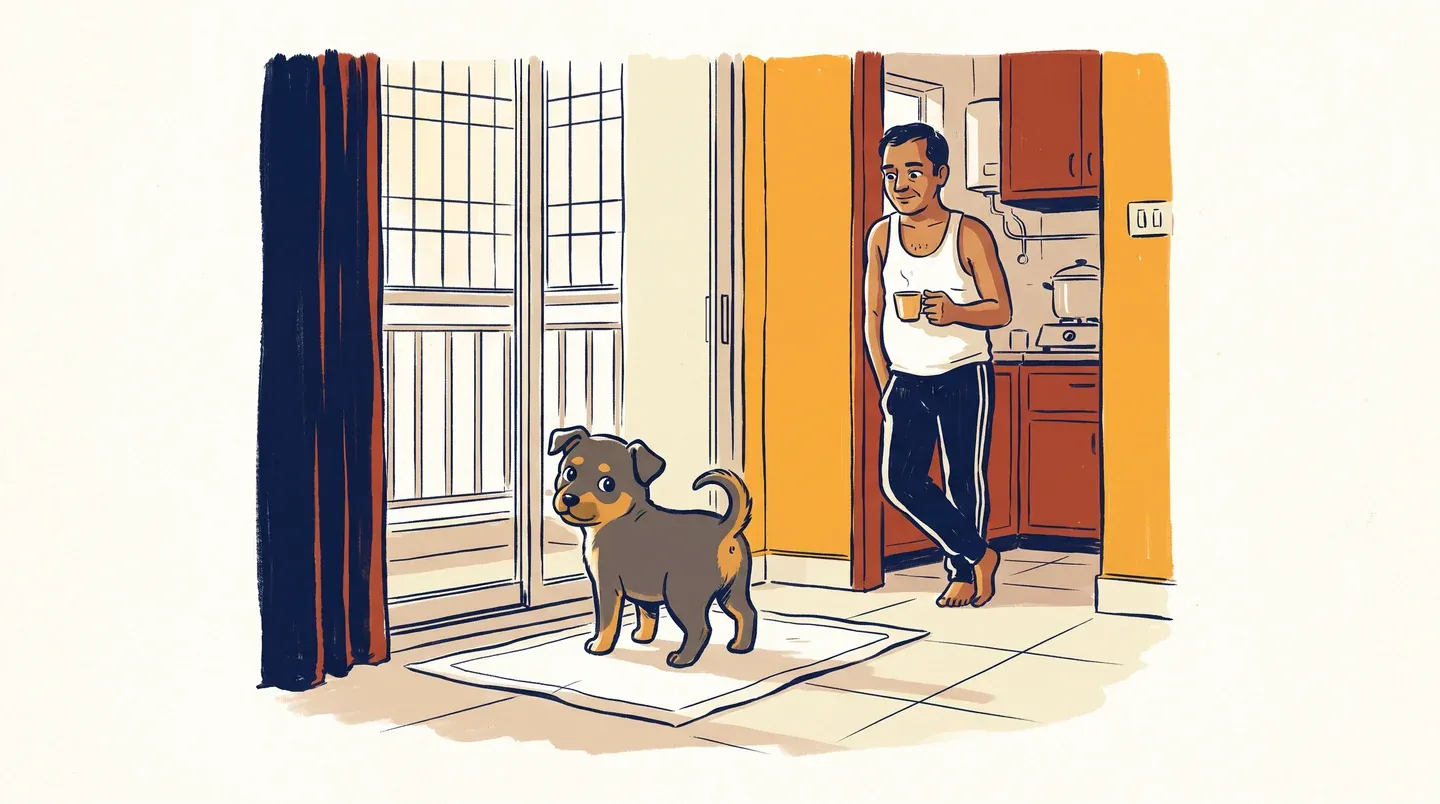
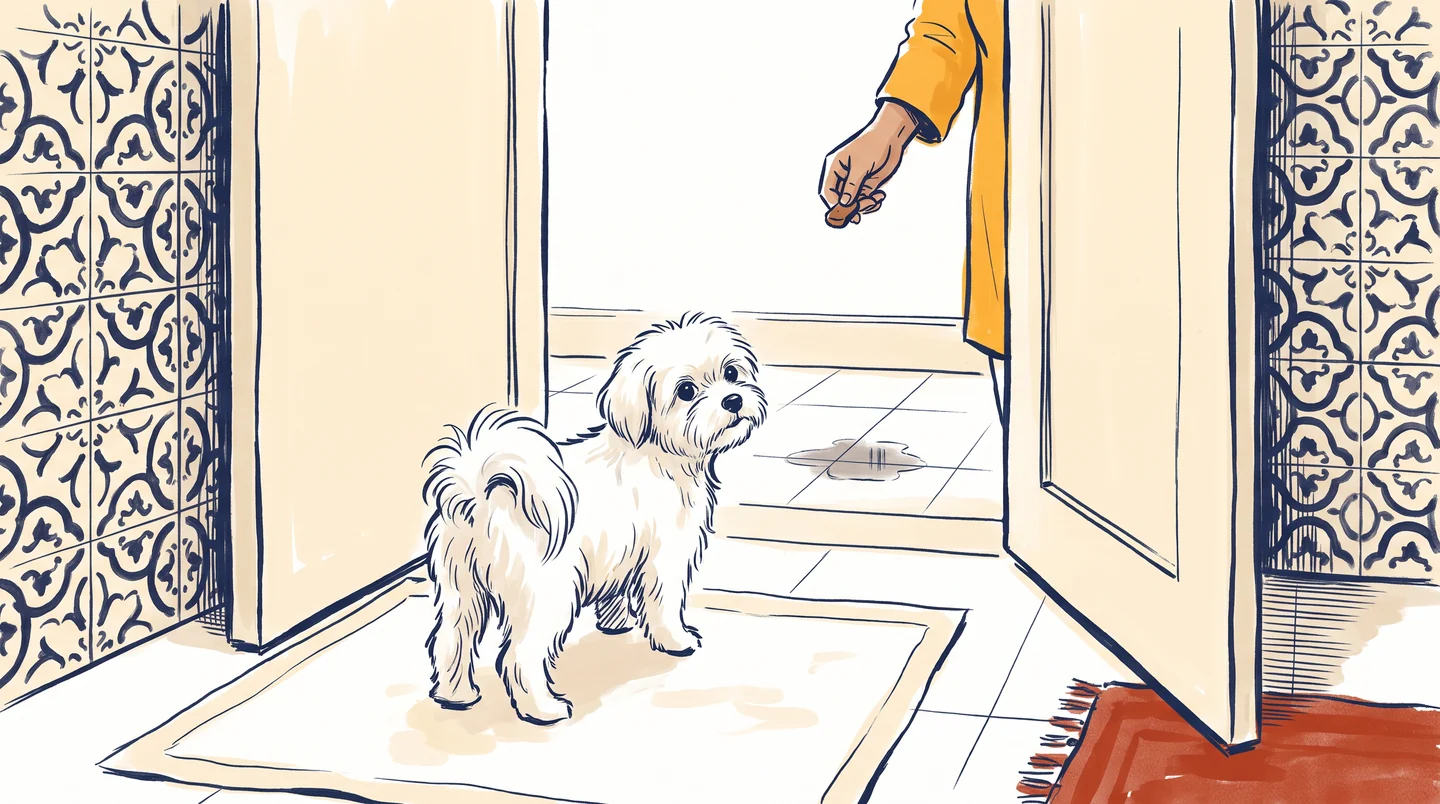
Her vaccines were not done, so she had not been out of the flat yet. Her pee pad was in the washroom. Every time she peed on it, someone gave her a treat. And she learnt fast. She would see a treat in someone's hand, trot to the washroom, pee on the pad, and trot straight back for her reward. Then a few hours later she would forget the whole thing and pee on the floor, in the hall, by the sofa, wherever she was.
The family thought she was confused. She was not confused at all. She had learnt exactly what they taught her: that peeing on the pad is a way to get a treat. Nobody had taught her where a dog goes when she needs to go.
 , open the figure larger
This chapter is about three things that families think of as small: where he goes, how he eats, and where he sleeps. None of them is training. You cannot command a bladder. You cannot teach a puppy to sleep with a word. They are habits, and a puppy builds his habits out of whatever the house does every day, whether the house means it or not. Get these three right in the first weeks and most of the rest of this book becomes easier. Get them wrong and you will be untangling them for a year.
He cannot hold it yet
Start here, because it will save you a lot of anger.
A small puppy cannot hold his bladder for long. It is not that he will not; he cannot. So when a three-month-old pees eight or ten times a day, all over the house, that is not a failure of training. It is a puppy. Your job is not to stop him. Your job is to learn his timing and be there when it comes.
So for the first few days, before you do anything, watch.
Dogs go at their own set times. Most puppies pee soon after they eat. Many poop a fixed number of minutes after a meal, and that number is the same day after day. So note it down. If he ate at nine and pooped at twenty past, tomorrow at twenty past nine you will be ready.
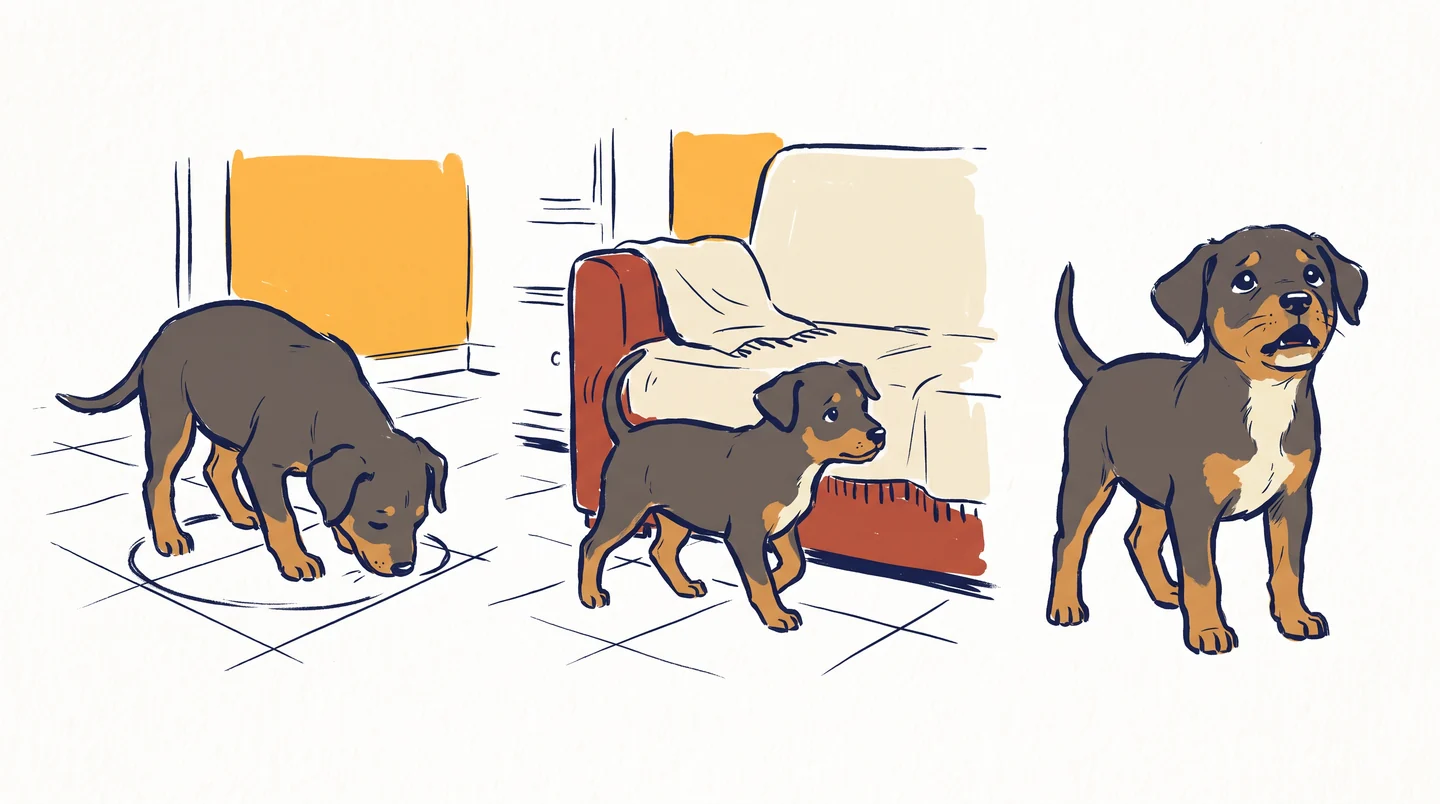
Then watch his body. A puppy who is about to go changes. He starts sniffing the floor in a circle. He gets a little restless, a little anxious, and some puppies whine. Once you know what that change looks like in your puppy, you will see it every time, and he is telling you what he needs.
 , open the figure larger
 The rest of Eight weeks to six months