At this age 8 weeks to 6 months
- the window for meeting the world is widest until about three months
- it stays partly open until about six months
- he comes home at about eight weeks, with part of it already spent
- the puppy shots usually finish after the widest part has closed
On the hill right now there are puppies of about two months, the same age most puppies are when a family brings one home.
One of their mothers is the fiercest dog I have. When her litter came, she dug a den with an opening so small that she could guard it with her mouth. Nobody could get in. For weeks her puppies never came out, and when I went inside she growled at me. At the slightest sound she came running, and she kept the big dogs away from them.
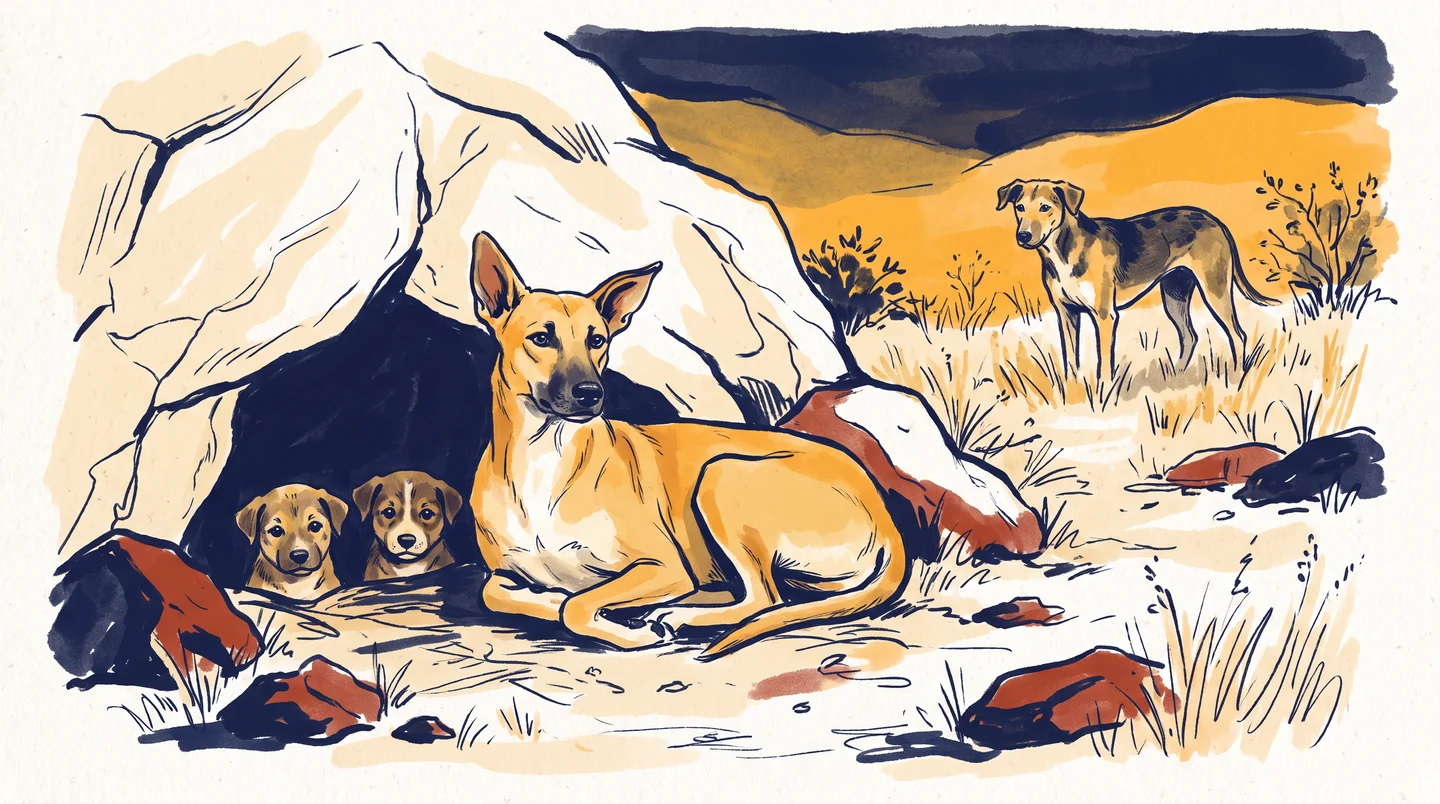 , open the figure larger
That was her house arrest, and it had a reason. In a pack, a dog with a strong predatory drive can kill a puppy who comes out too early. So a good mother keeps them in while the danger is real. Then, at about forty-five or fifty days, the puppies of a well protected pack start coming out of the den. They lie in the sun among the grown dogs, they wander a little further each day, and their mother decides how close the rest of the pack may come. From then on, the pack starts teaching them how to behave.
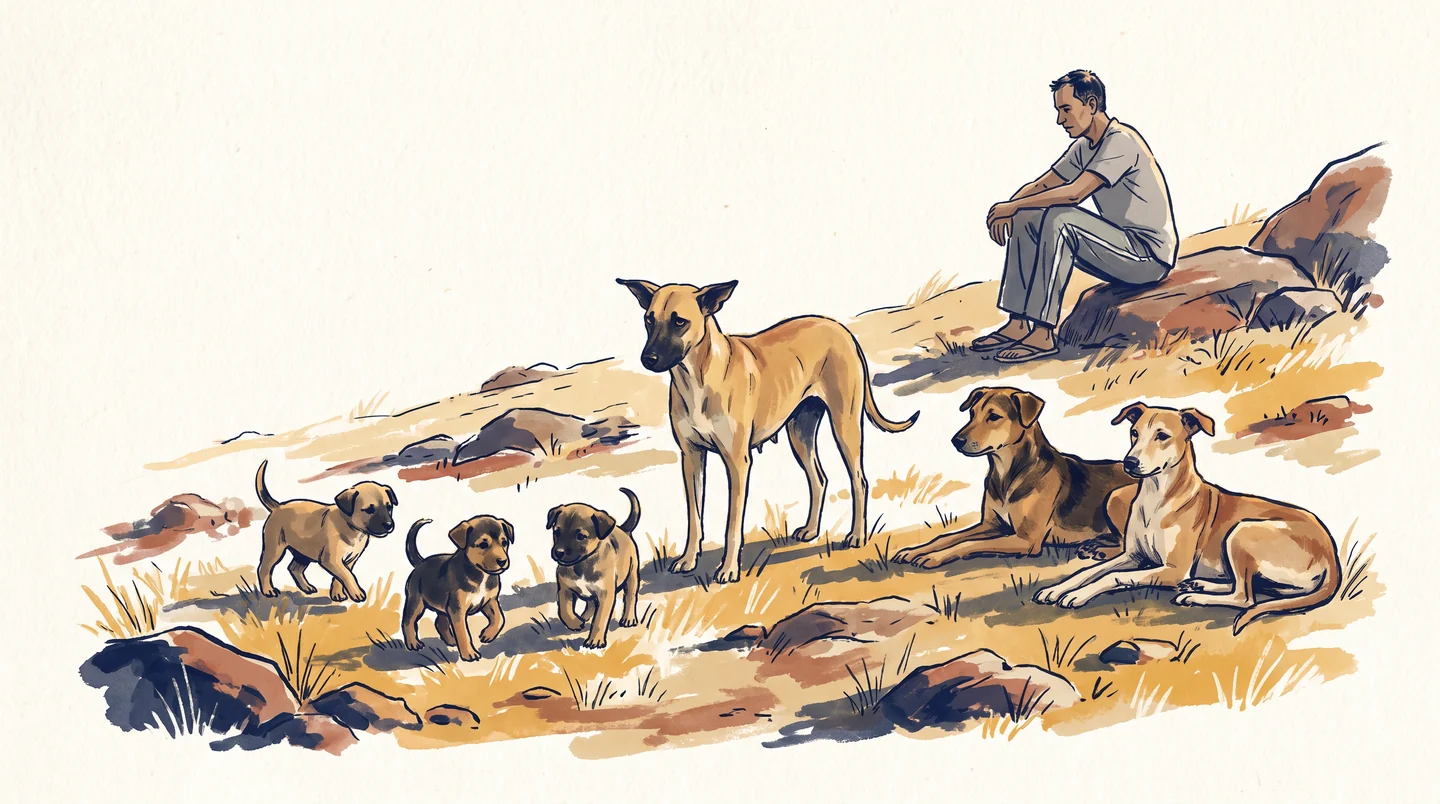 , open the figure larger
So by eight weeks, a puppy on the hill has already come out. He has lain in the open among grown dogs, been put in his place by some of them, and met me.
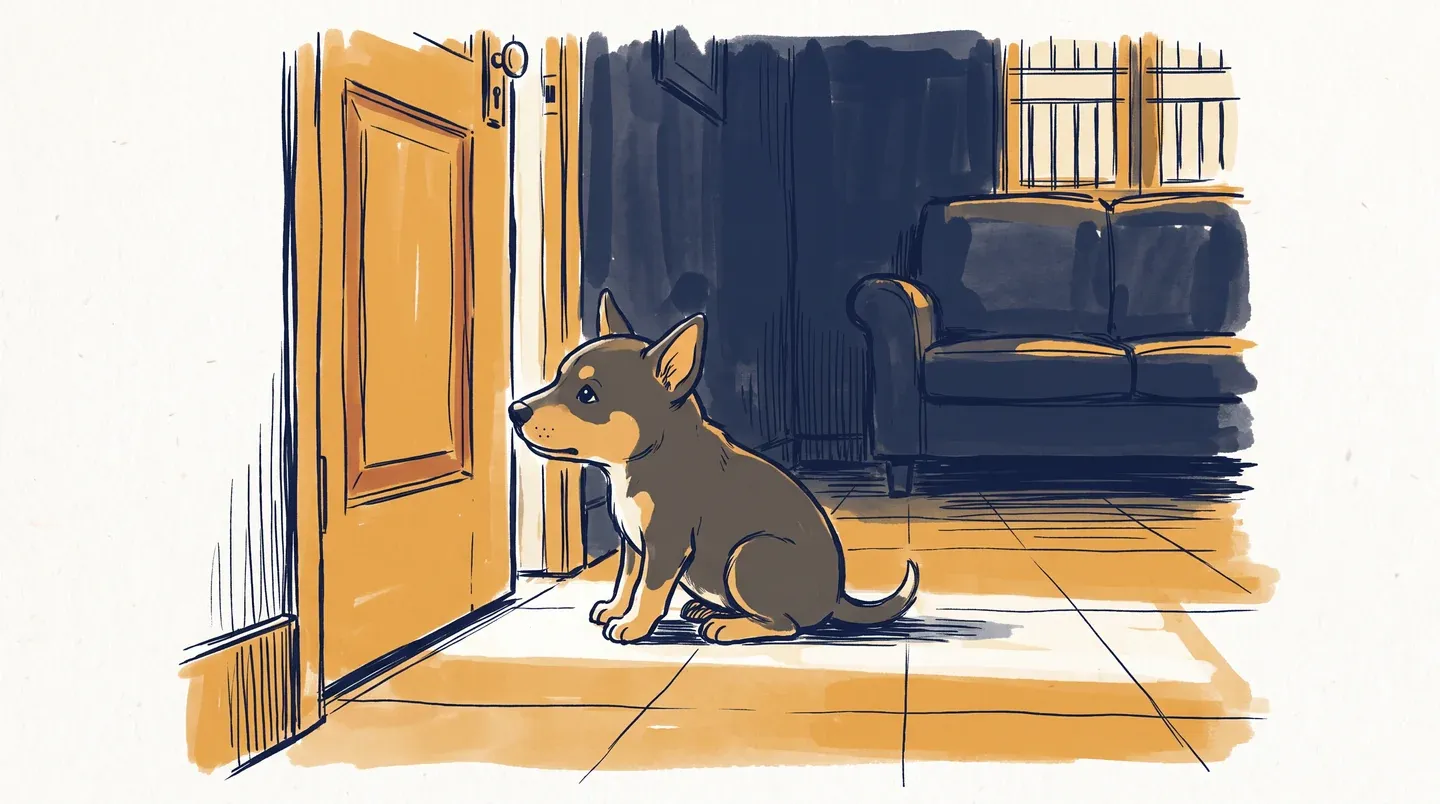
Now think of a puppy of the same age in a flat in the city. He comes home at eight weeks. The vet gives the family a card with dates on it and tells them to keep him in until the course is done. So the door shuts. The mother's house arrest ended at seven weeks. Ours starts at eight, and it often runs to four months. I have seen it run to six.
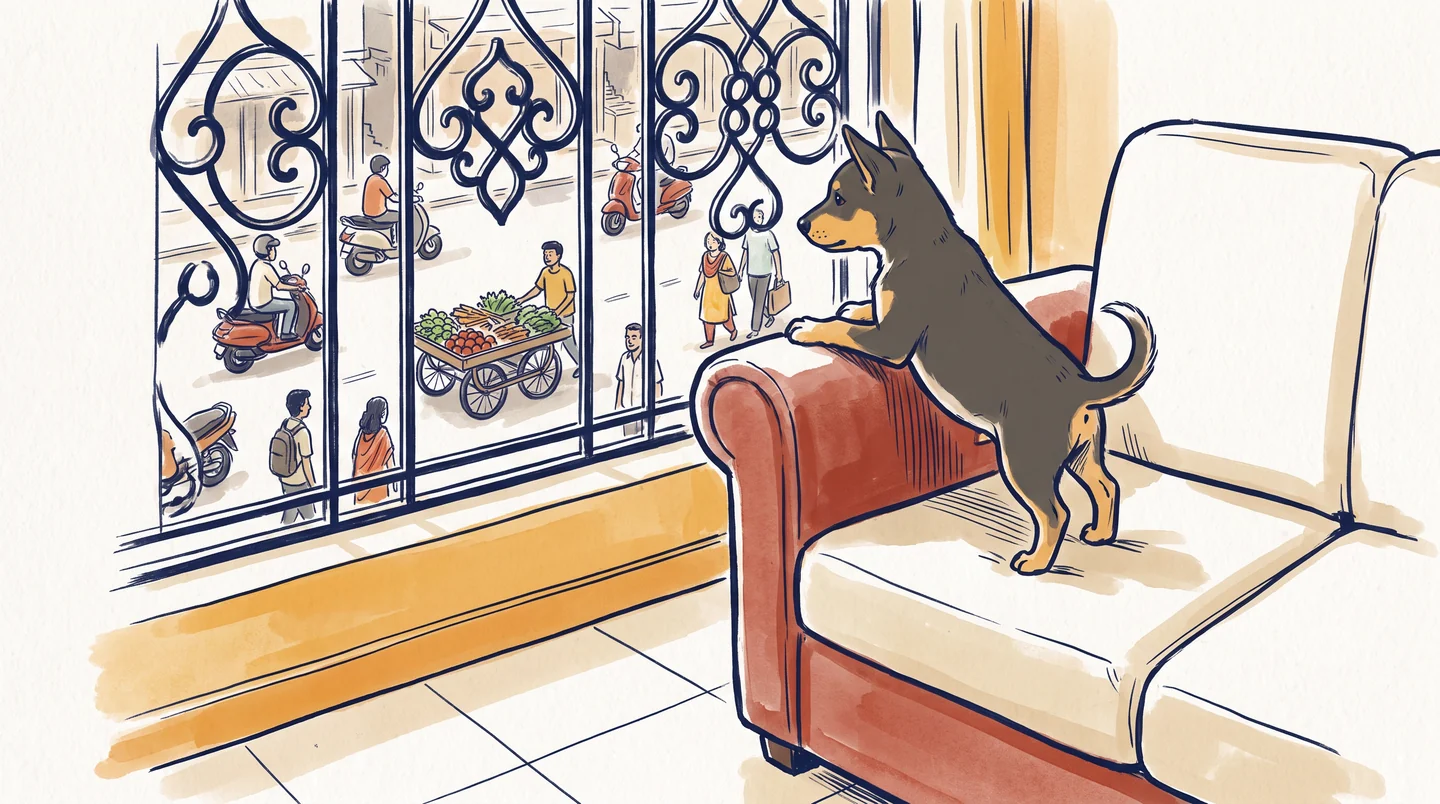 , open the figure larger
When can he go out?
This is the question I get, so let me answer it before anything else.
He goes out after his first shot. Until then, the world comes to him: the people at your door and the sounds of your house, from his first day. And after that first shot, what waits for the rest of the vaccines is not the world. It is a few kinds of ground.
His puppy shots go on your vet's schedule. I am not a vet, and the schedule is not mine to give you. But a schedule for his body is not a plan for his mind, and he needs both. Until the course is done, keep him off three places: public parks, the pavements and corners where street dogs toilet, and the floor of a vet clinic. Everything else in this chapter starts from his first shot, while the rest are still going on.
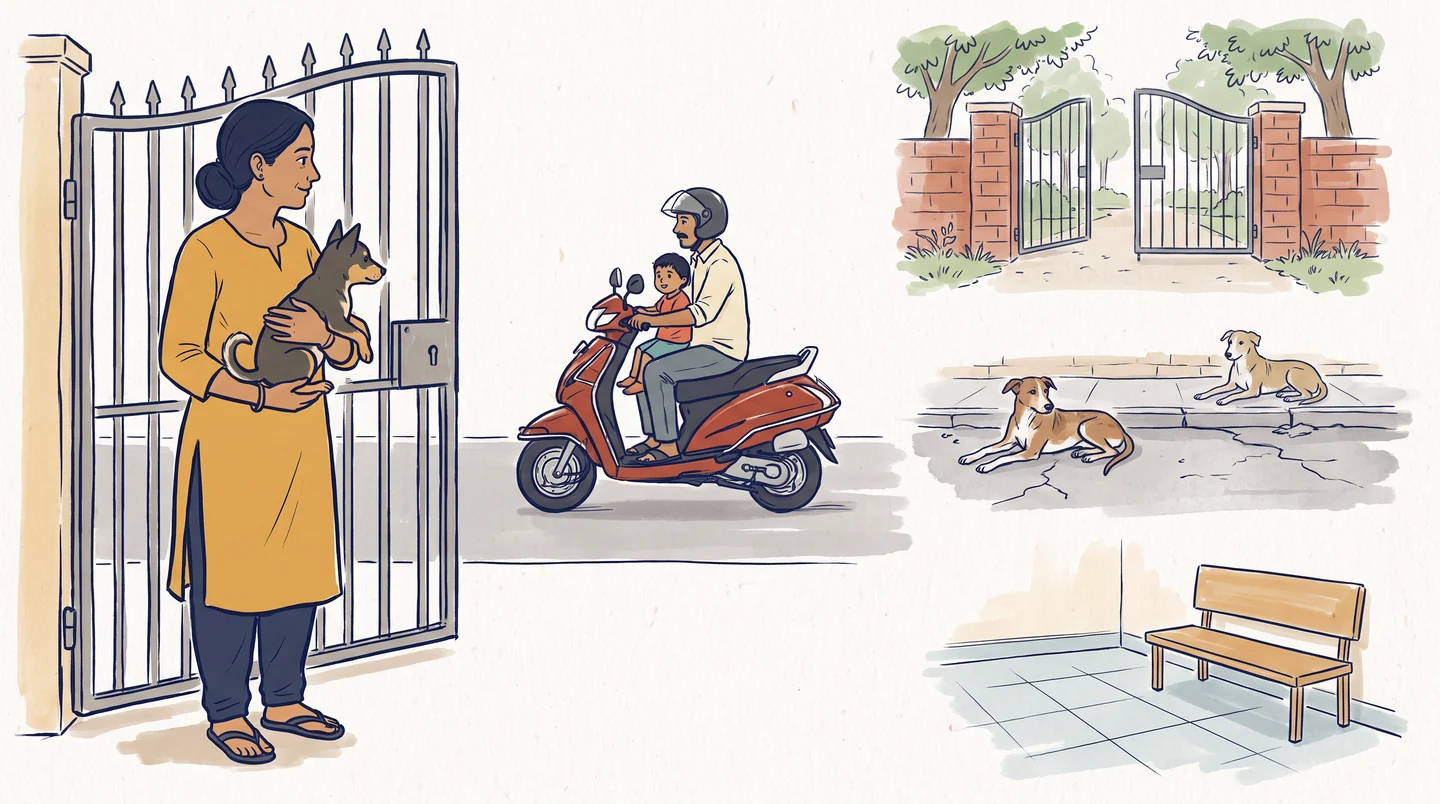 , open the figure larger
When you see your vet, ask it this way: how do I socialise him while keeping the risk down? That question gets a much better answer than the one most people ask, which is: when can he go out?
Safe for his body, worst for his mind
I want to be fair to the vets here.
On health, the vet is right. Diseases like parvo are real in our cities. Parvo spreads through the dirt where sick dogs have been, and it can stay in that ground for a long time. A puppy should not fall sick, and his vaccines are not done yet. We cannot argue with that, and I do not.
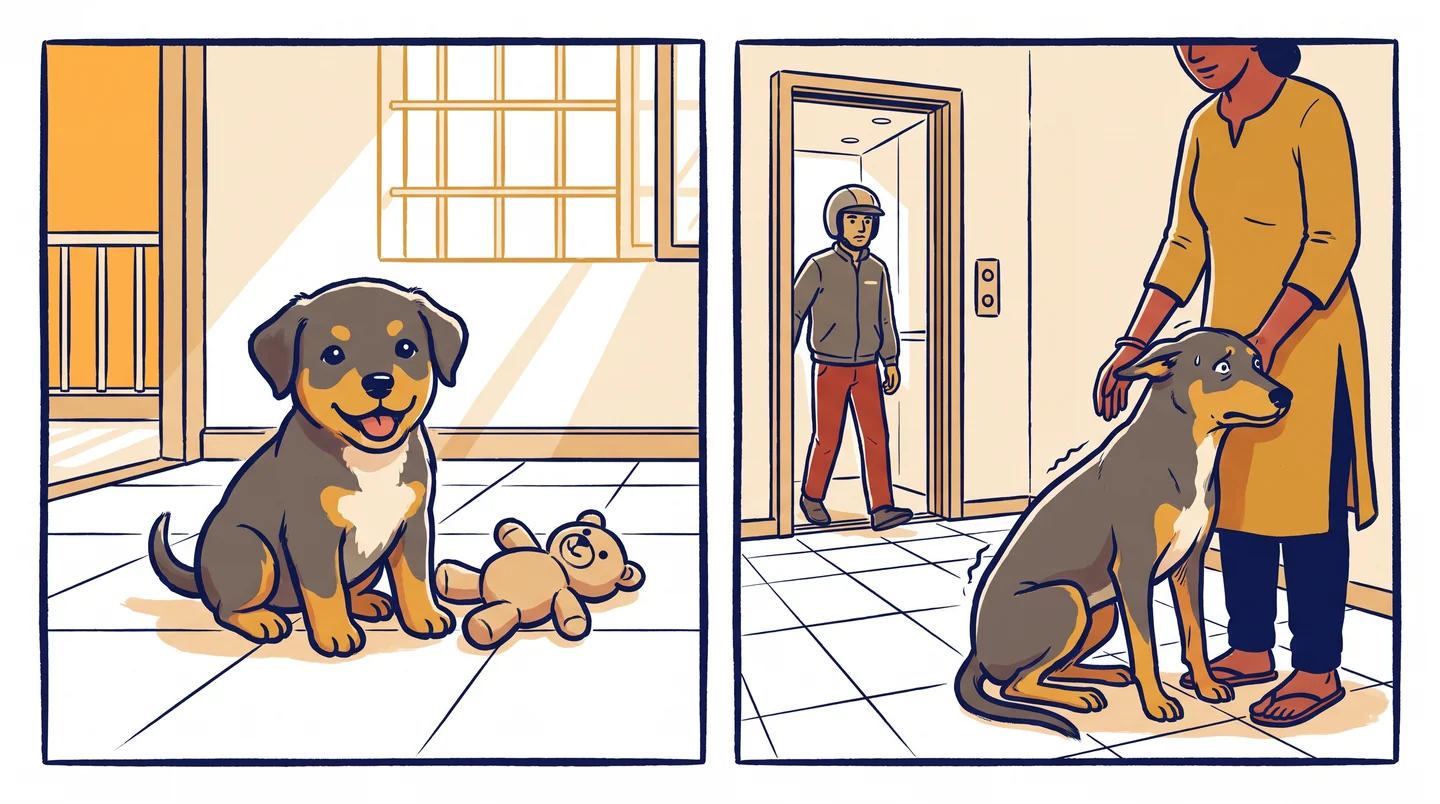
But the vet is looking at his body. That is what veterinary training teaches: the body, the symptoms, the treatment. Somebody has to look at his mind, and from that side, keeping a puppy inside the house for months is very bad. It is so bad that it can affect his whole life. It is not only about his health any more. This is a problem for life.
For us, five months is not much. For a dog, five months behind a wall is a big part of his growing up. In nature puppies are out of the den in their second month. The first six months are a big deal for a dog, and we are spending most of them indoors.
 , open the figure larger
And let me say one more thing, gently, because I have seen it many times. It is not only the vet's advice that keeps the puppy in. Families do not follow every piece of advice they get. They follow this one very carefully, and I think part of the reason is that waiting is easy. Not until his vaccines are done is a comfortable thing to say. Nobody has to go down in the lift at seven in the evening. There is a small, hidden laziness in all of us, and most of us do not see it in ourselves. I am not blaming you for it. I am asking you to notice it.
The window
Here is why the weeks matter so much.
From about three weeks, when he is still with his mother, a puppy's brain takes whatever it meets and files it as normal. A motorbike, a man with a beard, the pressure cooker, another dog: if he meets it now, calmly, it goes into the file of things that just exist. Scientists who study puppies put the widest part of this window at about three to twelve weeks. Then it starts to close. After it, the default turns around. New things are met with suspicion first and have to be worked through, slowly.
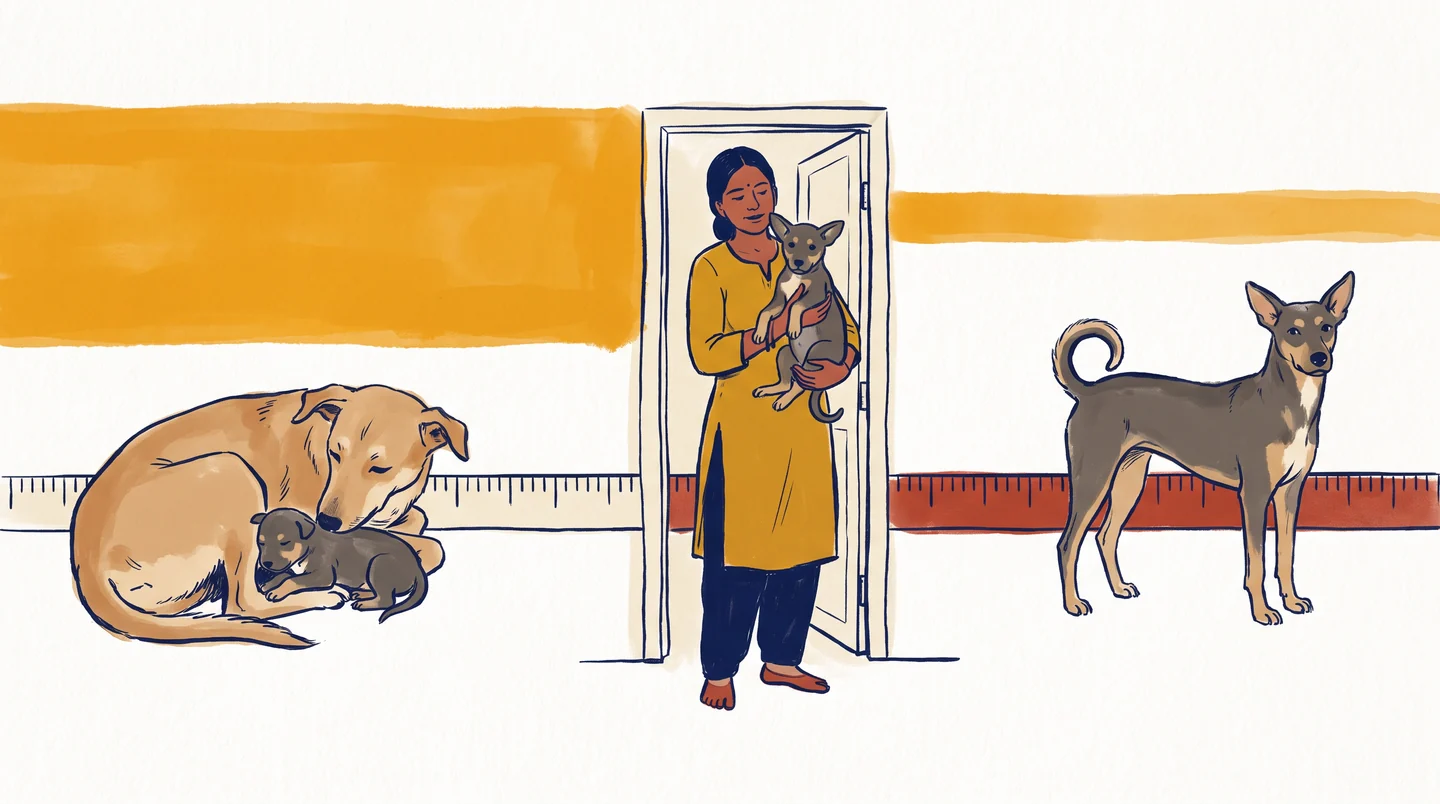
It does not slam shut on a date. The way I see it, the window is widest until about three months, and it stays partly open until about six. He keeps learning fast all through that time. That is why I tell people that from two months to six is when the real work happens, and it is also when almost nobody asks for help.
 , open the figure larger
Now count. He comes home at about eight weeks, so part of the window is already gone the day he walks in. The puppy shots are given a few weeks apart, and the course usually finishes after the widest part has closed. A puppy kept in until the last shot has spent the best of his window inside four walls. He walks into the world at four months or later with the default already turned to suspicion.
What waits behind the door
Most families think the problem is that he will not meet other dogs. That is part of it. A dog who never learnt how to be with dogs does not know how much force to use, and that goes wrong later. But the bigger part is everything else.
A young dog needs to move and to explore, the same way he needs food. Many puppies want to explore early, and when they do not get it, they get frustrated. The need does not go away because the door is shut. It comes out on the cushions, at the grille, on your hands.
And then there is fear. During the lockdown years so many families got a puppy and could not take him out, and so many of those dogs had problems later. It is easy to blame those years. But a puppy kept in for his first three, four, five, six months will have the same problems in any year.
I see that dog at a year old. He is healthy. He never fell sick. He is afraid of the lift, the dustbin, men in helmets, the sound of a scooter starting. The family cannot understand it, because nothing ever hurt him. That is the point. Nothing ever showed him anything either.
The world without the ground
The way out is to separate two things that families treat as one: seeing the world, and touching the ground. The disease is on the ground, in the places where unvaccinated dogs have been. The world is all around him, and most of it he can meet without putting his mouth on anything.
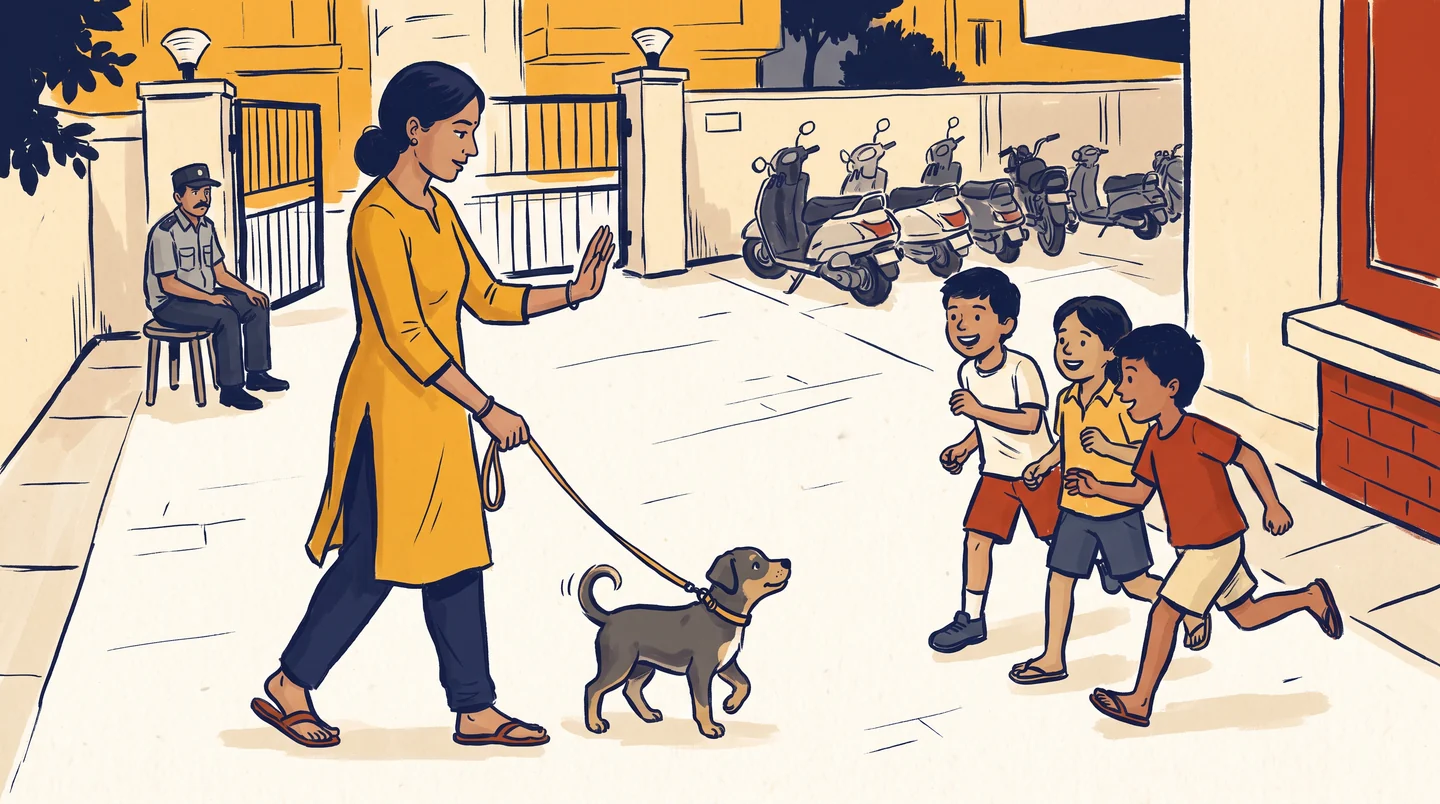
Out to a clean, natural place. Every day, take him out to somewhere clean and natural: a garden, a patch of grass, open ground where street dogs do not go. In a flat that usually starts with the lift. Take him down on a short leash into the clean parts of your compound, away from the corners where the community dogs gather and toilet. Keep his mouth off the ground. He does not need to lick the floor or eat what is lying there to learn what a society is. He needs to see the watchman, hear the gate, watch the scooters come in.
 , open the figure larger
And when you go down, the children will come. All of them, running, at full speed, reaching for him. Families do not stop them, because saying no to a child feels rude. But a puppy who keeps backing away from a crowd of hands, and is not heard, learns that his space means nothing to anyone. In a sensitive puppy that turns into barking, growling and, later, snapping, and then the dog is called the bad one. So say it. Stop, please, he is learning, stand still and let him come to you. If you will not say no to children, who will you say no to?
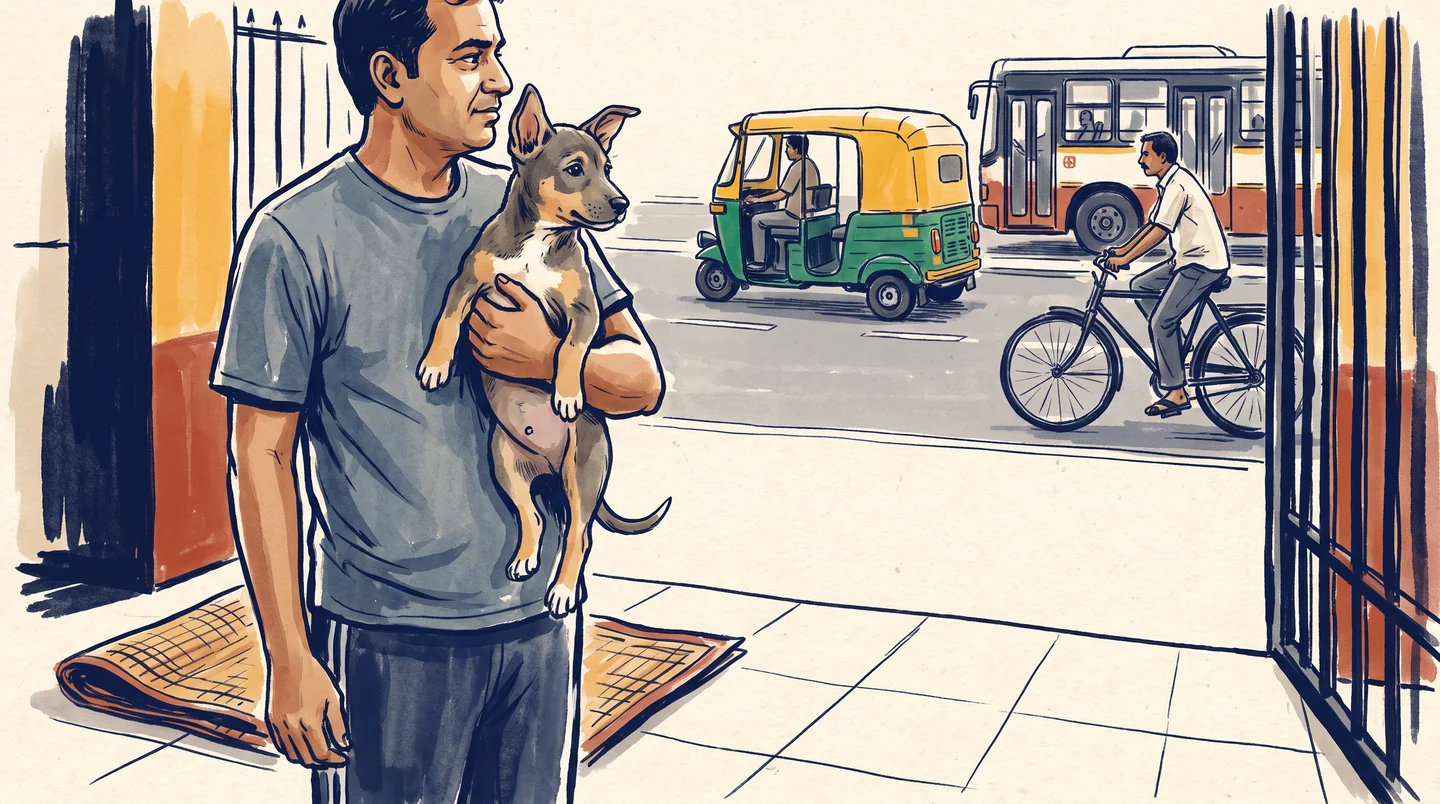
Carry him to see. You can also carry him, to the edge of the road, to the gate, past the shops, where his feet cannot touch anything. But remember chapter 1 and the lap. Pick him up from calm, the way you would lift a child over a puddle, and look at the road as if it were nothing. You are carrying him to see, never to soothe. When he is easy, put him down on a clean mat for a minute. Keep it short, and come home before he stiffens.
 , open the figure larger
Bring the world to your door. Men with beards, a delivery rider with his helmet still on, a grandmother in a sari, someone in a uniform, a child, all at your own door. Each one follows the rule from chapter 1: no touch, no talk, no eye contact until he is calm, so that he meets them with his nose. And let the house make its noise: the cooker, the mixer, the doorbell. When a sound makes him jump, do not rush in. Let him come back from it by himself before the next one.
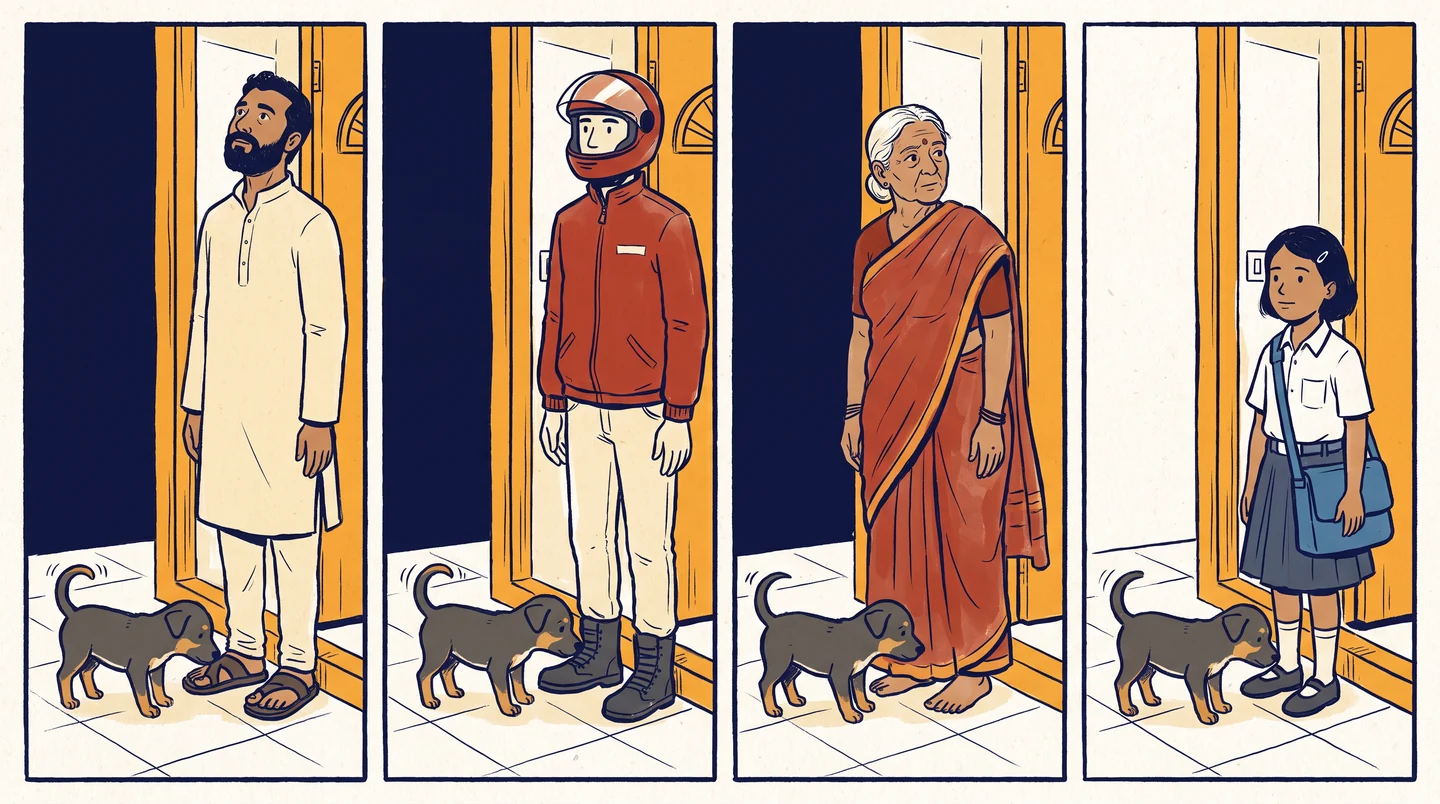 , open the figure larger
Dogs who are vaccinated, and kept away from the street. One calm, healthy, vaccinated grown dog, invited to your home, will teach him more about how dogs behave in ten minutes than a park will in a month. Ask to see the dog's vaccination card. Puppies of his own kind, all vaccinated, can meet too. But he does not meet any dog, grown or puppy, who mixes with street dogs, however healthy that dog looks.
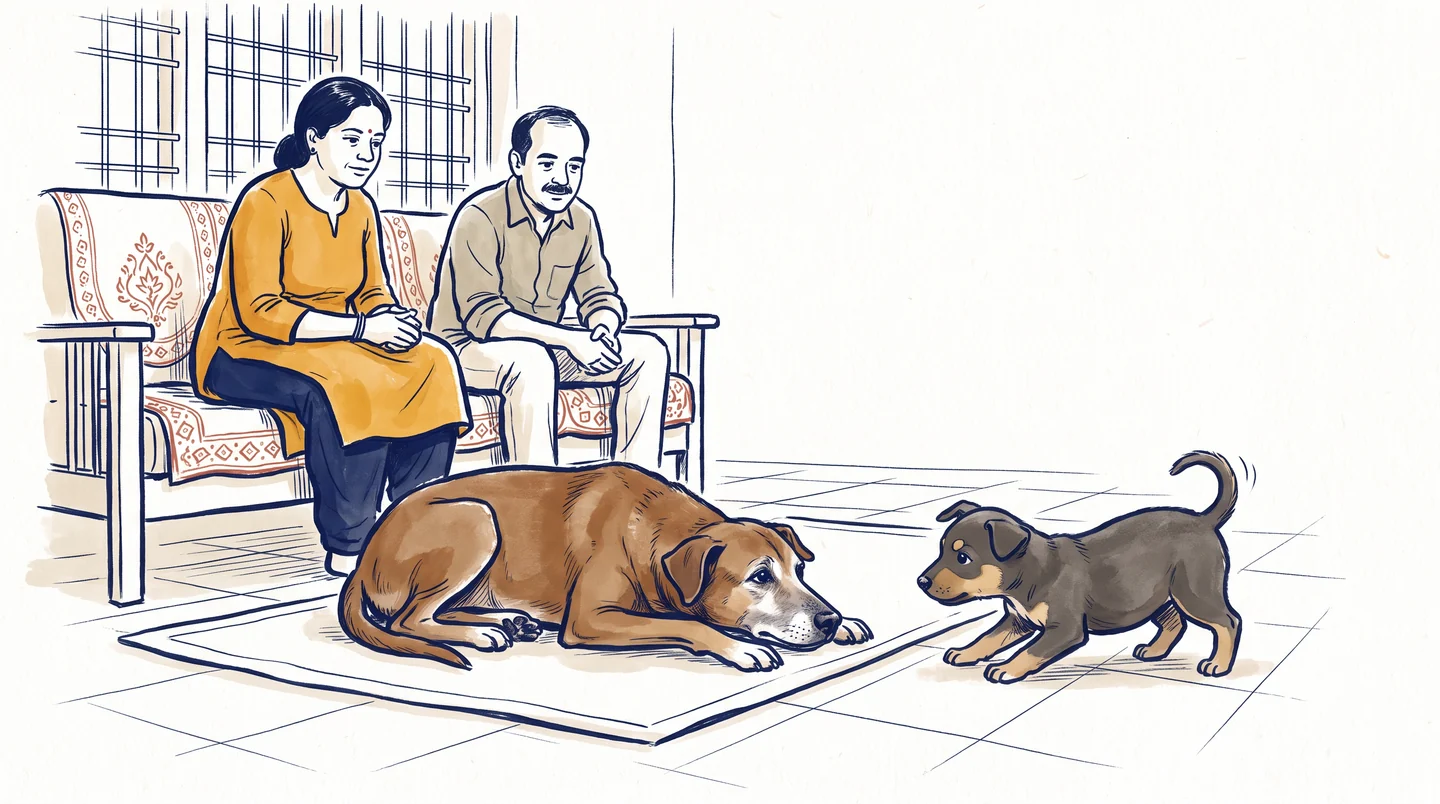 , open the figure larger
In our cities there are almost no groups for puppies like this, where every puppy's card is checked at the gate and they can meet on clean ground. I think there should be one in every city. If you find one, look at who runs it. It should be someone who understands behaviour, not only someone who teaches sit.
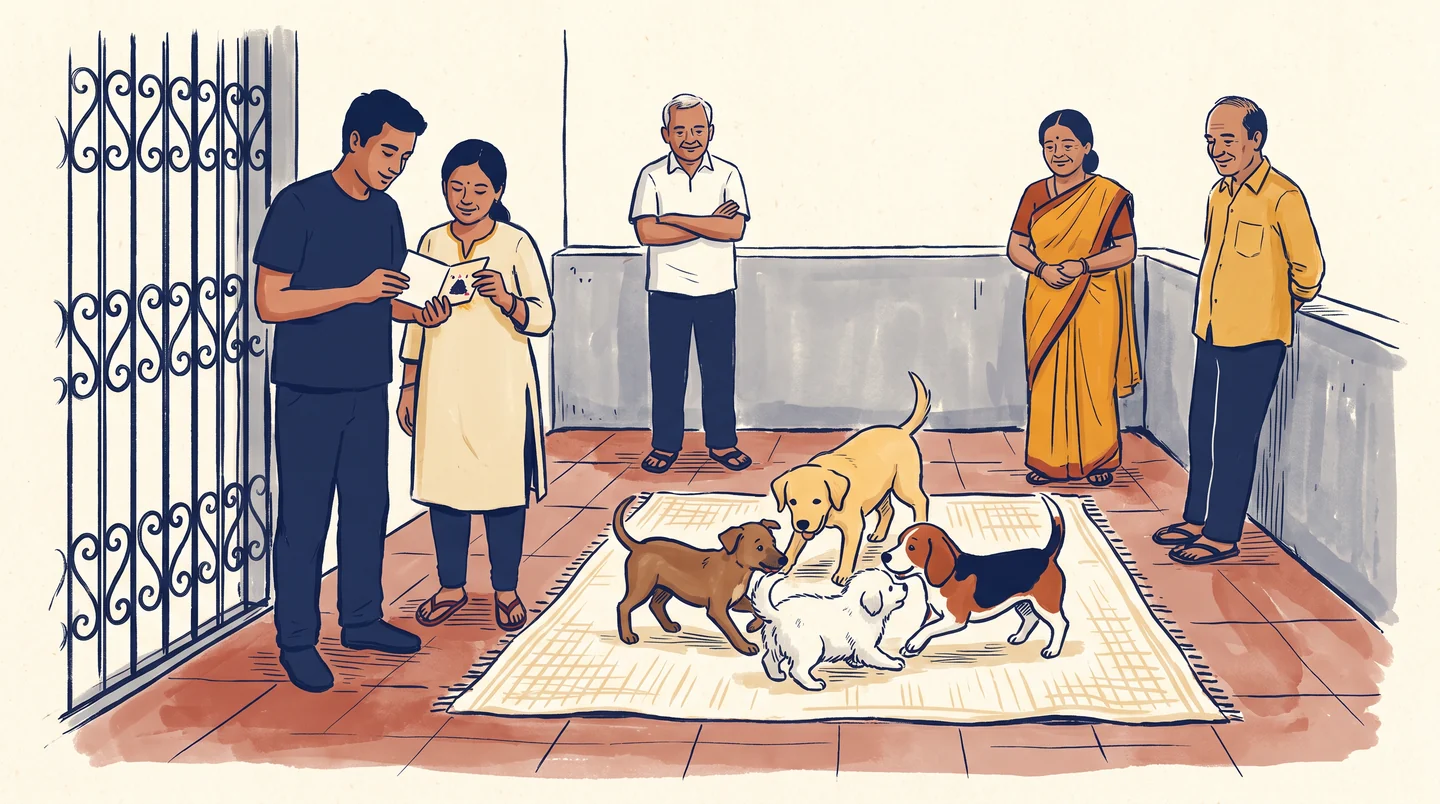 , open the figure larger
- His mother
- Keeps them in the den while the danger is real, brings them out at about seven weeks, and decides how close the pack may come.
- What most of us do
- Keep him in from the day he comes home until the last vaccine, and the window closes behind the door.
- What you do
- Keep his feet off dirty ground and show him the world anyway: on a short leash, from your arms, at your own door.
Watch him, not the list
People hear all this and make a list of fifty things, and drag the puppy through all of them in a week. That is not what I mean.
The window works both ways. A good meeting now stays with him, and so does a frightening one. One calm meeting with one steady dog is worth more than an hour in a crowd. So watch the puppy and not the list. A loose body, going forward, sniffing, coming back quickly after a surprise: he is learning. A tucked tail, a freeze, a puppy trying to get behind your legs: it is too much. Give him distance, and next time do less.
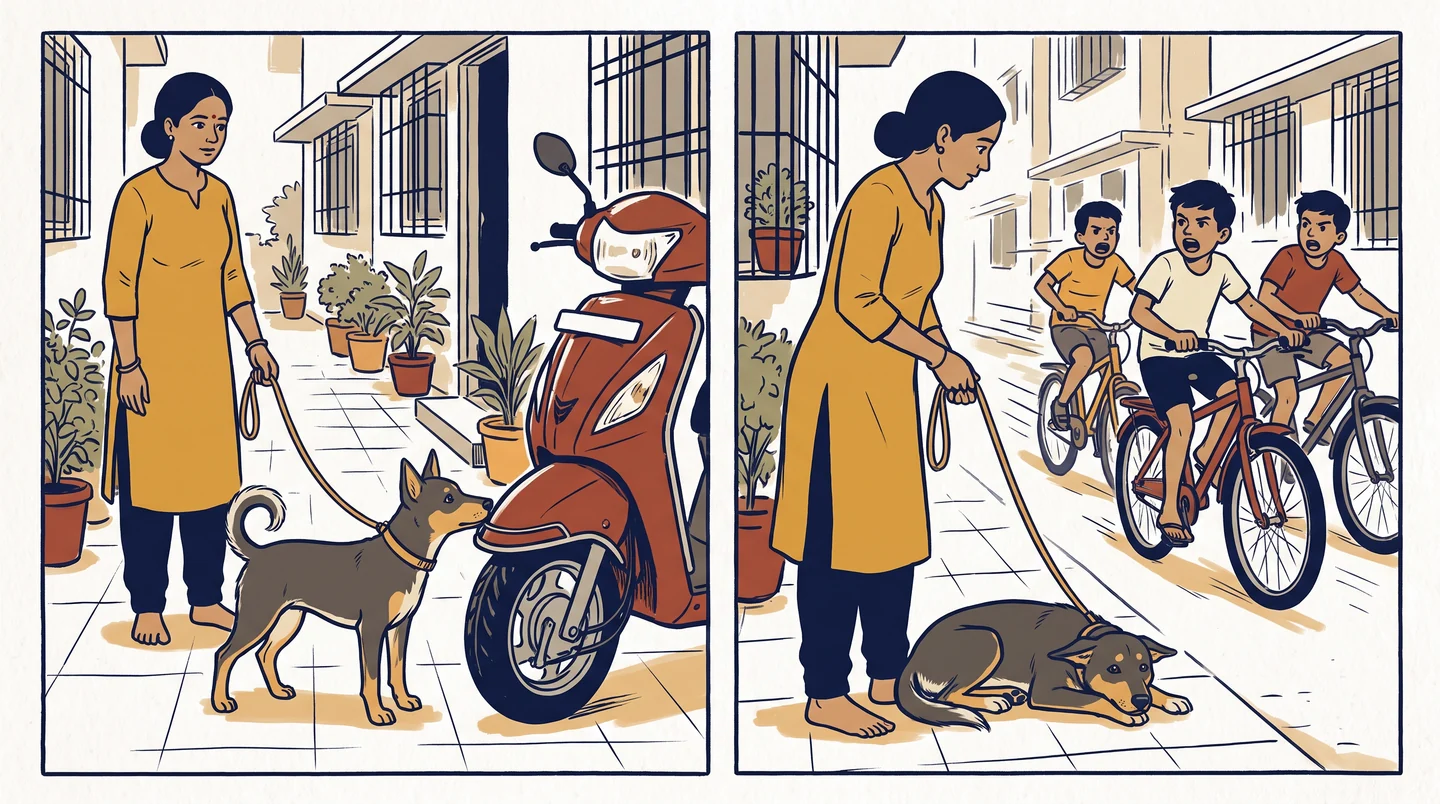 , open the figure larger
Every puppy is different here too. A confident puppy can take a new place often. A sensitive one does better in the same place, with something a little new each day. And never carry a frightened puppy towards the thing that frightened him to prove it is harmless. Stand calm, let him look from where he is, and move on when he is ready.
If he has already spent it inside
Maybe you are reading this and your dog is five months old, or eight, and he spent the window indoors. Nothing is lost. The method changes.
Go slower. Start from further away. Take smaller steps, and expect months rather than weeks. Any dog can learn to be calm around the world at any age. It is only that the work a two-month-old does by himself, an older dog needs you to do with him.
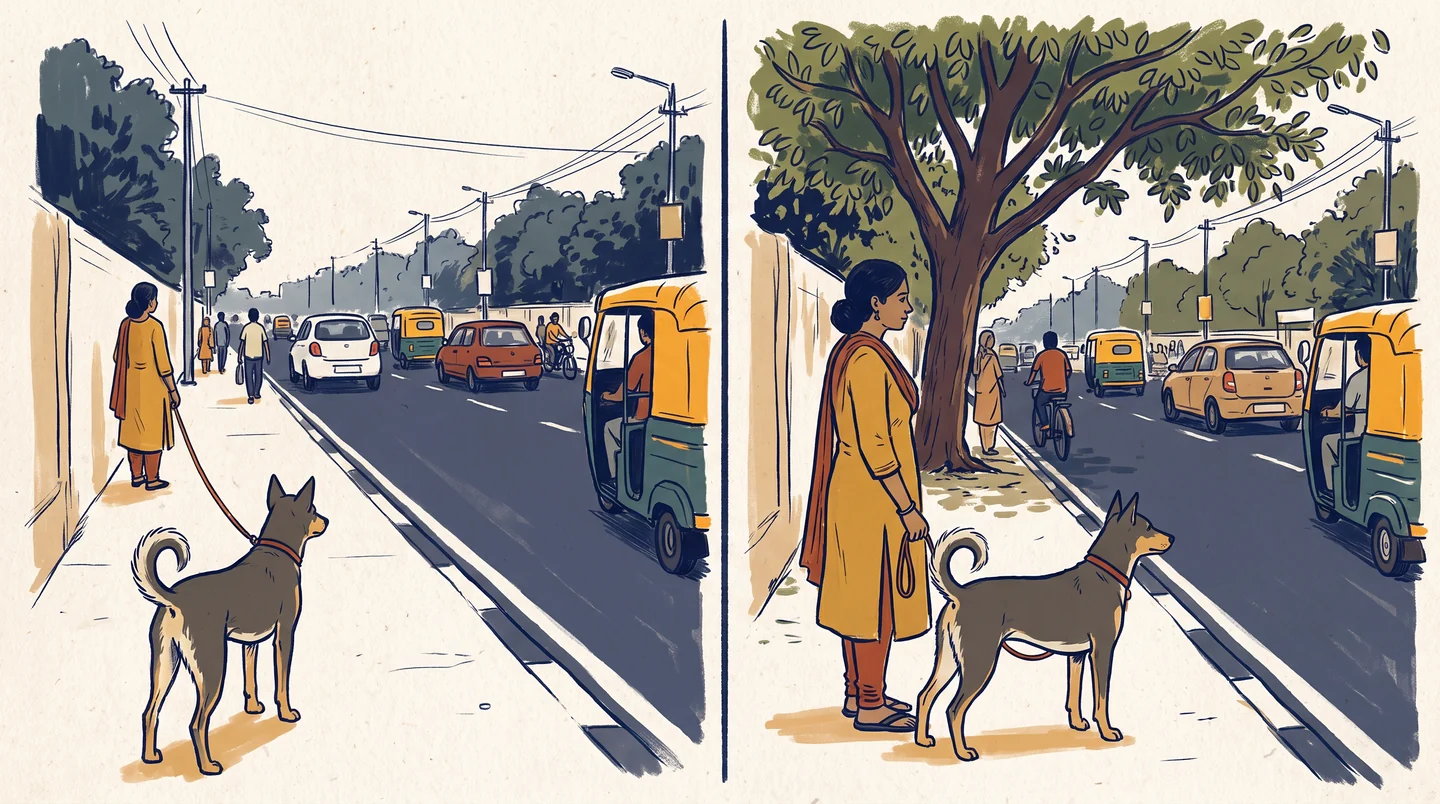 , open the figure larger
If he has been kept in a long time, start with what he has missed most. Give him exploration first, a long leash in an open place where he can run and sniff, and only then ask him to walk nicely beside you. A dog who has been behind a wall for months cannot listen to you until that need has been met. I come back to this in chapter 5.
The assignment
This is for every day until his course is done, and for the weeks after it.
- One question for your vet. Keep his shots on the vet's schedule, and ask: how do I socialise him while keeping the risk down?
- Out every day, from his first shot. To a clean, natural place, or down into the society on a short leash with his mouth off the ground, or in your arms to the edge of the road, from calm. A few minutes, and home before he stiffens. Say no to the children who come running. No park, no street dog pavement and no clinic floor until the course is done.
- The world at your door. Two or three new kinds of people a week, met with no touch, no talk and no eye contact until he is calm.
- Vaccinated dogs only. One calm, healthy, vaccinated grown dog in your house, or vaccinated puppies on clean ground. See the card. No dog who mixes with street dogs.
- Watch him, not the list. Loose and curious, go on. Tucked or frozen, give him distance and do less next time.
A puppy who is kept in, or even half kept in, still has to pee somewhere, and most families put a pad in the washroom and hope. That is chapter 3: toilet, bowl and sleep.