
At this age 8 weeks to 6 months
- most families meet their puppy with excitement
- the jumping and snapping calls come at 7 to 9 months
- change the greeting and most families see it in about a week
- by a year and a half, many families have run out of energy
I want to tell you about a family who would not come out of their bedroom.
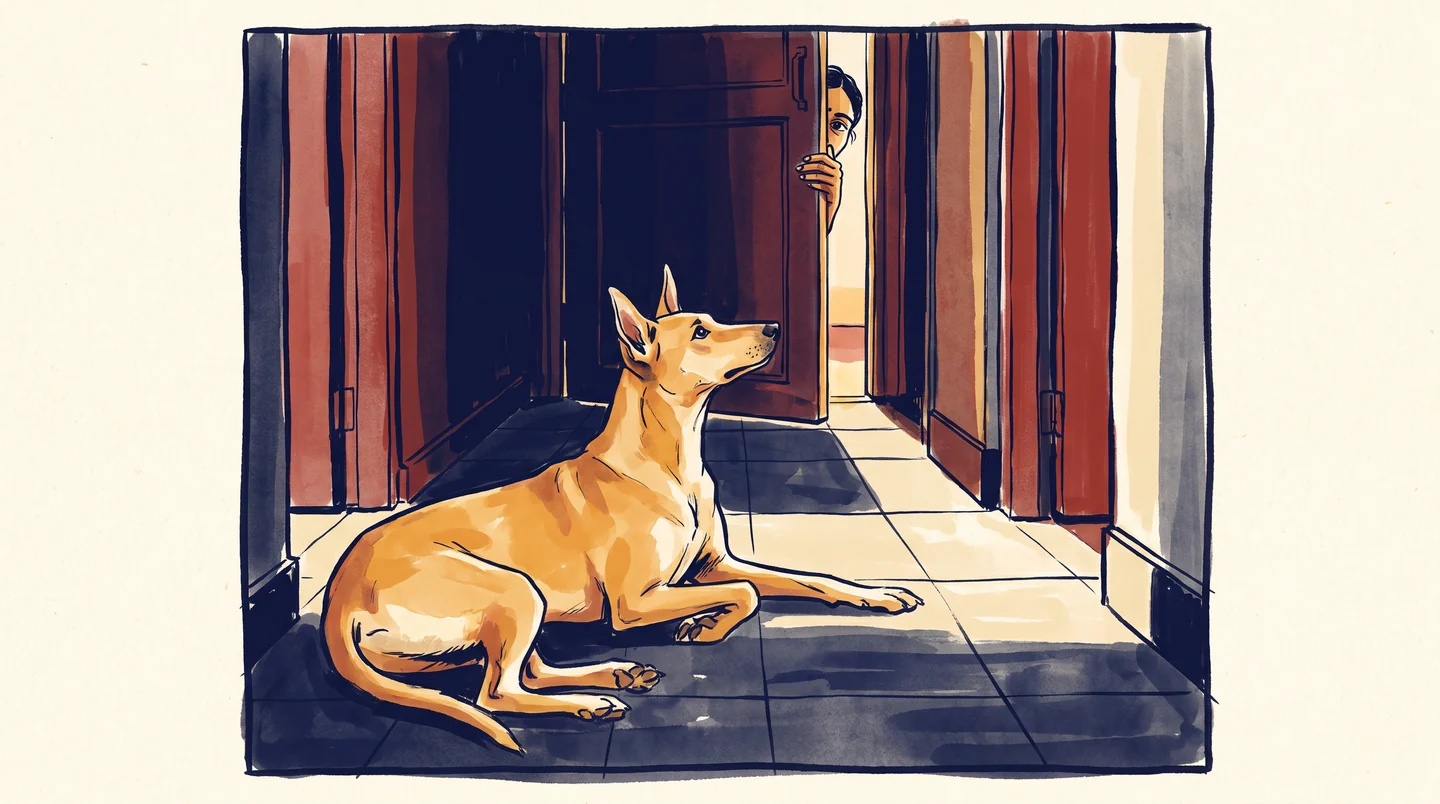
They had a dog, a young male, and he was sitting in the hall. So they stayed in their room. When they needed something from the kitchen, one of them opened the door a crack and looked out to see where he was. If he had gone into another room, someone would say, close that door, now I will come out. This was their own dog, in their own flat, and they were living around him the way you live around a leak in the ceiling.
 , open the figure larger
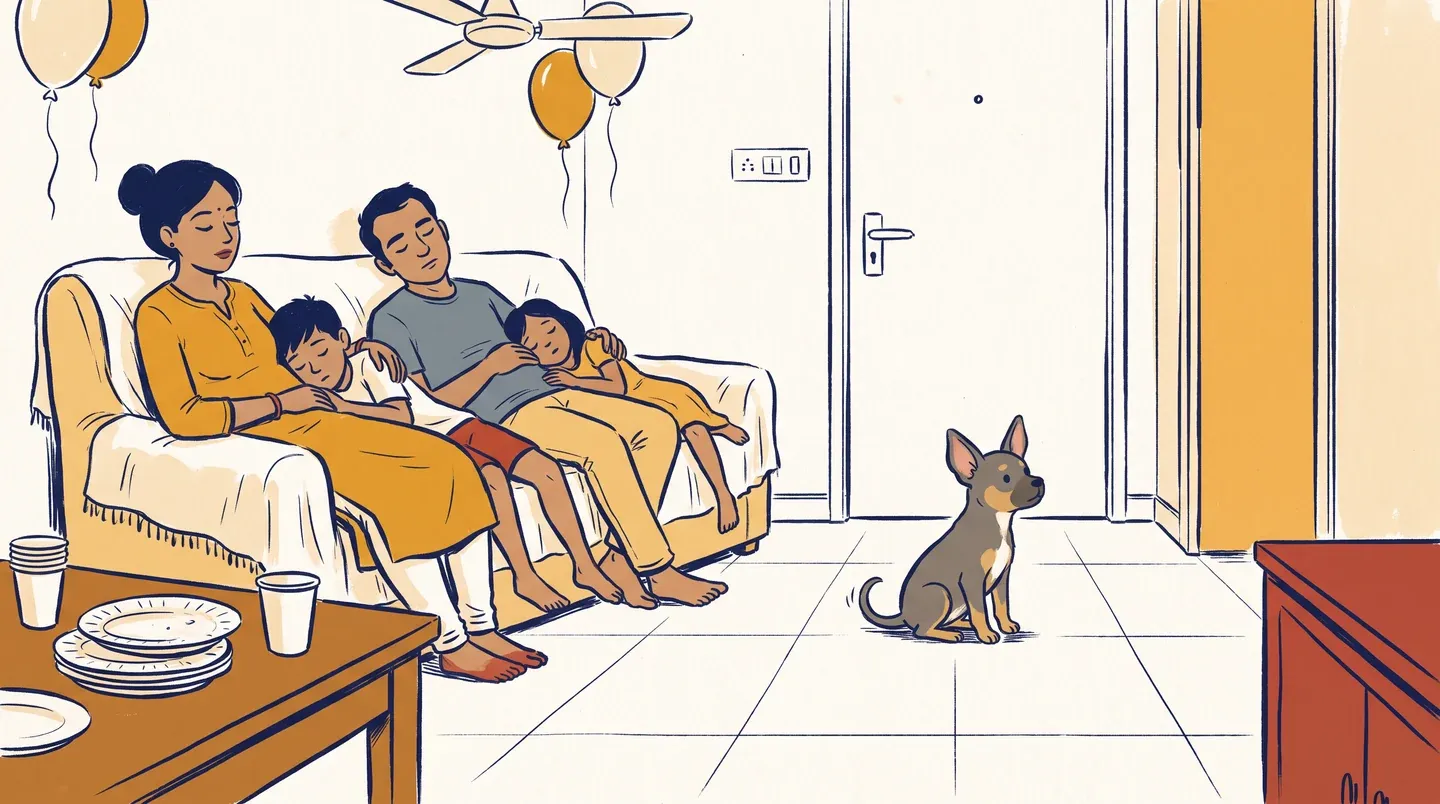
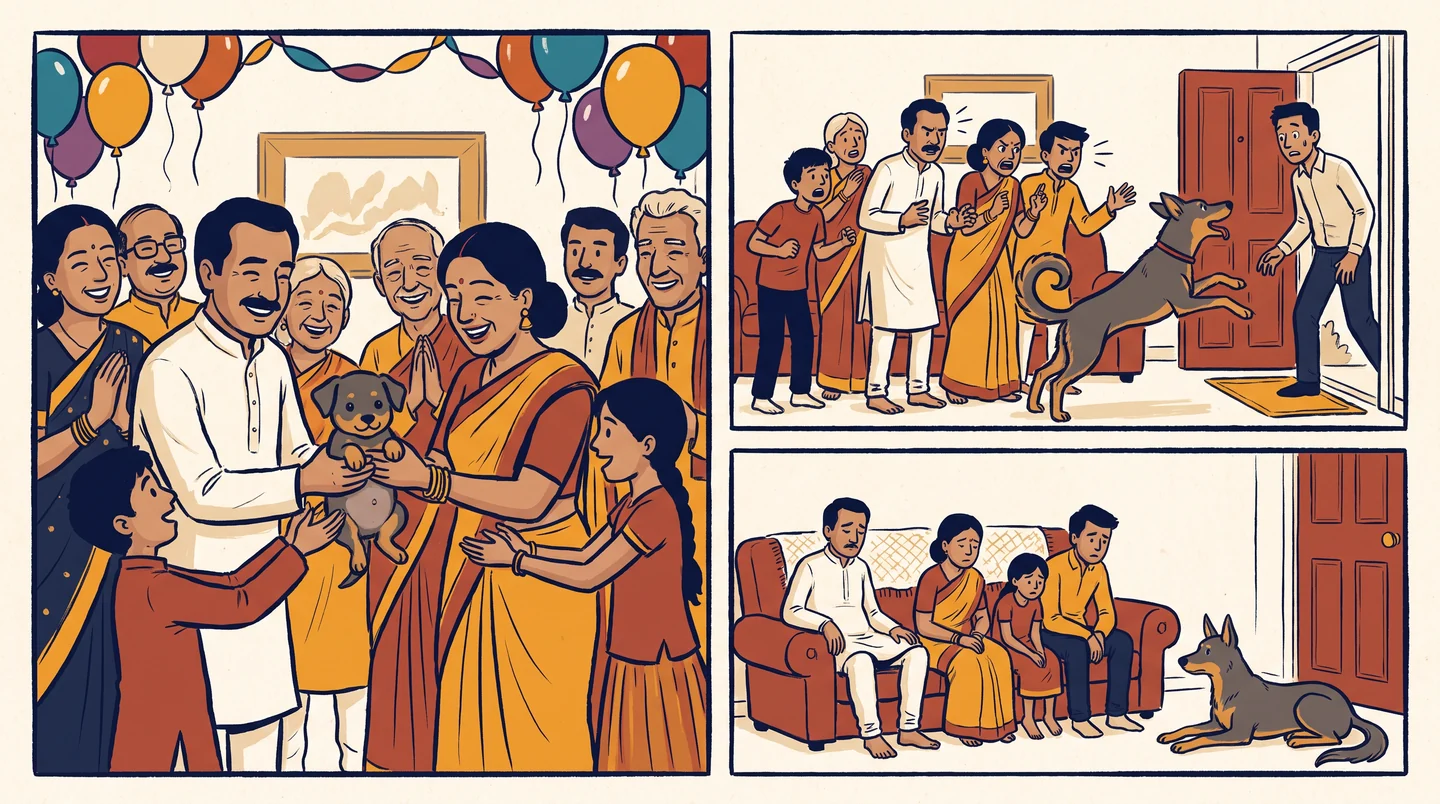
By the time they found me he was fifteen months old and they had been through four trainers. And when I asked them how it had started, they told me about the day he came home. It was a celebration. A lovely baby had come to the house. There were parties. Everyone came to see him, everyone held him, the whole family was in the mood of a festival, and for a few weeks the puppy was the centre of all of it.
That is not one family's story. I have heard it so many times that I have a name for it. I call it the carnival.
How the carnival goes
The shape is nearly always the same, so I will give it to you plainly.
A puppy arrives and the family is joyous. That joy is real and I would never ask you to give it up. But the joy turns into a way of living with him: he is picked up whenever he is near, greeted with a squeal whenever anyone comes home, comforted whenever he cries, laughed at whenever he does something small and fierce. For a few months nothing seems wrong, because nothing he does is big enough to hurt anyone.
Then, at around six months, the behaviour starts. He jumps on people and it is no longer sweet. He snaps when he is handled. He will not settle when you leave. By a year and a half the family has no energy left to pull through it. They are tired and ashamed and a little afraid of him, and some of them, I am sorry to say, give him away.
 , open the figure larger
When a family like this reaches me, they often say sorry, they say we are late, we should have called when he was small. They are not late. They did not know. How can someone be late for a thing nobody told them about? We are the ones who are late, all of us who work with dogs, because we did not reach them while he was small. This book is my attempt to arrive on time.
Nobody knows, and I did not either
Before you start feeling that you got it all wrong, let me tell you something about myself.
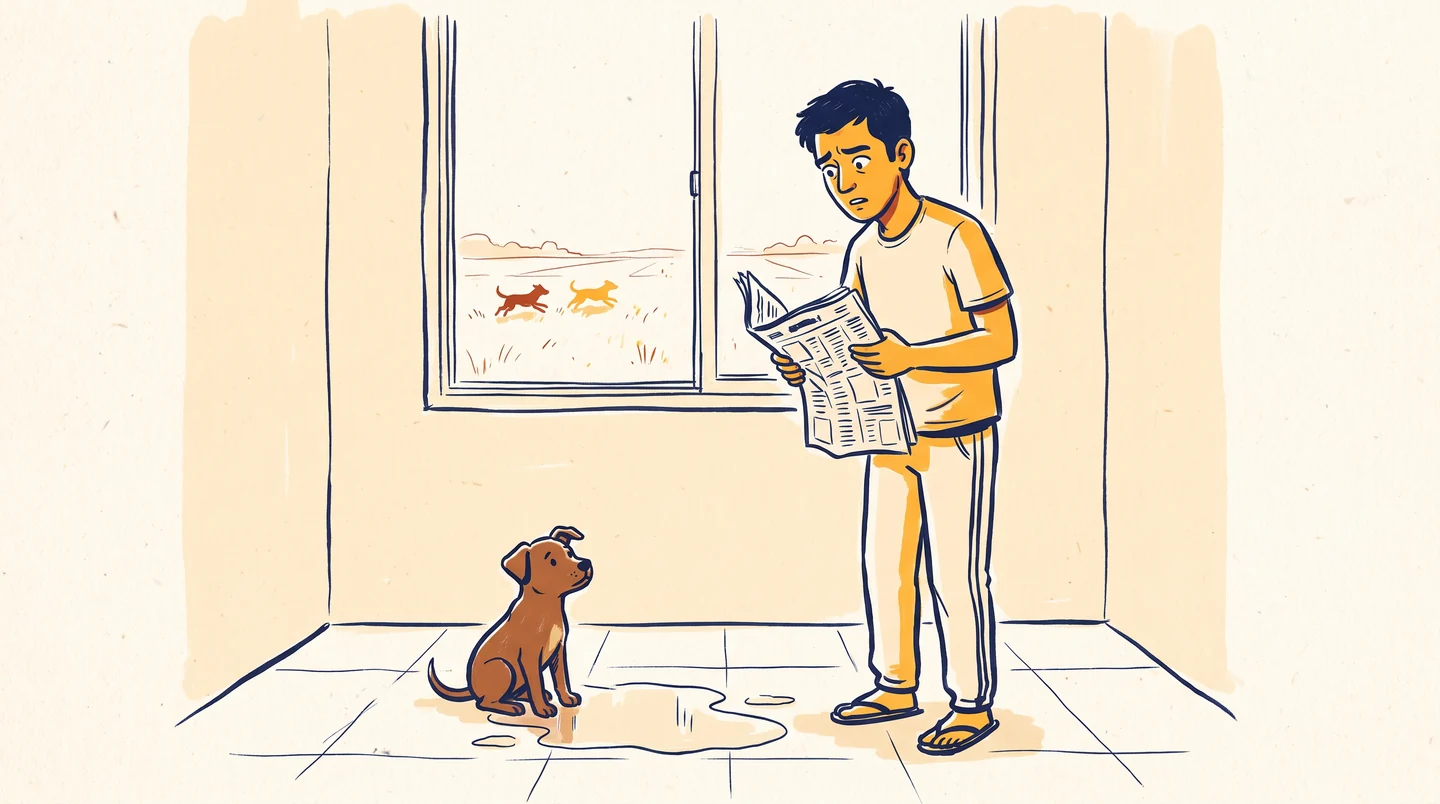
When the first puppy was coming into my life, I refused. I argued against it. I did not want a puppy, because a puppy is a responsibility and at that time I was frightened of responsibility. The puppy came anyway. And when I brought a dog into a house in Pune for the first time, I did not know how to teach him where to pee. I had only ever been with dogs in open fields, and in an open field you do not have to teach that. So even I did not know the most basic thing.
 , open the figure larger
That is how most of us come to dogs. We love them, we want that connection, and that is enough to take the leap. We jump first and gather our things afterwards. If we had read everything first, maybe none of us would have brought one home at all.
So I am not going to judge you by what I know now. I am going to assume you do not know, because almost nobody does, and tell you what I wish someone had told me in the first week.
What she taught him before you met
Your puppy did not arrive empty. Somebody had already started raising him, and she did it well.
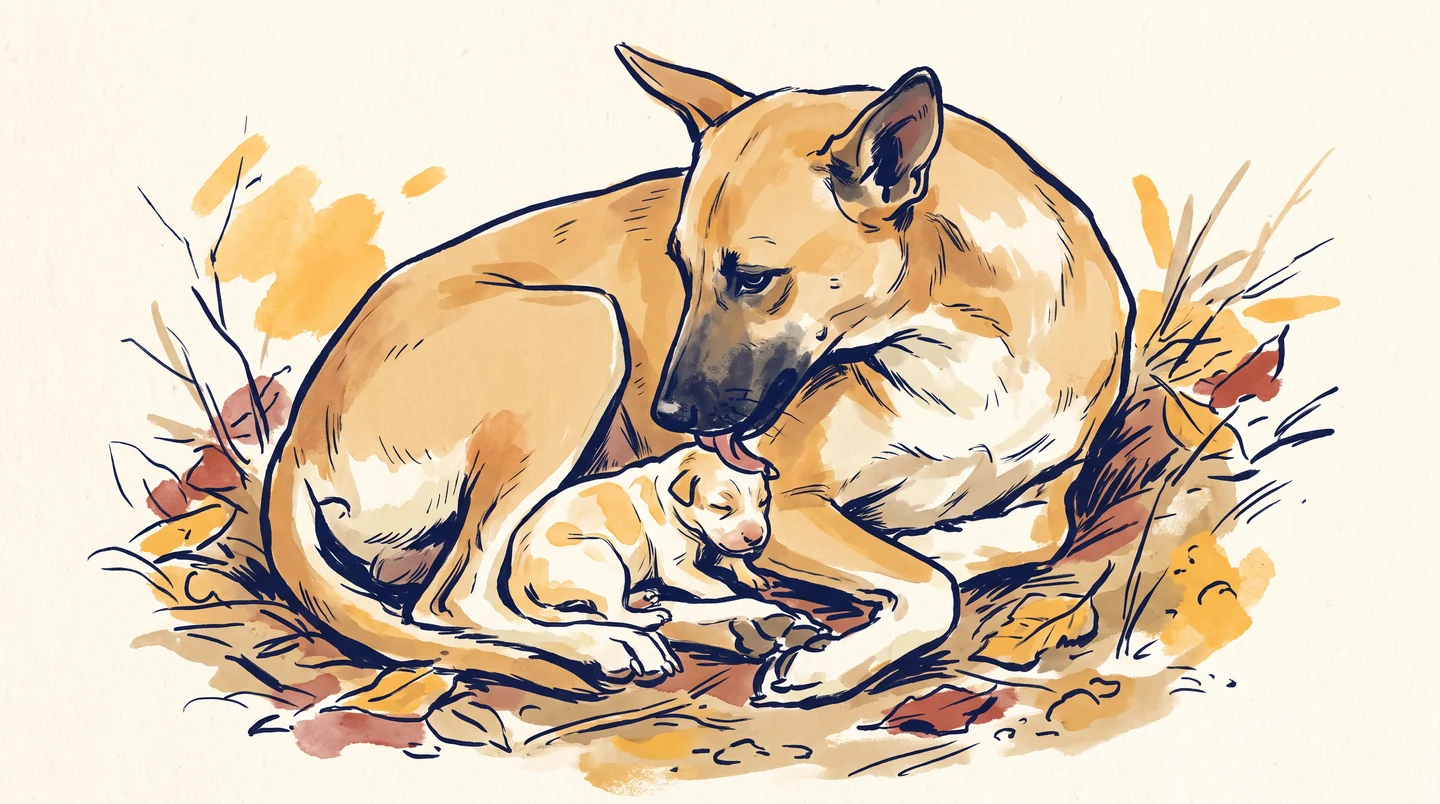
When a puppy is born he cannot see and he cannot hear. His eyes and ears are not working yet; they open in the weeks that follow. What works on the first day is his nose and the touch on his face. He comes out silent, wrapped in a thin sac he cannot break by himself, and his mother licks him free. She licks his face and his belly, he starts to cry for milk, and she pulls him towards her with her snout and lets him feed.
Think about what went into his brain in that first hour. A smell, a touch, warmth, milk. Safety, calm and food, all arriving through his nose and his skin before he had ever seen anything. I think of it as the first imprint of his life, and to me the first imprint goes the deepest. Everything after it is laid down in layers on top.
 , open the figure larger
Then for weeks she went on teaching him, and most of what she taught was calm. She did not rush to him at every whimper, and that may be no accident: in a study of guide dog puppies, the ones whose mothers fussed over them least did better in their work later. And when her milk was no longer enough, she brought meat and dropped it in the middle of the litter, and he had to get his share.
So when he arrives in your house at eight weeks or ten weeks or three months, you are not his first teacher. You are the next layer. The question for the first week is whether that layer carries on what she started, or undoes it.
- His mother
- Meets him with smell and touch. What she brings is calm, warmth and food.
- What most of us do
- Meet him with squeals, hands, faces and the whole family at once.
- What you do
- Let him meet you with his nose. Calm hands, a quiet voice, no fuss until he is calm.
The first meeting
This is why, in everything I teach, the nose comes first. People ask me why not a treat first, or a cheerful good boy, which is what most dog training will tell you. My answer is that for a puppy the nose and touch are where the world started. Calm, safety and reward came to him through them before anything else did. When you let him meet you by smell, you are speaking the first language he ever learned.
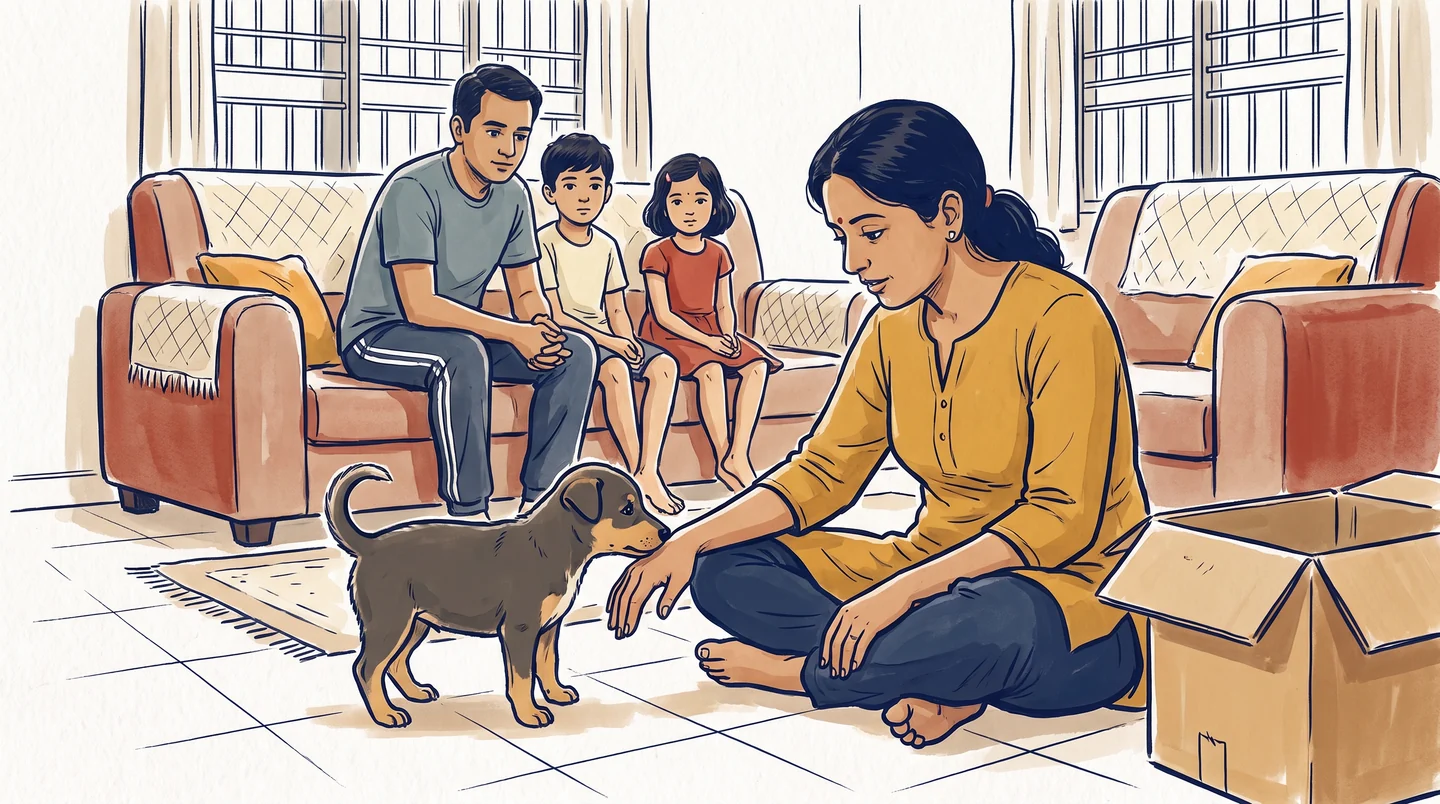
So when he comes through your door for the first time, put him down. Let him walk. Let him smell the floor, your feet, the bag he came in, the corner of the sofa. Sit on the floor if you like and let him come to you. When he does, let him smell your hand before it touches him, and when it touches him, let it be slow and warm and still, the way hers was.
 , open the figure larger
What I am asking you not to do is the carnival: the whole family crowding round, everyone reaching for him at once, the shrieks of how cute, the passing from lap to lap so that every uncle gets a turn. He has just been taken away from the only world he knew. What he needs from the first evening is to learn that this new place is calm too.
The greeting that grows
Here is the habit that starts in the first week and costs the most later.
In the homes I see, eight or nine families in ten meet their dog with excitement, and it starts in puppyhood. You come home, he runs to you, you crouch down and squeal and rub his ears. When he is this small that seems harmless. He is happy, you are happy.
But he is learning something every time. He is learning that the moment someone comes through the door, the right thing to feel is excitement. And at seven, eight, nine months, the calls I get are always the same. He jumps on us. He knocked my father down. He bit the children. And how does that bite happen? He gets hyper, a child screams or waves her arms, and the snap comes out of him. Now he is called aggressive, everyone in the house is scared of him, and a dog who lives among scared people gets more territorial, so they become more scared. A perfectly fine puppy became that dog, and it began with how he was greeted.
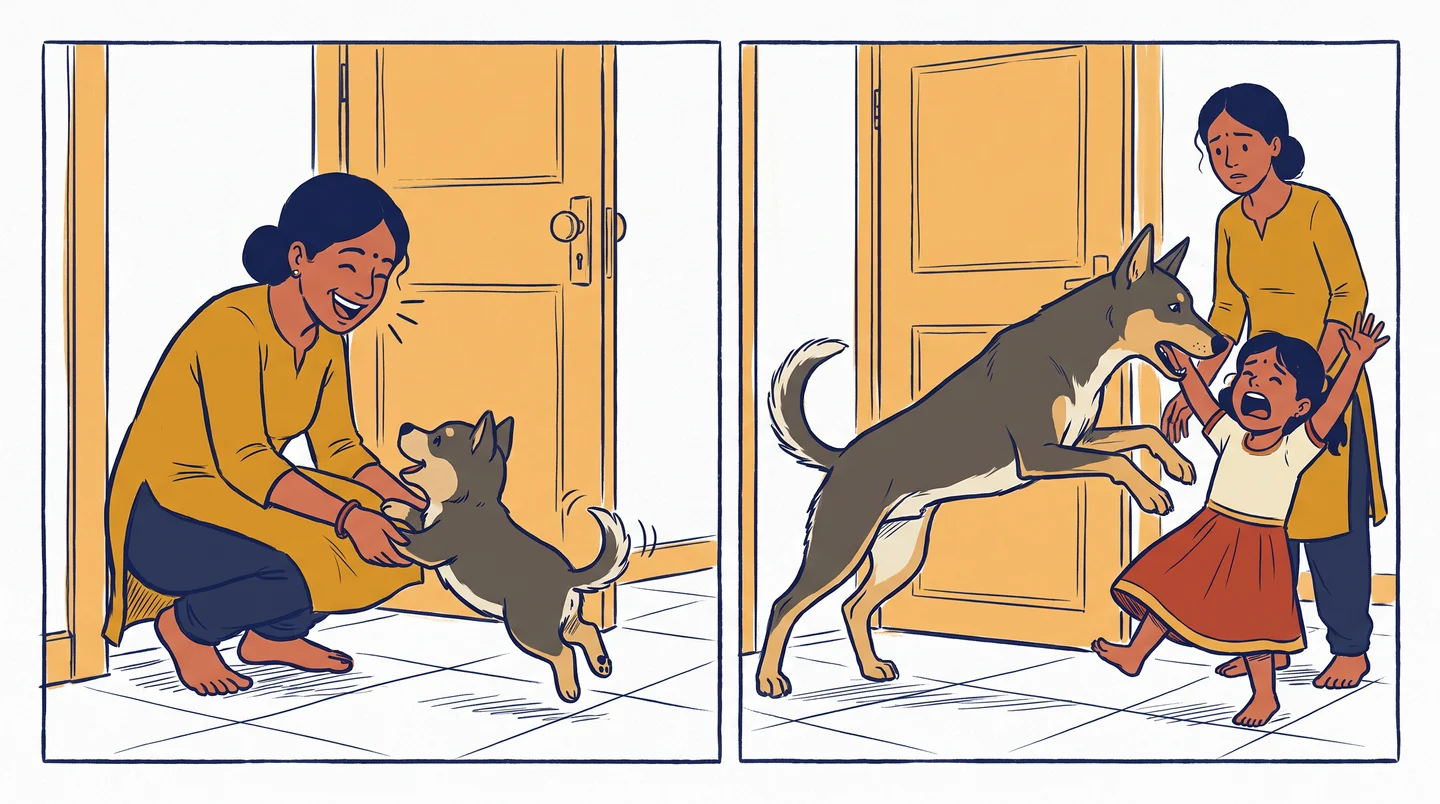 , open the figure larger
The answer is simple and the whole family has to do it. When you meet him, every time, there is no touch, no talk and no eye contact until he is calm. Then you can greet him, gently. If he has already learned the carnival greeting, warn the family: for a day or two he will whine more and jump more, because the old way used to work and he will try it harder. Then it starts to tone down. Most families see the excitement start to come down in six or seven days, and as you keep going, the nipping and the snapping go down with it.
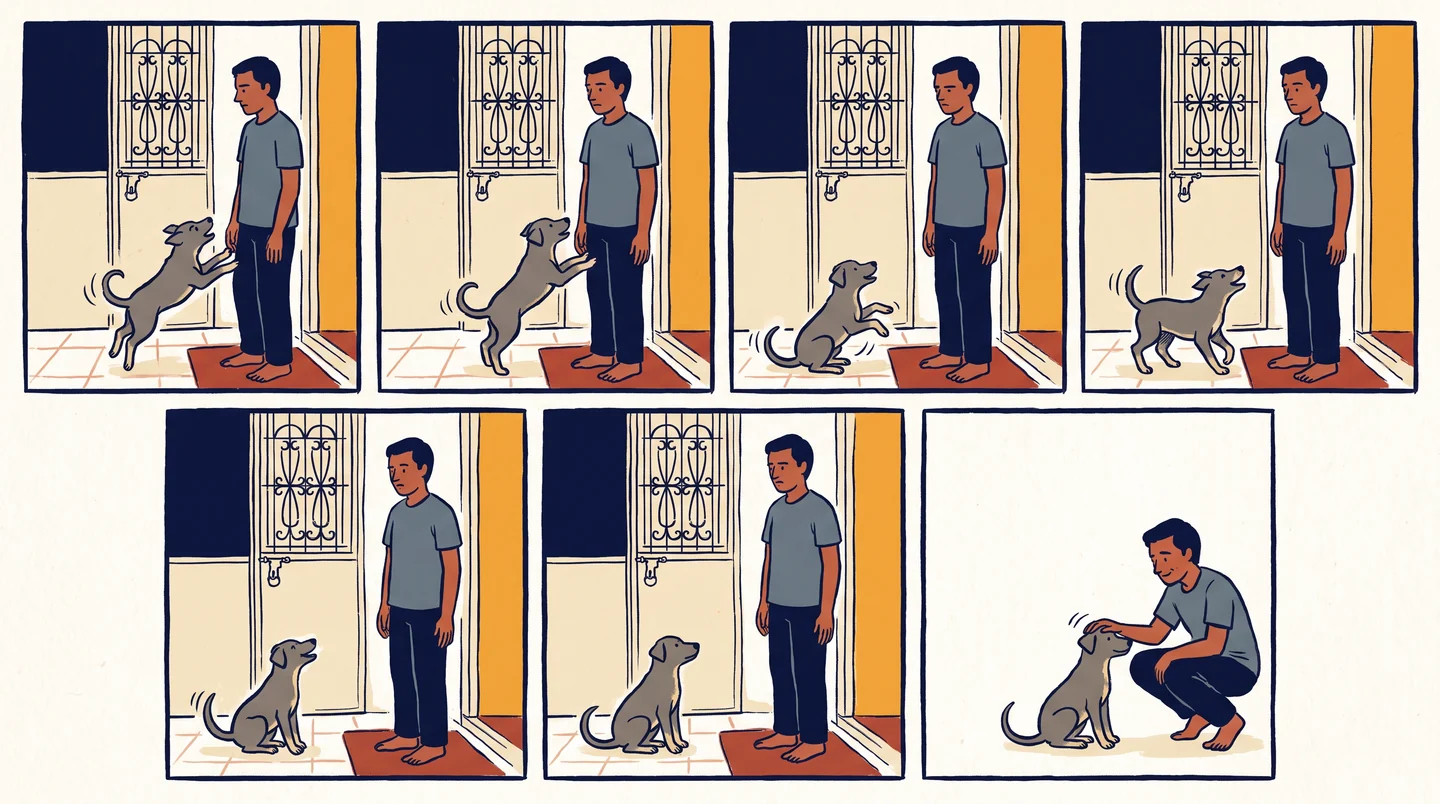 , open the figure larger
The Parenting Model has a whole chapter on how to meet a dog. For a puppy in his first week, all you need is that one rule, held by everyone who has a key to your door.
The lap
The second habit is picking him up.
Small puppies get carried. Some breeds get carried almost all the time, because a Maltese is so small and so sweet that it feels unkind to put him down. I understand the feeling completely. But think about what he learns when he is picked up every time he is unsure, or every time he cries, or simply every time he is near. He learns that comfort comes from a human. Only from a human. And then, when the human goes out of the door, he cries, because the only comfort he knows has just left. In the cases I see, a great deal of separation anxiety starts in the lap.
Affection itself is not the problem. The problem is affection given at the wrong moment and from the wrong feeling. Whatever state he is in when the affection arrives, that state grows. Give it when he is barking and the barking grows. Give it when he is jumping and the jumping grows. Give it when he is frightened and the fear grows. Give it when he is calm and the calm grows. That is the whole rule.
And when he is frightened, you may still need to pick him up. If he is on the ground in the middle of a crowd of dogs, lift him. But lift him from calm, the way you would lift a child out of a puddle, with a feeling of come on, I have got this. Not with a worried face and a voice saying oh baby, what happened, are you scared. Your worry goes straight into him and tells him he was right to be afraid. If you cannot find the calm in yourself at that moment, it is better not to pick him up at all. Stand beside him on his own four feet until you have found it. And as soon as you are both calm, put him down and walk on.
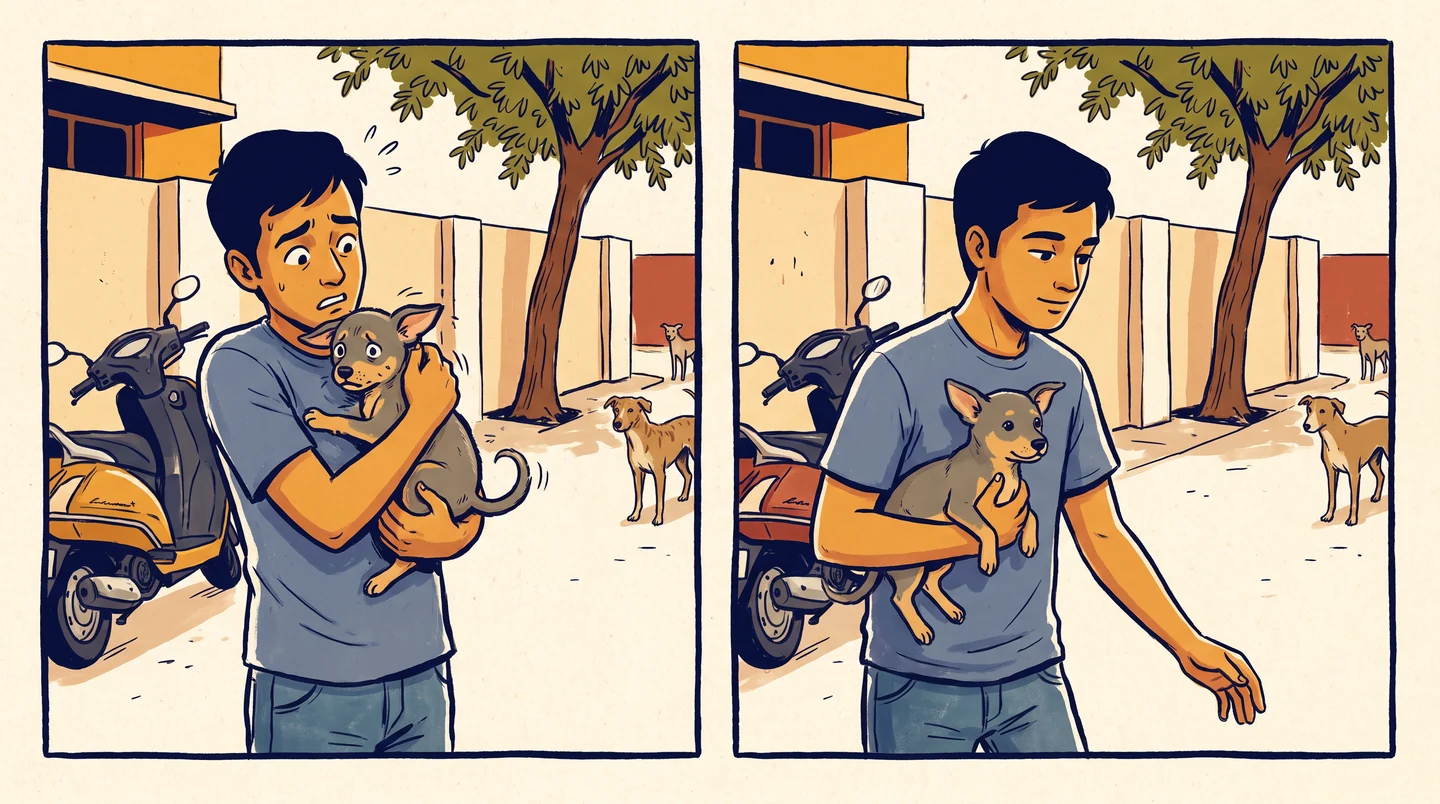 , open the figure larger
One more thing about lifting, because it is easy to miss. A puppy who has hurt his leg cries, and the reflex is to scoop him up. If the scooping hurts him more, he may bite the hand that lifted him, and now a hand reaching to pick him up has become something to bite. If he cries out whenever he is lifted, have the vet look at him first.
Rules from the first day
This October, on the hill, I was carrying food for a litter just over a month old, and a piece of meat their mother had dropped was lying on the ground. Every puppy pounced on it. They went at each other, and if I had put my hand in, they would have gone at my hand too.
Many people would laugh at that. It is so funny, a heap of fluffy things fighting over one piece. But it was not something to laugh at. It was the start of guarding, at a size where nobody can get hurt. So I moved the piece away with my hand. I did not say oh baby, wait, I am giving it to you. I said, that is enough. And they sat down, all of them, at a month old. And then they got their food.
I love those puppies a lot. That is the point of the story. The rule and the love are not opposite things. Their mother does both every day, and they adore her.
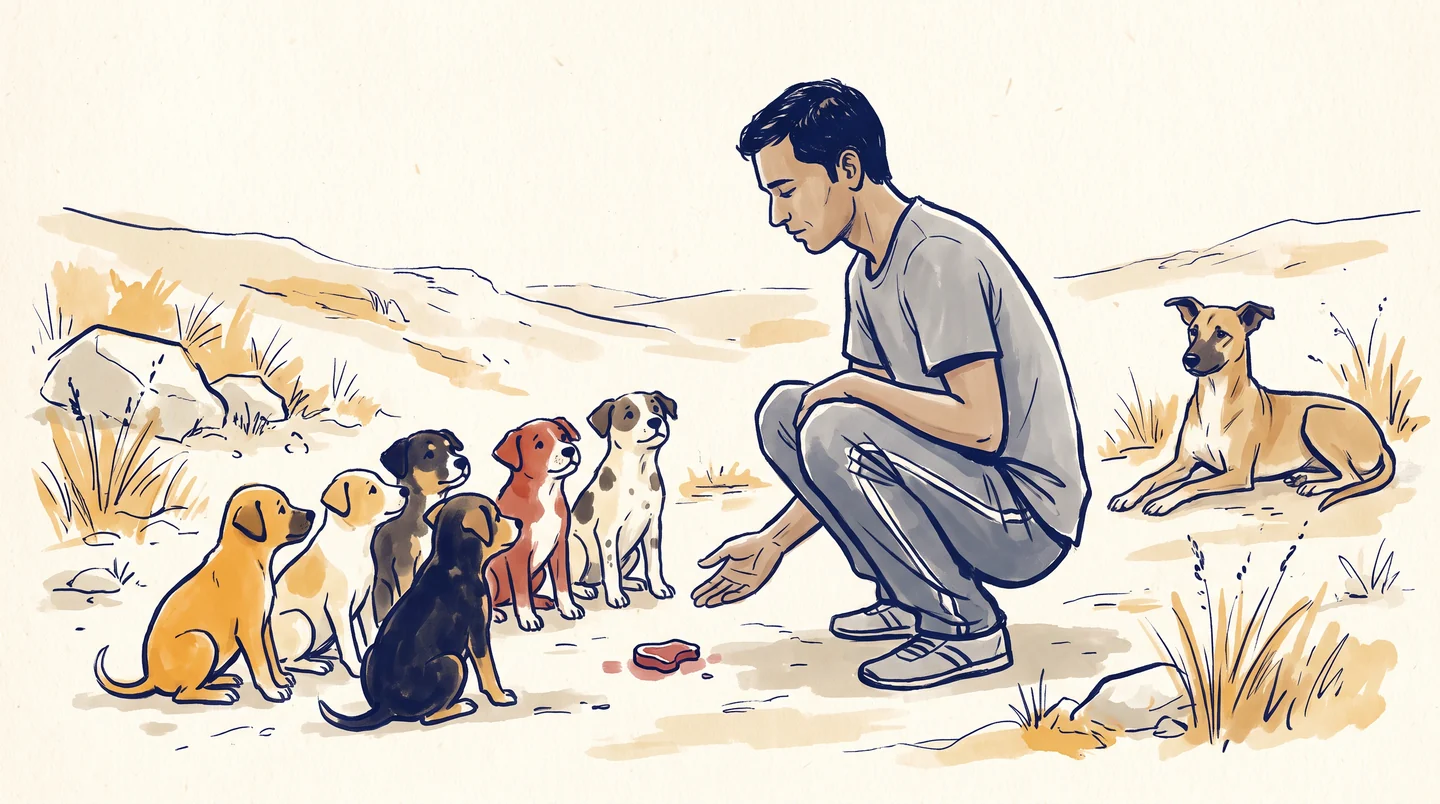 , open the figure larger
So the house starts its rules on the first day, not after he has settled in. He waits for a moment before his bowl goes down. He does not get the piece that fell from the table. The sofa and the bed are not his just because he cried at the edge of them. None of this is harsh, and none of it needs a loud voice. It is the same calm no his mother used, and if you do it from the first day, he will hardly notice it as a rule at all. He will just grow up thinking that is how the world works.
His own corner
The last thing for the first week is a place that is his.
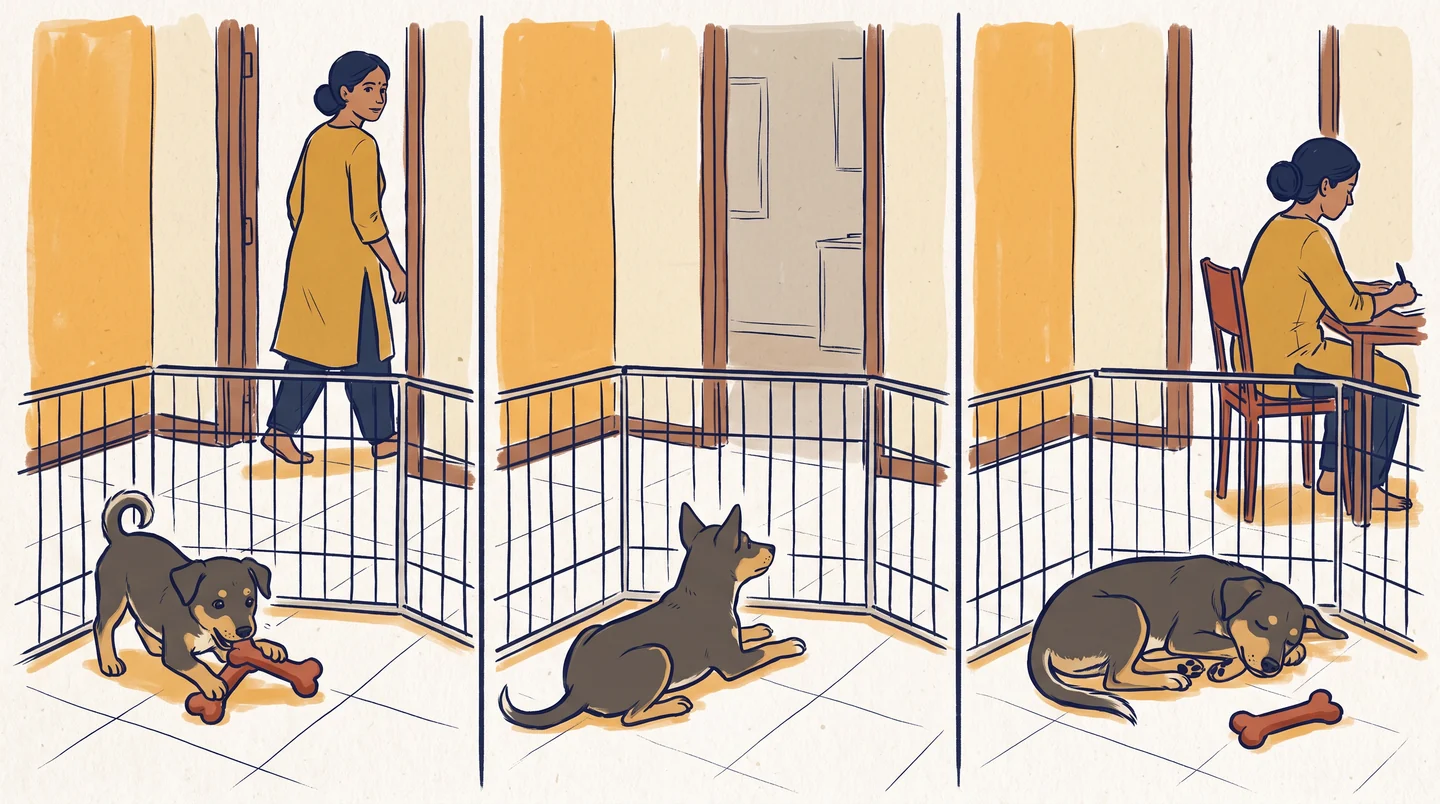
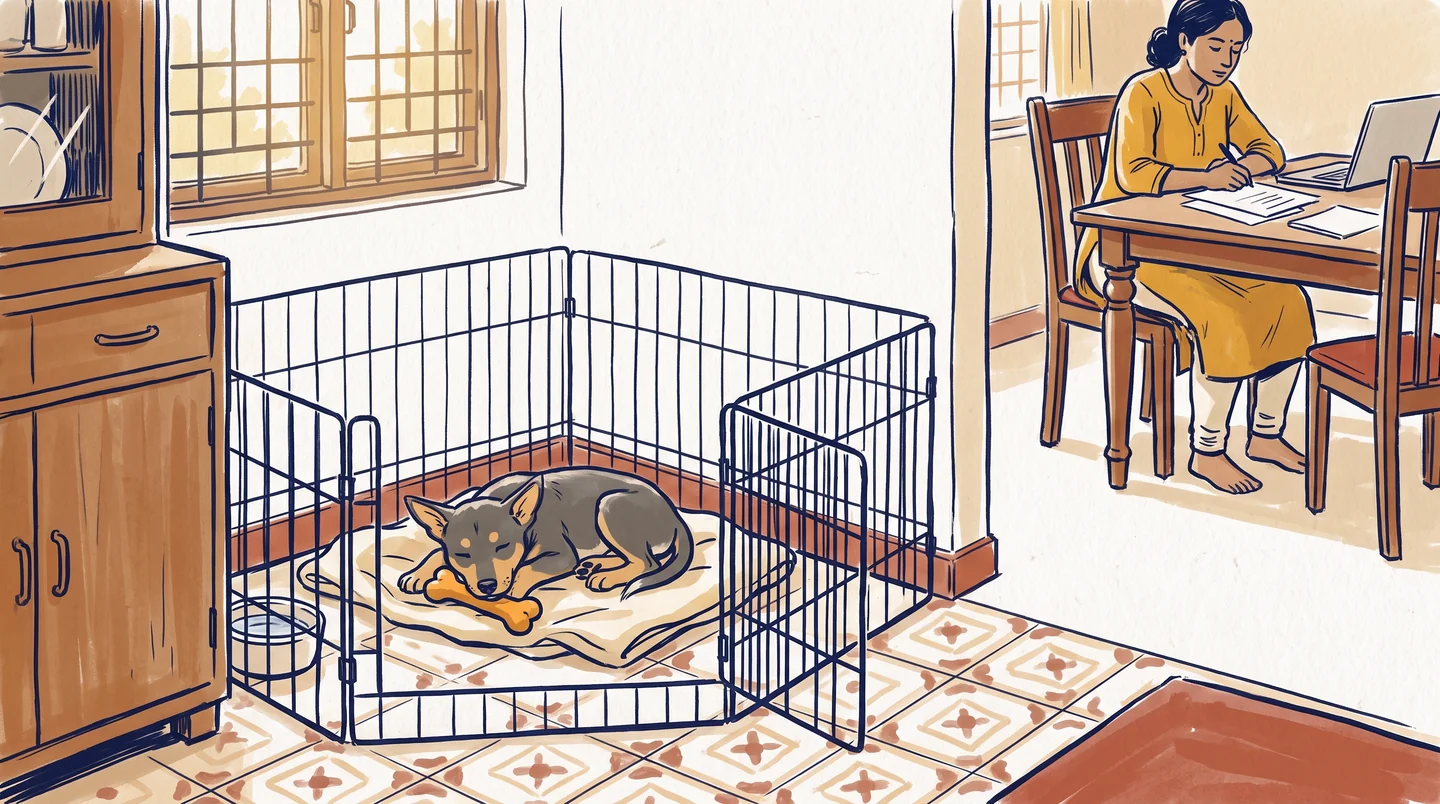
His mother kept her puppies in a den: a hollow, a corner, a place under something, small and dark and safe. In a flat, his den is a crate or a playpen in a quiet corner where nobody walks past all day. His bed goes in it. He rests there between his walks, his play and his meals, and he sleeps there.
That corner is also where he learns to be alone, and he has to learn it while you are at home. Put him in his corner with something to chew and step out of the room. Come back before he starts to panic, and come back calmly, with no greeting. Do it again later, and a little longer. If he cries and cannot settle, the time was too long; next time, make it shorter. A puppy who learns in his first weeks that being on his own is ordinary is far less likely to tear up your flat at eight months.
 , open the figure larger
 , open the figure larger
Strike the hammer while he is small
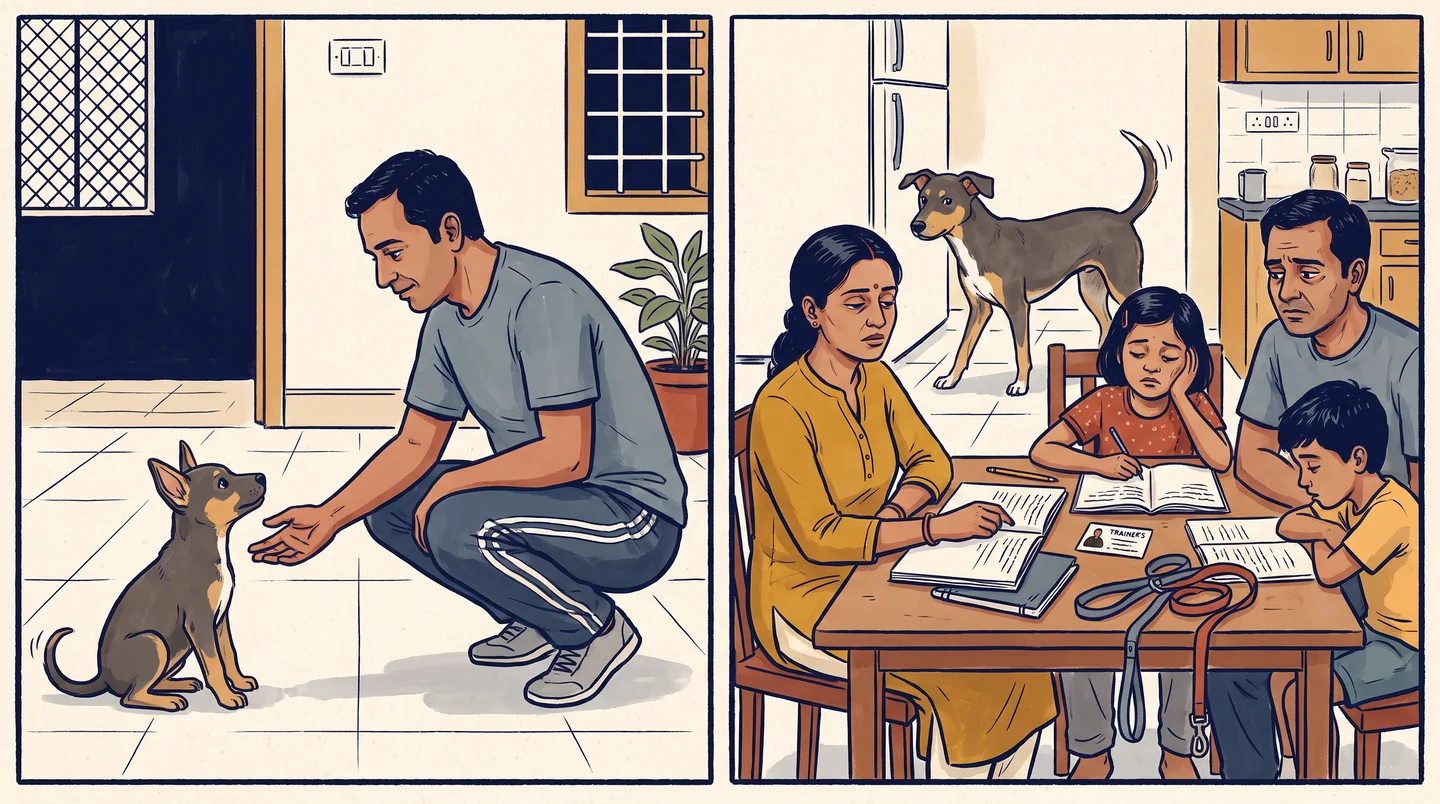
Everything in this chapter is easier now than it will ever be again. The window for meeting the world closes at about three months, which is only a few weeks after he comes home, and he keeps learning fast until he becomes a teenager. What is hard work with a grown dog is easy with him. But it changes quickly. As easy as it is now, it can become hard almost overnight once he reaches his teenage months, and that is when most families finally ask for help.
 , open the figure larger
I often say: strike the hammer at the puppy stage. You do not need to be hard on him. You need to be early. The carnival can still happen, for an evening. Have the party, invite the relatives, take the photos. And then, when they have gone home, start his life.
The assignment
This is for the first seven days. Write it on a sheet and put it on the fridge, because the family needs it more than the puppy does.
- The first meeting. He is put down, and he meets the house and every person in it with his nose first. No crowd, no passing him round.
- Every greeting. No touch, no talk, no eye contact until he is calm. Everyone in the house, and every guest at the door.
- The lap. He is picked up only when he needs to be, from calm, and put down as soon as he is calm. Never to stop him crying.
- Affection. Given when he is calm, never when he is barking, jumping or frightened.
- One rule a day. A wait before the bowl, no food from the table, no sofa because he cried. Said once, calmly, and kept.
- His corner. A crate or a pen in a quiet place. He rests there between walks, play and meals.
- Alone, a little. A few short absences a day while you are home, short enough that he settles. Come back without a greeting.
The carnival keeps him indoors, too. Most families keep a new puppy inside the house until every vaccine is done, which is the safe thing for his body and one of the worst things for his mind. That is chapter 2: the window, and the vaccine house-arrest.