The account
The Sloughi is the quietest dog most people will ever share a house with. In North Africa, Morocco, Algeria, Tunisia, it coursed hare, gazelle and jackal across desert and semi-desert, and between hunts it did essentially nothing, which is still the pattern. Indoors a Sloughi is close to invisible: clean, undemonstrative, largely silent, and content to lie in one place for hours. Outdoors, given ground, it becomes a different animal entirely.
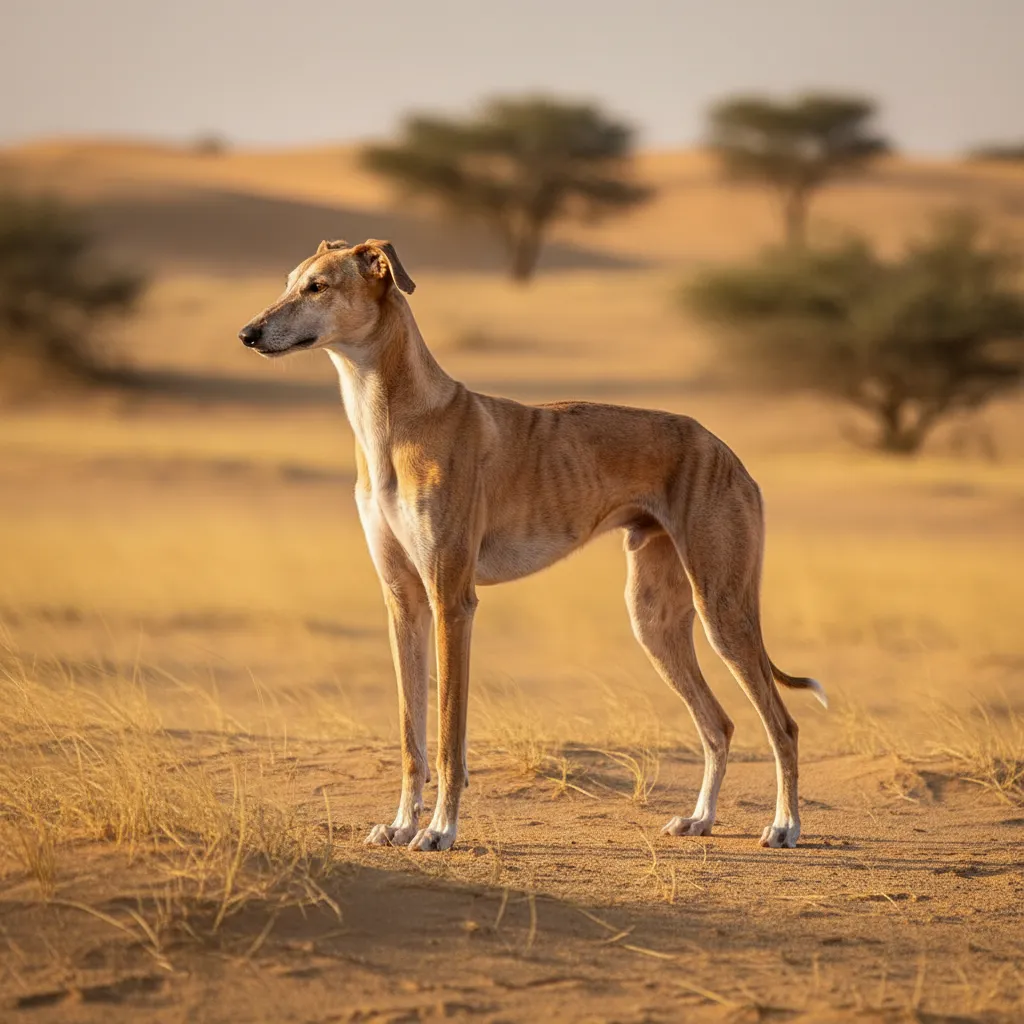
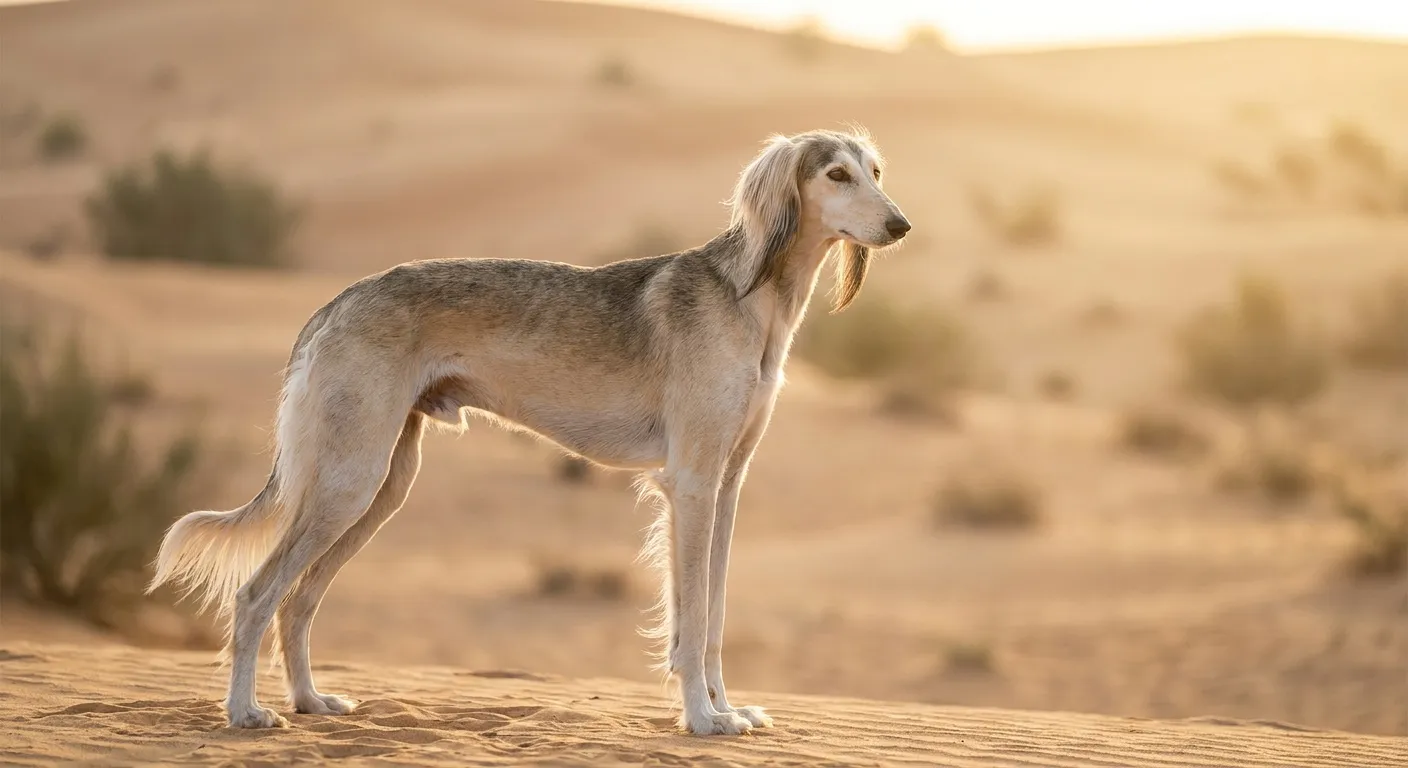
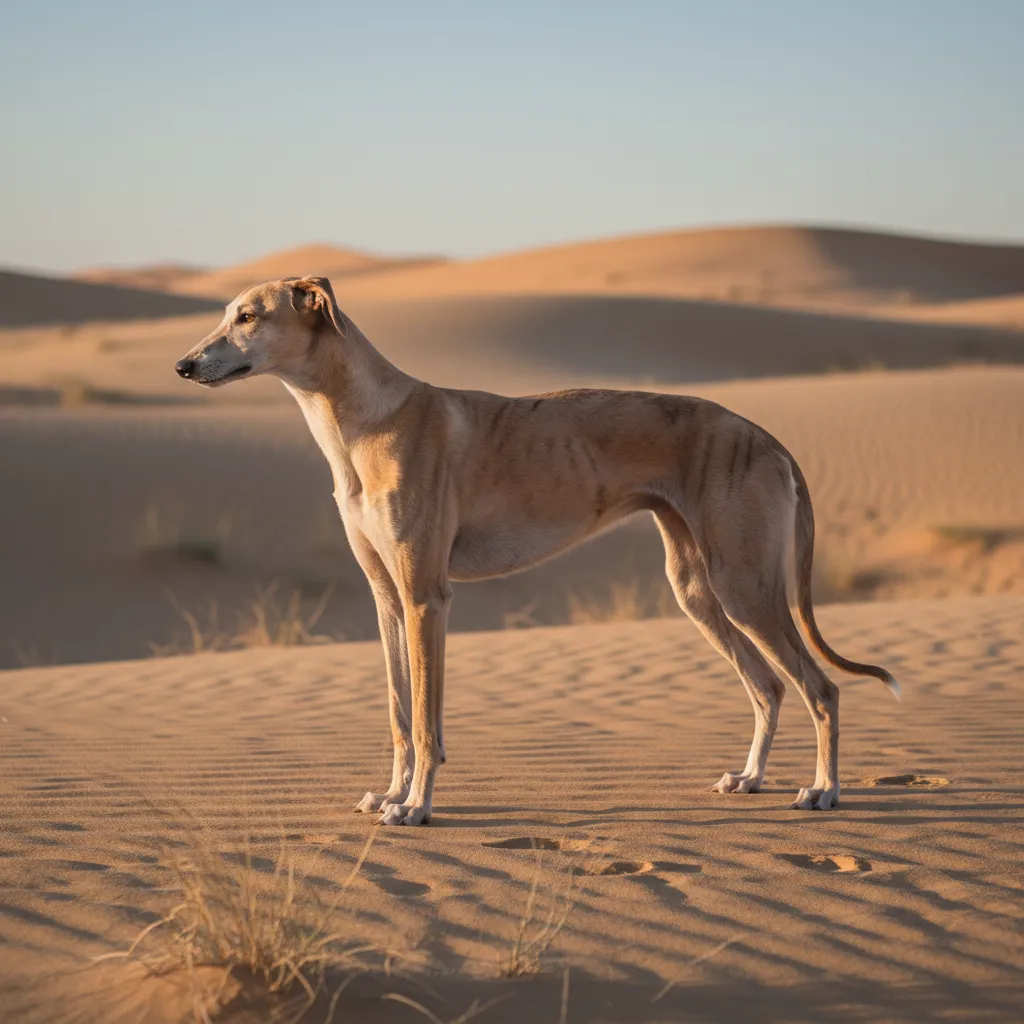
It belongs to the same North African and Middle Eastern group as the Saluki and the Azawakh, and it is often confused with both. The distinctions are real: the Sloughi has a smooth coat with no feathering at all, a more muscular and less extreme build than the Azawakh, and a characteristically melancholy expression that the standard describes and owners recognise immediately. Its Maghreb origin is well documented and the breed was long held by Bedouin and Berber communities as a valued hunting animal rather than as property to be traded.
Sensitivity is the defining trait for an owner. The Sloughi is intelligent and perfectly capable of learning, but it reads tone acutely and shuts down under pressure, raised voices and correction-based training produce a withdrawn, unresponsive dog rather than a compliant one. It bonds deeply to its people and can be genuinely distressed by rehoming as an adult. With strangers it is reserved rather than hostile, and it rarely seeks attention from anyone outside its household.
For Indian owners the climate suits and the specifics require care. Dry heat is what this dog was built for; humidity is harder on it, and thin skin, minimal body fat and a bony frame mean hard floors cause pressure sores and scrub tears the skin easily. Ask any breeder about progressive retinal atrophy, the Sloughi has a breed-specific mutation with a reliable DNA test, and make sure any vet operating on one knows that sighthounds metabolise anaesthetic differently. The population worldwide is small and there is no Indian breeder base.