Skip to content

FCI Group 2 (Molossoid/Mountain) · Bhutan (Himalayan Region)

Bhutanese Mastiff

The Bhutanese Mastiff is a large Bhutan breed: A devoted monastery guardian with the classic Himalayan mastiff temperament - fiercely protective of. Complete care guide with -specific tips.

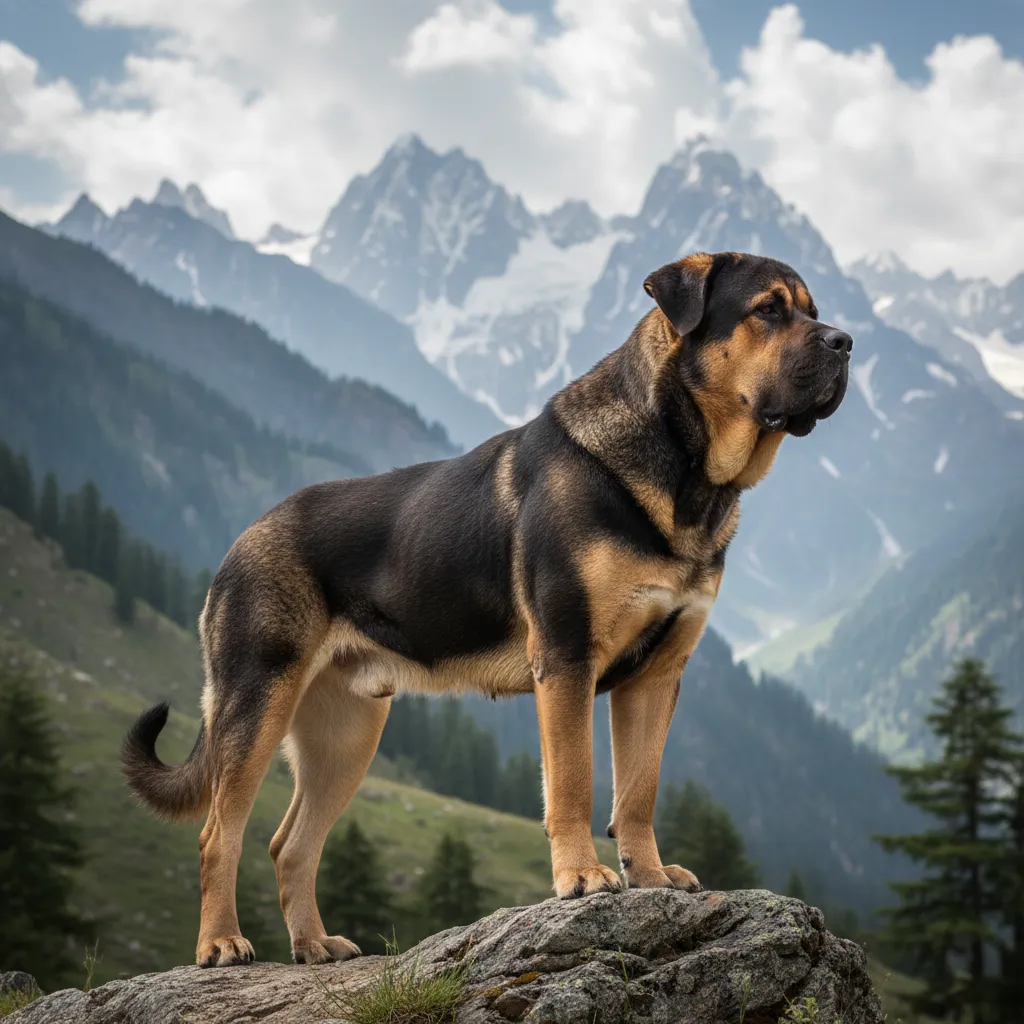
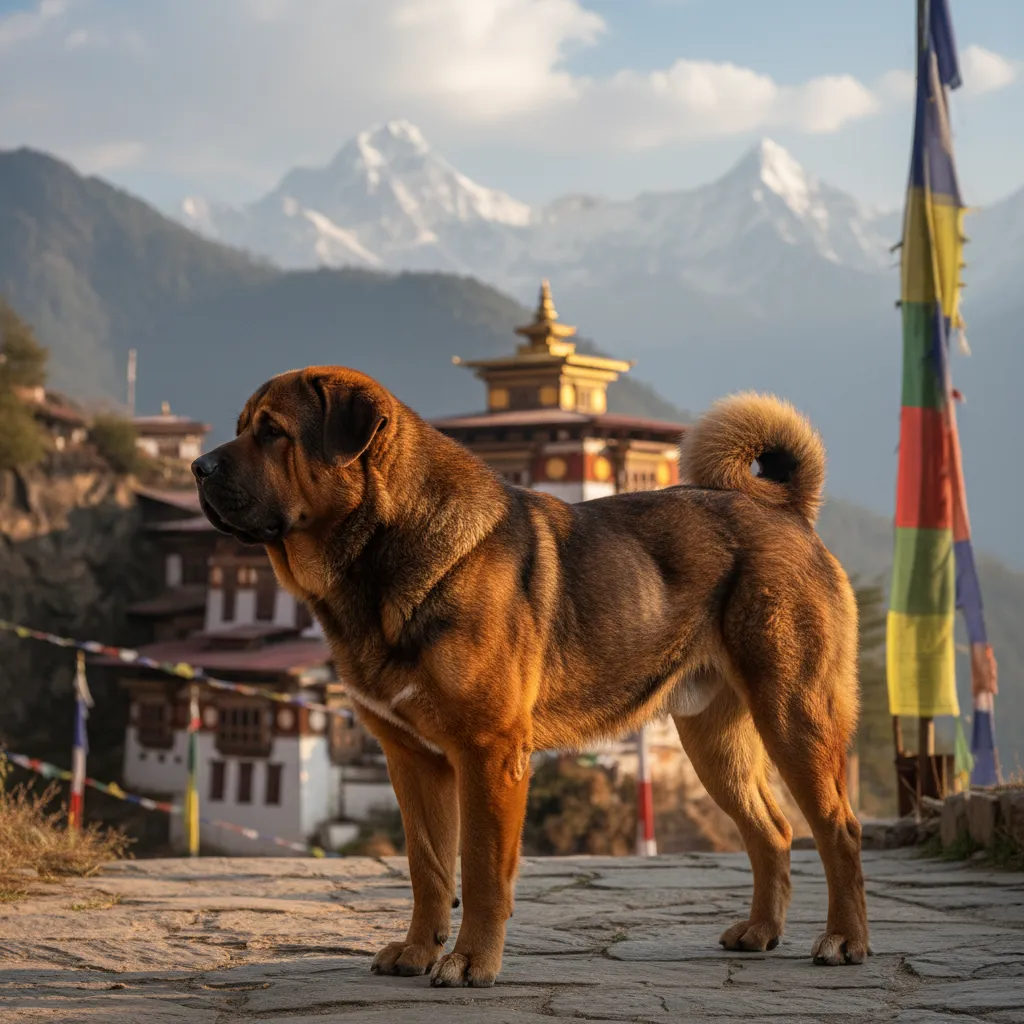
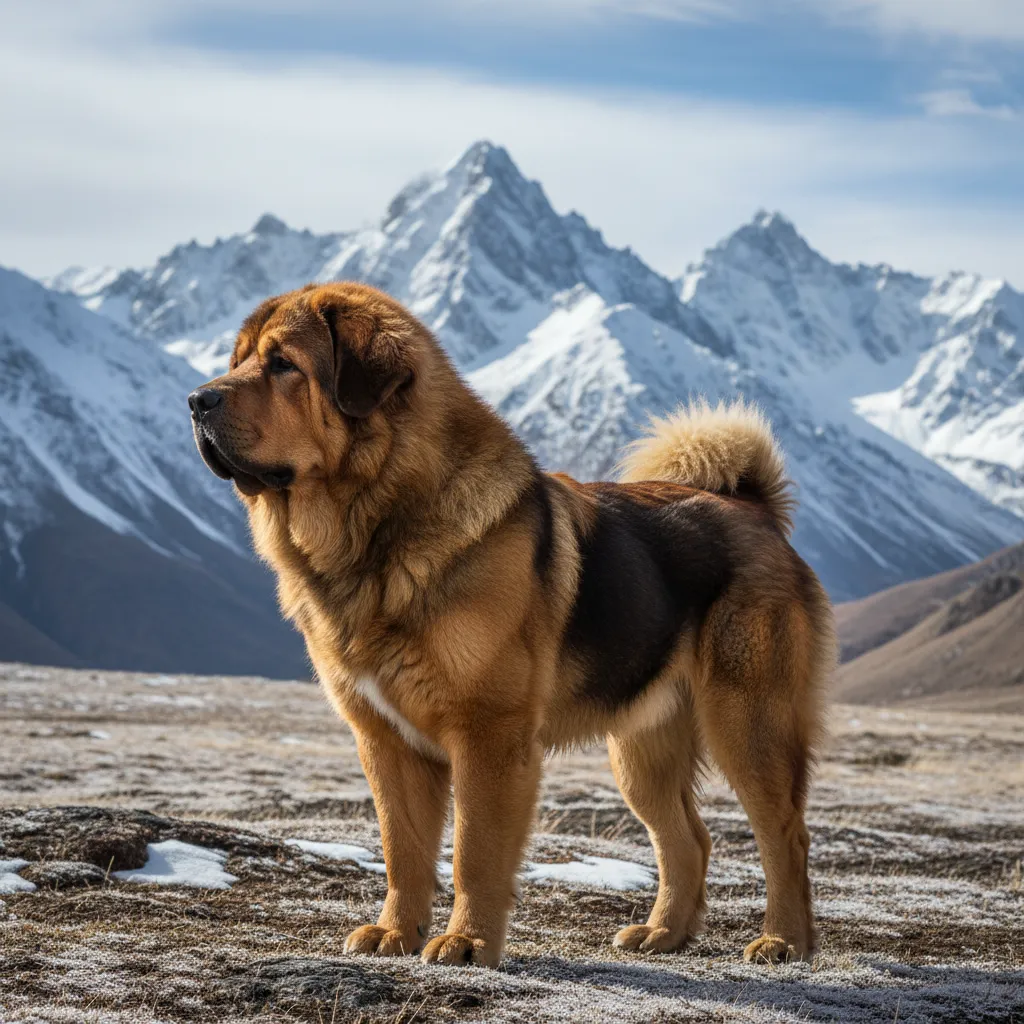
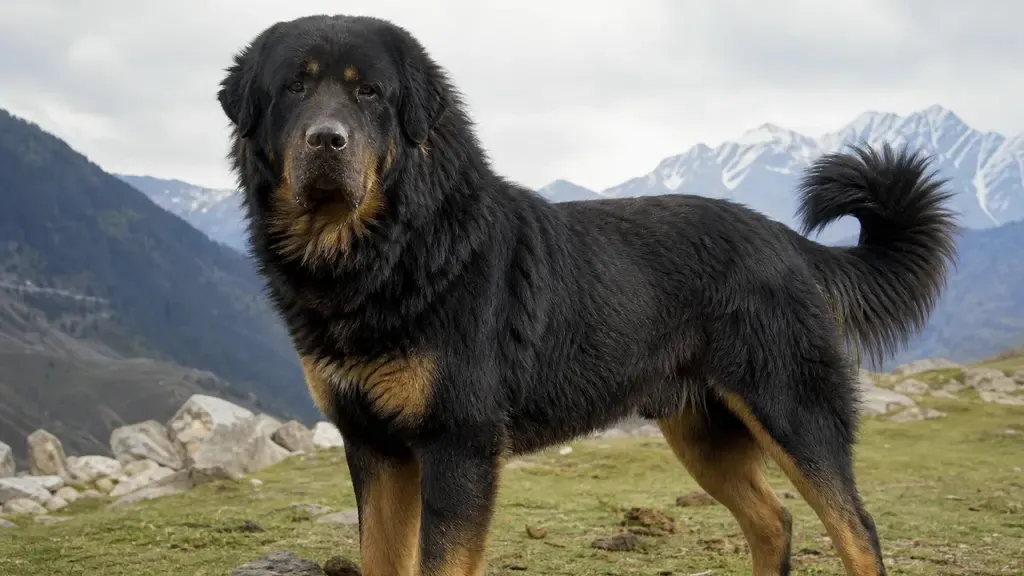
Bhutanese Mastiff, an illustrated specimen plate
Plate, Bhutanese Mastiff

The record

Size
Large
Height at shoulder
22-26 inches
Weight
35-65kg
Lifespan
10-14 years
Group
FCI Group 2 (Molossoid/Mountain)
Origin
Bhutan (Himalayan Region)
Period
Ancient - centuries old
Bred for
Guarding Buddhist monasteries, villages, and livestock in the Bhutanese Himalayas; temple guardian dog (Bjop Khyi)
Energy
Medium
Shedding
Very High
Trainability
Medium
Prey drive
Medium
Pack drive
Medium
Protectiveness
High
Sociability
Medium
Independence
High

A devoted monastery guardian with the classic Himalayan mastiff temperament - fiercely protective of its territory and family, yet slightly more approachable than its Tibetan cousin.

TemperamentTemple guardianLoyalProtectiveHardy

3 recorded ancestors stand behind this breed, nearest first. Open any one of them for what is known about it.

Tibetan MastiffTibetan MastiffLiving breedAncient - possibly 1100 BC or earlierTibet (Himalayan Region)

Still livingTibetan Mastiff

The account

The Bhutanese Mastiff, Bjop Khyi, the nomad's dog, is the Himalayan guardian in its Bhutanese expression: a large, heavily coated molosser kept at monasteries, villages and yak-herding camps across the eastern Himalaya. It belongs unambiguously to the same family as the Tibetan Mastiff, and whether it counts as a separate breed or a regional population of one is a question the sources do not agree on and the dogs themselves do not care about.

What the Bhutanese dogs are consistently reported to have is a slightly more approachable disposition than their Tibetan cousins. That is plausible rather than proven, and there is a reasonable explanation for it: monastery dogs live around a continuous flow of pilgrims, monks and visitors rather than in the isolation of a nomad camp, and centuries of that environment select gently for tolerance. It does not make the breed friendly. It makes it marginally less absolute.

The working pattern is the classic one for the type. These dogs are nocturnal guardians, comparatively inactive by day, alert and vocal at night, positioned at the edge of what they are protecting rather than moving through it. They form very strong attachments within their own circle and treat everything outside as a question to be resolved on the spot. The independence is total and the biddability is low; a Bhutanese Mastiff does not take instruction in a situation it considers its own to judge.

Practically, this is not a breed available to Indian buyers and would not suit most of them if it were. The double coat is built for altitude and cold, and lowland heat and humidity are genuinely dangerous rather than merely uncomfortable. It needs space, a boundary and an experienced handler, and the giant-breed costs, food, joint problems, a short life, all apply. Its interest here is comparative: it shows how one guardian type has diverged into a dozen locally-named versions along the length of the Himalaya.
Questions people ask

How is the Bhutanese Mastiff different from the Tibetan Mastiff?
The Bhutanese Mastiff (Bjop Khyi) is generally smaller and slightly less heavy-boned than the Tibetan Mastiff, adapted to the slightly milder Bhutanese valleys. Some cynologists consider it a regional landrace rather than a distinct breed.
Can I find a Bhutanese Mastiff?
It is extremely difficult. The breed is rare even in Bhutan and not bred commercially. Occasional specimens may be found in border areas of Sikkim, Arunachal Pradesh, or Darjeeling.
Is the Bhutanese Mastiff suitable for hot lowland regions?
Like all Himalayan mastiffs, the Bhutanese Mastiff suffers in hot, humid hot lowland regions. It is best suited for hill stations and the North-Eastern Himalayan regions. Its heavy double coat makes temperatures above 28C uncomfortable.

Nearby in the register

Back to the plate