

Just like in humans, a dog's poop can tell a lot about their internal functioning, including potential digestive problems or dietary imbalances.
Understanding what's normal and what's not can help you identify issues early on, ensuring your dog stays healthy and happy.
This guide aims to provide dog parents with the necessary knowledge to interpret the signs their dog's stool is giving about their digestive health.
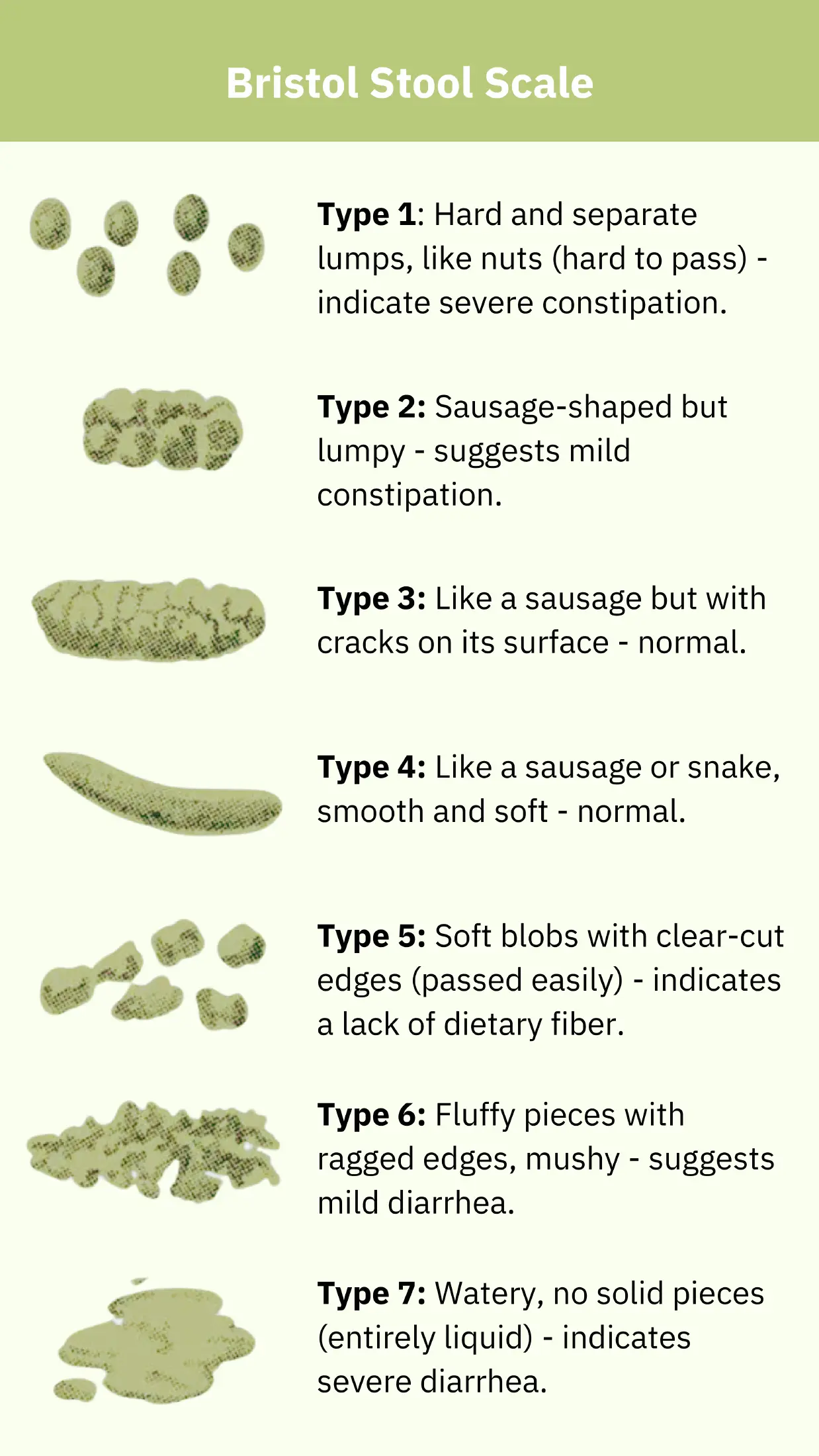
Understanding the Bristol Stool Scale for dogs
The Bristol Stool Scale, originally developed for humans, has been adapted for canine health.
It categorises stool into seven types, ranging from hard and lumpy (Types 1 and 2, indicating constipation) to watery (Types 6 and 7, indicating diarrhoea).
Types 3 and 4 are ideal, indicating a well-functioning digestive system.
This scale is a practical tool for dog parents to assess their pet's digestive health and to recognise when something might be amiss, prompting a visit to the vet.
 , open the figure larger
The seven types
- Type 1. Hard and separate lumps, like nuts, hard to pass. These indicate severe constipation.
- Type 2. Sausage-shaped but lumpy. This suggests mild constipation.
- Type 3. Like a sausage but with cracks on its surface. Normal.
- Type 4. Like a sausage or snake, smooth and soft. Normal.
- Type 5. Soft blobs with clear-cut edges, passed easily. This indicates a lack of dietary fibre.
- Type 6. Fluffy pieces with ragged edges, mushy. This suggests mild diarrhoea.
- Type 7. Watery, no solid pieces, entirely liquid. This indicates severe diarrhoea.
Signs of healthy digestion
Healthy digestion in dogs is typically represented by Types 3 and 4 on the Bristol Scale: these stools are like sausages, smooth, and easy to pass.
This indicates that the dog's diet is well-balanced, and their digestive system is working as it should.
Consistently seeing these types of stools is a good sign that your dog is absorbing nutrients properly and that their intestinal health is in good shape.
Constipation in dogs
Constipation in dogs is shown by Types 1 and 2 stools: hard, dry, and difficult to pass.
This could be due to various factors, including a lack of fibre or water in the diet, or health conditions like diabetes or thyroid problems.
Lifestyle changes, such as increasing exercise, can help.
If diet adjustments and increased hydration don't improve the situation, it's essential to consult a vet, as it might indicate a more serious condition, like bowel obstruction.
Diarrhoea and its implications
Diarrhoea in dogs is a condition that shouldn't be overlooked, as it can be indicative of various health issues.
According to the Bristol Stool Scale, a Type 5 stool, which is soft with clear-cut edges, often suggests a lack of fibre in your dog's diet.
On the other hand, Types 6 and 7, which are more fluid and less formed, might point towards an inflammatory issue within the digestive system.
The formation of your dog's stool is largely dependent on the time it spends in the large intestine.
Solid, well-formed stools are a sign that the digestion process is normal.
However, if your dog's stool is sloppy or watery, it indicates that it hasn't spent enough time in the large intestine.
This can be a result of increased motility, where the dog's digestive system is working faster than normal to expel the contents, possibly in an attempt to rid itself of irritants or due to a lack of sufficient dietary fibre.
To understand and manage your dog's diarrhoea, it's helpful to keep a diary noting the frequency and appearance of the stools.
This record can help you identify any patterns or correlations with changes in diet or health.
In cases where a lack of fibre is suspected, you can try to remedy the situation by incorporating more fibrous foods, like certain vegetables, into your dog's diet.
However, if diarrhoea persists or is accompanied by other symptoms like lethargy, loss of appetite, or vomiting, it's crucial to consult a veterinarian, as these could be signs of a more serious health issue.
What does the colour of your dog's poop mean?
Dark brown. This is the standard colour for healthy dog poop, primarily due to the presence of bilirubin. Bilirubin is a pigment that forms from the breakdown of red blood cells in the body. A dark brown colour indicates that your dog's digestive system is processing food and waste normally.
Black. Black stool in dogs can sometimes occur if they are fed a diet high in organ meat or tripe. Certain foods and medications can also result in black stools. However, it's important to be cautious with black poop, especially if it's sticky and tar-like, as this can be a sign of gastrointestinal bleeding. In such cases, it's essential to consult a veterinarian immediately.
White or pale grey. White or very light-coloured stool could indicate an excess of calcium in your dog's diet. However, it can also signify more serious issues, such as problems with the gallbladder, liver, or pancreas, which might be blocking bile production. Bile is essential for digestion and also gives poop its normal brown colour. If you notice pale or white stools, it's a good idea to get your dog checked by a vet.
Green. Green poop can be relatively normal if your dog eats a lot of plant-based foods. However, green stools can also be a sign of too much bile in the intestines or a reduced presence of bilirubin. If your dog's diet hasn't changed but their stool turns green, and particularly if it happens suddenly or frequently, it's wise to consult with your veterinarian.
Red. Red-tinted stool can sometimes be caused by your dog eating red-coloured foods, like cooked beetroot. However, red in the stool can also indicate the presence of blood, which could be due to intestinal bleeding or irritation, such as in cases of colitis. It's important to distinguish between food-related redness and blood. If you're unsure, or if the red colour persists, a vet visit is in order.
Orange. Orange stool can occur if your dog eats foods rich in beta-carotene, such as carrots or sweet potatoes. However, orange poop can also be a sign of a blocked bile duct or the effect of certain medications. The presence of orange stool, especially if accompanied by other symptoms, warrants a vet check to rule out any underlying health issues.
Yellow. Yellow, greasy-looking stool may indicate that there's too much fat in your dog's faeces. This could be due to a diet high in fat, malabsorption of fat in the diet, or a deficiency in certain digestive enzymes, including those needed to process bile. Persistent yellow stools, particularly if they are greasy or foul-smelling, should be evaluated by a veterinarian to ensure there's no underlying digestive issue.
Frequency of pooping
A healthy dog typically poops anywhere from one to three times a day. Dogs on a dry food diet may poop more often than those on a fresh food diet.
A sudden change in frequency, either more or less, especially if accompanied by other symptoms like changes in stool consistency or colour, could indicate a health issue and should be discussed with a vet.
The role of smell in dog poop
While dog poop naturally has an odour, the intensity and type of smell can provide insights into your dog's health.
A particularly foul odour could indicate poor digestion or an imbalance in gut bacteria.
Diet plays a significant role in this: dogs on a fresh food diet often have less smelly stools compared to those on a dry food diet.
However, any sudden change in the smell of your dog's poop, especially if it becomes exceptionally unpleasant or different, should be noted and potentially discussed with a vet.
Conclusion
Be attentive to your dog's stool as an indicator of their digestive health.
Regular monitoring can help in early detection of potential health issues.
Maintain a balanced diet for your dog, and consult a veterinarian for any concerns regarding their digestive health or changes in their stool.
A healthy dog is indeed a happy dog!
Thank you
We sincerely appreciate your interest in learning about the well-being of dogs. Your support in educating others is invaluable.
Please help us spread this important knowledge by sharing it on social media, forwarding it through WhatsApp, or emailing it to friends and family.
Every bit of information shared can make a big difference in the lives of our canine companions.
Together, we can ensure a healthier, happier life for dogs everywhere.
Sunny Luthra