


As a dog parent, you know how important your furry friend's health is.
But did you know that understanding their body condition is just as crucial as knowing their weight?
This guide is all about the Body Condition Score (BCS), a simple yet powerful tool to check if your dog is underweight, overweight, or just right.
By the end of this guide, you'll be equipped with the knowledge to keep your dog healthy and happy.
What is BCS?
The Body Condition Score, or BCS, is like a health meter for your dog.
It's not just about how much your dog weighs, but more about how much body fat they have.
Think of it like a scorecard that vets or nutritionists use to check if your dog is too skinny, just right, or too heavy.
It's important because dogs, like people, can have health problems if they are too thin or too fat.
By understanding your dog's BCS, you can make sure they are eating the right amount and staying in good shape.
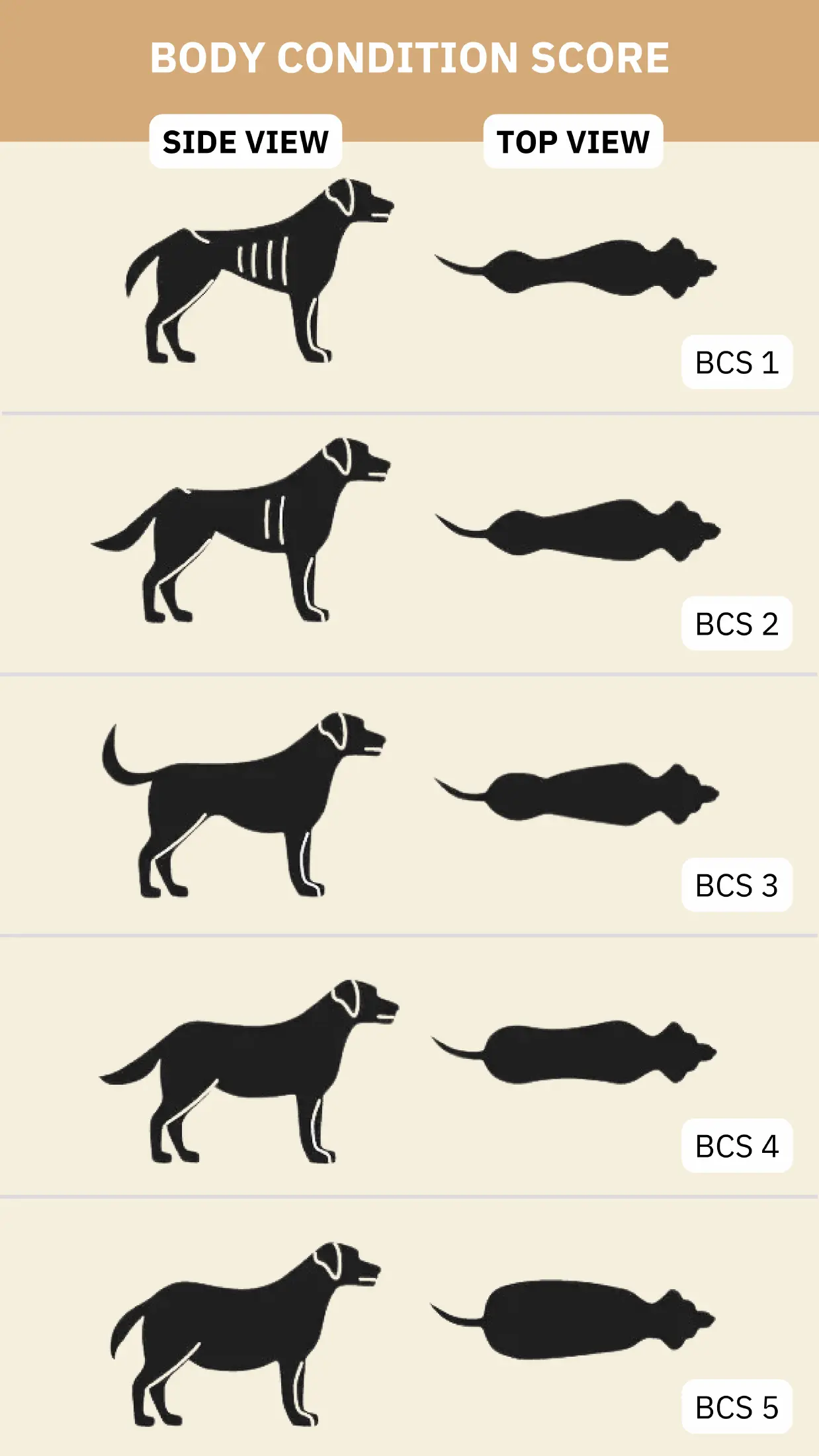 , open the figure larger
BCS 1: Very thin
If your dog is a BCS 1, it means they are very thin.
You can easily see and feel their bones like ribs, spine, and hips without any fat.
This is a sign that your dog isn't getting enough to eat and could be undernourished.
Dogs at this level might be weak and have less muscle.
It's important to find out why they are so thin and work on getting them to a healthier weight.
BCS 2: Thin
A dog with a BCS of 2 is thin.
Their bones are somewhat visible, and they have minimal fat.
While not as severe as BCS 1, these dogs still need more nutrition.
They might have lost weight due to not eating enough or being too active.
Increasing their food intake and monitoring their health can help them reach a better condition.
BCS 3: Just right
BCS 3 is the goal!
It means your dog is in great shape, not too fat, not too skinny.
You can feel their ribs with a slight fat covering, and they have a visible waist when you look at them from above.
Dogs at this score are typically more active and healthier.
This is the ideal condition you want to maintain for your pet's overall well-being.
BCS 4: Overweight
If your dog scores a BCS of 4, they are a bit overweight.
It's hard to feel their ribs because of the extra fat, and they may not have a visible waist.
Dogs at this level might not be as active and can have a higher risk of health issues like joint pain or diabetes.
It's a good idea to look at their diet and exercise routine to help them shed the extra weight.
BCS 5: Obese
A dog with a BCS of 5 is obese, meaning they have too much body fat.
Their ribs are hard to find under the fat, and they might look round with no waist.
This can lead to serious health problems like heart disease and can shorten their life.
If your dog is at this level, it's crucial to work with a vet to safely reduce their weight through diet and exercise.
No "ideal weight"
There's no one-size-fits-all "ideal weight" for dogs because every dog is unique.
Just like people, dogs come in different shapes and sizes.
That's why the BCS is so helpful. It considers the dog's overall body shape and fat level, rather than just the number on the scale.
Two dogs of the same breed might be healthy at different weights.
What's important is how much body fat they have and their overall body condition.
So, instead of focusing on a specific weight, aim for a healthy body condition for your dog.
Keeping a healthy BCS
Maintaining a healthy Body Condition Score in your dog involves a balance of proper diet, exercise, and regular health checks.
For dogs with thick or long fur, it can be more challenging to assess their body condition by just looking or feeling through their coat.
That's why it's a good idea to check your furry dog's BCS during bath time.
When their fur is wet, it's easier to see and feel their body shape.
Apart from bath time checks, ensure they are eating the right amount and type of food, and getting enough exercise.
Conclusion
Understanding and managing your dog's Body Condition Score is one of the best things you can do for their health.
It's more than just watching their weight. It's about making sure they have the right balance of body fat.
Aim for a BCS of 3 for most breeds, but remember that some breeds are naturally leaner and healthy at a BCS of 2.
By focusing on their BCS, ensuring proper nutrition, and keeping them active, you're contributing to a longer, happier life for your dog.
A healthy dog is indeed a happy dog!
Thank you
We sincerely appreciate your interest in learning about the well-being of dogs. Your support in educating others is invaluable.
Please help us spread this important knowledge by sharing it on social media, forwarding it through WhatsApp, or emailing it to friends and family.
Every bit of information shared can make a big difference in the lives of our canine companions.
Together, we can ensure a healthier, happier life for dogs everywhere.
Sunny Luthra